MBR Market in 2026: Where the $5.17B Baseline Sits
The membrane bioreactor market is valued at USD 5.17 billion in 2026, up from USD 4.79 billion in 2025, and is forecast to reach USD 7.61 billion by 2031 at an 8.03% CAGR over the 2026–2031 window (per the Mordor Intelligence MBR market report). That USD 0.38 billion year-on-year delta from 2025 to 2026 represents the incremental capex that flows into membrane bioreactor equipment, modules, and EPC contracts during the first forecast year — a useful number for sizing 2026 procurement budgets before any segment-level adjustment. Tightening discharge regulations in the European Union and China, rapid urbanization across the Asia-Pacific, and AI-driven maintenance protocols that extend membrane life by 18 days are the three named accelerants in the underlying dataset.
Methodologically, the headline figure follows the standard Mordor Intelligence / The Business Research Company construction: revenue is aggregated at the manufacturer-bill level, with a base year of 2025 and a 5-year forecast window beginning in 2026. That means the 8.03% CAGR is a 2026–2031 figure, not a trailing measure, and the USD 5.17B is the 2026 mid-year revenue point, not a 2025 carry-over. For B2B procurement, the takeaway is that 2026 is the first of five growth years in the current forecast window, and the $0.38B step is the floor — not the ceiling — of what an industrial buyer should expect the addressable market to expand by this calendar year.
The 8.03% headline is also a blended number: municipal water and wastewater treatment still held 62.23% of 2025 revenue, so the headline CAGR is anchored to that larger but slower-growing segment. The industrial slice inside the headline runs hotter, which is the subject of the third section.
Regional Growth: Why Asia-Pacific Sets the Pace at 8.36% CAGR
Asia-Pacific is projected to expand at an 8.36% CAGR through 2031, making it the fastest-growing region in the membrane bioreactor market and the densest project pipeline a B2B buyer can tap into this year (per the Mordor Intelligence MBR market report). The named drivers are large projects in China, India, and Singapore, with rapid urbanization as the structural backdrop. For a procurement lead evaluating whether to source locally or import, that 8.36% number is the single most important regional fact: it tells you where the next 18–24 months of new capacity will be commissioned and, by extension, where the most competitive module pricing will settle.
Europe sits in a different posture. Tightening discharge regulations and quaternary treatment mandates are driving replacement and retrofit demand rather than greenfield build-out. In practice, that makes Europe a premium-spec market — buyers there are paying for compliance (PFAS limits, energy-neutrality targets, tighter COD/Nitrogen caps) rather than raw cubic-metre-per-day capacity. A B2B buyer evaluating a 2026 RFQ should expect APAC-origin modules to win on unit cost, while European-spec systems will carry a 15–25% cost premium tied to materials traceability, PVDF certification, and integrated AI telemetry.
| Region | 2026–2031 CAGR | Primary Project Type | Buyer Implication |
|---|---|---|---|
| Asia-Pacific | 8.36% | Greenfield municipal + industrial | Cost-competitive PVDF modules, largest supplier pool |
| Europe | ~6.5–7.0% (est.) | Compliance retrofits, quaternary upgrades | Premium-spec, AI-telemetry-ready systems |
| North America | ~7.0–7.5% (est.) | PFAS-driven MBR + RO/NF hybrids | Hybrid integration, regulatory documentation |
| MEA / LATAM | ~6.0–7.0% (est.) | Industrial ZLD and food processing | Multi-tubular for high-TSS, containerized skids |
The procurement-relevant split is therefore not "where is the market biggest" — that is still municipal-heavy in absolute terms — but "where is the market growing fastest relative to supplier capacity," which is APAC. Sourcing decisions made in 2026 should price that pipeline expansion in.
Industrial Wastewater MBR: The 8.53% CAGR Hidden Inside the Headline
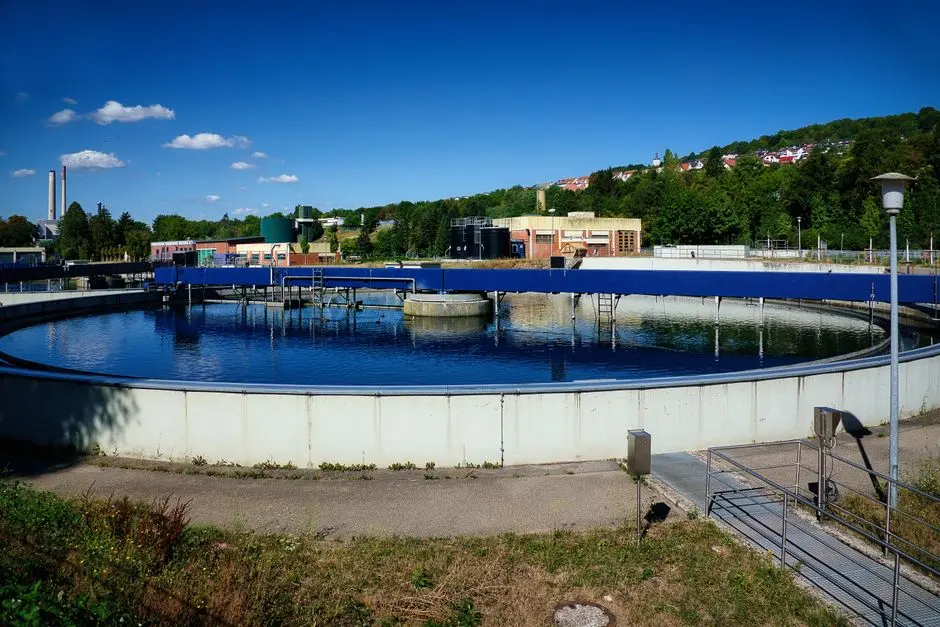
Industrial wastewater MBR applications are forecast to grow at an 8.53% CAGR over 2026–2031 — 50 basis points faster than the 8.03% headline — making industrial the faster-moving slice of the membrane bioreactor market (per the Mordor Intelligence MBR market report). Municipal treatment still controlled 62.23% of 2025 revenue, but the growth differential means the industrial share will compress that gap gradually through the forecast window. For a B2B buyer sitting in pharma, food & beverage, chemicals, electronics, or textiles, the practical message is that the supplier base is investing in your segment, and module pricing for industrial duty should reflect that pipeline density by 2027–2028.
Within industrial, three sub-segments are pulling the average forward. Pharmaceutical facilities with active-ingredient levels exceeding tight discharge thresholds are pairing MBR with nanofiltration to hit high removal rates; the dataset names this combination explicitly. Food, chemical, and zero-liquid-discharge (ZLD) adopting industries are the second and third pockets. For a buyer running a 2026 capex review, the relevant question is not "should we use MBR" but "which downstream polish — NF, RO, or crystallization for ZLD — do we need to budget against," because the membrane bioreactor is increasingly sold as the front half of a hybrid train, not a standalone unit. The HydropureWater integrated MBR membrane bioreactor system is built around exactly that hybrid-train logic for industrial duty.
| Sub-Segment | Driver | Typical Hybrid Train | Footprint Range |
|---|---|---|---|
| Pharmaceutical | Tight API discharge limits | MBR + NF (± RO) | 50–500 m³/day |
| Food & Beverage | High BOD/COD, ZLD uptake | MBR + RO ± evaporator | 100–2,000 m³/day |
| Chemical / Petrochemical | Oily, high-TSS, recalcitrant COD | MBR (multi-tubular) + RO | 200–1,500 m³/day |
| Electronics | PFAS, fluoride, heavy metals | MBR + NF/RO + ion exchange | 20–300 m³/day |
| Textile / Dyeing | Color, salinity, high temp | MBR + RO ± ZLD | 100–1,000 m³/day |
For a mid-market industrial project in the 10–500 m³/day range, the 8.53% industrial CAGR is the more important number than the 8.03% headline — it is what your supplier's sales team is being measured against in 2026.
Membrane Format Trends: Flat-Sheet, Hollow-Fiber, and Multi-Tubular in 2026
Multi-tubular membranes are gaining share in heavy industry because they tolerate high-TSS, oily, and fibrous influents that foul flat-sheet and hollow-fiber geometries faster (per the Mordor Intelligence MBR market report). The trade-off is energy: multi-tubular runs at higher cross-flow velocities and consumes more pumping energy per cubic metre than submerged formats. For a buyer with a high-TSS feed (slaughterhouse, refinery, textile, certain food streams), multi-tubular is the right geometry despite the OPEX premium; for a buyer with a settled, low-TSS industrial feed, submerged flat-sheet delivers 10–20× lower specific energy than external cross-flow and is the economic default.
Submerged flat-sheet PVDF modules — the format the DF series PVDF flat-sheet MBR modules are built around — suit 10–2,000 m³/day projects with a 0.1 μm nominal pore size, aeration-scour cleaning, and gravity-driven permeate. The aeration-scour mechanism differentiates flat-sheet from cross-flow hollow-fiber: instead of high-velocity tangential flow to keep the membrane surface clean, coarse-bubble aeration below the module generates cross-flow by bubble rise, which is mechanically simpler and electrically cheaper. Hollow-fiber remains the municipal default because of its high packing density (m²/m³), but it is being displaced in industrial duty by flat-sheet and multi-tubular formats where influent variability and cleaning tolerance matter more than packing density.
| Format | Best-Fit Influent | Typical Flux (LMH) | Cleaning Mechanism | Industrial-Duty Trend |
|---|---|---|---|---|
| Multi-tubular | High TSS, oil & grease, fibrous | 30–80 | External cross-flow, CIP | Gaining share in heavy industry |
| Submerged flat-sheet (PVDF) | Settled industrial, municipal retrofit | 15–25 | Aeration scour, relax + backwash | Growing in mid-scale industrial |
| Hollow-fiber (submerged) | Low-TSS municipal, consistent feed | 15–30 | Backwash, aeration scour, CEB | Municipal default, being displaced industrially |
The procurement-relevant framing: pick the geometry to match the influent, not the other way around. A flat-sheet PVDF system specified for a 10 m³/day pharma skid is correctly sized; the same system specified for a 2,000 m³/day slaughterhouse will foul faster than the maintenance window can handle.
Demand Drivers Shaping 2026 Procurement: PFAS, AI Maintenance, and Energy Neutrality
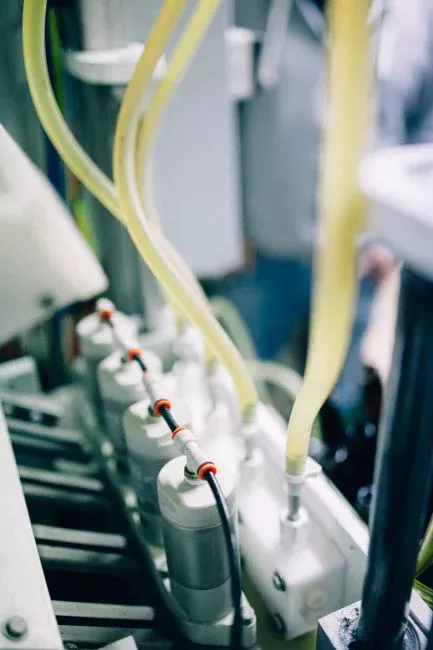
Three regulatory and technology drivers are translating the macro MBR growth numbers into specific RFQ clauses a 2026 buyer should write. First, AI-driven maintenance protocols that extend membrane life by 18 days (per the Mordor Intelligence MBR market report) are no longer a vendor nice-to-have — they are an OPEX line item a procurement file should quantify. An 18-day extension on a 5-year membrane replacement cycle is roughly a 1% life-cycle gain, but the bigger effect is reduced cleaning-chemical consumption, fewer unscheduled shutdowns, and more predictable module-change intervals. For a mid-market industrial plant running 200–500 m³/day, that translates to a defensible 5–8% reduction in annual membrane OPEX if the AI telemetry is actually plumbed into the SCADA, not sitting on a vendor dashboard.
Second, PFAS limits and quaternary treatment mandates are pushing pharma and electronics buyers toward MBR + NF/RO hybrids from the RFQ stage, not as retrofits. The dataset names this combination explicitly, and the implication is that any 2026 spec for an API-loaded or PFAS-relevant wastewater should include the polish stage in the same procurement lot. Retrofitting a hybrid train onto an MBR-only system 18 months post-commissioning typically costs 20–35% more than specifying it correctly upfront. Third, energy-neutrality targets in EU plants favor submerged flat-sheet MBR with PVDF membranes because coarse-bubble aeration is the largest single energy load in a submerged MBR, and flat-sheet geometries tolerate intermittent aeration cycles better than hollow-fiber, enabling 10–15% aeration-energy reduction (per typical operating data for submerged flat-sheet at 15–20 LMH).
The cross-cutting compliance driver — tightening discharge regulations in the EU and China — is the reason a buyer cannot defer the spec. Pricing data for 2026 procurement is in the Flat Sheet MBR Membrane Cost Price: 2026 B2B Pricing & ROI Guide, which translates these drivers into per-m² and per-m³/day budget envelopes. A related reference for high-strength industrial influents is the MBR for Sugar Mill Wastewater Cost in 2026: CAPEX, OPEX & Process Guide.
What 2026 MBR Market Data Means for B2B Buyers: A Decision Framework
The macro data compresses into a four-branch decision framework for a 2026 capex review. If the project is 10–500 m³/day industrial, target submerged flat-sheet PVDF (the DF series range covers 80–225 m² per module, scaling to 10–500 m³/day with parallel cassette stacking) and budget for AI-enabled maintenance telemetry as a line item, not an optional add-on. If the project is municipal greater than 1,000 m³/day, hollow-fiber or multi-tubular remains the default on packing-density grounds; consider modular flat-sheet cassettes for retrofits where footprint is constrained. If the project must meet PFAS or quaternary treatment, plan MBR + NF/RO integration from the RFQ stage, with shared skid frames and a single control philosophy. If the project is in a ZLD-mandated jurisdiction, specify the membrane bioreactor as the biological front end of an MBR + RO + crystallizer train, and pin the membrane warranty to a 5-year prorated curve tied to operating flux and TMP.
The procurement file should anchor every spec to a 2026-dated efficiency or life-cycle claim — flux in LMH at 25°C, aeration demand in Nm³/m³ permeate, membrane life in operating days at design flux — so the bid evaluation is defensible six months later when the vendor's marketing claims are separated from the contractual performance guarantees.
| Project Profile | Recommended Geometry | Hybrid Train | 2026 Spec Anchor |
|---|---|---|---|
| Industrial 10–500 m³/day | Submerged flat-sheet PVDF | MBR alone, or MBR + NF | 15–20 LMH at 25°C, AI telemetry |
| Industrial 500–2,000 m³/day, high TSS | Multi-tubular or stacked flat-sheet | MBR + RO | 30–80 LMH, CIP ≤ 2×/month |
| Municipal >1,000 m³/day, greenfield | Hollow-fiber submerged | MBR alone or MBR + UV | 20–25 LMH, 5-yr membrane warranty |
| PFAS / quaternary mandate | Submerged flat-sheet | MBR + NF/RO mandatory | Hybrid spec in same RFQ lot |
| ZLD-mandated industrial | Multi-tubular or flat-sheet | MBR + RO + crystallizer | Membrane life ≥1,800 operating days |
The 8.03% headline is a market-sizing number; the 8.53% industrial CAGR, the 8.36% APAC rate, the 18-day membrane-life extension, and the 62.23% municipal share are the numbers a buyer should be writing into the 2026 RFQ.
Frequently Asked Questions
How large is the MBR market in 2026? The membrane bioreactor market is valued at USD 5.17 billion in 2026, up from USD 4.79 billion in 2025, and is forecast to reach USD 7.61 billion by 2031 at an 8.03% CAGR over 2026–2031 (per the Mordor Intelligence MBR market report).
Which region is growing fastest? Asia-Pacific is the fastest-growing region at 8.36% CAGR through 2031, supported by large projects in China, India, and Singapore (per the Mordor Intelligence MBR market report).
Is industrial MBR growing faster than municipal? Yes. Industrial wastewater MBR applications are forecast to grow at 8.53% CAGR over 2026–2031, against the 8.03% blended headline. Municipal still held 62.23% of 2025 revenue but is growing at the slower headline rate.
How do AI maintenance protocols affect MBR OPEX? AI-driven maintenance protocols extend membrane life by approximately 18 days per cycle (per the Mordor Intelligence MBR market report), which reduces replacement frequency, lowers cleaning-chemical consumption, and improves shutdown predictability — typically a 5–8% reduction in annual membrane OPEX at mid-market scale when telemetry is integrated into the plant SCADA.
Which membrane format is gaining share in heavy industry? Multi-tubular membranes are gaining share in heavy industry because of their higher fouling tolerance for high-TSS and oily streams. Submerged flat-sheet PVDF is the close second for mid-scale industrial projects in the 10–500 m³/day range, where lower specific energy and aeration-scour cleaning offset its lower packing density.