Industrial arsenic wastewater treatment costs vary widely based on influent concentration, flow rate, and technology. For a 50 m³/h semiconductor fab with 500 µg/L arsenic, CAPEX ranges from $120,000 (adsorption) to $450,000 (hybrid RO + precipitation), with OPEX of $0.85–$2.30/m³. EPA’s 2024 benchmarks show adsorption achieves 90–95% removal at 10–50 µg/L, while reverse osmosis exceeds 99% but requires pre-treatment for high TDS streams. Compliance with China’s GB 25466-2010 (<50 µg/L) or EPA’s 10 µg/L standard drives technology selection.
Why Industrial Arsenic Wastewater Treatment Costs More Than Residential Systems
Industrial arsenic wastewater treatment systems face significantly higher capital and operational expenditures compared to residential solutions due to vastly different scales, influent characteristics, and regulatory complexities. Industrial influent arsenic concentrations typically range from 100–5,000 µg/L, whereas residential wells commonly present arsenic levels between 10–50 µg/L (EPA 2024 data). This order-of-magnitude difference in concentration necessitates more robust and higher-capacity treatment technologies for industrial applications.
Flow rates are another critical differentiator, with industrial systems, such as a typical semiconductor fab or mining operation, processing 10–1,000 m³/h, in stark contrast to residential systems handling only 0.1–1 m³/h. This increased throughput directly impacts equipment sizing, material costs, and energy consumption. industrial facilities must adhere to stringent regulatory limits, including China's GB 25466-2010 standard (<50 µg/L), the EPA's 10 µg/L standard for discharge, or the EU's 10 µg/L guideline, which are often much stricter than residential guidelines and require highly efficient removal.
Finally, industrial wastewater streams frequently contain co-contaminants like fluoride, heavy metals (e.g., lead, cadmium), chlorides, and sulfates, which can interfere with arsenic removal processes or necessitate multi-stage pre-treatment. For instance, semiconductor manufacturing wastewater may contain high levels of total dissolved solids (TDS) and various heavy metals from etching and cleaning processes, while mining operations often deal with acid mine drainage rich in iron, sulfates, and other dissolved minerals. These complex matrices add layers of complexity and cost to the overall treatment design, requiring specialized pre-filtration, pH adjustment, or advanced oxidation steps before arsenic removal can be effectively achieved.
Arsenic Removal Technologies: How They Work and What They Cost
Selecting the optimal arsenic removal technology for industrial wastewater hinges on influent characteristics, desired removal efficiency, and overall cost-effectiveness. Adsorption is a widely utilized method, employing media such as activated alumina or iron-based granular ferric hydroxide to bind arsenic from the water. These systems typically achieve 90–95% removal efficiency and incur an OPEX of $0.50–$1.20/m³, as per EPA 2024 benchmarks, making them cost-effective for moderate arsenic levels. The media requires periodic backwashing and replacement, with spent media requiring proper disposal.
Precipitation/Coagulation involves adding chemical coagulants like ferric chloride or lime to transform dissolved arsenic into a solid precipitate that can be removed through sedimentation and filtration. This method achieves 80–90% removal and has an OPEX ranging from $0.80–$1.50/m³. The process requires careful pH adjustment to optimize arsenic removal and often generates a significant volume of sludge that needs dewatering and disposal. HydropureWater provides precise chemical dosing for arsenic precipitation to ensure optimal performance.
Industrial RO systems for arsenic removal offer superior performance, achieving >99% removal efficiency and producing high-quality permeate suitable for reuse. However, RO systems have a higher OPEX of $1.50–$2.50/m³ and are susceptible to membrane fouling from high TDS, suspended solids, or certain co-contaminants, necessitating robust pre-treatment (Top 4). Hybrid systems combine multiple technologies, such as RO followed by adsorption or precipitation followed by filtration, to achieve 99.9% arsenic removal or higher. These multi-stage solutions, common in semiconductor fabs aiming for ultra-low discharge, typically have an OPEX of $2.00–$3.50/m³ but offer unparalleled performance and reliability, addressing complex influent matrices. Emerging technologies like electrocoagulation and membrane distillation are showing promise in pilot data from EPA demonstrations (Top 1), offering alternative approaches for specific industrial challenges.
| Technology | Removal Efficiency | Typical OPEX ($/m³) | Key Advantages | Key Disadvantages |
|---|---|---|---|---|
| Adsorption | 90–95% | 0.50–1.20 | Simple operation, low CAPEX for moderate flows | Media replacement/disposal, less effective for high concentrations |
| Precipitation/Coagulation | 80–90% | 0.80–1.50 | Effective for high concentrations, removes other metals | High sludge generation, pH control critical, chemical handling |
| Reverse Osmosis (RO) | >99% | 1.50–2.50 | Highest removal efficiency, high-quality permeate | High CAPEX, energy intensive, requires extensive pre-treatment, membrane fouling |
| Hybrid Systems | 99.9%+ | 2.00–3.50 | Achieves ultra-low discharge, handles complex influent | Highest CAPEX and OPEX, complex operation, larger footprint |
| Emerging (e.g., Electrocoagulation) | Variable (Pilot-stage) | Variable | Reduced chemical usage, compact footprint | Limited full-scale data, potential electrode fouling |
CAPEX and OPEX Breakdown: What Drives Arsenic Treatment Costs
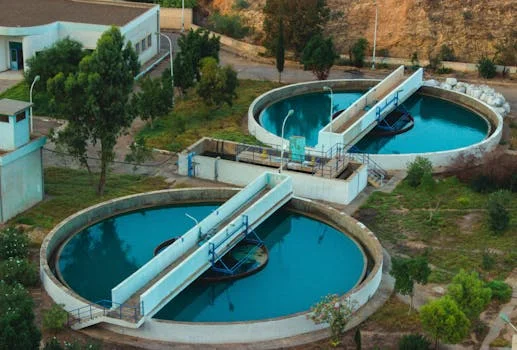
Industrial arsenic treatment costs are driven by a combination of capital expenditures (CAPEX) for system installation and operational expenditures (OPEX) for ongoing maintenance and consumables. CAPEX components typically include equipment ($80,000–$400,000 for a medium-scale industrial system), installation ($20,000–$100,000), and permitting fees ($10,000–$50,000), according to EPA demonstration program data (Top 1). Equipment costs are heavily influenced by the chosen technology, flow rate, and required removal efficiency, with hybrid RO systems being at the higher end.
OPEX is dominated by chemical consumption, energy usage, labor, and routine maintenance. Chemicals, such as coagulants, pH adjusters, and anti-scalants, can cost $0.20–$1.00/m³; notably, higher influent arsenic concentrations directly increase chemical consumption due to increased reagent demand. Energy costs, particularly for pumping and RO membrane operation, range from $0.10–$0.50/m³. Labor for system monitoring, chemical handling, and maintenance typically adds $0.15–$0.30/m³, while general maintenance and spare parts contribute $0.10–$0.40/m³.
Scale effects significantly impact cost efficiency; the cost per cubic meter often decreases by 30–40% for systems processing over 200 m³/h compared to smaller 50 m³/h systems, primarily due to economies of scale in equipment and labor. For example, a 50 m³/h system might have an OPEX of $2.00/m³, while a 500 m³/h system employing similar technology could achieve an OPEX closer to $1.20/m³. Hidden costs are also crucial to consider, including sludge disposal ($0.05–$0.20/m³), which can be substantial for precipitation-based systems. Membrane replacement for RO systems adds $0.10–$0.30/m³ over the system's lifespan, and adsorption media replacement costs $0.05–$0.15/m³ (EPA’s 2024 cost models). Efficient sludge dewatering for arsenic treatment residuals can help mitigate disposal costs. For broader context on industrial treatment costs, refer to our article on cost benchmarks for electronics wastewater treatment.
| Cost Component | Typical Range (CAPEX) | Typical Range (OPEX $/m³) | Notes |
|---|---|---|---|
| Equipment | $80,000–$400,000 | N/A | Varies by technology, flow rate, and complexity |
| Installation | $20,000–$100,000 | N/A | Includes civil works, piping, electrical, commissioning |
| Permitting & Engineering | $10,000–$50,000 | N/A | Regulatory approvals, design consulting |
| Chemicals | N/A | $0.20–$1.00 | Coagulants, pH adjusters, anti-scalants; depends on influent arsenic |
| Energy | N/A | $0.10–$0.50 | Pumps, blowers, RO system power; higher for RO |
| Labor | N/A | $0.15–$0.30 | Monitoring, chemical handling, maintenance staff |
| Maintenance & Spares | N/A | $0.10–$0.40 | Routine repairs, spare parts, instrumentation calibration |
| Sludge Disposal | N/A | $0.05–$0.20 | Cost for hazardous or non-hazardous waste disposal |
| Membrane/Media Replacement | N/A | $0.05–$0.30 | Periodic replacement for RO membranes or adsorption media |
How to Choose the Right Arsenic Treatment Technology for Your Plant
Selecting the appropriate arsenic treatment technology for an industrial plant requires a systematic evaluation of several critical factors to ensure compliance and cost-effectiveness. The influent arsenic concentration is a primary driver: adsorption is generally suitable for concentrations below 100 µg/L, precipitation/coagulation is effective for influent levels between 100–1,000 µg/L, and reverse osmosis is often necessary for concentrations exceeding 1,000 µg/L or when ultra-low discharge limits are required. Higher influent concentrations directly impact the required removal efficiency, often necessitating more advanced or multi-stage processes.
Flow rate dictates system sizing and whether a batch or continuous operation is more appropriate. Batch systems are typically sufficient for low flow rates, generally below 10 m³/h, while continuous systems are essential for industrial operations exceeding 10 m³/h (EPA’s 2024 small-system recommendations). The presence of co-contaminants significantly influences technology selection; for instance, RO systems are effective for high TDS removal, precipitation excels at removing other heavy metals alongside arsenic, and adsorption can be selectively used for certain organic contaminants. Understanding these interactions is crucial for designing an effective pre-treatment strategy.
Discharge limits are paramount; achieving a 50 µg/L standard is less demanding than meeting a stringent 10 µg/L limit, which typically increases CAPEX by 20–40% due to the need for more advanced or polishing stages. Finally, space constraints can dictate technology choice. Compact systems like compact MBR systems for arsenic pretreatment, when integrated into a hybrid solution, can be advantageous for plants with limited footprints (Top 1 EPA demonstrations). For semiconductor-specific arsenic treatment solutions, a detailed engineering blueprint is often required.
| Factor | Adsorption | Precipitation/Coagulation | Reverse Osmosis (RO) | Hybrid Systems |
|---|---|---|---|---|
| Influent Arsenic | <100 µg/L | 100–1,000 µg/L | >1,000 µg/L or ultra-low effluent | Variable (tailored for specific needs) |
| Flow Rate | <500 m³/h | >10 m³/h | >10 m³/h | >10 m³/h |
| Co-contaminants | Few/specific organics | Heavy metals, suspended solids | High TDS, specific salts | Complex mix (TDS, metals, organics) |
| Discharge Limit | >10 µg/L | >10 µg/L | <10 µg/L (potentially <5 µg/L) | <5 µg/L (or lower) |
| Space Constraints | Moderate | Large (for clarification/sludge) | Moderate (with pre-treatment) | Can be compact (e.g., MBR integration) |
Case Study: Semiconductor Fab Arsenic Treatment Costs and Performance
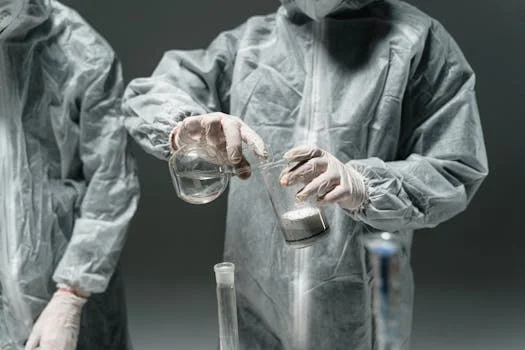
A leading semiconductor fabrication plant in Southeast Asia faced challenges treating 100 m³/h of wastewater containing an average of 300 µg/L of arsenic, along with high TDS and trace heavy metals. The facility required compliance with a strict local discharge limit of <5 µg/L arsenic. After a thorough evaluation, a hybrid precipitation + RO system was implemented to meet these demanding specifications.
The solution involved an initial chemical precipitation stage using ferric chloride and pH adjustment with lime, followed by clarification and multi-media filtration to remove suspended solids and precipitated arsenic. The pre-treated effluent then passed through an industrial RO system for arsenic removal, which ensured the removal of residual dissolved arsenic and other dissolved solids. An automatic chemical dosing system was critical for maintaining precise reagent levels in the precipitation stage.
The system achieved a consistent 99.9% arsenic removal efficiency, with the final effluent consistently measuring below 5 µg/L, well within the required discharge standard and compliant with the EPA 10 µg/L benchmark. The total CAPEX for this advanced hybrid system was approximately $320,000, broken down as $250,000 for primary equipment, $50,000 for installation, and $20,000 for engineering and permitting. The operational costs averaged $1.85/m³, comprising $0.60/m³ for chemicals, $0.45/m³ for energy, $0.25/m³ for labor, $0.20/m³ for maintenance, and $0.35/m³ for sludge disposal and membrane replacement.
A key lesson learned from this project was the critical role of robust pre-treatment for TDS and suspended solids. Optimizing the precipitation and filtration stages significantly reduced membrane fouling in the subsequent RO unit by an estimated 40%, extending membrane lifespan and reducing overall OPEX. This case demonstrates that while hybrid systems represent a higher initial investment, they deliver superior performance and long-term cost efficiency for complex industrial wastewaters.
ROI Calculator: How to Justify Arsenic Treatment Costs to Your CFO
Justifying the significant capital and operational expenditures of industrial arsenic treatment to a CFO requires a clear return on investment (ROI) framework that quantifies both avoided costs and potential savings. The cost of non-compliance is a major driver, encompassing substantial fines ($10,000–$100,000 per violation, depending on severity and regulatory body like EPA or local environmental agencies), significant legal fees ($50,000–$200,000 for enforcement actions), and severe reputational damage that can impact market share and investor confidence. Proactive treatment mitigates these risks entirely.
Operational savings can also contribute to ROI, particularly through water reuse. For example, high-quality permeate from an RO system, after arsenic removal, can be recycled for non-potable uses such as cooling tower makeup water or various process water applications, significantly reducing fresh water intake costs. This can result in substantial savings, especially in regions with high water tariffs or scarcity. The typical payback period for most industrial arsenic treatment systems ranges from 2–5 years, driven by the avoided costs of fines and the value of water reuse.
For a 50 m³/h system facing potential annual fines of $50,000 and achieving $30,000 in annual water reuse savings, a $200,000 CAPEX could yield a payback in approximately 2.5 years. Key ROI factors to consider include the influent arsenic concentration, which dictates treatment complexity and chemical usage; the flow rate, affecting economies of scale; specific discharge limits, which increase CAPEX for stricter standards; and local labor and energy costs, which can vary significantly by region. A comprehensive ROI calculation should factor in all these variables to present a compelling business case.
| ROI Factor | Description | Impact on ROI |
|---|---|---|
| Cost of Non-Compliance | Fines, legal fees, reputational damage from discharge violations. | Directly increases ROI by avoiding significant penalties. |
| Operational Savings (Water Reuse) | Value of treated water reused in process, cooling, or irrigation. | Reduces fresh water intake costs, improving payback period. |
| Influent Arsenic Concentration | Higher concentrations require more robust/costly treatment. | Increases CAPEX/OPEX, potentially extending payback, but higher risk mitigation. |
| Flow Rate | Larger flows benefit from economies of scale. | Decreases cost per m³, improving ROI for larger operations. |
| Discharge Limits | Stricter limits require more advanced (costly) technologies. | Higher CAPEX, but ensures long-term compliance and avoids future retrofits. |
| Local Labor/Energy Costs | Regional variations in operational expenses. | Directly impacts OPEX, influencing overall project profitability. |
| System Lifespan & Maintenance | Durability and ongoing costs of the chosen technology. | Longer lifespan and lower maintenance enhance long-term ROI. |
Frequently Asked Questions
What is the typical arsenic removal efficiency for industrial wastewater?
Industrial arsenic removal efficiencies typically range from 80% for basic precipitation systems to over 99.9% for advanced hybrid systems utilizing reverse osmosis or specialized adsorption media, depending on the influent concentration and target discharge limits.
How does influent arsenic concentration affect treatment costs?
Higher influent arsenic concentrations generally increase both CAPEX (for larger capacity or more advanced systems) and OPEX (due to increased chemical consumption, media replacement frequency, or energy for higher-pressure systems) to achieve the same discharge limit.
Can arsenic treatment systems handle other heavy metals?
Yes, many arsenic treatment technologies, particularly chemical precipitation/coagulation and reverse osmosis, are also highly effective at removing other heavy metals concurrently, which can be a significant advantage for complex industrial wastewaters.
What are the main sludge disposal considerations for arsenic treatment?
Arsenic-laden sludge is often classified as hazardous waste, requiring specialized dewatering (e.g., using filter presses) and disposal at permitted facilities. Disposal costs can add $0.05–$0.20/m³ to the overall OPEX, depending on local regulations and sludge volume.
What is the typical lifespan of arsenic adsorption media or RO membranes?
Arsenic adsorption media typically lasts 1-3 years before requiring replacement, depending on influent arsenic load and flow rate. RO membranes generally have a lifespan of 3-7 years, heavily influenced by effective pre-treatment and operating conditions.