Why Industrial Facilities Rely on Reverse Osmosis: A Real-World Scenario
Industrial reverse osmosis (RO) systems are the primary defense against high Total Dissolved Solids (TDS) that can compromise sensitive manufacturing processes. For example, a semiconductor fabrication plant in Shenzhen recently faced feedwater TDS levels of 1,200 mg/L, which exceeded the tolerance of their cooling towers and ultra-pure water (UPW) loops, leading to severe equipment scaling and a 15% reduction in wafer yield (per 2024 SEMI Standards). By implementing a high-efficiency RO system, the facility reduced TDS to <10 mg/L, successfully meeting the SEMI F63-0706 requirements for UPW production.
The economic impact of such a transition is substantial. In this specific case, the cost of production downtime and equipment maintenance was estimated at $500,000 per year. In contrast, the capital expenditure (CAPEX) for a 50 m³/h industrial RO system was approximately $200,000, providing a return on investment (ROI) in less than six months. For engineers and procurement teams, understanding the mechanics of RO is not just a matter of chemistry—it is a critical calculation of operational efficiency and risk mitigation. This detailed guide on RO contaminant removal mechanisms explores how these systems achieve such high purity levels at an industrial scale.
Reverse osmosis is a high-efficiency water purification process that removes up to 99% of dissolved contaminants by forcing water through a semi-permeable membrane under pressure (typically 200–1,200 psi, depending on feedwater salinity). At the heart of the system, the RO membrane—with pores as small as 0.0001 μm—blocks salts, heavy metals, bacteria, and organic molecules while allowing water molecules to pass. Industrial RO systems achieve recovery rates of 30–95% and are critical for applications like semiconductor manufacturing, pharmaceuticals, and desalination, where ultra-pure water is non-negotiable. This guide breaks down the engineering process, efficiency data, and key selection criteria for 2025.
The Science Behind Reverse Osmosis: Osmotic Pressure, Membrane Selectivity, and Pressure Requirements
Osmotic pressure is the natural physical force that drives water to migrate from a region of low solute concentration to a region of high solute concentration across a semi-permeable membrane. To reverse this natural flow, an external force must be applied that exceeds the osmotic pressure of the solution. For instance, seawater with a TDS of 35,000 mg/L exerts an osmotic pressure of approximately 26 bar (377 psi), meaning the RO system must operate well above this threshold to produce permeate (per 2024 WHO guidelines).
Membrane selectivity is governed by both size exclusion and electrostatic repulsion. While a standard coffee filter might block particles based on size alone, an RO membrane—with pore sizes ranging from 0.0001 to 0.001 μm—functions at the molecular level. It blocks monovalent ions like Sodium (Na⁺) and Chloride (Cl⁻) and larger molecules exceeding 150 Daltons (Da), such as glucose and complex organics. The process works by lowering the chemical potential difference across the membrane, effectively "pushing" the water molecules through the dense polymer matrix while leaving the solutes behind in a concentrated waste stream.
| Parameter | Brackish Water RO | Seawater RO (SWRO) | Ultra-Pure Water (UPW) RO |
|---|---|---|---|
| Feedwater TDS (mg/L) | 1,000 – 5,000 | 30,000 – 45,000 | <500 (Pre-treated) |
| Applied Pressure (psi) | 200 – 400 | 800 – 1,200 | 150 – 250 |
| Salt Rejection (%) | 99.0% – 99.7% | 99.4% – 99.8% | >99.8% |
| Membrane Flux (LMH) | 20 – 35 | 10 – 15 | 25 – 40 |
Inside an Industrial RO System: Key Components and Their Engineering Specs
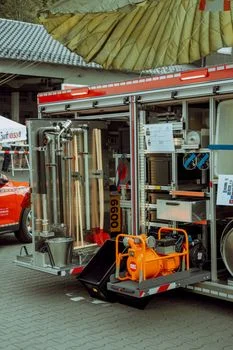
Industrial RO systems integrate high-pressure pumps, spiral-wound membrane modules, and pre-treatment stages to achieve salt rejection rates exceeding 99.5%. The reliability of the system depends on the synergy between these components, particularly the pre-treatment stage which protects the sensitive membranes from fouling. Using HydropureWater industrial RO systems for ultra-pure water production ensures that each component is sized according to the specific chemical profile of the feedwater.
The high-pressure pump is the "engine" of the system, typically consuming 2–6 kWh/m³ of permeate produced. Modern systems often incorporate Energy Recovery Devices (ERDs), such as pressure exchangers, which can recover up to 90% of the energy from the high-pressure concentrate stream. The membranes themselves are usually spiral-wound polyamide thin-film composites (TFC). These modules feature 8–16 mil spacers to facilitate flow and reduce the risk of colloidal fouling. In high-purity applications, post-treatment components like UV sterilizers or degasifiers are added to remove trace gases and biological contaminants.
| Component | Technical Specification | Industrial Purpose |
|---|---|---|
| Multi-Media Filter | Flux: 5–15 m³/h/m²; Media: Sand/Anthracite | Reduces SDI and removes suspended solids (>10 μm) |
| High-Pressure Pump | Centrifugal or Positive Displacement; 200–1,200 psi | Overcomes osmotic pressure for permeate flux |
| RO Membrane | Polyamide TFC; Pore size: 0.0001 μm | Removes dissolved salts, heavy metals, and viruses |
| Energy Recovery Device | Pressure Exchanger (e.g., isobaric) | Reduces OPEX by recovering energy from reject stream |
| CIP System | Automated dosing; pH 2 (acidic) to pH 12 (alkaline) | Removes scale and organic fouling from membranes |
Step-by-Step RO Process: From Feedwater to Permeate and Concentrate
The RO process flow consists of five distinct stages—pre-treatment, pressurization, membrane separation, post-treatment, and storage—to ensure permeate quality meets industrial standards. The process begins with raw water intake, where large particulates are removed. For example, a textile plant dealing with high-turbidity groundwater might utilize lamella clarifiers for RO pre-treatment to reduce turbidity and SDI before the water ever reaches the membrane surface. This prevents the rapid "blinding" of the membrane pores.
Once pre-treated, the water is pressurized. The required pressure is calculated as the sum of the osmotic pressure plus the "net driving pressure" (typically an additional 10–30% to account for membrane resistance). During the membrane separation stage, the feed stream is split: the permeate passes through the membrane to the central collection tube, while the concentrate (brine) carries away the rejected salts. In many 2025-spec industrial designs, the concentrate is further treated in Zero Liquid Discharge (ZLD) systems. Finally, the permeate undergoes post-treatment, such as pH adjustment using lime or caustic soda, to prevent corrosion in downstream stainless steel piping (per 2024 ASME B31.3 standards).
RO vs. Other Purification Methods: When to Use Reverse Osmosis (and When to Avoid It)
Reverse osmosis offers the highest rejection rate for monovalent ions compared to nanofiltration or ultrafiltration, but it requires significantly higher energy inputs (2–6 kWh/m³). While ultrafiltration (UF) is excellent for removing bacteria and suspended solids, it has 0% salt rejection. Nanofiltration (NF), often called "loose RO," is effective at removing divalent ions like Calcium and Magnesium (50–90% rejection) at much lower pressures (100–300 psi), making it ideal for water softening where total desalination is not required.
Distillation remains a competitor for high-salinity applications, but its energy consumption (10–20 kWh/m³) makes it economically unviable for most industrial processes unless waste heat is available. RO excels in seawater desalination and electronics-grade water production but may fail in scenarios with high-silica feedwater, where the silica rapidly precipitates as hard scale. In such cases, engineers should consult a guide to selecting pre-treatment filter media for RO systems to mitigate these specific risks before finalizing system design.
| Technology | Salt Rejection | Energy Use (kWh/m³) | Typical CAPEX ($/m³/day) |
|---|---|---|---|
| Reverse Osmosis | 99% + | 2.0 – 6.0 | $500 – $2,000 |
| Nanofiltration | 50% – 90% | 0.8 – 2.0 | $400 – $1,500 |
| Ultrafiltration | 0% | 0.1 – 0.5 | $200 – $800 |
| Distillation (MED/MSF) | 99.9% | 10.0 – 20.0 | $3,000 – $10,000 |
How to Select an Industrial RO System: A Decision Framework for Engineers
Selecting an industrial RO system requires a quantitative analysis of feedwater Silt Density Index (SDI), Total Dissolved Solids (TDS), and required flux rates (LMH) to prevent premature membrane fouling. The first step is always a comprehensive water analysis. If the SDI is greater than 5, the system will require enhanced pre-treatment. For biological control, some facilities find that how ozone generators complement RO systems for disinfection is a vital consideration for pharmaceutical or food-grade applications.
Engineers must also calculate the recovery rate, defined as (Permeate Flow / Feed Flow) × 100. While a 95% recovery rate sounds efficient, it increases the concentration of salts in the reject stream, which may lead to scaling if it exceeds the solubility limit of minerals like Calcium Sulfate. To manage this, procurement teams should specify automated CIP systems to extend RO membrane lifespan, ensuring that antiscalants are precisely metered based on real-time flow data.
| Selection Step | Key Metric | Engineering Threshold |
|---|---|---|
| Feedwater Analysis | SDI (Silt Density Index) | Must be < 3 for optimal membrane life |
| Purity Requirement | Permeate Conductivity | < 1.0 μS/cm for high-spec electronics |
| Flux Selection | LMH (Liters/m²/Hour) | 15–20 for surface water; 25–35 for well water |
| Maintenance Plan | CIP Frequency | Every 3–6 months (standard) |
Common RO System Problems and How to Solve Them

Membrane fouling and scaling are the primary causes of permeate flux decline, typically requiring chemical cleaning (CIP) when the normalized flow decreases by 10-15%. Organic fouling often presents as a gradual increase in the pressure differential across the first stage of the RO vessel. The solution is an alkaline wash (pH 11–12) using Sodium Hydroxide to dissolve organic polymers and biofilms. Conversely, inorganic scaling (like Calcium Carbonate) usually occurs in the final stage and requires an acidic wash (pH 2–3) using citric or hydrochloric acid.
Mechanical issues, such as high permeate conductivity, often stem from damaged O-rings or "telescoping" of the membrane elements due to sudden pressure surges. Operators should conduct a pressure decay test to identify specific vessel leaks. If the energy consumption of the system spikes unexpectedly, it is often a sign of fouled membranes or an inefficient energy recovery device. Regular monitoring of the Langelier Saturation Index (LSI) in the feedwater can help predict scaling potential and allow operators to adjust antiscalant dosing before damage occurs.
Frequently Asked Questions
What contaminants does reverse osmosis remove?
RO removes 99%+ of dissolved salts (e.g., NaCl, CaCO₃), heavy metals (e.g., lead, arsenic), bacteria (e.g., E. coli), viruses, and organic molecules >150 Da. It does not effectively remove dissolved gases like CO₂ or O₂, nor does it remove very low molecular weight organics like methanol without specialized membranes.
How much pressure is needed for reverse osmosis?
Pressure requirements are directly proportional to feedwater TDS. Brackish water (2,000 mg/L TDS) typically requires 200–400 psi, while seawater (35,000 mg/L TDS) requires 800–1,200 psi. The applied pressure must always exceed the osmotic pressure of the feed solution to produce permeate.
What is the lifespan of an RO membrane?
In industrial applications, RO membranes typically last 3–5 years. Lifespan is shortened by high fouling rates, exposure to oxidizers like chlorine (which causes irreversible polyamide degradation), or excessive cleaning frequencies. Annual replacement costs generally range from 5–10% of the total system CAPEX.
Can reverse osmosis remove viruses?
Yes. Because RO membranes have pore sizes smaller than 0.001 μm, they effectively block viruses (which range from 0.02 to 0.4 μm) with 99.99% efficiency, meeting 2024 EPA guidelines for safe drinking water and pharmaceutical process water.
What is the difference between RO and nanofiltration?
The primary difference is the rejection capability and operating pressure. RO removes monovalent ions (Na⁺, Cl⁻) with >99% efficiency at high pressure. Nanofiltration is "selective," removing divalent ions (Ca²⁺, Mg²⁺) with high efficiency but allowing more monovalent ions to pass, operating at significantly lower pressures (100–300 psi).