Start with the discharge route and permit requirement
An effluent treatment plant in Uganda is the treatment and control system used to reduce industrial or other wastewater pollutants before discharge into water or land, discharge to a public sewer, or reuse. Selection should start with the intended destination and the permit path. Uganda’s National Environment (Standards for Discharge of Effluent into Water or Land) Regulations, 2020 require treatment measures, compliance with the applicable schedules, and an effluent discharge permit for direct environmental discharge. Public-sewer discharge requires separate approval under the Water (Sewerage) Regulations.
The 2020 regulations define “effluent” as liquid, including agricultural, domestic and industrial wastewater, discharged, treated or untreated, directly or indirectly into the environment. They also impose a general pollution-prevention obligation on activities likely to produce effluent. The stated measures include cleaner-production techniques and installing effluent treatment equipment and facilities (NEMA, National Environment effluent regulations, 2020).
For discharge into water or land, the regulations address application, issuance, suspension or revocation, and renewal of an effluent discharge permit. A public sewer is not a substitute route around environmental oversight: substances prohibited by the Water (Sewerage) Regulations must not be discharged, and sewer discharge requires approval under those regulations (NEMA, 2020).
Reuse is a separate design objective. Set the required water quality by its intended application and obtain the relevant approval before fixing the process. An integrated MBR wastewater treatment system may be relevant to reuse applications, while a DAF system for industrial wastewater may be required where oil, grease and floatable material must be removed first.
| Discharge route | First compliance decision | Information to establish before design |
|---|---|---|
| Surface water or land | Direct discharge into water or land is regulated by the 2020 effluent regulations. | Effluent discharge permit, applicable schedules, receiving-water context and treatment requirements. |
| Public sewer | Approval is required under the Water (Sewerage) Regulations; prohibited substances must not enter the sewer. | Written sewer-acceptance conditions, prohibited-substance requirements and sampling or pretreatment obligations. |
| Water reuse | Reuse requires an agreed water-quality target and applicable approval. | Intended use, health or process criteria, residual requirements and regulatory acceptance of the proposed treatment route. |
Translate Ugandan discharge standards into a compliance brief
Uganda’s 2020 effluent regulations prescribe standards for general chemicals and micro-biological parameters in Schedule 2, inorganic substances in Schedule 3, and organic substances in Schedule 4. They also allow the lead agency responsible for water resources, in consultation with other relevant agencies and the Authority, to issue treatment guidelines and approve treatment methods (NEMA, 2020). A procurement brief should therefore identify the current permit, applicable schedules and any relevant lead-agency guidance.
The table below reproduces the metal limits stated in the supplied NEMA source. Its stated scope is effluent requirements for direct discharge into surface water, land or sewer. Sewer discharge still requires approval under the Water (Sewerage) Regulations. These values are not a complete effluent specification: the full permit and applicable schedules remain necessary.
| Parameter | Maximum permissible limit | Parameter | Maximum permissible limit |
|---|---|---|---|
| Aluminium | 0.5 mg/L | Antimony | 0.5 mg/L |
| Arsenic | 0.1 mg/L | Barium | 10 mg/L |
| Beryllium | 0.1 mg/L | Cadmium | 0.01 mg/L |
| Calcium | 100 mg/L | Chromium (hexavalent) | 0.05 mg/L |
| Chromium (total) | 0.5 mg/L | Cobalt | 0.1 mg/L |
| Copper | 0.5 mg/L | Iron (total) | 3.5 mg/L |
| Lead | 0.1 mg/L | Magnesium | 100 mg/L |
| Manganese | 1 mg/L | Mercury | 0.01 mg/L |
| Nickel | 0.5 mg/L | Selenium | 0.02 mg/L |
| Silver | 0.5 mg/L | Tin | 2 mg/L |
| Total metal | 10 mg/L | Vanadium | 1 mg/L |
| Zinc | 2 mg/L | ||
Do not ask a supplier to select permit limits from a marketing page. Request the current permit, the complete applicable schedules, site-specific guidance and the proposed compliance-to-equipment map. The ETP process, compliance and sizing guide can support that structure, but the permit document remains the controlling input.
Build a wastewater profile before choosing equipment
Average daily flow is not a design basis by itself. The plant must accommodate the wastewater profile that will actually reach it, including production shifts, batch discharges, storm-water entry, cleaning operations and peak discharge periods. Request a time-series flow record and explain how each abnormal flow is controlled.
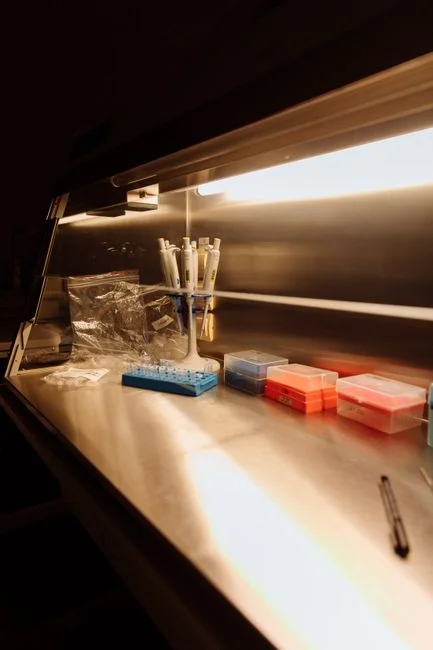
The sampling programme should cover pH, suspended solids, oil and grease, biochemical oxygen demand and chemical oxygen demand, then add the inorganic and organic contaminants identified from the production process and the applicable permit schedules. For each result, require the sampling method, analytical units, detection limits and operating conditions. Values collected during production, cleaning and shutdown must remain identifiable.
| Design input | Minimum information to request | Why it affects the ETP |
|---|---|---|
| Flow regime | Time-series flow, average flow, peak flow, batch discharges and storm-water entry. | Determines equalization, pumping, hydraulic loading and bypass prevention. |
| Organic load | BOD, COD and operating conditions for each sampled period. | Indicates biological treatability and process oxygen demand. |
| Solids and oils | Suspended solids, oil and grease, plus settleable material and colloidal load. | Identifies the need for screening, DAF, clarification and sludge handling. |
| Chemical and process context | pH, temperature, toxicity, chemical use, reject streams and relevant metals or organics. | Determines pretreatment, chemical dosing, biological inhibition risk and discharge controls. |
| Residuals and future change | Sludge characteristics, reject destinations, production changes and anticipated future effluent targets. | Prevents a treatment train or sludge route becoming incompatible with operations. |
Require each bidder to separate measured values, client-supplied data and engineering assumptions. The supplied research does not establish a universal sizing rule, so a calculated hydraulic or contaminant load must remain traceable to the project data. Include any automatic chemical-dosing package and mechanical screening only where the profile and chemical plan justify them; avoid fitting a rotary mechanical bar screen because it is included in a generic package list.
Select a treatment train for the actual contaminants
CLEAR-ION summarizes a common ETP sequence as equalization, chemical dosing, biological treatment, clarification, filtration and disinfection (CLEAR-ION, accessed 2026). Use that sequence as a reference structure, not a compulsory configuration. The selected stages must follow from the wastewater profile, permit conditions and reuse objective.
Screening and equalization protect downstream equipment where rags, plastics, grit, variable flow or batch discharges are present. Equalization also provides the operating buffer needed to prevent shock loading of chemical and biological processes. The equipment boundary should identify how these functions are provided and what happens during an upset or high-level event.
DAF is suited to suspended solids, FOG, oil and grease, and colloidal material. The supplied product information for the DAF system for industrial wastewater publishes a capacity range of 4–300 m³/h and 13 standard models. Those figures describe that published system; they are not universal sizing guidance for an industrial ETP in Uganda.
MBR combines activated-sludge treatment with submerged PVDF membrane filtration. It is relevant where biological treatment and membrane solids separation are required in a compact configuration, including industrial process-water and reuse applications. The supplied integrated MBR wastewater treatment system information specifies a 10–2,000 m³/day range and filtration below 1 μm. Confirm membrane configuration, duty, cleaning, solids handling and treated-water guarantees during supplier selection.
Ultrafiltration is a membrane barrier for bacteria, colloids and suspended solids and can provide pretreatment for downstream membrane systems. The supplied UF information specifies a 2,000–40,000 L/h range, 0.03 μm PVDF membranes and an influent turbidity limit up to 300 ppm. UF does not remove dissolved contamination merely because it removes suspended material, and it is not automatically a replacement for biological treatment or oil removal.
Disinfection provides a final microbial-control barrier. Evaluate chlorine-dioxide generation and UV sterilization against the treated-water objective, residual needs, site utilities and downstream requirements.
Advanced polishing needs a separate justification. A University of Twente thesis investigated nanofiltration for reclaiming wastewater-treatment-plant effluent for agricultural or indirect potable use (University of Twente, direct nanofiltration thesis). A Wageningen University thesis published on 23 September 2022 investigated constructed wetlands for micropollutant removal from ETP effluent. Neither establishes automatic suitability for a Ugandan plant; testing, design and regulatory acceptance remain necessary.
| Contaminant or objective | Process stage to evaluate | Design condition to confirm |
|---|---|---|
| Suspended solids, FOG, oil and grease, colloidal matter | DAF and solids separation | Representative loads, sludge characteristics and required downstream solids condition. |
| Biodegradable organics | Equalization, biological treatment and clarification | BOD/COD profile, toxicity, temperature, hydraulic variation and available operating control. |
| Fine solids and biological solids | MBR | Target quality, membrane duty, cleaning route, footprint and operator capability. |
| Bacteria, colloids and suspended solids before another membrane | UF | Influent turbidity, flow profile, cleaning and downstream compatibility. |
| Microbial control | Disinfection | Required log reduction, residual or exposure control, site conditions and monitoring. |
| Reclamation or micropollutant objective | Advanced polishing or constructed wetlands | Specific reuse target, pilot or validation evidence, footprint, operation and regulatory acceptance. |
Compare treatment options with a weighted decision matrix
DAF, MBR, UF and advanced polishing solve different problems, so their bids should be compared against route-specific weights rather than ranked by a common efficiency claim. The supplied research contains no comparable quotation prices, payback periods, total-cost figures or universal removal efficiencies.
Weight the criteria according to the wastewater and obligation: contaminant profile, oil and grease presence, biological treatability, required solids separation, reuse target, footprint, sludge route, automation and operator capability. Apply a separate set of weights for direct discharge, sewer discharge and reuse. A direct-discharge case may place greater weight on permit limits and monitoring; a sewer case on acceptance conditions and prohibited substances; a reuse case on target water quality and additional barriers.
| Option | Primary role | Strongest fit for evaluation | Key limitation to verify |
|---|---|---|---|
| DAF | Removes suspended solids, FOG, oil and grease, and colloidal matter. | Oil-bearing wastewater needing pretreatment or solids removal. | Does not establish biological treatment or dissolved-contaminant compliance. |
| MBR | Combines activated-sludge treatment with membrane filtration. | Projects requiring combined biological treatment and solids separation, or compact reuse-related treatment. | Requires a defensible influent basis, membrane system, cleaning and sludge route. |
| UF | Provides a membrane barrier for bacteria, colloids and suspended solids. | Pretreatment for downstream membrane systems or a defined solids-rejection barrier. | Is not a complete substitute for biological treatment or dissolved-contaminant removal. |
| Nanofiltration | Potential polishing for wastewater reclamation. | Specific reuse objectives requiring further membrane treatment. | Project-specific suitability and regulatory acceptance are not established by the thesis. |
| Constructed wetlands | Researched option for micropollutant removal from ETP effluent. | Reuse cases with a validated micropollutant objective and available land. | Feasibility, footprint, operation and regulatory acceptance require project-specific review. |
Ask each bidder to price the same commercial boundary, including equipment, civil works, installation, commissioning, chemicals, energy, sludge handling and maintenance. Compare quotations only after normalising those boundaries. For solids-handling alternatives, the screw press design for wastewater sludge and industrial pretreatment limits and compliance planning illustrate the engineering inputs that quotations should expose.
Evaluate suppliers, commissioning and permit evidence
A credible quotation should define the treatment objective, design basis, incoming wastewater assumptions, treatment stages, equipment materials, controls, utilities, installation boundary, commissioning tests and operator training. A list of unit names is not enough. Each stage should connect to a design input, treatment function and acceptance check.
Require proposed sampling and monitoring points tied to the permit and applicable schedules, together with instruments, locations, frequencies, calibration duties and data-recording responsibilities. For solids separation, the plate-frame filter press and high-efficiency sedimentation tank are examples of equipment whose duty, materials, cake route and controls need to be written into that scope.
| Procurement area | Evidence required from the supplier | Buyer check |
|---|---|---|
| Design basis | Measured, client-supplied and assumed wastewater data clearly separated. | Trace every design load and duty to a source or stated assumption. |
| Equipment and controls | Materials, capacities, process duty, utilities, alarms, interlocks and control narrative. | Confirm the proposed equipment handles the actual contaminant groups and operating pattern. |
| Operations | Maintenance plan, chemical consumption, sludge route, spare parts, remote support and local service capability. | Assign responsibility and identify who can respond on site. |
| Commissioning and acceptance | Test methods, representative wastewater, agreed acceptance criteria and documentation. | Do not infer test limits absent from the permit, reuse target or agreed specification. |
| Permit coordination | Application, renewal and facility-transfer responsibilities stated in the contract. | Resolve responsibility before equipment order. |
Make acceptance conditional on agreed performance tests using representative wastewater and methods linked to the discharge or reuse objective. The 2020 regulations also require notification within 90 days when the holder of a licence intends to transfer a permitted facility, while advising the transferee to apply for a new licence to own and operate the ETP (NEMA, 2020).
Market practices provide a useful scope check, not proof of suitability. CLEAR-ION describes custom or standardised ETP configurations, installation support, testing and commissioning; Vikas Pump likewise emphasises custom or standard configurations, testing, installation support and after-sales service (CLEAR-ION and Vikas Pump, accessed 2026). Require equivalent commitments in the purchaser's contract and verify them through documented deliverables.
Frequently Asked Questions
How much does an effluent treatment plant in Uganda cost?
No defensible price can be given without the wastewater profile, discharge route, target quality and plant boundary. Request itemised quotations for equipment, civil works, installation, commissioning, chemicals, energy, sludge handling, maintenance, spares and permit-related services. Compare bids only after confirming that they cover the same scope and exclusions.
How should an industrial ETP in Uganda be sized?
Flow alone is insufficient. The design also needs the time-series flow profile, wastewater quality, discharge route, target quality, operating pattern and sludge route. Require the bidder to show which data were measured, which were supplied by the client and which were assumed, then reconcile equipment capacity with those inputs.
Which supplier qualifications should be checked before ordering an ETP?
Check verifiable engineering scope, permit coordination, proposed performance tests, controls, drawings, operating documentation, operator training, local service and spare-parts support. A relevant ETP valves and filter-media supply package is not proof of system capability; ask for project-specific experience and contractual deliverables instead.
Which permits apply to direct discharge, sewer discharge and reuse in Uganda?
Direct environmental discharge is governed by the 2020 effluent regulations, including an effluent discharge permit and applicable schedules. Public-sewer discharge requires approval under the Water (Sewerage) Regulations and compliance with prohibitions on sewer-discharged substances. Reuse requires a defined water-quality target and the relevant approval for the intended use; it should not be assumed to follow automatically from ETP treatment.