The 2026 Regulatory Stack a Randle Mining Site Must Satisfy
Mining and metals plants near Randle, Washington meet pretreatment limits before sewer discharge by stacking three regulatory layers: the federal National Pretreatment Program at 40 CFR Part 403 (prohibited discharges, categorical standards, local limits, and best management practices), the Mineral Mining and Processing Effluent Guidelines at 40 CFR Part 436, and the receiving POTW's site-specific local limits developed through the EPA Maximum Allowable Headworks Loading (MAHL) approach. In practice, an indirect-discharging site installs a pretreatment train — flow equalization, pH adjustment with lime, heavy-metal precipitation, dissolved air flotation or lamella clarification, multimedia filtration, and ultrafiltration or reverse osmosis polishing — plus sludge dewatering. The exact train is dictated by the POTW's local limits and the categorical standard that applies to the mined commodity.
Indirect discharge to a sewer is regulated by the National Pretreatment Program under 40 CFR Part 403, which contains prohibited discharges, categorical pretreatment standards, local limits, and best management practices (per pdhacademy.com Course 439 and the EPA Local Limits Development Guidance). Separately, the Mineral Mining and Processing Effluent Guidelines at 40 CFR Part 436 were promulgated in 1975 and amended in 1976, 1977, 1978, and 1979; the regulation covers wastewater discharges from mine drainage, mineral processing operations, and stormwater runoff, and is incorporated into NPDES permits (per epa.gov/eg/mineral-mining-and-processing-effluent-guidelines). A direct-discharger converting to indirect discharge near Randle keeps its Part 436 obligations in scope and adds the local POTW's local limits on top, because the receiving POTW's permit and the federal pretreatment program both apply. Section 307(b) of the Clean Water Act gives EPA the authority to set categorical pretreatment standards for industrial categories; for mining and primary metals, those categorical standards drive the floor that the Randle site must clear before any local limit is even considered (per epa.gov Local Limits Development Guidance).
How Local Limits Are Actually Calculated
EPA's MAHL approach runs in five steps: identify pollutants of concern (POCs), collect and analyze data, calculate Maximum Allowable Headworks Loadings for each POC, designate and implement local limits, and address collection-system concerns (per epa.gov Local Limits Development Guidance, Chapter 2). Maximum Allowable Industrial Loadings (MAILs) are derived from MAHLs by subtracting loadings from uncontrolled sources and hauled waste, then applying a safety factor and an expansion/growth allowance (per epa.gov, Chapter 6.2). POTWs may develop local limits from effluent-quality, sludge-quality, inhibition-based, or air-quality-based Allowable Headworks Loadings, with the most stringent value governing (per epa.gov, Chapter 5.2). For a mining/metals industrial user, pollutants of concern typically include total suspended solids, total dissolved solids, sulfate, pH, oil and grease, cyanide (where used), ammonia, and the heavy-metal suite — but the exact list is set by the receiving POTW's approval authority (per epa.gov, Chapter 3.2).
The numeric ceiling on an IU's discharge permit is not arbitrary; it is the MAIL the POTW has allocated to your site after subtracting every other controlled and uncontrolled source feeding the headworks. Understanding the math identifies which parameter to negotiate and which one is locked because the POTW's own NPDES permit is the binding constraint.
What a Mining or Metals Wastewater Stream Near Randle Actually Looks Like
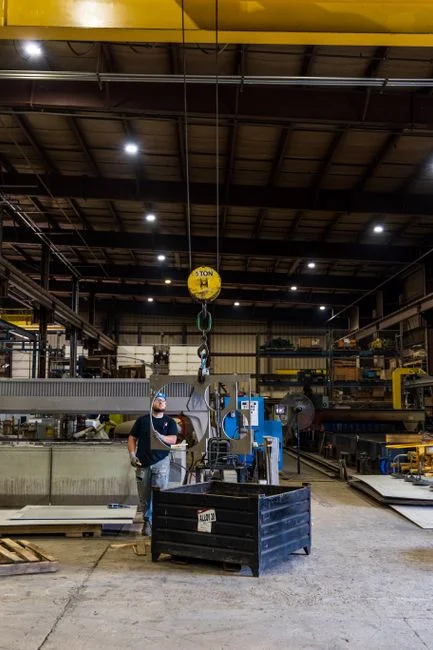
Acid rock drainage (ARD) forms when sulfide minerals such as pyrite and pyrrhotite are exposed to oxygen and water, generating sulfuric acid that mobilizes iron, manganese, copper, zinc, arsenic, and cadmium (per smenet.org Mining and Water Quality briefing). Process water from flotation, heap leach, or cyanide gold circuits adds process chemicals, reagents, and high TDS to the wastewater; tailings-pond effluent contributes fine solids, residual reagents, and leached metals (per smenet.org and ampac1.com). Dewatering discharge from open-pit or underground workings can be relatively clean in some settings but in sulfide-bearing geology can carry significant metal loading — site-specific characterization is required before any treatment claim is made (per ampac1.com). SME's 2022 technical position notes more than 500,000 abandoned or inactive mines in the U.S. and that the legacy of ARD plus the chemicals used in ore processing (mercury, cyanide historically) means many 'mining wastewater' profiles include contaminants not always obvious from a current operating permit (per smenet.org).
For a site in the Randle/Cowlitz watershed, this chemistry is possible regardless of whether the commodity is industrial mineral, base metal, or aggregate, as sulfide content in the wall rock or the overburden is the controlling variable.
Building the Pretreatment Train for Sewer Discharge
Equalization comes first: mine and process flows are batchy, and the receiving POTW's local limits are almost always written as daily maximum and monthly average concentrations, so flow and load smoothing is a prerequisite for chemistry control. pH adjustment with lime (or caustic) is the standard first chemistry step for ARD because it neutralizes acidity and precipitates dissolved heavy metals as hydroxides (per smenet.org and ampac1.com). Dissolved air flotation or a lamella clarifier follows precipitation to remove the metal-hydroxide floc and entrained suspended solids; the choice between them depends on floc density, flow rate, and footprint (per the DAF vs clarifier decision guide for mining and metals wastewater). Multimedia filtration then polishes residual turbidity to an SDI acceptable for downstream membrane protection — essential if the next step is reverse osmosis for sulfate and TDS reduction. Ultrafiltration is an alternative polishing step when the local limits are driven by suspended solids, colloids, oil and grease, and metals bound to particulates rather than by TDS. Reverse osmosis is the polishing step of choice when the POTW's local limits cap sulfate, TDS, or specific dissolved metals; for high-sulfate AMD feed, BWRO designs typically target 50–70% recovery to manage scaling (per ampac1.com). Sludge from the precipitation, DAF, and clarification stages must be dewatered before off-site disposal — a plate and frame filter press is the standard fit for the metal-bearing hydroxide cake generated at a mining IU.
| Unit Operation | Primary Pollutants Removed | Equipment Reference |
|---|---|---|
| Flow equalization | Flow/load variability; TSS homogenization | Equalization basin with mixers |
| pH adjustment (lime/caustic) | Acidity; dissolved Fe, Mn, Cu, Zn, As, Cd as hydroxides | PLC-controlled chemical dosing system |
| DAF or lamella clarification | Metal-hydroxide floc; TSS; oil and grease | DAF system for metal-bearing wastewater |
| Multimedia filtration | Residual turbidity; SDI reduction | Multi-media filter |
| Ultrafiltration (0.03 µm PVDF) | Colloids; bound metals; oil and grease residuals | 0.03 µm PVDF ultrafiltration system |
| Reverse osmosis (BWRO) | Sulfate; TDS; residual dissolved metals | Industrial RO system for sulfate and TDS reduction |
| Sludge dewatering | Metal-hydroxide cake (volume reduction) | Plate and frame filter press for metal hydroxide sludge |
Reuse should be considered in parallel with discharge design. Mining and metals sites are increasingly being designed for water reuse to reduce freshwater draw, which means the pretreatment train should be sized for the higher-recovery case from the start (per the mine site water reuse and reclaimed water capacity sizing guide). For context on how a comparable direct-discharge site re-tools when it switches to indirect discharge, see the mining pretreatment compliance at another U.S. site.
Pollutants vs. Treatment Steps: A Quick Mapping
pH and dissolved metals (Fe, Mn, Cu, Zn, As, Cd) are addressed by pH adjustment with lime plus precipitation plus DAF or lamella clarification (per smenet.org; ampac1.com). Total suspended solids, oil and grease, and FOG are removed by DAF or lamella clarifier and then multimedia filtration. Colloidal matter, residual turbidity, and microbiological carryover are removed by ultrafiltration at 0.03 µm with automatic backwash. Sulfate, TDS, and residual dissolved metals are polished by brackish-water reverse osmosis. Cyanide (if present) and ammonia require dedicated destruction (alkaline chlorination, breakpoint chlorination, or biological nitrification) before the polishing step — flagged in SME's technical position as a process-chemistry issue, not a mechanical separation issue. Generated metal-hydroxide sludge is dewatered by plate and frame filter press to a handleable cake.
Sizing the System: What 2026 Engineering Inputs Matter Most
Three flows must be characterized separately: dewatering discharge, process water from the mill or leach circuit, and tailings-pond return water — each with a different chemistry (per ampac1.com). The receiving POTW's local limits are the single most important sizing input because they dictate the polishing step's target recovery, the chemistry setpoints, and the sludge-handling duty (per epa.gov Local Limits Development Guidance, Chapter 6). Designers should request the POTW's MAHL documentation, sampling data, and approval-authority correspondence before locking in chemistry doses or membrane recovery (per epa.gov, Chapter 4.1.3 'At Industrial Users' and Chapter 6.7 'Approval Authority and Adoption Process'). Mining and metals sites are increasingly being designed for water reuse to reduce freshwater draw, requiring the pretreatment train to be sized for the higher-recovery case from the start (per ampac1.com).
Without these four documents, any vendor quote is a guess. A defensible sizing basis in 2026 requires the local-limits table, the MAHL calculations, twelve months of representative sampling on each wastewater stream, and the approval authority's adoption record.
A 2026 Action Checklist Before You Sign a PO
Obtain the receiving POTW's current local limits, MAHL basis, and IU discharge permit template (per epa.gov Local Limits Development Guidance, Chapter 6.7). Pull 12 months of composite sampling on each wastewater stream (dewatering, process, tailings return) and characterize pH, TSS, TDS, sulfate, oil and grease, ammonia, cyanide (if applicable), and the full metals suite (per epa.gov, Chapter 4.3). Match each local-limit parameter to a unit operation in the train shown above and ask vendors for guaranteed effluent at the design turndown and peak flows. Plan for sludge dewatering capacity in parallel with the water-side design — a metal-bearing hydroxide sludge stream is what determines filter-press sizing. Confirm the financial-assurance and post-closure obligations in the site's existing mining permit before changing the discharge pathway.
Frequently Asked Questions
Does 40 CFR Part 436 apply if the Randle site discharges to a POTW instead of a surface water?
Part 436 is the effluent guidelines framework incorporated into NPDES permits for direct discharges; once a site is an indirect discharger it is regulated under 40 CFR Part 403 and the receiving POTW's local limits, but the categorical and water-quality obligations from Part 436 remain in the background as the technical basis for what pollutants the POTW will look for (per epa.gov/eg/mineral-mining-and-processing-effluent-guidelines and epa.gov Local Limits Development Guidance).
What is the typical order of unit operations in a mining/metals pretreatment train for sewer discharge?
Equalization → pH adjustment with lime → heavy-metal precipitation → DAF or lamella clarification → multimedia filtration → ultrafiltration or reverse osmosis polishing → sludge dewatering by plate and frame filter press (per smenet.org, ampac1.com, and the product specifications cited above).
What does a mining/metals pretreatment system cost in 2026?
Cost depends on flow, target effluent, and the chosen polishing step;