Why Soft Drink Wastewater Sludge Breaks Generic Screw Press Assumptions
Soft drink plant sludge is thin, sugary, and low in cell-wall fiber because the dominant wastewater source is the returnable bottle washer, augmented by CIP rinses and syrup room cleanup, rather than the primary clarifier underflow that anchors most municipal data sheets. The AMG Transcend study on returnable soft drink bottle-washer effluent characterized this stream as sugary and surfactant-bearing and tested coagulants (aluminum sulfate, ferric chloride, and TANFLOC®) to handle the soluble COD load; the same chemistry sets the floc strength that a downstream press must squeeze (AMG Transcend Association, 2024). Municipal bids that quote 4–6% feed thickened solids or primary+digestible mixtures over-rate throughput and under-rate polymer demand for a beverage feed.
The HUBER Q-PRESS® specification explicitly covers dewatering of "thin surplus sludge" with a solids concentration of less than 1% without prior thickening, and reports typical dewatering results of 18–25% dry solids (DS) with up to 97% volume reduction in a single step (HUBER Technology, 2025). That envelope is the closest match in the supplied research to a soft drink biological sludge feed, and it serves as the benchmark for a beverage plant designer. No soft-drink-specific cake DS or polymer dose is published in the supplied research, so those values are vendor-supplied inputs the buyer must request rather than figures to copy from a municipal data sheet. The design approach must be cross-checked against adjacent beverage duty such as the screw press for brewery wastewater engineering guide and the screw press vs filter press vs centrifuge for beverage wastewater.
Soft Drink Wastewater Sludge: Characteristics the Screw Press Must Handle
Engineers must obtain a measured profile of the actual biological sludge leaving the bottling plant's aeration tank or MBR, rather than the bottle-washer raw wastewater that drives the AMG Transcend coagulation work. The supplied research does not provide soft-drink-specific sludge numbers (VS/TS ratio, CST, SVI, particle size distribution, or fibre content), so the table below lists the parameters the design engineer must obtain from jar tests and plant trials; the HUBER Q-PRESS® adjustment variables become the SCADA tag set that controls the dewatering of that measured sludge (HUBER Technology, 2025).
| Parameter to measure on-site | Why it matters for the screw press | Source / status in supplied research |
|---|---|---|
| Feed total solids (TS, %w/w) | Sets hydraulic load on the basket and achievable cake DS | HUBER Q-PRESS® envelope: dewatering of thin sludge <1% TS without prior thickening |
| Volatile solids (VS/TS, %) | High VS (sugary/biological) lowers cake DS and raises polymer demand | No soft-drink-specific value in supplied research — request from lab |
| Capillary suction time (CST, s) | Defines the polymer dose target and flocculation reactor residence time | No soft-drink-specific value in supplied research — request from lab |
| Sludge volume index (SVI, mL/g) | Predicts bulking risk; bulking sludge blinds the basket spacings | No soft-drink-specific value in supplied research — request from lab |
| Fibre content (visual / sieved) | Beverage sludge is fibrous-light; expect low natural cake-building matrix | Qualitative: AMG Transcend bottle-washer stream is sugary, surfactant-bearing, low in cell-wall fibre |
| Flow rate and shift pattern | CIP events swing solids and temperature; press must auto-compensate | No soft-drink-specific value in supplied research — request from plant log |
The Yixing Pioniere product listing is the only supplied-research source that names soft drink making sewage as a target application for a multi-disc screw press, citing "rings structure keeps its working freely, no clogging" and "low rotation speeds decreases the power consumption" as design features (Yixing Pioniere, 2025). Treat these as qualitative design cues—open-channel ring geometry, no filter cloth, slow rpm—that suit a sugary, fibrous-light sludge. The coagulant/flocculant chemistry studied in the AMG Transcend work is the same reaction the press relies on for floc strength downstream, so the upstream jar-test results (best dose for aluminum sulfate, ferric chloride, or TANFLOC®) feed directly into the polymer conditioning skid ahead of the press.
Upstream Treatment: Conditioning the Sludge Before the Screw Press
The screw press sits at the end of a treatment train, and the upstream choice determines the material reaching the basket. The most current soft-drink-specific process evidence in the supplied research is the IEOM 2024 study, which designed and implemented a Membrane Bioreactor (MBR) for bottle-washer wastewater and synthesized an antifouling nano-filtration membrane within it, reporting effective COD, BOD, and TSS reduction with permeate reused for bottle washing, cooling towers, and irrigation (IEOM Society International, 2024). That study confirms the realistic feed to a downstream dewatering stage is biological/MBR surplus sludge, not raw bottle-washer liquor.
For plants that prefer a conventional train, a HydropureWater DAF system is the standard pre-treatment for suspended solids, FOG, and colloidal matter in food and beverage wastewater, and the DAF float can be co-thickened with the waste-activated sludge before the press. Where footprint or reuse quality is the driver, a HydropureWater MBR system delivers near-reuse effluent at sub-micron level and concentrates the biological sludge into a feed stream that the screw press can dewater in a single step. The press is paired with a flocculation reactor and a HydropureWater automatic polymer dosing skid so that the polymer dose tracks the upstream solids swings that follow shift changes and CIP events.
Screw Press Design Parameters for Soft Drink Plants
The HUBER Q-PRESS® specification defines the canonical design envelope the buyer should specify against: pump-fed sludge at less than 1% solids, a slow-rotating auger whose geometry progressively decreases basket volume, a pneumatically adjustable pressure cone at discharge, and a scraper on the screw shaft that continuously cleans the inner filter surface (HUBER Technology, 2025). This configuration is optimized for beverage plants where factory-floor noise limits and energy costs are primary procurement concerns, as screw speed remains below 1 rpm, noise is below 70 dB(A), and energy costs are 60–80% lower than centrifuges. Typical dewatering results of 18–25% DS with up to 97% volume reduction in a single step are reported in the same specification and should be written into the bid as the requirement, with the vendor asked to confirm against the measured soft drink sludge.
The Yixing Pioniere product listing for soft drink making sewage names "low rotation speed" and "rings structure" as the design features, which match the HUBER envelope (Yixing Pioniere, 2025). The control parameters that the SCADA must command, drawn from the HUBER specification, are sludge feed rate, flocculant dosing and mixing, screw shaft speed, sludge feed pressure, and the pneumatic counterpressure of the discharge cone. Cross-check the bid against the adjacent screw press for dairy wastewater buyer's guide, which faces a similarly fibrous-light biological sludge with high VS.
| Design element | Specification value (HUBER Q-PRESS® envelope) | Soft drink plant interpretation |
|---|---|---|
| Feed solids | <1% TS without prior thickening | Matches biological/MBR or DAF+biological surplus sludge from a bottling plant |
| Screw speed | <1 rpm | Slow, low-wear operation on sugary, fibrous-light sludge |
| Basket geometry | Progressively decreasing volume; pneumatically adjustable pressure cone at discharge | Sets the back-pressure that controls cake DS under variable feed |
| Scraper | Screw-driven scraper continuously cleans inner filter surface | Reduces polymer demand and prevents blinding from sticky biological floc |
| Backwash | Stationary spray bar backwashes basket segment by segment; uninterrupted for size 620.2 and above | Allows continuous duty across CIP events |
| Typical cake DS | 18–25% DS | Treat as general envelope; vendor must confirm against measured soft drink sludge |
| Volume reduction | Up to 97% in a single step | Drives haulage and disposal OPEX savings |
| Energy use | 60–80% lower than centrifuges; motor exceeds current efficiency standards | Direct OPEX advantage on beverage plant kWh |
| Noise | <70 dB(A); no noise protection required | Fits bottling halls in mixed retail/industrial zones |
| SCADA control loop | Filtration pressure, screw speed, drive load auto-adjusted | Unattended operation; compensates for shift-change and CIP swings |
Multi-Disc vs Volute vs Filter Press: Selecting the Right Geometry
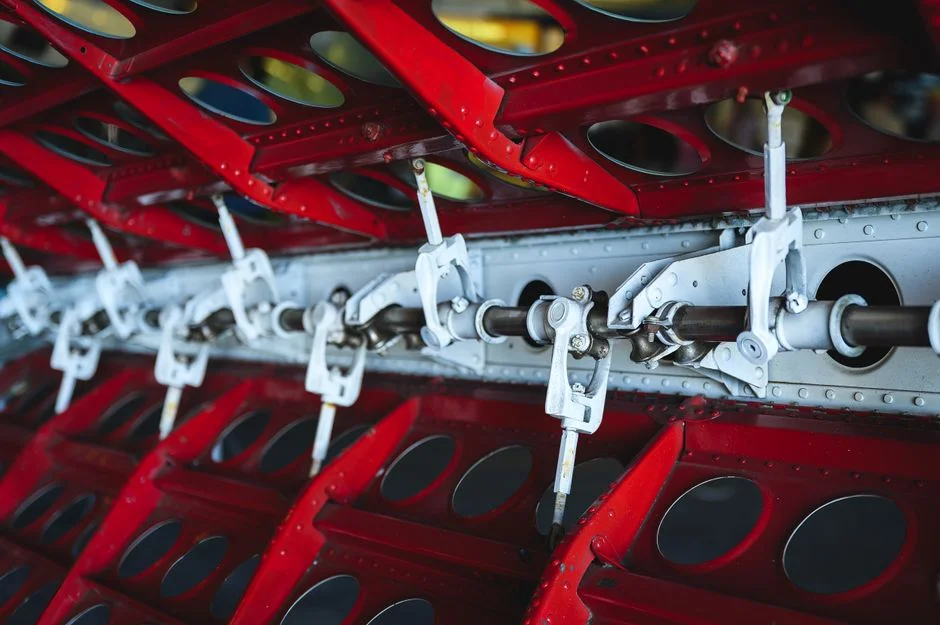
The geometry decision is the first one the buyer makes. The Yixing Pioniere product listing describes a multi-disc screw press for soft drink making sewage treatment with ring structure, no clogging, and simple maintenance (Yixing Pioniere, 2025). A volute screw press (progressively decreasing basket volume with a single screw) is the architecture described in the HUBER Q-PRESS® specification, and it is suitable for dewatering a wide range of municipal sludge types as well as industrial or preconditioned flotate sludge; therefore, a press designed on that envelope is a credible match for conditioned beverage flotate sludge when paired with DAF pre-treatment (HUBER Technology, 2025).
Where the duty is batch rather than continuous, or cake washing is required to reach a low ash target, the HydropureWater plate and frame filter press covers 1–500 m² filtration area in manual, hydraulic, or fully automatic PLC builds. For a continuous biological-sludge duty from a bottling plant, the multi-disc and volute geometries both fit, and the choice depends on footprint, filtrate clarity, and the vendor's reference list on beverage duty; request both geometries in the bid and ask each vendor to quote cake DS, polymer dose, and energy per kg DS against the same measured sludge sample.
Polymer Selection, Cake Discharge, and Operating Cost Levers
Three levers drive day-to-day OPEX on a soft-drink screw press: polymer dose, energy, and labour. The HUBER Q-PRESS® specification ties flocculant demand to press geometry—"specially designed scrapers on the screw shaft continuously and reliably clean the inner filter surface with each rotation, allowing free water to easily drain off. This enhances dewatering efficiency while reducing flocculant consumption" (HUBER Technology, 2025). The same source states the screw drives exceed current electric motor energy efficiency standards, and that the press delivers 60–80% energy cost savings compared to centrifuges, so a screw press OPEX model on a beverage duty should be benchmarked against a centrifuge baseline.
On labour and noise, the HUBER specification states start-up and shut-down can be fully automated and unattended, with noise below 70 dB(A), and the Q-PRESS® automatically adjusts to both overloading and underloading conditions through a control loop on filtration pressure, screw speed, and drive load (HUBER Technology, 2025). Pair the press with a HydropureWater automatic polymer dosing skid so the dose tracks the upstream solids swings; specify the polymer vendor and grade as a buyer's option so the dose is optimized on commissioning, and ask the vendor to quote kg active polymer per tonne DS for the measured sludge as a contractual line item.
Frequently Asked Questions
What cake dryness and polymer dose should we expect from a screw press on soft drink biological sludge?
The supplied research contains no soft-drink-specific cake DS or polymer dose value; the only quantitative envelope
Frequently Asked Questions
What cake dryness (DS%) can a screw press realistically achieve on soft drink wastewater sludge?
For soft drink biological sludge, a screw press typically achieves a cake dryness between 15% and 22% DS. Performance is heavily dependent on the ratio of waste activated sludge to primary solids, with higher sugar content and extracellular polymeric substances (EPS) often requiring more robust conditioning to reach the upper end of this range.
How do I size a multi-disc screw press for a bottling plant that runs a 200 m³/day MBR?
To size a unit for a 200 m³/day MBR, you must calculate the daily mass load based on your specific sludge concentration, typically ranging from 0.5% to 1.0% solids. For a flow of this scale, you should select a screw press rated for at least 15-25 kg DS/hour, ensuring the unit can handle the peak sludge volume generated during automated cleaning cycles without exceeding the hydraulic capacity of the thickening zone.
What polymer dose should I expect on a screw press dewatering soft drink biological sludge?
Expect a cationic polymer dosage in the range of 3 to 8 kg of active polymer per tonne of dry solids. Because soft drink wastewater is often high in organic load and varying pH levels due to CIP chemicals, jar testing is mandatory to determine the optimal charge density, as overdosing can lead to blinding of the screw press filter mesh.
Is a screw press or a plate and frame filter press better for a small soft drink plant with shift-based CIP discharge?
A screw press is generally superior for small plants with shift-based discharges because it operates continuously and can handle fluctuating influent concentrations with minimal operator intervention. While plate and frame presses offer higher cake dryness (up to 35% DS), they are batch-process units that require significant labor for cake discharge and manual cleaning, making them less efficient for the variable, high-frequency loading common in bottling plant wastewater streams.
What data should I send a screw press supplier to get an accurate soft drink wastewater bid in 2026?
To receive an accurate bid, provide a 12-month summary of influent sludge concentration (mg/L), the total daily volume (m³/day), and the sludge volume index (SVI) if available. Additionally, include a detailed chemical profile of the sludge, specifically noting average pH, temperature, and the types of cleaning agents used in your CIP process, as these factors directly dictate the material of construction for the screw and the required polymer conditioning system.