Why Hotels Are Re-thinking Sludge Dewatering in 2026
Hotel chief engineers are managing dewatering requirements that legacy 2018-era plant designs did not anticipate. A typical basement dissolved air flotation (DAF) or packaged biological plant produces a wet, smelly cake that haulers quote by wet volume, so a "dewatered" cake at 8-12% dry solids can cost several times more per year to remove than a properly pressed cake at 22-28% DS. Municipal pretreatment limits on total suspended solids in hotel discharges are tightening, and many properties must operate their plants without a dedicated operator on shift. Rising disposal tipping fees, tighter discharge rules, and the pressure to run unattended are driving a fresh look at mechanical dewatering in 2026, and the screw press has moved from a specialty option to a credible answer for many hotel retrofits.
For a hospitality project, the design target is to drop wet tonnage per occupied room per year into a predictable band using a basement footprint that does not require a new building. A screw press is one of the few technologies that can deliver continuous, low-attendance dewatering inside a 2.6 m long, 1 m wide envelope, which is why it warrants a serious look alongside a hotel and resort wastewater treatment engineering guide brief.
How a Screw Press Dewaters Sludge: The Three-Zone Principle
A screw press is a continuously operating mechanical dewatering unit that reduces sludge volume by transporting it through a rotating screw inside a perforated cylinder, progressively compressing it as the annular space narrows toward the discharge end. According to the ClearFox product literature (clearfox.com, accessed 2026), the design is built around three functional zones: a thickening zone where sludge is conditioned and water begins to drain by gravity, a filtration zone where free water passes through the perforated screen, and a compression zone where the screw pitch and annular gap are reduced to mechanically squeeze the cake. The same source states that the unit achieves dry solids of up to 30%—and higher with some sludge types—and processes feed concentrations of 2-50 g/L (0.2% to 5% dry matter).
The self-cleaning ring chamber distinguishes a screw press from a filter press or a centrifuge; alternating moving and fixed rings keep the filter area open during operation, allowing the unit to run 24/7 without the diaphragm cycling, cloth washing, or high-speed wear parts that other dewatering technologies require (clearfox.com, 2026). This mechanical simplicity allows biological sludge from a packaged plant to be fed continuously, matching the variable 24-hour loading of a property more naturally than a plate-and-frame press. The Separations academic paper (doi.org/10.3390/separations11010028, 2024) notes that most commercial screw presses are designed for throughputs above 5 m³/h and that dewatering performance is sensitive to substrate character—a point hotel engineers should keep in mind when extrapolating vendor curves. For the brewery analogy that the same supplier uses, see this screw press sizing logic for food-service wastewater.
Hotel-Specific Sludge Characteristics That Change Screw Press Performance
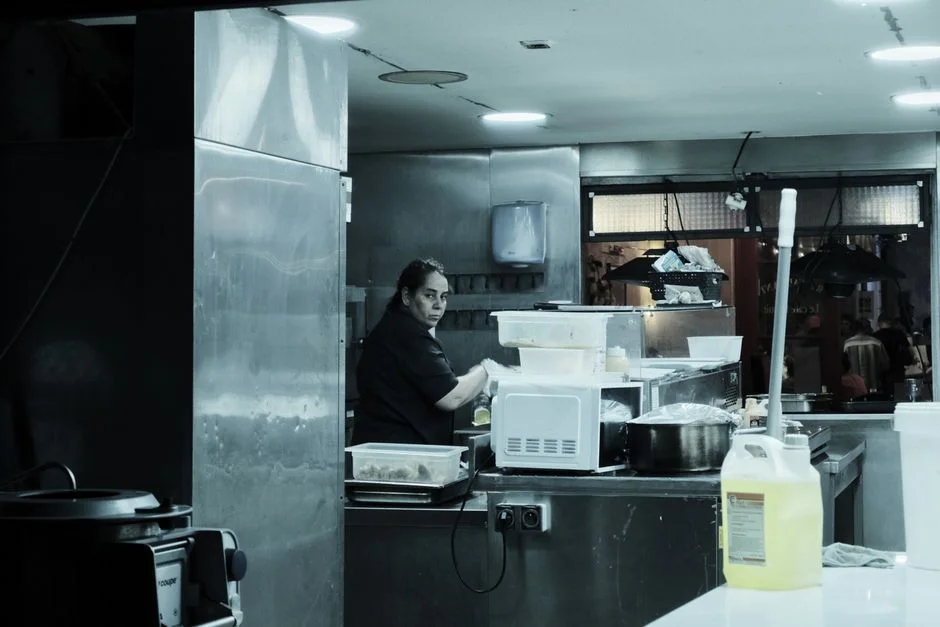
Hotel wastewater carries emulsified fats, oils, and grease (FOG) from kitchens that can blind filter screens and increase polymer demand if not removed upstream by a DAF or grease interceptor. Food waste grinders and inconsistent kitchen habits send organic particulates and starches into the equalization tank, producing a sludge that compacts differently from pure secondary biological sludge and usually requires a bench or trailer pilot rather than brochure-based sizing.
Laundry lint and microfibers accumulate as fibrous floatables; without fine screening upstream, fibers wrap on the screw flighting, raise torque, and shorten the maintenance interval between ring inspections. Occupancy-driven peak loadings on weekends, conferences, and seasonal tourism mean feed dry solids and flow swing widely, so a press sized only on the average day will starve or overload at peak. A typical packaged sewage treatment plant with A/O biological stage downstream of a hotel kitchen delivers this variable feed, and the screw press selection must be made against that envelope rather than a steady-state municipal curve. These hotel-specific effects are not quantified in the supplied research; treat them as inputs to confirm with a supplier pilot.
Screw Press Operating Parameters for a Hotel Application
The numeric envelope below represents the industry standard a hotel engineer should expect a credible supplier to quote.
| Parameter | Published value | Source | Hotel-engineering note |
|---|---|---|---|
| Feed dry solids | 0.2% to 5% DS (2-50 g/L) | ClearFox, clearfox.com, 2026 | Matches typical DAF underflow and packaged-plant waste |
| Achievable cake dryness | Up to 30% DS, higher with some sludge types | ClearFox, clearfox.com, 2026 | Request a pilot for hotel biological sludge |
| Throughput | Up to 420 kg DS/h (largest standard unit) | ClearFox, 2026; Separations, 2024 | Boutique properties may need a compact variant |
| Volume reduction | Up to 80% | ClearFox, clearfox.com, 2026 | Function of initial water content; require site-specific number |
| Footprint | <2.6 m long, <1 m wide | ClearFox, clearfox.com, 2026 | Decisive for basement retrofits with low headroom |
| Operation | Continuous 24/7, self-cleaning rings | ClearFox, clearfox.com, 2026 | Suitable for unattended hotel operation |
The 2-50 g/L feed window covers the typical 3-5% DS underflow from a hotel DAF or the 0.5-2% DS waste from a packaged biological plant, allowing a single press model to cover both upstream configurations. The academic literature (Separations, 2024) explicitly flags that screw press performance is sensitive to non-typical substrates, which reinforces the need for a supplier pilot on hotel sludge. For comparison on the same food-service duty, see the screw press sizing logic for food-service wastewater.
Screw Press vs Plate-and-Frame Filter Press vs Centrifuge for Hotels

Procurement managers must defend a dewatering choice to a non-technical owner using a head-to-head comparison of available technologies.
| Criterion | Screw press | Plate-and-frame filter press | Centrifuge |
|---|---|---|---|
| Operating mode | Continuous 24/7, self-cleaning | Batch, cloth washing required | Continuous, enclosed |
| Achievable cake dryness | Up to 30% DS | Highest in class | Lower than filter press; FOG sensitive |
| Footprint | <2.6 m long, <1 m wide | Larger; needs wash area | Compact but tall |
| Operator attendance | Low; visual inspection | High; batch cycling | Medium; high-speed maintenance |
| Power draw | Low | Low per kg DS | High per kg DS |
| FOG sensitivity | Moderate | Low once flocced | High |
| Noise / odor | Low | Low to moderate | High noise |
| Best-fit scenario | Unattended, continuous | High cake dryness | Odor containment |
For most hotel retrofits, the screw press wins on operating attendance and footprint. A plate and frame filter press for higher cake dryness is the right answer when the disposal contract pays a clear premium for cake above 30% DS, while a centrifuge is suited for applications where odor containment is paramount and energy budget is not the primary constraint. The same logic is expanded in the filter press vs centrifuge comparison and the screw press vs filter press vs centrifuge guide for food-and-beverage duty.
Sizing a Screw Press for a Hotel: The Inputs You Must Have Ready
A screw press sized on brochures often fails to meet performance expectations. The five inputs below are the minimum requirements a credible supplier will request before quoting.
- 24-hour influent flow profile. Hotels commonly swing 2-3× on flow, so an average-day number hides the worst-case scenario.
- Upstream sludge type and dry solids. Equalization tank underflow, DAF float, or biological waste changes both polymer demand and cake dryness.
- Target cake dryness and disposal route. The hauler's wet-tonnage gate-fee is the primary driver for press ROI.
- Basement or plant-room constraints. Floor loading, ceiling height, and access for a 2.6 m long unit must be confirmed via architectural drawings.
- Polymer program. The ClearFox unit includes an integrated flocculation reactor with an agitator and polymer tank (clearfox.com, 2026), and a polymer dosing skid for sludge conditioning is part of the standard scope.
If the supplier does not request these items, they are not properly sizing the unit for the site. These site-specific inputs are critical because no industry standard exists for hotel-typical flow per occupied room.
2026 Supplier Evaluation Checklist for a Hotel Screw Press
Selecting a vendor for a hospitality project requires verification of their specific experience and equipment capabilities.
- Installed base in hospitality or food service. FKC cites 6,000+ screw presses installed worldwide, with 20+ years in water and wastewater (fkcscrewpress.com, 2026).
- Pilot or on-site testing offer. Academic literature (Separations, 2024) shows performance sensitivity to non-typical substrates; require a pilot on actual hotel sludge.
- Material of construction matched to effluent. ClearFox offers stainless steel, duplex, super duplex, or epoxy-coated options depending on effluent chemistry (clearfox.com, 2026).
- Remote monitoring. ClearFox offers optional remote access for real-time status checks, which helps engineering teams manage multiple properties (clearfox.com, 2026).
- Volume-reduction guarantee in writing. Published data shows up to 80% volume reduction (clearfox.com, 2026); ensure the supplier provides a specific number with a defined test protocol.
A polymer dosing skid for sludge conditioning should be procured alongside the press to ensure the flocculation program is fully integrated.
When a Screw Press Is the Wrong Choice for a Hotel
Certain operating conditions dictate the use of alternative technologies rather than a screw press.
- Very small boutique properties with intermittent flow are often better served by a simple drying bed or bag press.
- Severe FOG excursions without upstream grease removal will blind the press and cause poor cake dryness; install a hotel DAF unit for FOG and floatable removal before sizing a press.
- Landfill or incinerator contracts that pay a premium above 30% DS are better served by a plate and frame filter press for higher cake dryness.
- Properties where odor control to guest areas is paramount may prefer an enclosed centrifuge despite higher energy costs.
Frequently Asked Questions
What cake dryness can a screw press realistically achieve on hotel sludge?
Published product data for the ClearFox screw press states up to 30% dry solids, and higher with some sludge types (clearfox.com, 2026). The Separations academic
Frequently Asked Questions
What cake dryness can a screw press realistically achieve on hotel wastewater sludge?
On typical hotel wastewater sludge—which often features a high concentration of fats, oils, and grease (FOG) alongside organic solids—a modern multi-disk screw press can realistically achieve a cake dryness of 18% to 25% total solids. Achieving the higher end of this range typically requires an optimized polymer dosing strategy and a screw speed maintained between 0.5 and 2.0 RPM to ensure adequate residence time for water extraction.
How do I size a screw press for a 200-room hotel with variable occupancy?
Sizing for a 200-room facility must be based on peak hydraulic load rather than average daily occupancy to prevent overflow during high-traffic seasons. Using an industry-standard estimate of 150 to 200 gallons of wastewater per room per day, your system should be designed to process the sludge output of 30,000 to 40,000 gallons of influent daily; therefore, select a unit with a solids handling capacity of at least 15-20 kg DS/h (dry solids per hour) to accommodate peak surges while allowing for reduced operational hours during low-occupancy periods.
Screw press vs filter press for a hotel basement installation — which is better in 2026?
For 2026 basement installations, the screw press is superior due to its significantly smaller footprint, lower ceiling height requirements, and automated continuous operation. Unlike a filter press, which requires manual labor for plate shifting and high-pressure pumps that generate significant noise and vibration, a screw press operates at low speeds with minimal vibration and provides a fully enclosed process that effectively contains odors within the confined basement environment.
What is the typical capital cost range for a hotel screw press in 2026, and what drives it?
In 2026, a complete turn-key screw press system for a hotel-scale application typically ranges from $85,000 to $160,000. The primary cost drivers include the metallurgy of the screw assembly (304 vs. 316 stainless steel for corrosion resistance), the sophistication of the PLC control system for remote monitoring, and whether the scope includes ancillary equipment like integrated sludge conditioning tanks, polymer dosing skids, and discharge conveyors.
How do I evaluate screw press suppliers for a hotel project — what should be in the warranty and pilot-test offer?
When evaluating suppliers, prioritize those offering a 24-month comprehensive mechanical warranty and a guaranteed performance bond tied to specific solids capture rates (typically >95%). A valid pilot-test offer should include on-site mobile unit testing for a minimum of 48 hours to account for diurnal flow variations, a detailed analytical report comparing influent vs. effluent suspended solids, and a commitment to providing a "performance baseline" document that defines the exact polymer dosage required per ton of dry solids processed.