
Why MBR vs CAS Is a Real Question for Newburgh Mining and Metals Sites
Newburgh sits on the Hudson in Orange County, NY, with both active operations and legacy sites tied to the region's mining and metals history. Any new or upgraded wastewater train at these sites runs under a NYSDEC State Pollutant Discharge Elimination System (SPDES) permit, and the plant's choice of biological system has to clear that bar before anything else is decided.
Mining and metals wastewater is a specific influent class. Streams typically carry heavy metals, sulfate, high total dissolved solids (TDS), high suspended solids, and a pH that drifts with each mill campaign. Conventional activated sludge (CAS) has been the workhorse for carbonaceous BOD removal and nitrification on these streams for decades. A membrane bioreactor (MBR) layers a submerged ultrafiltration membrane — typically PVDF, with a nominal pore in the 0.1 to under-1 μm range — on top of the same activated-sludge biology, retaining essentially all biomass and producing a tighter effluent.
Proximity to New York City's source waters adds another layer. The NYC Watershed Protection Program, last reviewed by the National Academy of Sciences in 2020, governs activities across much of the Catskill/Delaware and Croton upstream areas that ultimately feed NYC water supply (nycwatershed.org, 2020-11). For a Newburgh-area site whose treated stream could reach a reservoir tributary or a designated sensitive watershed, that upstream protection regime can push effluent quality above a standard SPDES surface-discharge limit, which is where the MBR vs CAS question starts to bite.
What Each System Actually Is: CAS, MBR and the Grey Area In Between
Conventional activated sludge (CAS) is a suspended-growth biological process: an aeration tank where biomass oxidizes BOD and nitrifies ammonia, followed by a secondary clarifier that separates the treated water from the mixed liquor. The clarifier is the weak link — it sets the upper bound on mixed liquor suspended solids (MLSS), and it is the first unit to fail when flow or solids loading spikes. The CAS baseline is well documented in academic literature as the reference configuration for municipal and industrial wastewater, including in comparative studies where the MBR alternative is benchmarked against it (as noted in the Elsevier 2008 study on CAS and MBR fate of pharmaceuticals, retrieved 2026-04).
An MBR replaces that secondary clarifier with a submerged membrane cassette — flat-sheet or hollow-fiber PVDF in most commercial units. The membrane retains essentially all biomass in the aeration tank, so the clarifier's settling limit disappears and MLSS can be pushed much higher. Effluent quality is then bounded by the membrane pore size rather than by sludge settleability. Academic work on MBR sludge viability (Agence Bibliographique de l'Enseignement Supérieur, study of activated sludge viability in MBR) describes the system as an advanced option specifically motivated by stricter discharge and reuse standards and by the need to control pathogens in the treated stream.
The grey area in between is what gets projects wrong. Hybrid trains — CAS basins followed by a membrane step, or MBRs run at low MLSS like a CAS — exist, but the defining choice is whether the membrane is doing the biomass separation. If it is, you are running an MBR; if a clarifier is, you are running CAS. The economic and operating characteristics of the two diverge from that single point. For a deeper cost and operating review, the MBR cost per m³ 2026 guide walks through the per-cubic-meter economics in detail.
MBR vs CAS for Mining/Metals Wastewater: Side-by-Side Comparison
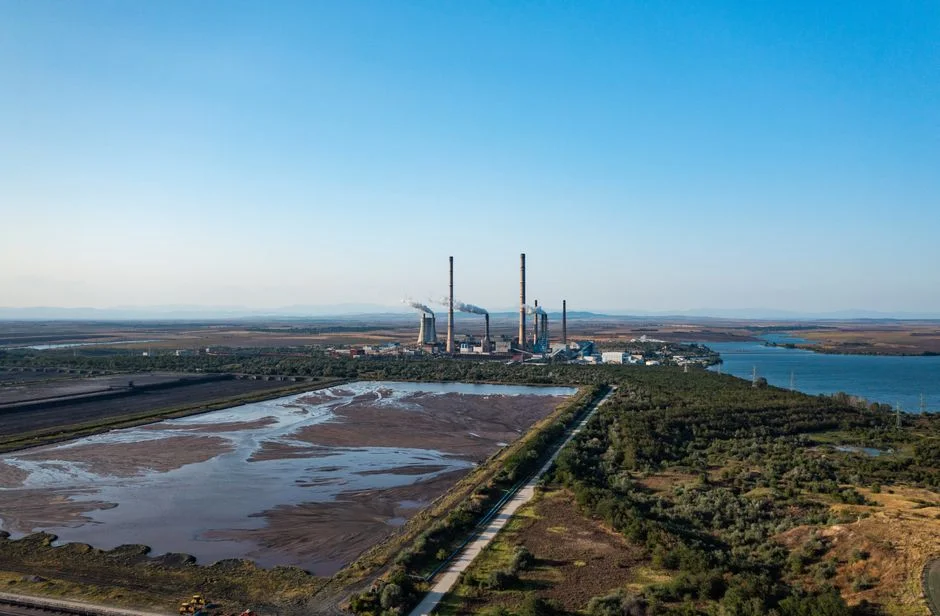
For a process engineer scanning a specification, the trade-off between MBR and CAS on a mining or metals duty in Newburgh comes down to seven parameters: footprint, effluent quality, MLSS/SRT headroom, OPEX drivers, reuse readiness, heavy-metal behavior, and how each responds to influent swings. The table below puts them side by side; the numbers cited are from the supplied product and research data, not from assumed industry ranges.
| Parameter | Conventional Activated Sludge (CAS) | Membrane Bioreactor (MBR) |
|---|---|---|
| Biomass separation | Secondary clarifier (settling-limited) | Submerged PVDF membrane cassette (0.1 μm DF series; <1 μm integrated MBR per HydropureWater product data, 2026) |
| Footprint | Reference baseline | ~60% smaller footprint than conventional systems (HydropureWater integrated MBR product data, 2026) |
| Typical MLSS | Bounded by clarifier settling (typically 3,000–5,000 mg/L in mining duty, not stated in supplied research) | Can sustain much higher MLSS because settling is no longer the constraint (academic MBR viability study) |
| SRT flexibility | Limited by sludge settleability and wasting | Longer SRT achievable, supporting nitrification stability under variable load |
| Effluent TSS/turbidity | Variable; bounded by clarifier performance | Bounded by membrane pore; low and consistent turbidity |
| Reuse readiness | Typically needs downstream filtration (e.g., UF) before reuse | Close to reuse quality without tertiary filtration |
| Heavy metal removal | Biology does not destroy metals; upstream precipitation + downstream polishing required | Same — biology does not destroy metals; upstream DAF/lamella and downstream RO still required |
| OPEX drivers | Sludge handling, clarifier maintenance | Membrane-aeration energy, periodic chemical CIP, membrane replacement |
| Operator sensitivity | More forgiving of upsets | More sensitive to fouling/scaling upsets; needs CIP and aeration discipline |
Three things are worth pulling out of the table for a Newburgh specification. First, neither system removes dissolved metals on its own — both still need a DAF system for mining wastewater upstream for metals precipitation and sludge removal, and an industrial RO for water reuse downstream if a ZLD or tight discharge is in scope. Second, the footprint advantage is real but only matters when land is the binding constraint — on a greenfield with room, it is irrelevant. Third, reuse readiness is where MBR tends to pay back its OPEX premium: the lower-turbidity, lower-SDI effluent reduces the loading on whatever RO or polishing step comes next, which reduces RO cleaning frequency and membrane replacement on the more expensive side of the train.
Mining- and Metals-Specific Selection Criteria for Newburgh Sites
The decision between MBR and CAS on a Newburgh mining or metals site is driven by influent, effluent, footprint, and stakeholder pressure — not by a generic preference. The site-specific items to weigh, in roughly the order they should be settled, are listed below.
Influent variability. Mining and metals flows swing with mill campaigns, storm events, and upset conditions. MBR's higher MLSS and longer SRT give it a real edge when the biology has to ride out a shock load without losing nitrification. A clarifier-bounded CAS train washes out faster under the same swing. For a site with a documented peak-to-average flow ratio above roughly 2:1, that headroom is a meaningful design input rather than a marketing claim.
Effluent target. If the goal is reuse for process water, dust suppression on a haul road, or mill wash water, MBR's lower-turbidity effluent reduces the load on the downstream filter. If the goal is simple surface discharge under a standard SPDES limit, CAS can usually meet it at lower CAPEX.
Available footprint. Brownfield sites and infill industrial parcels around Newburgh often lack the land a CAS clarifier train needs. MBR's ~60% footprint reduction (HydropureWater product data, 2026) translates into smaller civil works and faster permitting on tight sites; it is irrelevant on a greenfield with room to spread out.
Discharge vs reuse vs ZLD. A ZLD or high-reuse train wants an MBR effluent feeding the RO — low SDI, low TSS, consistent quality. A simple surface discharge under a conventional SPDES permit can usually be served by CAS. A POTW pretreatment path falls in between and usually follows the receiving POTW's own limits.
Operator skill and membrane tolerance. MBR is more sensitive to fouling and scaling upsets and needs disciplined CIP, aeration balancing, and MLSS control. A site without that operational depth should either budget for training or accept a higher service-contract scope, and should weigh that cost against the CAPEX delta. For pretreatment selection upstream of either biology, the DAF vs clarifier for mining wastewater comparison is a useful parallel.
Adjacent regulatory layers. Proximity to NYC Watershed Protection Program source waters (NAS-NYC WPP Review, 2020-11) can push reuse or lower-TSS effluent even when direct discharge would otherwise allow a simpler CAS design. That stakeholder pressure is real and should be mapped before a technology is selected.
When CAS Still Wins on a Newburgh Mining/Metals Site
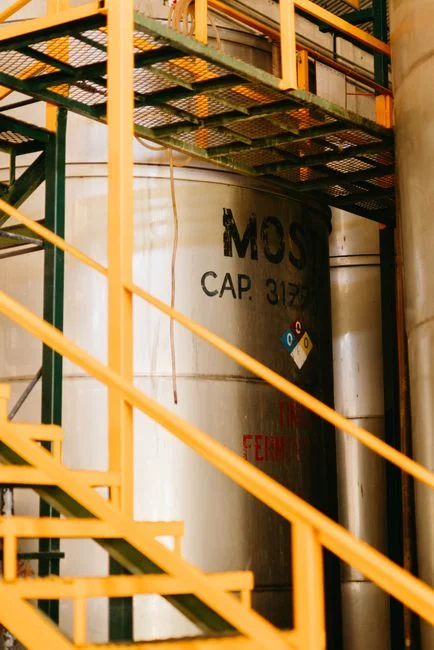
Not every site needs an MBR, and the bias of a technology-comparison article is to push the reader toward the newer option. On a Newburgh mining or metals duty, CAS is the right call in four common situations.
First, on a greenfield with adequate land, a stable flow profile, and a conventional SPDES surface-discharge permit, CAS delivers the lowest CAPEX for BOD, COD, and ammonia reduction. The clarifier train is well understood by local engineering firms and operators, and the spare parts inventory is straightforward.
Second, when the discharge goes to a municipal POTW with adequate capacity, the bottleneck is usually the POTW's own pretreatment limits, not the biology in the upstream system. In that case, a CAS basin plus a simple equalization tank is often the most cost-effective way to meet the POTW's discharge criteria.
Third, when the operations team has no membrane-maintenance experience and the training lead time is short, CAS avoids the membrane CIP scheduling, aeration tuning, and replacement planning that an MBR demands. This is a real constraint, not a hypothetical one, and a poorly operated MBR performs worse than a well-operated CAS.
Fourth, when the influent is highly fouling to membranes — high oil and grease, certain surfactants, or upsets that carry tramp oil — CAS can be more robust until a proper pretreatment train (oil removal, equalization, DAF) is in place. Membranes do not forgive an upstream upset the way a clarifier does.
When MBR Pays for Itself in Mining/Metals Duty
The positive case for MBR on a Newburgh mining or metals site rests on four points where the membrane earns its OPEX premium.
Reuse credit. Replacing freshwater purchase with reclaimed process water at a Newburgh site can offset the membrane-aeration OPEX. The specific dollar value depends on local water tariffs, the reuse end-use quality bar, and the site's current freshwater intake volume — none of which are stated in the supplied research. Treat any cost figure on this as a site-specific number, not an industry default.
Footprint value. The ~60% footprint reduction (HydropureWater product data, 2026) translates into real estate savings, smaller civil works, and faster permitting on tight brownfield sites. When the binding constraint is land, that footprint delta is a hard-dollar saving rather than a soft preference.
Effluent consistency. The under-1 μm membrane barrier smooths out clarifier upsets. On a mining or metals site where a single hydraulic or solids excursion can trigger an SPDES excursion, the consistency of an MBR effluent is itself a compliance asset.
RO pretreatment. A submerged MBR (such as the DF-series flat sheet MBR module at 0.1 μm, 32–135 m³/day per cassette per HydropureWater product data, 2026) feeds a downstream industrial RO for water reuse with low SDI. That reduces RO fouling, lowers cleaning frequency, and extends RO membrane life — and the RO membrane is the more expensive replaceable on the train, so protecting it has real value. The full HydropureWater integrated MBR system integrates this cassette into a packaged unit for sites from 10 to 2,000 m³/day (HydropureWater product data, 2026).
A 2026 Site-Readiness Checklist Before You Specify
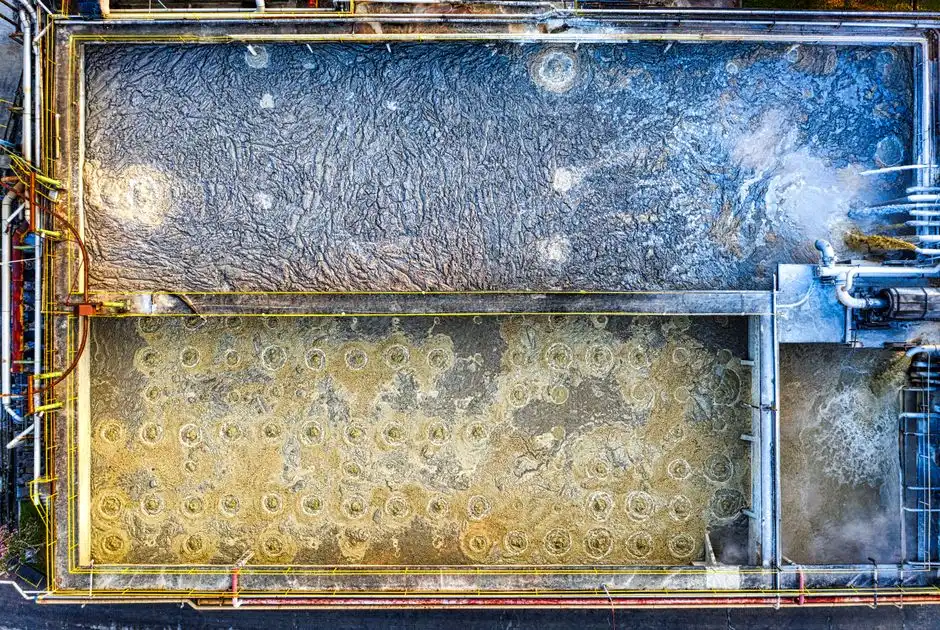
Before a vendor is asked for a binding quote, an engineer should have the following inputs in hand. The supplied research does not include numeric cost data, so cost numbers belong in a vendor quote, not in this checklist.
| Input | Why it matters for MBR vs CAS |
|---|---|
| 12 months of influent data: flow (avg, peak, storm), BOD/COD, TSS, ammonia, heavy metals, sulfate, TDS, pH, temperature | Drives biology sizing and tells you whether MBR's SRT headroom is worth paying for |
| Discharge route: NYSDEC SPDES surface water, POTW pretreatment, on-site reuse, or ZLD | Each route biases the technology choice differently |
| Available footprint and brownfield constraints | MBR's ~60% footprint reduction (HydropureWater product data, 2026) only matters if land is the binding constraint |
| Operator capability for membrane CIP, aeration balancing, MLSS control | If absent, budget for training or higher service-contract scope |
| Reuse targets with end-use quality requirements (process water, dust suppression, mill wash) | Drives whether CAS effluent is sufficient or whether MBR's lower-turbidity output is required |
| Vendor inputs to request | Why it matters |
| Cassette geometry and capacity (e.g., DF series 80–225 m², 32–135 m³/day per cassette per HydropureWater product data, 2026) | Matches the design flow and footprint envelope |
| Site-specific 2026 pricing | Numeric CAPEX/OPEX figures are not in the supplied research — request them from the vendor |
| Membrane life expectancy and replacement cost under the site's specific influent | Drives lifetime OPEX and reuse-economics |
| CIP chemical consumption and waste handling under the site's metals profile | Drives consumables cost and any additional permitting on the chemical waste stream |
Frequently Asked Questions
Is an MBR or a CAS system better for a Newburgh mining or metals site with variable flow?
For sites with documented peak-to-average flow swings from mill campaigns or storm events, an MBR's higher MLSS and longer SRT tolerate shock loads better than a clarifier-bounded CAS train (Agence Bibliographique de l'Enseignement Supérieur, study of activated sludge viability in MBR). On a stable-flow site with adequate footprint, CAS is usually the lower-CAPEX baseline.
How much does an MBR system cost per cubic meter for a mining or metals duty in 2026?
The supplied research does not include numeric cost data for MBR systems on mining or metals duty. The per-cubic-meter figure depends on the design flow, influent loading, cassette geometry, reuse requirements, and local labor and energy rates, so the right input here is a site-specific vendor quote for 2026 — request it from the supplier against the design basis assembled in the readiness checklist above.
Can MBR or CAS remove heavy metals from mining wastewater on their own?
No. Biological treatment — in either CAS or MBR — does not destroy dissolved heavy metals. Both trains still require upstream metals precipitation and clarification, typically with a DAF system for mining wastewater, and downstream polishing such as ion exchange or RO when discharge or reuse limits require it.
What supplier and compliance risk should a Newburgh site weigh before choosing between MBR and CAS?
Check that the proposed supplier has documented reference installations on mining or metals duty (not just municipal or pharmaceutical) and can provide site-specific 2026 pricing against the readiness checklist above. Separately, confirm early with NYSDEC that the chosen discharge path — surface water under SPDES, POTW pretreatment, on-site reuse, or ZLD — is the binding constraint, and map any proximity to NYC Watershed Protection Program source waters (NAS-NYC WPP Review, 2020-11) before locking the technology, since that upstream regime can push effluent quality above a standard SPDES limit.