
Why Krasnoyarsk Is a Distinct Case for Data Center Water Treatment
Data centers in Krasnoyarsk require site-specific water treatment designs due to the sub-Arctic climate, Yenisei-basin discharge regulations, and the influence of municipal heating utilities on makeup water. Industry estimates cited by KETOS show roughly 75–90% of data centers worldwide rely on water-based cooling as their primary method, and within that group the arithmetic is fixed: 70–80% of makeup water evaporates, the remaining 20–30% is purged as blowdown with elevated dissolved solids.
Russian regulatory oversight runs through Roshydromet and the regional Yenisei basin authorities, with enforcement handled by the Federal Service for Supervision of Natural Resources (Rosprirodnadzor); the supplied research does not contain numeric discharge limits for this basin, so any design institute brief must flag those limits as a required local input rather than an assumed value. Makeup water at this latitude is typically drawn from the Yenisei, from municipal surface-water treatment, or from local groundwater, and each source shifts the baseline TDS, silica, and hardness entering the cooling loop. For readers comparing site archetypes, the data center blowdown treatment in Amritsar reference illustrates how the same blowdown arithmetic applies, while the winter and basin constraints diverge sharply. The cross-cutting data center discharge compliance guide frames the regulatory posture this blueprint narrows to a Yenisei-specific context.
What Cooling Tower Blowdown Looks Like at This Site
Blowdown chemistry is the single most useful number a design engineer can collect before sizing any unit operation, and the research-supported envelope is narrow enough to act on. Per Genesis Water Tech, a cooling tower at 4 cycles of concentration loses 25–30% of makeup water to blowdown, and that blowdown carries TDS at 4–8× the makeup, typically 1,200–6,000 mg/L. Scaling minerals dominate the design envelope: calcium, magnesium, silica, and alkalinity concentrate together and dictate whether RO, NF, or a hybrid split is the right separation step. Treatment chemicals accumulate in proportion to cycles — biocides, corrosion and scale inhibitors, dispersants — and any reuse or discharge scenario must address them, particularly where Russian basin authorities restrict phosphate or chrome residuals. Suspended solids of 10–50 mg/L arrive from corrosion products, biofilm fragments, and airborne dust despite basin filtration, and the biological load of planktonic bacteria and biofilm-formers defines the fouling rate on every downstream membrane. The two operator inputs that set every downstream parameter are the cycles-of-concentration target and a current makeup-water analysis; without these, the train is sized on assumption rather than chemistry.
Treatment Train Options for Reuse, Compliant Discharge, or Zero Liquid Discharge
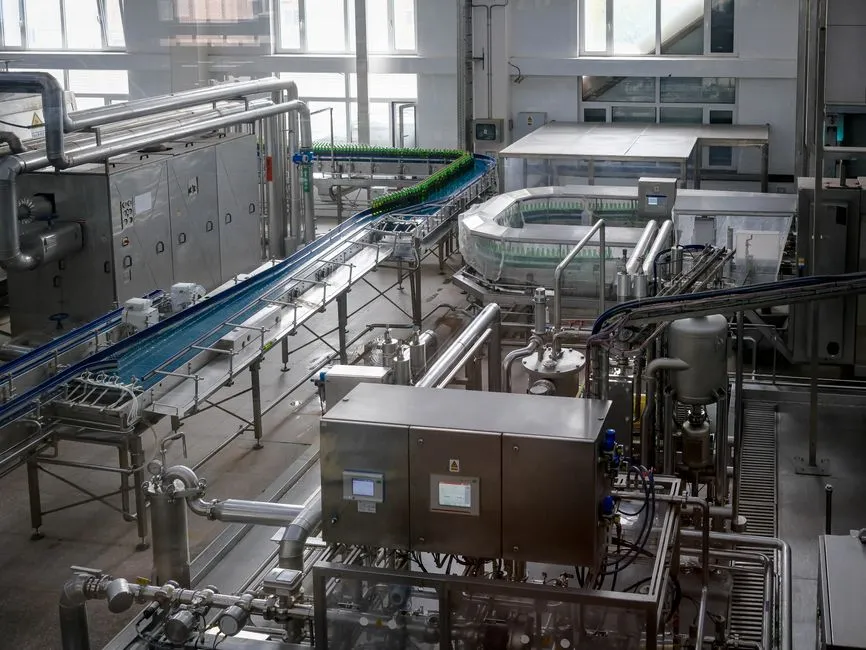
Three endpoint strategies map to three different treatment trains, and the right choice for a Krasnoyarsk facility pivots on the regulatory envelope, the makeup water cost, and whether waste heat is available. Cooling-tower makeup reuse is the highest-value endpoint: Genesis Water Tech reports 60–85% recovery from the blowdown stream, directly cutting freshwater demand. Process-water reuse (irrigation, washdown) accepts lower recovery in exchange for lower complexity; discharge compliance is justified by avoided fees of $5–15 per thousand gallons in water-stressed regions. Zero liquid discharge combines RO (70–80% recovery) → MVC or brine concentrator (95% recovery of concentrate) → crystallizer, achieving 95–99% overall recovery and 1–3% solid waste; capex is typically $3–8M for data-center service, per Genesis Water Tech. A high-silica, scale-prone makeup source can be addressed with the architecture described in the IDE MAXH2O Desalter case study, where sparingly soluble salts are precipitated in a fluidized bed and RO is operated dynamically above conventional scaling limits, yielding ~95% recovery with permeate silica of ~1 mg/L — a useful pattern where Yenisei-sourced silica would otherwise cap RO recovery. The selection of industrial reverse osmosis systems is the membrane anchor of all three trains, and the discharge compliance guide covers the permit-side checks for each endpoint. Developers should evaluate these options based on local infrastructure availability to ensure operational feasibility.
| Endpoint | Typical Recovery | Permeate Quality | Indicative Capex (Data-Center Scale) | Best Fit When |
|---|---|---|---|---|
| Cooling-tower makeup reuse (RO) | 50–85% | 10–50 mg/L TDS | $250,000–$500,000 per 50,000 GPD RO skid | Makeup water scarce; Roshydromet allows partial discharge of a smaller concentrate stream |
| Compliant discharge (NF or RO + polish) | 70–85% (NF); 50–85% (RO) | NF permeate 30–50% of feed TDS; RO 10–50 mg/L | Lower than reuse; depends on reduction target | Municipal/industrial POTW accepts concentrate; avoided fees exceed reuse capex |
| Zero liquid discharge (RO → MVC → crystallizer) | 95–99% overall | Distillate <10 mg/L TDS | $3–8M for data-center service | Discharge effectively prohibited or freshwater unavailable |
| High-recovery CTBD reuse (precipitation + dynamic RO) | ~95% | Permeate silica ~1 mg/L | Project-specific; higher than conventional RO | High-silica, scale-prone makeup; salt-precipitation step is feasible |
Side-Stream Filtration and Ultrafiltration Pretreatment
Adequate pretreatment prevents downstream membrane fouling and avoids the costs associated with frequent cleanings. Self-cleaning side-stream filters at 10–25 micron, treating 1–5% of circulation flow, hold suspended solids and biological load low enough for downstream membranes; Genesis Water Tech cites $50,000–$200,000 capex for typical data-center installations. Ultrafiltration at 0.01–0.1 micron removes suspended solids, bacteria, viruses, and high-molecular-weight organics, operating at 10–30 psi with 90–95% recovery, and is the standard RO/NF pretreatment for blowdown streams. UF permeate is sent to RO; UF concentrate returns to the blowdown stream, so the recovery within UF is largely about protecting the RO rather than about water yield. Pretreatment targets are feed filtration below 10–15 microns, antiscalant dosing matched to scaling chemistry, and pH adjustment for membrane compatibility. Selection of ultrafiltration pretreatment and multi-media filtration upstream of UF is the standard arrangement for blowdown-derived feeds.
Reverse Osmosis, Nanofiltration, and Thermal Polishing for a Cold Climate
The choice of separation technology depends on water chemistry, but the cold-climate envelope dictates energy and siting requirements. Reverse osmosis removes 95–99% of dissolved solids and produces 10–50 mg/L TDS permeate suitable for blending into cooling-tower makeup; recovery on blowdown is 50–85% depending on scaling potential. Nanofiltration operates at 75–150 psi with 70–85% recovery and permeate TDS at 30–50% of feed — a better fit when hardness rather than total TDS drives the discharge or reuse limit. Mechanical vapor compression achieves 95–98% recovery with distillate below 10 mg/L TDS at 15–25 kWh per 1,000 gallons, with capex of $1–3M for 10,000–30,000 GPD systems per Genesis Water Tech; a Krasnoyarsk site with access to district-heating return lines or generator waste heat can offset part of that energy cost, though the supplied research notes that few data centers possess sufficient waste heat to justify a brine concentrator without purpose-built heat. Outdoor membrane skids and RO vessels in central Siberia require enclosure, heat tracing, and freeze-protected chemical dosing lines; thermal stages need building integration rather than pad-mounted supply. Membrane selection and replacement elements are anchored on standard RO and UF membrane elements rated for cold-climate operation.
Decision Framework: Reuse, Discharge, or ZLD for a Krasnoyarsk Facility
The endpoint choice depends on three local inputs: current Roshydromet limits for the Yenisei basin, makeup water analysis, and the cost/availability of freshwater versus the cost of discharge. Pick cooling-tower makeup reuse when Roshydromet and the local basin authority allow partial discharge of a smaller concentrate stream and makeup water is scarce or expensive — this is the default high-value case. Pick compliant discharge with TDS reduction when a municipal or industrial POTW accepts the concentrate, discharge fees are below avoided freshwater cost, and the facility wants to avoid thermal-stage capex. Pick ZLD or partial ZLD when discharge is effectively prohibited or freshwater is unavailable; ZLD operating cost is $5–15 per thousand gallons per Genesis Water Tech and must be weighed against the regional cost of water supply. In all three cases, the design still requires from the operator: a makeup water analysis, current Roshydromet limits for the Yenisei basin, the winter ambient design temperature, available waste-heat sources, and a target cycles-of-concentration number. The discharge compliance guide covers the permit-side checks that accompany each branch of this decision.
Frequently Asked Questions
What does a cooling-blowdown treatment train actually cost for a Krasnoyarsk data center?
Research-supported capex anchors are side-stream filtration at $50,000–$200,000, a 50,000 GPD RO skid at $250,000–$500,000, MVC at $1–3M for 10,000–30,000 GPD, and full ZLD at $3–8M for data-center service, per Genesis Water Tech. Operating cost for ZLD is $5–15 per thousand gallons treated. A Krasnoyarsk-specific estimate still requires the operator's blowdown flow, makeup water analysis, target cycles, and Roshydromet limits, since each input shifts the train by one or more unit operations.
How do we pick a supplier or design partner for this train in Russia?
Ask each bidder for a documented cold-climate reference list covering outdoor skid enclosure, heat tracing, and freeze-protected chemical dosing; require they supply a winter operability narrative tied to your specific winter ambient design temperature, not a generic cold-weather brochure. Insist on a process guarantee that names the permeate quality (TDS, silica) and the recovery rate at your cycles target, with defined antiscalant dosing matched to your makeup analysis. For thermal stages, require evidence of integration with available district-heating or generator waste-heat sources, and a demonstrated Russian Federation installation footprint that includes Roshydromet and Rosprirodnadzor coordination.
Can we just discharge blowdown to the Yenisei without treatment?
Regulatory limits dictate discharge feasibility. Genesis Water Tech notes that some jurisdictions have implemented TDS limits below 1,500 mg/L, effectively prohibiting discharge of concentrated blowdown without treatment, and the research does not contain the current numeric Yenisei-basin limits. The operator must obtain the current Roshydromet and Rosprirodnadzor limits for the receiving segment before any discharge path is locked in; this is a required input rather than a known value.
Is ZLD worth it in a sub-Arctic climate, and what makes it economically defensible?
ZLD is technically feasible at 95–99% overall recovery with 1–3% solid waste, but the operating cost of $5–15 per thousand gallons and capex of $3–8M require a defensible water cost or a hard discharge prohibition to justify. Per Genesis Water Tech, ZLD is justified in water-scarce regions where alternative supplies are unavailable or where discharge is not permitted under any circumstances; a Krasnoyarsk facility should also weigh whether district-heating or generator waste heat can offset the MVC energy load, since the energy line is the largest operating cost driver.