

Why the Ulsan underwater data center changes the cooling-water problem
Ulsan was selected as the final site for the "Carbon-Zero Underwater Data Center Standard Model Development Project" under South Korea's Ministry of Oceans and Fisheries, securing 40 billion KRW (≈US$29 million) in central government funding over the next five years and a total of 51.1 billion KRW committed through 2030 (Data Center Dynamics, 2026; Seoul Economic Daily, 2026-04-08). The project is sized to house up to 100,000 servers inside a pressure vessel at roughly 20 m below the sea surface, drawing on Ulsan offshore water that holds an annual average of 13.3 °C as the primary coolant, and is targeting a power usage effectiveness (PUE) of 1.2 at 20 m depth by 2030, with a large-scale commercial complex to follow from 2031 (Seoul Economic Daily, 2026-04-08).
Those macro numbers — 100,000 servers, 20 m depth, 13.3 °C, PUE 1.2 — define the cooling problem, not the power problem. The headline "free cooling from the sea" only holds if the seawater feed is treated as a real industrial feedwater: screened, filtered, conditioned, and either discharged cleanly or recycled through a blowdown recovery train. A 12% carbon-emission cut versus a comparable onshore build is the project sell, but the engineering cost is paid in unit operations, not in tonnage of refrigerant (Mint, 2025-11). That framing — cooling story as a water-treatment story — is what the rest of this article builds out.
The consortium behind the build — KIOST, UNIST, POSCO, GS E&C, and SK Telecom, among 12 partners — is the same group that has to underwrite the modular, pressure-vessel architecture the city wants standardized for cost-effective scaling (Data Center Dynamics, 2026). The demand backdrop is the reason Korea is even considering subsea sites at all: data center power demand in the Seoul region is reported to exceed 1,450 MW by 2028, with only 1.9% of applications approved, pushing planners toward sites that are not competing for onshore grid headroom (Mint, 2025-11).
What "seawater cooling" actually puts into the water-treatment scope
Seawater is not a free heat sink. It is a loaded feedwater with a baseline total dissolved solids (TDS) around 35,000 mg/L, sulfate and chloride concentrations that stress metallurgy, and a biological load that includes barnacle and mussel larvae, biofilm-forming bacteria, and seasonal plankton blooms. The Ulsan design explicitly pairs the pressure vessel with "ultra-high-efficiency hybrid cooling technology," where seawater is the primary loop and a secondary loop interfaces with the IT equipment (Data Center Dynamics, 2026; Seoul Economic Daily, 2026-04-08). Every barrier between the two loops — and every bleed between the primary loop and the environment — is a unit operation the EPC has to scope.
Four effluent or blowdown streams have to be reconciled before a treatment train can be drawn:
- Intake reject — backwash from coarse and fine screening, and UF concentrate, returning to sea under a marine discharge permit.
- Hybrid-loop blowdown — the controlled bleed-off that holds cycles of concentration in check. TDS typically lands in the 1,200–6,000 mg/L range, with scaling ions (calcium, magnesium, silica, alkalinity) and suspended solids commonly 10–50 mg/L (Genesis Water Technologies).
- Server-hall condensate — essentially distilled water from the secondary loop, generally reusable internally and low-risk to handle.
- Onshore sanitary and trade wastewater — from the staging area, staff facilities, and any diesel back-up cooling; out of scope of the seawater loop but in scope of the same discharge envelope if the owner's package covers it.
The variable the EPC cannot fix without the owner is which of these streams tie into the same treatment skid. Confirm before locking the process flow diagram (PFD).
Korean regulatory frame for a Ulsan data center discharge
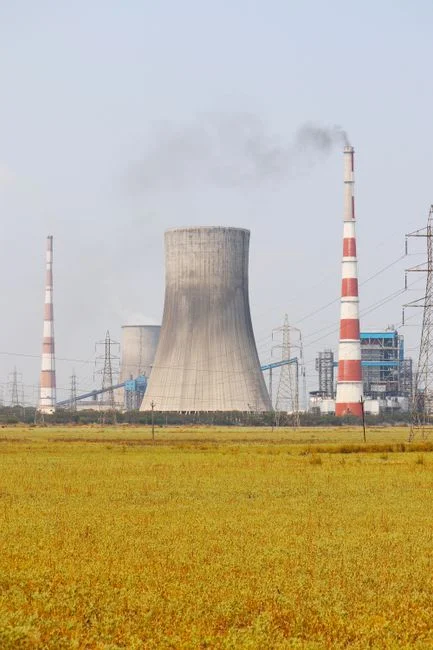
South Korea's primary statute for industrial wastewater is the Water Quality Conservation Act (수질환경보전법), administered by the Ministry of Environment with regional enforcement through the Ulsan Metropolitan City government. Parameter limits depend on the discharge route — municipal sewer versus a coastal water body — and on the regional enforcement posture; the same operator can face different TDS, total suspended solids (TSS), and biocide-residual limits depending on whether the outfall is to Ulsan's industrial sewer or directly to nearshore seawater.
For any direct coastal outfall, the Marine Environment Management Act, administered by the Ministry of Oceans and Fisheries, layers additional marine discharge standards on top of the Water Quality Conservation Act. That detail matters here because the same ministry that funds the Ulsan underwater data center is also the marine-discharge regulator — confirm the latest site-specific permit envelope with the owner's permitting team before fixing any unit operation, and do not assume limits from another Korean industrial site carry over.
Parameters the engineer should plan to control in any hybrid-loop blowdown stream include: TDS, TSS, residual chlorine and other biocide residuals, pH, temperature differential at the point of discharge (the Ulsan outfall will sit in water that is itself around 13.3 °C, so the warm-side temperature delta is a real permit question), and oil/grease from any diesel rotary-uninterruptible-power-supply or generator cooling. Treat the permit envelope as a deliverable from the owner, not as a design assumption.
Intake pretreatment: keeping the hybrid loop clean from the seafloor up
The first barrier is a rotating drum or bar screen at the seawater intake to remove macrofouling debris — macroalgae, jellyfish, and any plastic — before water enters the pressure vessel. A drum screen on a 20 m-depth intake is the default for nearshore and subsea intakes, and it is the difference between a working heat exchanger and a fouled one within the first season.
The second barrier is fine screening, typically spiral self-cleaning filters rated to 10–25 µm that continuously strip particulates and reduce biological loading on the loop with minimal backwash waste (Genesis Water Technologies). For a Ulsan-style subsea intake this stage protects the downstream heat exchangers and reduces the chemical demand on the rest of the train.
Ultrafiltration is the workhorse pretreatment ahead of any reverse-osmosis (RO) polishing in a seawater-fed loop. Hollow-fiber UF with a ~0.01–0.1 µm pore size (typically PVDF) strips bacteria, viruses, colloids, and most bio-fouling precursors at low pressure (10–30 psi) and is the standard barrier between the intake and any high-pressure membrane. Sized for a hollow-fiber ultrafiltration system for seawater pretreatment, it lets the downstream RO run at designed recovery without being blinded by particulates.
Upstream of the RO, a small dose of antiscalant and either chlorine or chlorine dioxide is the typical conditioning step; the antiscalant must be compatible with the UF membrane chemistry and with the chosen RO elements. A multi-media filter for upstream polishing can take out the residual particulates the spiral filter misses, and a rotary mechanical bar screen sized for the marine intake sets the floor for what the rest of the train has to handle.
Blowdown treatment train: UF → RO → optional MVC for the Ulsan site
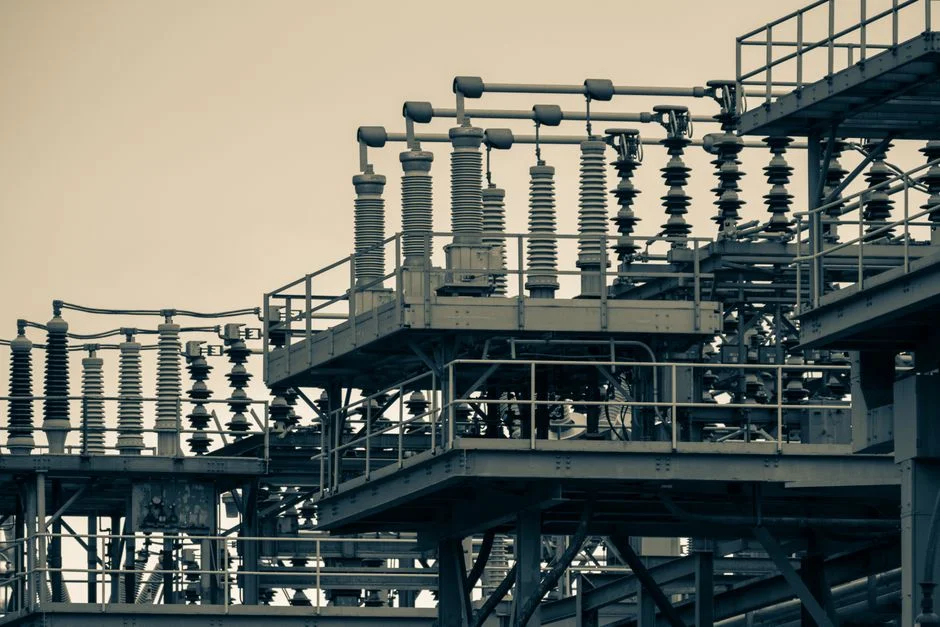
The realistic options for a Ulsan hybrid-loop blowdown fall into three families: discharge compliance (treat to permit, send to outfall), cooling-tower makeup reuse (treat and return to the loop), or near-zero liquid discharge (ZLD) (recover and crystallize the concentrate). The parameter table below maps the technologies the EPC will see on a bid sheet, drawn from Genesis Water Technologies process descriptions, onto the role each one plays in a seawater-fed blowdown train.
| Technology | Role in train | Operating pressure | Recovery | Output quality |
|---|---|---|---|---|
| Self-cleaning side-stream filter (10–25 µm) | Enables higher cycles of concentration; protects heat exchangers and downstream membranes | Low (gravity / low-head) | Continuous bleed, ~1–5% of circulation flow | Reduces suspended solids in blowdown to RO-manageable levels |
| Ultrafiltration (0.01–0.1 µm) | Pretreatment ahead of RO; standalone for TSS / biological control | 10–30 psi | 90–95% | Removes bacteria, viruses, colloids; concentrate returned to blowdown |
| Reverse osmosis (seawater-rated) | Blowdown polishing for reuse as cooling-tower makeup; primary TDS reduction | 150–400 psi (higher for seawater feed) | 50–85% | Permeate 10–50 mg/L TDS; 95–99% dissolved-solids rejection |
| Nanofiltration | Partial softening; first-stage divalent-ion reduction when hardness limits | 75–150 psi | 70–85% | Permeate TDS ~30–50% of feed; lower energy than RO |
| Mechanical vapor compression (MVC) | Polishes RO concentrate; pathway to near-ZLD | Thermal (electric-driven) | 95–98% of concentrate stream | Distillate <10 mg/L TDS; brine 20–30% dissolved solids |
The realistic Ulsan stack is UF → RO for blowdown polishing, with the option to drop an MVC on the RO concentrate if the project is pushed toward ZLD. RO on blowdown removes 95–99% of dissolved solids and most treatment chemicals, producing permeate at 10–50 mg/L TDS at 50–85% recovery — a stream that can be returned as cooling-tower-quality makeup water and that directly cuts freshwater draw (Genesis Water Technologies). A hybrid stack of RO at 50–75% recovery followed by MVC on the concentrate pushes overall system water recovery into the 85–95% range, which is the lever that reduces both the freshwater intake and the size of any required marine outfall treatment.
For EPC scope, the equipment is straightforward: an industrial RO system for blowdown recovery, supported by a seawater-rated RO and UF membrane elements replacement package sized for the design recovery and feedwater salinity. A paired membrane bioreactor trains the sanitary stream separately so it does not load the seawater membranes, and a PLC-controlled antiscalant and biocide dosing skid ties antiscalant and biocide injection to the loop conductivity.
Disinfection, residuals and materials selection in a seawater loop
Legacy cooling-water programs built on chromate or high-phosphate chemistry accumulate in blowdown and complicate both membrane reuse and discharge compliance. A non-phosphate, low-toxicity program is the modern default for data-center loops, paired with on-site biocide generation to avoid the handling and storage risk of bulk chlorine (Genesis Water Technologies).
For biocide control, an on-site chlorine dioxide generator for cooling-loop biocide control gives consistent residual without the trihalomethane (THM) formation risk of bulk chlorine and is the common choice where Legionella and biofilm control are regulated concerns. A UV sterilizer on RO permeate or the recirculating loop is a non-chemical polishing step that controls chlorine-resistant organisms such as Cryptosporidium and Giardia without altering water chemistry — useful when the operator wants to avoid pushing the biocide load onto the membranes.
On materials, chloride-rich seawater at 20 m head is the wrong environment for carbon steel and most 300-series stainless. Specify super-duplex stainless, titanium, or fiber-reinforced plastic (FRP) pressure vessels on the intake and any plate heat exchangers, and tie the materials call to the project's pressure-vessel and modular standardization goals so the same alloy selection carries into the commercial complex after 2031.
Sizing, cost and modular packaging for a 100,000-server Ulsan site
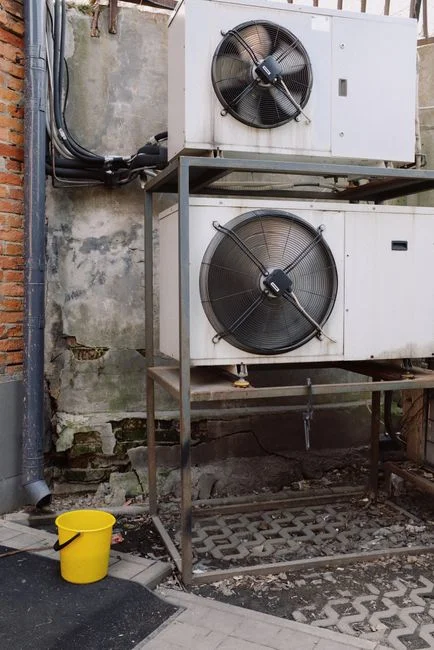
The project is explicitly designed for modular, standardized configurations to support cost-effective scaling toward the 2031 commercial complex (Seoul Economic Daily, 2026-04-08). That modularity is not optional for the water-treatment package — the EPC has to size skids for containerized or skid-mounting early so the pressure-vessel envelope can accommodate them, and so the same skid design repeats across the 100,000-server build-out.
On the recovery-rate trade-off, pushing the RO train from 70% to 80% recovery raises scaling risk on the concentrate and usually demands a more aggressive antiscalant program plus more frequent chemical cleans. For a seawater feed, design RO recovery at the conservative end and rely on MVC to recover the concentrate rather than over-stressing the RO. The Genesis source puts RO operating costs at around $1.50–3.00 per thousand gallons treated (including energy, chemicals, membrane replacement, and maintenance) and MVC energy at 15–25 kWh per 1,000 US gallons of distillate, with discharge fees in water-stressed regions of roughly $5–15 per thousand gallons (Genesis Water Technologies). These numbers are bid-sheet references, not Ulsan-specific — confirm current Korean electricity tariffs, antiscalant pricing, and Ulsan discharge fees with the utility and city authorities before fixing the design.
The sizing inputs the engineer still needs from the owner are: average and peak IT load, target PUE (1.2 for the demo), cycles of concentration in the hybrid loop, freshwater makeup fraction, sanitary wastewater load, and whether the onshore staging area is in scope of the same treatment package. For a broader 2026 compliance view, the general 2026 compliance guide for data center discharge covers the permit-envelope logic across jurisdictions. For site comparisons, the comparable 2026 guide for data center blowdown in a hot-climate site and the 2026 guide for data center blowdown in a freshwater-limited site work through the same train in different feedwater and regulatory frames.
Frequently Asked Questions
What is the PUE 1.2 target for the Ulsan underwater data center?
A PUE of 1.2 at 20 m depth is the published demonstration goal the Ulsan consortium has set for completion by 2030, with a large-scale commercial complex to follow from 2031 (Seoul Economic Daily, 2026-04-08). The target is a performance-verification milestone, not a guaranteed operating number — the actual PUE will depend on hybrid-loop design, IT load, and how aggressively blowdown is recovered as cooling-tower makeup.
How is the Ulsan project funded and what is the committed budget?
Central government funding is 40 billion KRW (≈US$29 million) over five years, with a total of 51.1 billion KRW committed through 2030 including matching contributions (Data Center Dynamics, 2026; Seoul Economic Daily, 2026-04-08). The budget covers the demonstration phase; commercial-complex capex from 2031 onward is a separate scope.
What effluent quality can RO polishing deliver on a seawater cooling blowdown?
RO on blowdown produces permeate in the 10–50 mg/L TDS range at 50–85% recovery, removing 95–99% of dissolved solids and most treatment chemicals (Genesis Water Technologies). That permeate is suitable for return as cooling-tower makeup water, which directly cuts freshwater draw and reduces the volume of any required marine outfall treatment.
What is the realistic cost and lead-time envelope for a Ulsan-scale blowdown recovery skid?
For seawater cooling data centers, published reference economics are roughly $1.50–3.00 per thousand gallons treated for RO operating cost and 15–25 kWh per 1,000 US gallons of distillate for MVC energy, with discharge fees in water-stressed regions of about $5–15 per thousand gallons (Genesis Water Technologies). The action for a Ulsan bid is to request current Korean electricity tariffs, antiscalant pricing, and Ulsan city discharge fees from the utility and the owner's permitting team, and to confirm skid delivery lead times against the 2030 demonstration milestone — do not lock pricing from a non-Korean reference case. For supplier selection, the actionable check is to verify that any bidder has prior seawater RO or MVC skid references (not just freshwater data-center work) and can supply seawater-rated RO and UF membrane elements with documented replacement cycles for the 35,000 mg/L feed.