The Vincent Mining/Metals Plant Decision: DAF, Clarifier, or Both?
For a Vincent, US mining or metals factory in 2026, the choice between a dissolved air flotation (DAF) system and a gravity (lamella) clarifier depends on what is actually in the influent. DAF, which separates suspended solids, oils, greases, and metals by attaching 30–50 µm micro-bubbles generated from a ~100 psi pressurized recycle stream (per Aries Chemical and SigmaDAF), excels at low-density, oily, or chemically flocculated streams. Gravity or lamella clarifiers win on heavy, high-density mineral slurries with little oil. Mining/metals plants typically benefit from pairing a clarifier with upstream chemical precipitation and downstream sludge dewatering, so the practical answer is usually a clarifier-led train with DAF as a polish step when FOG or light floc is present.
Three physical separation problems show up repeatedly in metals plant influent: high-TSS slurries, fine heavy-metal-bearing precipitates, and intermittent oils or lubricants. Each one maps to a different unit operation, which is why the DAF-versus-clarifier question rarely has a single right answer. The Kemco description of DAF explicitly lists heavy metals among the target contaminants, alongside oils, greases, BOD, COD, and suspended solids (Kemco Systems), confirming that DAF is a credible option where metals are co-precipitated as floc rather than remaining in true solution. The job here is to give the plant engineer a decision framework: which stream characteristics push toward a DAF primary, which push toward a gravity or lamella clarifier primary, and which justify both in series.
How DAF and Gravity Clarifiers Actually Separate Solids
DAF separation is driven by micro-bubble attachment. A portion of clarified effluent is pressurized to roughly 100 psi, supersaturated with air, and released at atmospheric pressure into the flotation tank. The pressure drop nucleates micro-bubbles — Aries Chemical reports ~30 µm bubbles, while SigmaDAF documents a 30–50 µm range — that attach to conditioned particles and float them to a surface skimmer (Aries Chemical, SigmaDAF via Clearwater Industries). Aries describes the skimmer as a 304SS flight with chemical- and heat-resistant wipers driven by a Browning speed reducer, which gives a feel for the mechanical detail a buyer should expect on a specification sheet.
DAF depends on chemical pretreatment. pH adjustment, coagulant charge neutralization, and long-chain polymer flocculation are required to make particles large and hydrophobic enough for bubble attachment. Without this chemistry, performance collapses — Aries is explicit that coagulation neutralizes particle charge and that flocculation with long-chain polymer connects particles into flocs the bubbles can lift. Kemco reinforces the point: DAF systems are paired with physical-chemical treatment, and accurate pH control is vital across industrial wastewater service.
Gravity and lamella clarifiers work on a different physical principle: mass settling. Heavy mineral solids, metal hydroxides, and coarse grit drop under gravity, and inclined-plate (lamella) packs multiply the effective settling area. SigmaDAF notes that its FPBC DAF model itself uses lamella pack technology to slow water velocity and maximize separation efficiency, which is a useful reminder that lamella plates are not exclusive to gravity clarifiers — they appear wherever reduced vertical velocity improves separation. For a Vincent plant, the mechanical difference between bubble attachment and density settling is the entire selection logic: if the contaminant is buoyant or flocculable, DAF wins on kinetics; if it is dense and inert, gravity settling is faster, cheaper, and more robust.
DAF vs Clarifier for Mining/Metals Wastewater: Head-to-Head Comparison
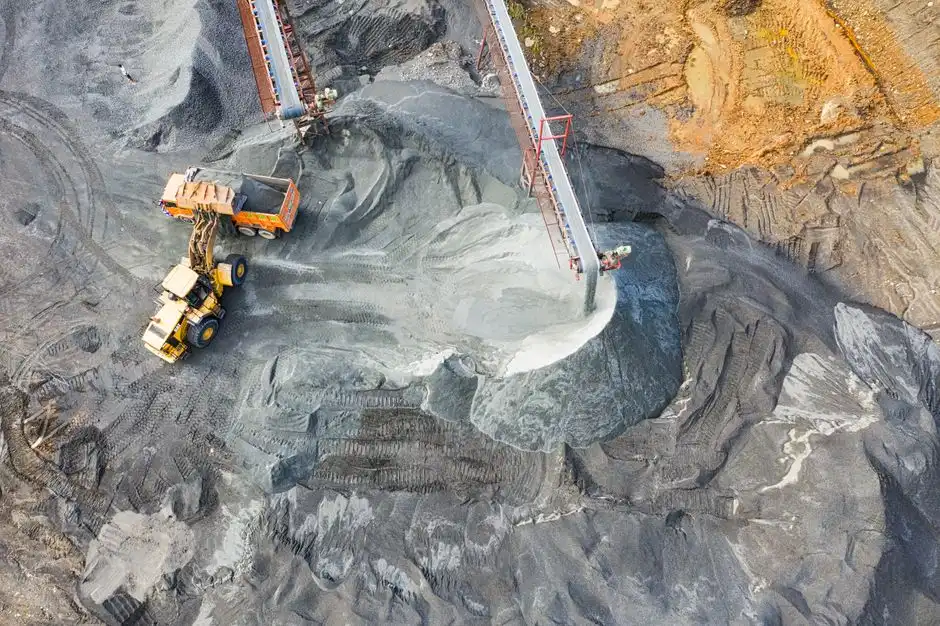
The matrix below summarizes the operating differences a Vincent plant engineer should weigh before issuing an RFQ. Where the supplied research does not document a specific number, the row is left qualitative and the buyer is expected to obtain a project-specific value from jar testing or pilot work.
| Parameter | DAF System | Gravity / Lamella Clarifier |
|---|---|---|
| Separation driver | Micro-bubble attachment, ~30–50 µm bubbles from a ~100 psi recycle (Aries, SigmaDAF) | Density-driven settling, often with inclined lamella packs to raise surface loading |
| Best-fit target particles | Low-density floc, oils, FOG, chemically conditioned colloids; co-precipitated heavy metals per Kemco | High-density mineral fines, metal hydroxides, coarse grit after upstream screening |
| Chemistry requirement | Required: pH control, coagulant, long-chain polymer flocculation (Aries, Kemco) | Optional for bulk settling; useful when polishing for reuse |
| Footprint and hydraulics | Needs a flocculation stage plus a pressurized recycle loop (recycle pump, compressor, saturation tank) | Smaller footprint with lamella packs; no compressed-air service |
| Standard materials of construction | 304SS standard, with 316SS, polypropylene, and other materials available (SigmaDAF, Aries) | Typically epoxy-coated mild steel, 304SS, 316SS, or polypropylene depending on chemistry |
| Sludge handling interface | Floated scum to skimmer; Kemco documents downstream filter press dewatering | Underflow to sludge handling; same downstream dewatering logic applies |
| Flow scalability (documented example) | SigmaDAF COMPACT DAF uses a single skid up to 66 GPM and a modular two-skid layout above 66 GPM | Scaled laterally or by adding lamella packs; no documented fixed breakpoint in supplied research |
| Documented target contaminants | Oils, greases, suspended solids, BOD, COD, and metals per Kemco | Suspended solids; metals only when pre-precipitated as settleable solids |
The table is meant to be carried into a vendor meeting. Two rows deserve particular attention for a metals service: materials of construction, because chlorides, acids, and abrasive slurries attack standard 304SS, and the chemistry requirement, because DAF's polymer demand is the single biggest operating cost driver on the cell.
Matching the Technology to the Mining/Metals Stream
Heavy-metal precipitation trains — lime or caustic raise of pH to drop metals as hydroxides, or sulfide precipitation for tighter effluent targets — generate fine, low-density floc that responds well to DAF when paired with polymer flocculation. The Kemco description of DAF removing heavy metals alongside suspended solids, oils, greases, BOD, and COD is the direct evidence that DAF handles metal-bearing floc rather than truly dissolved metals, so the upstream chemistry has to do the dissolution work first. A clarifier can also handle metal floc, but its advantage shows up when the floc is dense enough to settle rapidly without aggressive polymer dosing.
Run-of-mine slurries, mill discharge, and tailings-dewatering overflows carry coarse, high-density grit that a hydrocyclone or shaker screen should remove first — Kemco describes coarse filtration via hydrocyclone or shaker screen as a standard pre-DAF step. The choice between DAF and clarifier is meaningless until that grit is removed, because either cell will choke on it. Once the grit is out, the residual fines and any FOG decide the unit operation. Oily streams from vehicle and equipment wash, lubes from crushing equipment, or cutting fluids at downstream fabrication favor DAF as the primary or polish step because of its documented FOG removal performance.
Streams aiming for reuse — process water, gland service, dust suppression — usually need both. A clarifier drops bulk suspended solids; a DAF or filter step hits the lower TSS and FOG targets reuse demands. For pretreatment programs and POTW discharge limits, sizing should never be set on average influent alone. The Connersville mining pretreatment 2026 compliance guide covers the regulatory framing, and the mine site water reuse sizing guide covers the reuse-side capacity math for a paired clarifier-plus-DAF train.
Sizing, Materials, and Configuration Choices for Vincent Plants
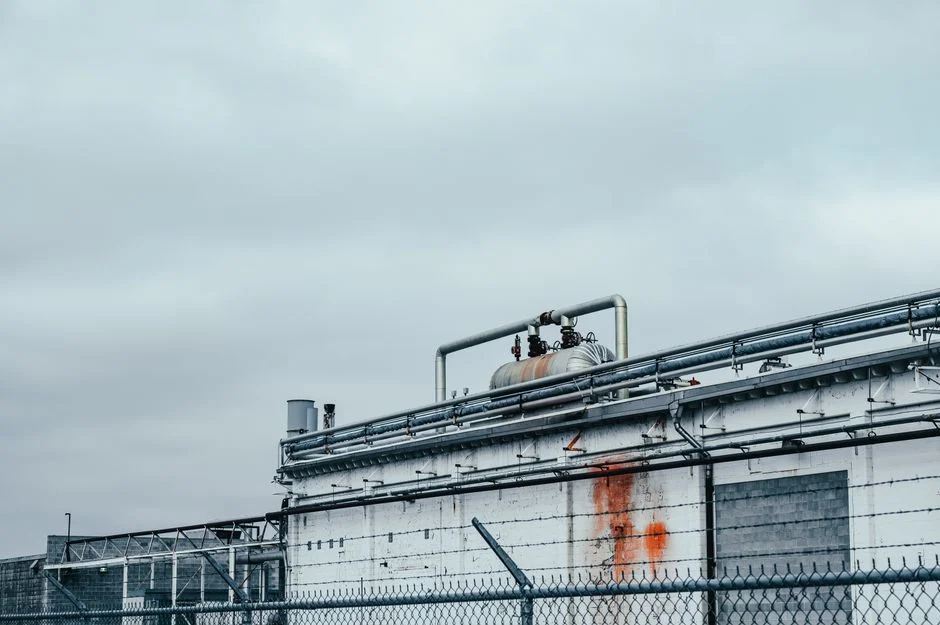
Sizing DAF on hydraulic loading alone is a common mistake. The air-to-solids ratio and the floc characteristics drive the actual cell area, and Aries offers bench-scale jar testing to confirm both before a cell area is committed. Aries documents that jar testing identifies removal efficiencies, floatation characteristics, and a cost-effective chemical program, which makes it a useful pre-RFQ data point to request from any vendor. For a HydropureWater DAF system, the same logic applies: pilot data tied to the actual mine water beats generic removal curves every time.
Materials of construction should be chosen for the actual chemistry, not the default. SigmaDAF's standard build is 304SS, with 316SS, polypropylene, and other materials available on request; Aries lists epoxy-coated mild steel, stainless steel, and polyethylene as construction options. For a metals plant with chloride exposure, low pH, or high sulfate, 316SS or polypropylene is the defensible choice, while epoxy-coated mild steel is acceptable for less aggressive service where budget dominates. Clarifier configuration follows the same pattern: lamella packs raise surface loading versus a conventional basin, and a covered or insulated design matters if the Vincent site sees cold winters that slow settling kinetics.
| Build-spec question | What to put on the RFQ | Why it matters in metals service |
|---|---|---|
| DAF sizing basis | Hydraulic loading, air-to-solids ratio, and jar-test removal efficiency on site water | Generic curves overstate performance on real mine water |
| Clarifier sizing basis | Surface loading rate (gal/day/ft²) at peak and minimum flow, with lamella pack count | Cold winter viscosity reduces settling rate; covered designs help |
| Materials of construction | Specify 316SS for chloride service, polypropylene or polyethylene for low-pH or high-sulfate streams, epoxy-coated mild steel for budget builds | 304SS fails prematurely in chloride, low-pH, or abrasive slurry service |
| Sludge handling interface | Define underflow or scum consistency targeted for downstream dewatering with a plate and frame filter press | Undersized dewatering turns the primary cell into the bottleneck |
| Chemistry feed | Integrate an automatic chemical dosing system for pH, coagulant, and polymer | Manual dosing is the most common cause of DAF underperformance |
Plan sludge handling in parallel with primary separation. Kemco's process flow places sludge dewatering — typically a filter press — immediately after the DAF, and the same logic applies to clarifier underflow. Without a defined dewatering step, the primary equipment produces a stream the rest of the plant cannot handle. A HydropureWater lamella clarifier should be specified with the downstream dewatering interface defined in the same RFQ package, not as a separate purchase order six months later.
Total Cost and Risk: What to Ask Vendors Before You Sign
CAPEX drivers on a DAF quote are dominated by the air-saturation package — recycle pump, compressor, saturation tank — and by the vessel material. SigmaDAF's 304SS standard versus 316SS, polypropylene, or specialty upgrades is the line item where most of the swing lives, and Aries confirms epoxy-coated mild steel, stainless steel, and polyethylene as Aries builds. For a clarifier, the CAPEX line items are basin size, lamella pack count, and the same materials question. OPEX on a DAF is polymer-hungry because Aries documents long-chain polymer flocculation as the engine that makes the bubbles attach; coagulant and compressed-air energy sit underneath that, and sludge haul-off is the largest downstream cost if dewatering is not planned for.
Compliance risk in the US is driven by the local pretreatment program. Categorical standards under 40 CFR Part 403 apply to many mining and metals operations, and the clarification step must be sized to consistently meet local POTW limits, not average them. Aries offers bench-scale jar testing and on-site pilot studies, and SigmaDAF documents that its systems are designed to meet the discharge standards for a specific effluent and industry; the same approach should be requested on any vendor quote. Lead time is a separate risk: SigmaDAF notes that all systems are manufactured in-house, which is a useful schedule data point to verify against any 2026 delivery promise.
What the supplied research does not support is a specific dollar figure for any of the above, so the procurement reader should request itemized quotes against the cost drivers above rather than against a benchmark price. Three line items deserve particular attention: pilot data tied to the actual mine water (not generic removal curves), a written guarantee on the materials of construction for the specific chloride, pH, and sulfate exposure, and a sludge consistency target that downstream dewatering equipment can actually handle.
Frequently Asked Questions
How much does a DAF system cost for a Vincent mining or metals plant in 2026?
The supplied research does not publish a 2026 price for a DAF system, so a specific dollar figure should not be requested from a vendor without scope. Instead, ask for an itemized quote against the documented cost drivers: vessel material (304SS versus 316SS versus polypropylene per SigmaDAF and Aries), air-saturation package sizing, polymer and coagulant consumption projected from jar testing, and the downstream dewatering interface. Aries offers bench-scale jar testing to confirm chemical consumption, which is the most defensible way to anchor an OPEX estimate before signing.
How do I pick the right size DAF or clarifier for my mine water flow?
Size DAF on hydraulic loading plus air-to-solids ratio, not on flow alone, and confirm both with jar testing on the actual mine water (Aries Chemical). SigmaDAF's 66 GPM breakpoint between single-skid and modular two-skid COMPACT DAF configurations is a useful example of how DAF scales; a clarifier scales by basin area and lamella pack count rather than by a fixed skid breakpoint. For reuse targets, the mine site water reuse sizing guide walks through reclaimed-water capacity math.
What should I look for in a DAF or clarifier supplier before signing?
Look for in-house manufacturing (SigmaDAF documents this), on-site pilot or jar-testing capability (Aries documents this), and a written guarantee that the materials of construction match the specific chloride, pH, and sulfate exposure of the mine water. Request references from metals plants, not just food processing or general industrial accounts, and verify the supplier's documentation covers heavy-metal co-precipitation as a target application, since Kemco's DAF description is explicit that metals are among the contaminants the technology handles. A DAF vs clarifier guide for Deane, US mining and metals plants and a DAF vs clarifier guide for Luttrell, TN mining and metals plants offer comparable supplier-selection framing for adjacent US sites.
Can a DAF remove heavy metals, or do I need a clarifier for that?
DAF removes heavy metals when they have been pre-precipitated as settleable or floatable floc — Kemco's description of DAF explicitly lists heavy metals among the contaminants the technology targets alongside oils, greases, BOD, COD, and suspended solids. Truly dissolved metals require upstream chemical precipitation (lime, caustic, or sulfide) before either DAF or a clarifier can remove them. The choice between DAF and clarifier for the metal-bearing stream then comes down to floc density and FOG presence: dense metal floc favors a clarifier, and metal floc with entrained oil or low density favors DAF.