Why Malingao needs its own cooling-blowdown design
A Malingao build does not inherit a Manila or Cebu template because the local water balance, climate, and grid mix all push the train in a different direction. PAGASA's mean annual relative humidity of 78–85% across the Philippines suppresses evaporative cooling efficiency and forces operators to push cycles of concentration (CoC) higher to reject the same heat load, which concentrates blowdown faster than dry-climate benchmarks (S3, 2026). Source water in the Rio Grande de Mindanao basin and Sultan Kudarat groundwater carries variable TDS through the dry season; confirm the actual influent range with site-specific testing before locking the recovery target, because the same nominal "municipal" source can swing several hundred mg/L between February and August in this corridor.
A 100 MW hyperscale facility can draw up to 2 million liters of water per day, putting even mid-sized Malingao builds in direct competition with municipal and agricultural users in a Mindanao basin already flagged for water-stress in dry-season LGU advisories (S5, 2026). Mindanao's largely hydro-thermal grid, with embedded diesel for the genset cooling loop and remote industrial feeders, also changes the LCA picture. A cooling system commissioned today and operated through 2050 would spend the majority of its service life under grid conditions where the GWP penalty of reuse is negligible, while its water savings accrue at full value (S1, 2026). That is the real Mindanao-specific framing: ZLD is a grid-carbon and discharge-permit decision, not a generic "water-scarce region" reflex.
The four wastewater streams a Malingao data center must treat
A tropical data center produces four distinct wastewater streams, and treating blowdown in isolation is the most common scoping error on Philippine sites. Cooling-tower blowdown is the largest by volume: 25–30% of makeup water at 4 cycles of concentration, carrying TDS of 1,200–6,000 mg/L, suspended solids 10–50 mg/L, residual biocides, scale inhibitors, and corrosion products (S3, 2026). Reverse-osmosis reject from humidification and process-water polishing arrives at 20–30% of feed flow with elevated TDS concentrate that re-enters the waste train and must be co-treated with blowdown rather than discharged separately. Diesel-generator cooling water, floor wash, and humidifier bleed are lower-volume but intermittent, often oily, and cannot be routed to the same membrane system as blowdown without oil-removal pretreatment. Stormwater and habagat runoff contacting outdoor equipment pads is seasonal and high-volume, with suspended-solids spikes during typhoon events that need a separate equalization and TSS-cut step before any discharge (S3, 2026).
| Stream | Peak flow indicator | Key contaminants | DENR DAO 2021-19 exposure |
|---|---|---|---|
| Cooling-tower blowdown | 25–30% of makeup at 4 CoC | TDS 1,200–6,000 mg/L; SS 10–50 mg/L; biocides; corrosion inhibitors | Exceeds 1,500 mg/L TDS ceiling at 4–6 CoC |
| RO reject (humidification / process) | 20–30% of RO feed | Elevated TDS concentrate; hardness, silica | Re-enters waste train; cannot bypass compliance |
| Genset cooling water, floor wash, humidifier bleed | Intermittent, low-volume | Oils, hydrocarbons, suspended solids | Must be oil-removed before membrane co-treatment |
| Stormwater / habagat runoff | Seasonal, typhoon-driven spikes | TSS surges; debris from outdoor pads | Needs equalization and TSS cut before any discharge |
Each stream has different chemistry, different peak flow, and a different compliance path. The RFQ should name all four explicitly so the supplier prices a complete equalization and oil-separation front end, not just the RO skid.
What DENR DAO 2021-19 actually requires on a Malingao site
DENR DAO 2021-19 caps industrial effluent TDS at a typical 1,500 mg/L discharge ceiling, with parallel limits on chloride, sulfate, and biocide residuals that the blowdown stream routinely exceeds at 4–6 cycles of concentration (S3, 2026). Beyond DAO 2021-19, sites in the Cotabato City or Sultan Kudarat LGU layer sit on top of EMB Region XII review and any LLDA-style watershed clearance where the receiving body is a Class C or higher watercourse; verify the receiving-water classification before sizing the train, because Class C and Class SC waterbodies carry different effluent ceilings and the LGU can layer additional limits on top of the national DAO (S3, 2026). Discharge fees in water-stressed basins run $5–15 per 1,000 gallons, and some jurisdictions enforce TDS limits below 1,500 mg/L that effectively prohibit untreated blowdown discharge (S2, 2026). Hyperscale builds also need PEOS/EIS coverage under the Philippine EIS System, which adds an environmental performance commitment to freshwater intake and Scope 3 water withdrawal that the ESG team should track alongside the engineering scope (S3, 2026).
Four realistic treatment trains, from minimum compliance to ZLD
Four trains cover the range from minimum compliance to full ZLD based on site water stress, permit stringency, and CapEx appetite. A UF pretreatment skid ahead of the RO is the default Mindanao building block because biologically active, warm feed water will foul any RO membrane that is not protected by a 0.01–0.1 micron barrier.
Option 1 — Side-stream filtration only uses a 10–25 micron self-cleaning filter on 1–5% of circulation flow, holds blowdown suspended solids below 15 mg/L, and enables higher CoC without reducing TDS; CapEx runs $50,000–200,000 for typical data center flow rates (S3, 2026). It is the minimum train for any tropical site drawing from a Mindanao surface or municipal source but does not by itself solve a DENR DAO 2021-19 TDS exceedance.
Option 2 — UF + RO (BWRO) is the default Malingao train: an industrial RO system for blowdown recovery sized for 50–85% recovery at permeate 10–50 mg/L TDS, with operating cost of $1.50–3.00 per 1,000 gallons (S2, 2026; S3, 2026). UF operates at 0.01–0.1 micron, 90–95% recovery, 10–30 psi; RO operates at 150–400 psi, 50–85% recovery, 10–50 mg/L TDS permeate. This is the train that brings a Malingao site inside DENR DAO 2021-19 discharge limits in most cases.
Option 3 — UF + RO + NF polish targets sites where hardness rather than total TDS is the binding constraint; NF at 75–150 psi and 70–85% recovery selectively removes hardness and sulfate while letting chlorides pass, and the NF permeate blends with RO permeate to raise overall reuse volume (S2/S3, 2026).
Option 4 — UF + RO + MVC brine concentrator is the ZLD path: 95–98% recovery, distillate below 10 mg/L TDS, 15–25 kWh per 1,000 gallons, with CapEx of $1–3M for 10,000–30,000 GPD (S2, 2026; S3, 2026). ZLD is justified only when EMB Region XII discharge is restricted or a hyperscale tenant contractually requires zero liquid discharge; conventional BWRO is otherwise limited to 75–80% recovery before scaling becomes unmanageable (S5, 2026).
| Train option | Recovery | Permeate / distillate quality | Typical CapEx band | OpEx band (per 1,000 gal) | Mindanao fit |
|---|---|---|---|---|---|
| 1. Side-stream filtration only | No volume reduction; enables higher CoC | Blowdown SS below 15 mg/L; TDS unchanged | $50,000–200,000 | Minimal (solids disposal) | Minimum compliance only; TDS still exceeds DAO 2021-19 |
| 2. UF + RO (BWRO) | 50–85% (RO) | 10–50 mg/L TDS permeate | $250,000–500,000 per 50,000 GPD | $1.50–3.00 | Default Malingao train |
| 3. UF + RO + NF polish | 70–85% (NF); blended with RO | NF permeate 30–50% of feed TDS | Add ~20–30% to Option 2 | $2.00–3.50 blended | Best when hardness, not total TDS, is binding |
| 4. UF + RO + MVC brine concentrator (ZLD) | 95–98% (MVC) | Distillate below 10 mg/L TDS; solid cake for disposal | $1–3M (10,000–30,000 GPD); ZLD overlay $3–8M | $5–15 (ZLD overlay) | Only if EMB Region XII discharge is restricted or tenant contract requires ZLD |
Pretreatment and chemistry: the four steps that decide membrane life
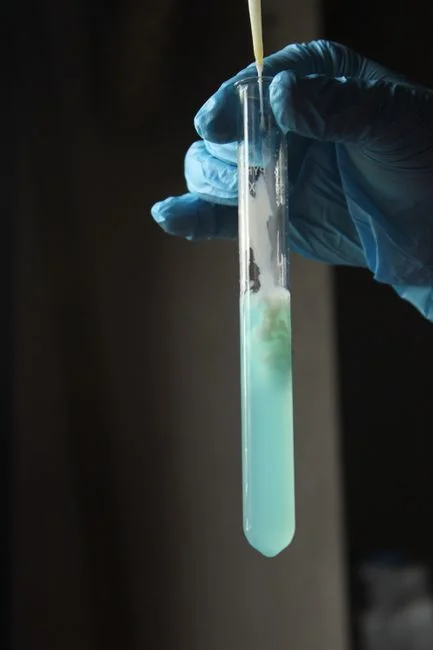
Membrane fouling is the dominant failure mode on Philippine sites because warm, biologically active feed water coats any RO membrane that lacks upstream protection. Self-cleaning side-stream filtration at 10–25 micron keeps blowdown suspended solids below 15 mg/L before the UF pretreatment skid (S3, 2026). Bio-organic flocculant dosing aggregates colloidal solids and biofilm fragments that bypass conventional filtration, which is a real problem in 28–32°C loop water. Antiscalant chemistry has to be tuned for silica and calcium sulfate: conventional BWRO caps at 75–80% recovery before scaling becomes unmanageable, so an automatic antiscalant and biocide dosing skid sized for Mindanao source water is what pushes recovery toward 85% (S3, 2026; S5, 2026). On-site disinfection with a chemical-free UV sterilizer for the warm cooling loop or a chlorine dioxide generator controls planktonic bacteria and biofilm precursors without leaving residuals that would accumulate at high CoC, and a multi-media pre-filter ahead of the UF stage is the lowest-cost insurance for the whole train. Skipping any one of these four steps is what drives membrane replacement intervals from 3–5 years down to 12–18 months in tropical service (S3, 2026).
CapEx, OpEx and payback for a Malingao build
A defensible CapEx/OpEx case for a Malingao hyperscale build sits in a narrow band. An RO train sized at 50,000 GPD runs $250,000–500,000 CapEx and $1.50–3.00 per 1,000 gallons OpEx; a ZLD overlay adds $3–8 million and $5–15 per 1,000 gallons (S3, 2026). Avoided municipal commercial purchases plus avoided discharge fees — typically $5–15 per 1,000 gallons in water-stressed basins (S2, 2026) — recover an RO-only CapEx in roughly 3–5 years for a Metro Manila-scale facility, with 100 MW hyperscale tenants drawing up to 2 million liters per day (S5, 2026) reaching payback faster through sheer volume. Mindanao-specific variables that move the payback band are the genset-diesel cooling-water loop, typhoon-driven stormwater equalization, and the Sultan Kudarat / Cotabato LGU tariff schedule, and these should be confirmed against current utility bills before the RFQ is issued. Sludge handling from the upstream clarifier and membrane cleaning drives the back end of the train; an industrial plate-frame filter press sized for the projected waste solids and a stocked set of replacement RO and UF membrane elements are the two line items that most often get cut from the RFQ and then re-added at commissioning.
Frequently Asked Questions
What is the realistic CapEx and OpEx envelope for cooling blowdown treatment at a Malingao hyperscale build?
A 50,000 GPD BWRO train runs $250,000–500,000 CapEx and $1.50–3.00 per 1,000 gallons OpEx, and a ZLD overlay adds $3–8M CapEx and $5–15 per 1,000 gallons OpEx (S3, 2026). For a 100 MW hyperscale site drawing up to 2 million liters per day (S5, 2026), avoided municipal purchases and $5–15 per 1,000 gallons in avoided discharge fees (S2, 2026) typically recover an RO-only CapEx in roughly 3–5 years. Request a priced line-item split for intake screening, oil removal on the genset loop, equalization, UF, RO, NF or MVC overlay, and sludge handling so the bands above are not blended into a single number.
How do I pick a supplier who can actually deliver a Mindanao-compliant train in 2026?
Shortlist suppliers who can document at least one installed BWRO train above 25,000 GPD on tropical surface or municipal feed, and ask for nameplate data on permeate TDS, recovery, and membrane cleaning interval at the actual site water temperature rather than at 25°C rating conditions. Confirm that the proposed chemistry program is non-phosphate and silica-aware, because conventional antiscalants will not let BWRO reach 85% recovery on Rio Grande de Mindanao source water (S3, 2026; S5, 2026). For broader Philippines cost benchmarking and pressure-testing before issuing the RFQ, the DCS supplier buyer's guide covers the control-system side and the Metro Manila data center blowdown guide provides a comparable cost baseline.
Will DENR DAO 2021-19 and EMB Region XII permit a standard BWRO discharge, or do I have to plan for ZLD?
For most Malingao sites, a UF + RO train at 50–85% recovery brings blowdown inside the typical DENR DAO 2021-19 TDS ceiling of about 1,500 mg/L and inside the parallel chloride, sulfate, and biocide limits (S3, 2026). ZLD is reserved for sites where EMB Region XII or the receiving-water classification effectively prohibits discharge, or where a hyperscale tenant contractually requires zero liquid discharge. Before sizing, request the receiving-water classification from the LGU and the latest EMB Region XII discharge-fee schedule, because some water-stressed basins already enforce TDS limits below 1,500 mg/L that effectively prohibit untreated blowdown discharge (S2, 2026). Hyperscale builds will also need PEOS/EIS coverage under the Philippine EIS System, which adds a Scope 3 water-withdrawal commitment that the ESG team must track in parallel with the engineering scope (S3, 2026).
What is the typical lead time and what site inputs should I bundle with the RFQ?
Tropical BWRO skids in the 50,000 GPD class typically run 16–24 weeks from PO to factory acceptance test, plus 4–8 weeks for sea freight, site assembly, and commissioning — confirm the supplier's current slot rather than relying on a generic brochure number. Bundle four site inputs with the RFQ so bidders price the same scope: (1) a 12-month influent dataset covering dry- and wet-season TDS, hardness, silica, and chloride; (2) the receiving-water classification and the EMB Region XII pre-application feedback; (3) the genset-diesel cooling-water flow and oil content; and (4) the LGU commercial tariff and any discharge-fee resolution. For the compliance side of the same RFQ, the data center effluent compliance guide lists the discharge documents that should travel with the proposal.