Who Regulates Industrial Discharge Near Jonesboro
Three regulators sit on top of every transportation equipment plant that discharges to the Jonesboro collection system, and the discharge number on the permit is a product of all three. The City Water and Light Plant (CWL) is the POTW administrator and acts under the Jonesboro Municipal Code, Part 1, Chapter 70, Article III, Division 3 (General Sewer Use Ordinance) and Division 2 (Pretreatment Ordinance); both are enforceable under the federal Clean Water Act, 33 U.S.C. 1251 et seq., per the CWL General Sewer Use Ordinance, Section 70-103 (Source: S4). The Arkansas Department of Energy and Environment (ADEQ) runs the NPDES pretreatment program for permit AR0043401, which is the underlying authority that allows CWL to implement 40 CFR 403 locally (Source: S3, S4). U.S. EPA sits above ADEQ as the rule-writer whose prohibited discharge standards and Categorical Pretreatment Standards CWL adopts.
A plant must satisfy all three layers at the same time: the absolute prohibitions in 40 CFR 403.5(a)(1) and (b), any applicable EPA Categorical Pretreatment Standard, and CWL's Technically Based Local Limits (TBLLs) (Source: S4, Section 70-105). On top of that, Section 70-108(1)(A) of the CWL ordinance allows the CWL Manager to impose conventional pollutant limits expressed as concentrations (mg/L) or mass loadings (lbs/day), and those limits are enforceable in the permit whether or not the user is otherwise subject to categorical standards (Source: S4, Section 70-108(1)(A)). If a transportation equipment facility thinks a permit number is wrong, the push-back runs upward through CWL first, then ADEQ, then EPA — but the day-to-day enforcement is CWL's.
The Permit Path: From Industrial User Survey to Discharge Permit
The CWL paperwork sequence is fixed by ordinance and runs in four steps. Step one is the CWL Industrial User Survey on the form furnished by the Manager; the survey is the gate that decides whether a permit is required at all (Source: S4, Section 70-107(C)). A first-time filer should treat this form as a process audit, not a checkbox — process descriptions and flow numbers on the survey propagate into the eventual permit limits.
Step two triggers only if the Manager flags a permit requirement; the Industrial User then submits an application for an individual or general Industrial Wastewater Discharge Permit under Section 70-89(4–6) of the Jonesboro Municipal Code (Source: S4, Section 70-107(C)). Step three is the Manager's evaluation under Section 70-89(7), which results in a permit that carries site-specific concentration (mg/L) or mass (lbs/day) limits and any monitoring, reporting, and sampling conditions (Source: S4, Section 70-107(D)). Step four is financial: the CWL Board of Directors sets the fees for sewer service, monitoring, inspections, and surveillance that fund the compliance program (Source: S4, Section 70-104). EHS managers should request a written target date for permit issuance at application intake; the ordinance fixes the steps but does not state a permit-issuance SLA in the supplied text.
What a Transportation Equipment Plant Discharges
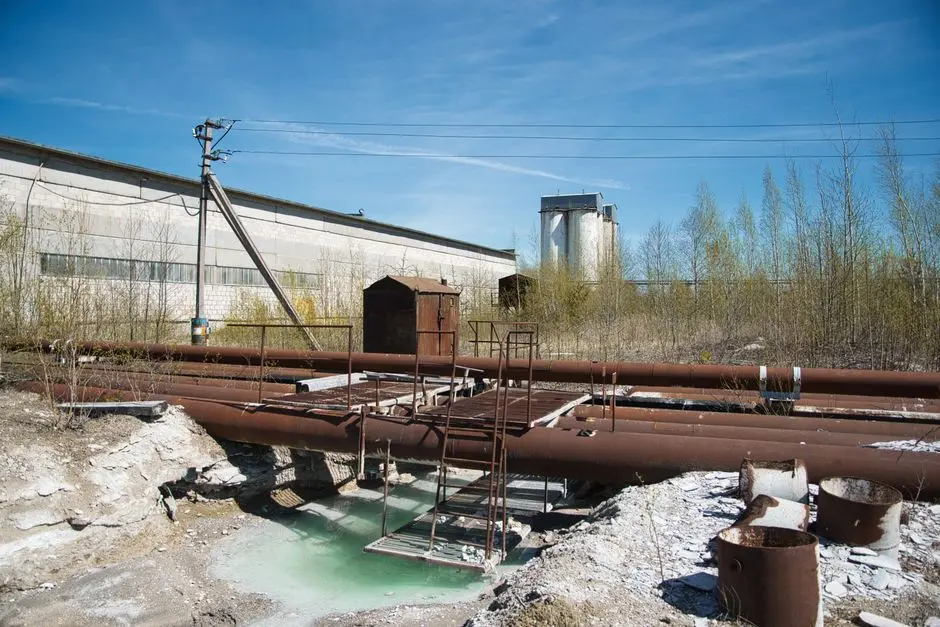
A transportation equipment plant — truck bodies, trailers, rail equipment, off-highway — generates a mixed wastewater profile that maps onto the parameter families CWL is most likely to test. Parts-washing effluent carries oils, greases, and entrained metal fines; machining and grinding coolant contributes emulsified oil and dissolved metals from tooling wear; phosphate and nitrate conversion-coating rinse water adds total phosphorus and total nitrogen plus dissolved metals; e-coat and paint overspray washwater carries suspended paint solids, solvents, and often zinc or chromium from pretreatment stages; boiler blowdown cycles through with elevated total dissolved solids and pH excursions. EPA's separate sanitary sewer guidance notes that wet-weather inflow and infiltration (I/I) can push instantaneous flows above permit conditions, so the equalization basin must be sized with the I/I risk in mind (Source: S5).
The parameter families CWL is most likely to impose under TBLLs and conventional limits include total suspended solids (TSS), oil and grease (O&G), pH, total metals (typically zinc, lead, copper, nickel, and chromium), and in some cases COD or BOD — the parameter family is described in Source: S4, Section 70-105 abbreviations. The supplied research does not list specific numeric TBLL values, so the EHS manager must request the current TBLL letter from CWL before any equipment is sized. Categorical Pretreatment Standards in 40 CFR may apply in addition to local TBLLs, and the more stringent number controls (Source: S4, Section 70-105, definition of Local Limits and TBLL).
The On-Site Treatment Train That Hits the Limits
The treatment train is layered because no single unit operation can bring a transportation equipment wastewater profile under all of CWL's limits at once. Each step below ties to a specific pollutant family or a specific permit-language risk.
Equalization and neutralization. The first vessel balances pH and dampens flow spikes. This step is not optional under the CWL framework because Section 70-108(1)(A) lets the Manager express limits as lbs/day, and a flow surge during a wash batch directly inflates the daily mass loading even if the concentration stays inside the mg/L ceiling (Source: S4, Section 70-108(1)(A)).
Coarse screening. A rotary mechanical bar screen at headworks protects downstream pumps and the DAF from rags, weld wire, parts-washer debris, and large paint chips that would otherwise blind the flotation cell or score pump impellers.
Dissolved air flotation (DAF). A DAF system for oil and grease removal takes out free and emulsified oil & grease and a large fraction of TSS. Oil/grease and TSS are two of the most commonly cited TBLLs for metalworking and transportation equipment plants under general POTW practice, although the specific numeric TBLL value for the Jonesboro service area is not present in the supplied research and must be requested from CWL.
Chemical precipitation, pH adjustment, and lamella clarification. Dissolved metals (zinc, copper, nickel, lead, chromium) are removed as hydroxide floc with a PLC-controlled chemical dosing system trimming the pH window to the metal solubility curve. A lamella clarifier for metals polishing captures the floc and residual TSS before discharge. The dosing system interlocks to flow loss so chemical feed cannot continue when the clarifier is offline.
Sludge dewatering. A plate and frame filter press for sludge dewatering handles the metal-rich sludge from the DAF and clarifier underflow, cutting hauled-waste volume against the plant's waste-vendor contract. Operators should also review the parallel pretreatment playbook for textile plants and the DAF vs clarifier comparison for fabricated metals to pressure-test the unit-operation choices against a peer sector.
| Unit Operation | Target Pollutant | Design Input the Buyer Must Request |
|---|---|---|
| Equalization / neutralization | pH, flow variability | Site total flow (gpm, gpd), peak shift pattern, worst-case pH excursion |
| Rotary mechanical bar screen | Gross solids, rags, weld wire | Peak instantaneous flow and bar spacing |
| Dissolved air flotation (DAF) | Oil & grease, TSS | Influent O&G and TSS, hydraulic loading, current CWL TBLL values |
| Chemical precipitation + lamella clarifier | Dissolved metals, residual TSS | Metals profile, target effluent metals, pH window, flocculant selection |
| Plate and frame filter press | Solids capture from DAF and clarifier underflow | Sludge volume, target cake dryness, cycle time |
| Effluent sampling and flow metering | Permit reporting compliance | Required sampling points, sampling frequency, reporting format |
Parameter Table: Mapping Each Train Step to a Permit Limit

The table below converts the narrative train into a one-page reference an engineer can use during equipment selection and HAZOP reviews. The permit framing — mg/L concentration limits and lbs/day mass loadings — comes from Section 70-108(1)(A) of the CWL General Sewer Use Ordinance (Source: S4).
| Process Step | Permit-Unit Output the Bidder Must Guarantee | Buyer Input Required Before Sizing |
|---|---|---|
| Equalization | Stabilized pH and flow that keep downstream mass loadings under lbs/day limits | Site peak flow, batch schedule, raw influent pH range |
| Rotary mechanical bar screen | Solids-free feed protecting DAF and pumps | Peak flow, debris character (rags, chips, weld wire) |
| DAF | Effluent oil & grease and TSS concentrations in mg/L aligned to CWL TBLLs (numeric TBLL not in supplied research) | Influent O&G and TSS, hydraulic loading rate, current TBLL letter from CWL |
| Chemical precipitation + lamella clarifier | Effluent total metals (Zn, Pb, Cu, Ni, Cr) in mg/L and residual TSS in mg/L | Metals profile, pH window, flocculant/coulant chemistry |
| Plate and frame filter press | Cake solids concentration for hauled-waste volume | Sludge volume, target cake dryness, cycle time |
For a deeper read on clarifier cost tradeoffs during equipment selection, the lamella clarifier cost comparison is a useful benchmark.
Enforcement and What a Violation Actually Costs
The downside is spelled out in the ordinance. Civil penalty exposure is up to $1,000 per violation per day for false statements, monitoring tampering, or knowingly inaccurate reporting (Source: S4, Section 70-108(1)(B)). Service-level enforcement runs in parallel: the Manager may decline to connect or reconnect sewer or water service to any person that has failed to comply with the ordinance or any order issued under it, unless the user first demonstrates sufficient financial ability to restore or repair damage to the POTW (Source: S4, Section 70-108(2)).
Administrative and judicial enforcement remedies under Sections 70-110, 70-111, and 70-112 can run simultaneously, so a single upset can trigger a notice of violation, a compliance order, and a court action in parallel (Source: S4). At the receiving end, EPA's municipal wastewater guidance flags that significant wet-weather flows can create operational challenges and adversely affect treatment efficiency and control of unit process operations at the WWTP — meaning a transportation equipment plant that spikes load during a storm event can be traced back through the SSO record (Source: S5).
A 2026 Procurement Checklist for the EHS Manager
The technical and regulatory content above only protects the plant if procurement closes on equipment that is actually sized to the permit. The 2026 checklist below is what an EHS manager should hand to a supplier shortlist meeting.
- Pull the binding numbers first. Obtain the current CWL permit and the latest TBLL letter; share both with every bidder so equipment is sized to the actual numeric limits, not assumptions (limit existence per Source: S4; numeric values to be requested from CWL).
- Demand permit-unit guarantees. Ask each supplier for guaranteed effluent concentrations at the design flow, expressed in the same mg/L and lbs/day units the permit uses, plus a turndown curve for low-flow shifts.
- Lock the chemical compatibility. Require documentation of PLC-controlled chemical dosing system chemistry for the flocculant/coagulant, and PLC interlocks so the dosing system shuts down on flow loss.
- Plan sludge handling against the waste-vendor contract. Confirm plate and frame filter press for sludge dewatering cycle time, cake dryness, and expected annual hauled-waste volume against the plant's current waste-hauler agreement.
- Build a 30/60/90 commissioning plan. Include baseline sampling, CWL notification, and operator training so the first permit reporting cycle is clean.
Frequently Asked Questions
What does the CWL Industrial User Survey actually ask?
The survey identifies process discharges, flow, and pollutants so the CWL Manager can decide whether an individual or general Industrial Wastewater Discharge Permit is required, per Section 70-107(C) of the Jonesboro General Sewer Use Ordinance (Source: S4). Treat it as a process audit, not a checkbox — process descriptions and flow numbers on the survey propagate into the eventual permit limits.
Are Categorical Pretreatment Standards enough, or do I also need to meet CWL's local limits?
You must meet both; the more stringent value controls, and CWL's TBLLs are set to protect the specific receiving POTW (Source: S4, Section 70-105). The EHS manager should map every applicable 40 CFR category limit against the current TBLL letter and size the treatment train to the lower of the two numbers on every parameter.
How much does a compliant pretreatment skid cost for a mid-sized transportation equipment plant in 2026?
The supplied research contains no validated 2026 price benchmark for the Jonesboro market. The EHS manager should request itemized CAPEX for screening, DAF, chemical dosing, clarifier, and sludge dewatering from at least three competing suppliers, and benchmark against the buyer's own flow and load data before awarding.
What is the realistic lead time from CWL permit application to first discharge?
The ordinance fixes the application and review steps but does not state a permit-issuance service-level agreement in the supplied text. The EHS manager should request a written target date from the CWL Manager at application intake and build the equipment delivery, installation, and commissioning schedule backwards from that date.