Why Okmulgee Food and Beverage Plants Are Re-Engineering Pretreatment in 2026
A surprise surcharge on the monthly POTW bill — or a Notice of Violation from the Oklahoma Department of Environmental Quality — is what usually gets a food or beverage plant manager into this article. EPA and state regulators have tightened discharge standards continuously, and Integrated Water Services notes that the food and beverage sector sits under heightened scrutiny because of its substantial water use and the complexity of its effluents (Integrated Water Services, 2024). In Oklahoma, the discharge envelope is set by three overlapping documents: the federal pretreatment framework under EPA 40 CFR Part 403, the ODEQ operating permit, and — most importantly day to day — the local sewer-use ordinance enforced by the receiving POTW, in the Okmulgee area the City of Okmulgee Public Works Authority.
Conventional primary clarification, equalization, and a basic activated-sludge basin were the standard 2000s-era food-plant recipe, and many Okmulgee plants are still running that configuration. Integrated Water Services states bluntly that conventional methods often fail to address the specific composition of food and beverage effluents, so compliance with stricter regulations frequently forces a technology upgrade (Integrated Water Services, 2024). The financial consequence of skipping that upgrade is well established: surcharge formulas on BOD and TSS excess, scheduled compliance meetings, and ultimately consent orders with construction milestones that can halt production. Plants that get ahead of the curve sequence their upgrades against an audit-ready plan; plants that react to enforcement letters pay for speed. The regional pretreatment compliance playbook covers the same rule stack from a different process angle and is a useful cross-check for an engineer assembling a defensible upgrade memo.
The Contaminant Categories That Drive Every Okmulgee Pretreatment Design
Every pretreatment train starts with a waste-stream characterization, and the contamination profile is driven almost entirely by product mix. ALAR breaks the food and beverage sector into recognizable contaminant categories, and that taxonomy maps cleanly to the unit operations an Okmulgee plant should evaluate (ALAR, 2024).
Meat and poultry operations generate FOG-rich wastewater that can physically clog collection piping and disable downstream biological treatment if not removed upstream. Beverage and confectionery plants discharge sugars and starches — easily degradable organics that drive rapid bacterial growth and very high BOD. Dairy and protein-rich waste streams add to the BOD load and create foaming and odor in aeration basins. Clean-in-place (CIP) chemicals and sanitation detergents swing pH and inhibit biology when they reach the aeration tank unconditioned. Pulp, seeds, grains, and packaging debris add a suspended-solids load that requires dedicated clarification. USP Technologies repeatedly flags hydrogen sulfide as the primary odor and corrosion problem in food and beverage waste, with downstream consequences for downstream infrastructure and worker safety (USP Technologies, 2024).
| Product mix | Dominant contaminant | Operational consequence | First unit operation to evaluate |
|---|---|---|---|
| Meat, poultry, protein rendering | Fats, oils, grease (FOG); blood and protein | Pipe fouling, foaming, biological inhibition | Dissolved air flotation (DAF) |
| Dairy, cheese, ice cream | Lactose, milk fats, protein | High BOD, foaming, H2S generation | Equalization + DAF, pH control |
| Beverage, brewery, soft drink, confectionery | Sugars, starches, suspended solids | Rapid BOD spikes, bulking sludge | Equalization + biological stage |
| Bakery, grain, snack, cereal | Starches, particulate, flour | High TSS, oxygen depletion in sewer | Fine screening + DAF |
| All food/beverage with CIP | Acid/alkaline cleaners, sanitizers | pH swings, nitrification failure | Automatic pH neutralization skid |
The category above the table matters more than flow volume when sizing equipment. A 50,000 gpd dairy stream and a 50,000 gpd brewery stream have very different unit-operation priorities, and both look different from a 50,000 gdp meat plant. Engineers who specify a single "food plant" treatment train without first mapping contaminants to product mix typically over-size one stage and under-size another. A filter press sizing for beverage wastewater guide walks through the same categorization logic for downstream solids handling.
A 2026 Parameter Table: What Limits Your Plant Actually Has to Hit
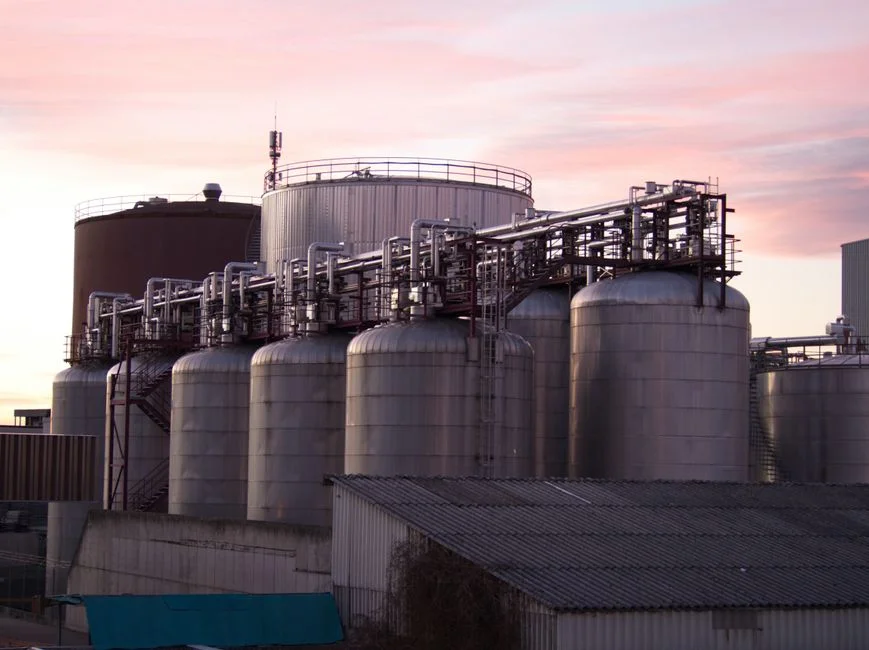
The sewer-pretreatment envelope that a food or beverage plant must hit in 2026 is the union of EPA's 40 CFR Part 403 categorical standards, the ODEQ-issued permit, and the local POTW sewer-use ordinance. ALAR confirms that the conventional parameter set covers BOD, TSS, pH, and nutrient levels (ALAR, 2024). USP Technologies adds that pH stability is not just a discharge number — unstable pH causes nitrification failure, poor sludge settling, and high ammonia in the effluent, so a pH excursion upstream is observable downstream as a compliance failure (USP Technologies, 2024).
Limits vary by state and by POTW; the supplied research explicitly names state-level variation across NCDEQ, SCDHEC, ADEQ, NMED, FDEP, CDPHE, the California Water Boards, and TCEQ, with ODEQ filling that role in Oklahoma (Integrated Water Services, 2024). USP Technologies also notes that hydrogen sulfide is an inspection-visible operational parameter, not just an odor issue, and that disinfection standards are tightening across the country (USP Technologies, 2024). Nutrient limits — total nitrogen and total phosphorus — are typically added where the receiving water body is impaired or sensitive.
| Parameter | Why the limit exists | Operational consequence of failure | Unit operation that solves it |
|---|---|---|---|
| BOD / CBOD | Oxygen demand in receiving stream | POTW surcharge, ODEQ violation | Biological stage (MBR, MBBR, IFAS) |
| TSS | Sludge deposition, sewer capacity | Surcharge, solids pass-through | DAF + clarification |
| pH | Worker safety, biological stability | Nitrification failure, pipe corrosion | Automatic chemical dosing skid |
| FOG / oil & grease | Sewer blockages, fire risk | POTW pass-through, NOV | DAF with coagulant/flocculant |
| Total nitrogen (ammonia, TKN) | Receiving-water eutrophication | Permit excursion, fish kill | Nitrification/denitrification in MBR or MBBR |
| Total phosphorus | Eutrophication in receiving water | Permit excursion, algae events | Biological P removal or chemical precipitation |
| H2S | Odor, corrosion, worker safety | Citizen complaints, infrastructure damage | Oxidation chemistry, dissolved-oxygen control |
| Fecal coliform / E. coli (where applicable) | Public health | Discharge violation | UV or chlorine dioxide disinfection |
The compliance manager should treat the right-hand column as a shopping list that maps 1:1 to a unit operation. If a plant cannot point to a specific piece of equipment for any row in that table, the inspector will find the gap.
The Standard Pretreatment Train: From Bar Screen to Sludge Cake
Water flows through a food/beverage pretreatment train in a predictable order, and each stage protects the next. A rotary fine bar screen for headworks protection comes first to remove rags, plastics, seeds, and fibrous debris that would otherwise rag up downstream pumps and plug biological-stage diffusers. Equalization follows to buffer the hydraulic and organic shocks that are routine in batch CIP and seasonal product changeovers — without it, chemistry and biology downstream see a moving target instead of a steady stream.
An automatic chemical dosing skid is where the operator takes direct control of coagulant, flocculant, and pH adjustment. USP Technologies ties pH stability directly to nitrification success, and unstable pH is documented as a cause of high ammonia, poor sludge settling, and ultimately a permit excursion (USP Technologies, 2024). A PLC-controlled coagulant and pH dosing skid with closed-loop pH control is the most reliable way to keep the envelope stable under changing CIP loads.
The next stage is a DAF system for FOG and suspended-solids removal. ALAR and USP Technologies both treat DAF as standard equipment for meat, dairy, and protein plants because it removes FOG, oil & grease, and fine suspended solids before they reach the biological stage (ALAR, 2024; USP Technologies, 2024). The biological stage — MBR, MBBR, or IFAS — handles the dissolved BOD and ammonia load, and is covered in the next section. The train closes with disinfection and a plate and frame filter press for sludge volume reduction, which directly cuts sludge-hauling cost (ALAR, 2024).
MBR vs MBBR vs IFAS: Choosing the Right Biological Stage

The biological stage is the most expensive single decision in the train, and the choice between MBR, MBBR, and IFAS is driven by discharge limits, footprint, and whether water reuse is a near-term objective. Integrated Water Services positions membrane bioreactors as the advanced-compliance answer, noting that MBRs combine biological treatment with membrane filtration to achieve higher contaminant removal and better effluent quality (Integrated Water Services, 2024). ALAR describes MBBR and IFAS as efficient aerobic options for high-strength food and beverage waste, with smaller, modular footprints than conventional activated sludge (ALAR, 2024).
MBR effluent is typically near-reuse quality, which matters for plants pursuing water reuse or ESG goals and is increasingly a permit-renewal conversation in Oklahoma. The trade-off is real: MBR carries higher membrane cost, higher aeration energy, and an operator skill requirement that smaller plants sometimes underestimate. MBBR and IFAS are simpler to operate, easier to retrofit into existing tanks, and forgiving of hydraulic shocks — but they will not deliver the same effluent quality as an MBR under tightening nutrient limits. A MBR configuration engineering guide walks through the same design choices from a different influent angle.
| Criterion | MBR | MBBR / IFAS |
|---|---|---|
| Effluent quality | Near-reuse, tightest BOD/TSS/nutrient limits | Solid secondary quality; nutrients depend on configuration |
| Footprint | Compact; membranes replace clarifier | Modular; can retrofit into existing basins |
| Operator skill | Higher — membrane cleaning, integrity testing | Moderate — conventional activated-sludge skill set |
| Hydraulic shock tolerance | Lower — membrane flux sensitive | Higher — biofilm handles swings |
| Capex vs Opex | Higher Capex, higher Opex (energy, membrane replacement) | Lower Capex, lower Opex |
| Best fit in Okmulgee | Tightest discharge envelope, water-reuse objective | Brownfield retrofit, budget-constrained upgrade |
A plant targeting a conventional secondary envelope with an upgrade path can start with an MBR module added to a future biological stage, while a greenfield plant chasing a tight nutrient limit from day one should evaluate a full MBR biological stage for tight BOD and nutrient limits now and skip the retrofit conversation later.
Disinfection and Sludge Handling: The Two Steps Plants Forget
Disinfection is the step that is most often deferred to "later" and the step most often cited in audit findings. USP Technologies notes that disinfection standards are tightening across the food and beverage sector, which raises the operational cost and complexity of chlorine, UV, and ozone systems (USP Technologies, 2024). A food plant that ships secondary effluent to a POTW without addressing disinfection when its permit requires it will see that gap show up in the next inspection cycle.
Sludge handling is the other deferred step, and it has a direct line on the operating budget. Residual sludge from DAF and the biological stage must be reduced in volume before disposal, and a plate and frame filter press for sludge volume reduction is the most common closing unit operation in the food and beverage sector (ALAR, 2024). The relevant comparison is between UV and chemical disinfection: a UV disinfection stage is operationally simple but offers no residual, while a chlorine dioxide generator provides residual disinfection and biofilm control at the cost of chemistry management. Skipping either disinfection or sludge dewatering is a common audit finding and a frequent cause of permit non-compliance, and both are visible line items on a compliance manager's inspection checklist.
Frequently Asked Questions
What does a 2026 food and beverage pretreatment upgrade actually cost in the Okmulgee area?
The supplied research does not publish a per-gallon or per-gpm installation cost for an Okmulgee food plant, so any number quoted from memory is a guess. What a buyer can do instead is request a site-specific CAPEX and OPEX split from each supplier, broken down by unit operation (headworks, equalization, chemical dosing, DAF, biological stage, disinfection, sludge dewatering), and ask each vendor to attach operating-cost assumptions for energy, chemistry, and sludge hauling at the plant's actual flow and load. That structure lets two proposals be compared on the same basis and makes the budget conversation with finance defensible.
How do we select a supplier and confirm the equipment will meet the local POTW and ODEQ envelope?
Supplier selection should be driven by three auditable items, not by brand familiarity. First, ask for pilot or reference data on a food or beverage stream with a similar BOD, TSS, and FOG profile at a similar flow range. Second, request documentation that the proposed biological stage and disinfection step have been used to meet an ODEQ-issued discharge permit, not just a generic EPA narrative. Third, confirm in writing that the supplier will support a performance test against the City of Okmulgee Public Works Authority sewer-use ordinance parameters, and that the warranty period is keyed to demonstrated compliance rather than to a calendar interval. Those three items separate an equipment vendor from a compliance partner.
Which product mix makes MBR mandatory instead of MBBR or IFAS?
The supplied research does not define a numeric threshold at which MBR becomes mandatory, so the decision is qualitative. Plants that need near-reuse quality, that are discharging to a sensitive receiving water body, or that face ammonia or total nitrogen limits near the detection floor of conventional biology should evaluate MBR. Plants with a secondary discharge envelope, a brownfield tank to retrofit, and limited operator headcount are usually better served by MBBR or IFAS. The same contaminant characterization in the second section that drove DAF selection should drive this decision; do not choose the biological stage on flow alone.
What is the typical lead time from PO to commissioning for a food plant pretreatment train in Oklahoma?
The supplied research does not publish a 2026 lead time for a food and beverage pretreatment train, so the figure has to be requested, not assumed. A buyer should ask each vendor for a written schedule broken into engineering submittal, fabrication, shipping, installation, commissioning, and performance-test phases, and then ask for the same schedule from two reference customers in Oklahoma or a neighboring state. Lead time on long-lead items — membrane modules, filter press plates, UV reactors — is the schedule risk that most often pushes a compliance deadline, and that risk only shows up when the schedule is requested in writing before the PO is signed.