What 'Domestic Sewage Treatment' Means in Muscat
Domestic sewage treatment in Muscat is the engineered process of collecting and treating the used water from toilets, washing, laundry, kitchen cleaning and food preparation, separating the contaminants from the liquid stream, and either discharging the clarified effluent to a designated point or routing the biosolids to a managed end-use. In Oman's published research this water is described as "the water consumed by a human being" that "contains all the materials added to the water throughout its use" and that is "composed of the human body wastes together with the water utilized for flushing toilets, washing, laundry, food preparation, and cleaning of kitchen utensils" (Al-Hashimi et al., 2013, PMC4450684).
In Muscat this stream reaches a treatment plant through one of two routes: a pressurised or gravity municipal sewer network operated by Haya Water, or a tanker haulage from septic tanks at compounds, hotels and remote sites that fall outside the sewered catchment. The published Oman overview also separates this stream from industrial wastewater — water from process and cooling activities — so a residential compound, hotel, hospital or labour camp is squarely in the domestic category (Al-Hashimi et al., 2013). The same source notes that influent in Oman stays warm for most of the year, which is a design input for biological kinetics, oxygen demand and tank sizing rather than a constant a buyer can take from a generic textbook.
How Oman's Domestic Sewage Treatment Network Is Built
Oman operates a national STP estate of more than 350 wastewater treatment plants distributed across the Sultanate, with 37 plants visited in the published characterisation study, split between 15 main plants and 22 small community units (Al-Hashimi et al., 2013, PMC4450684). The headline finding for a 2026 buyer is that "roughly 96% of STPs were operating as extended aeration processes, with the remainder operating as stabilization ponds which do not produce sludge at monthly and annual intervals" (Al-Hashimi et al., 2013). That single percentage is the most important procurement signal in the article: a Muscat engineer is almost always replicating a known extended-aeration design envelope rather than introducing a novel process train, which means local operator familiarity, local spares and local reference sites already exist.
On the solids side, the same study reports that "roughly 60% of the visited STPs treat the sludge in drying beds," while "around 8% of covered STPs utilized filter press," and the remaining percentage "had no sludge treatment processes, and in general, these sites periodically collected the sludge in trucks and dumped it at landfills" (Al-Hashimi et al., 2013). The study also flags that many of the drying-bed installations are "functioning without proper planning and were poorly maintained, with either too much sludge being supplemented to the beds without providing the opportunity for the sludge to dry or allowing the sludge to remain too long in beds with resultant growth of weeds." A Muscat buyer should read this as a planning input: drying beds are the baseline technology, but a 2026 design that pairs extended aeration with mechanical dewatering is a credible upgrade path on a known footprint.
Muscat's Domestic STPs and Their Sludge Reality
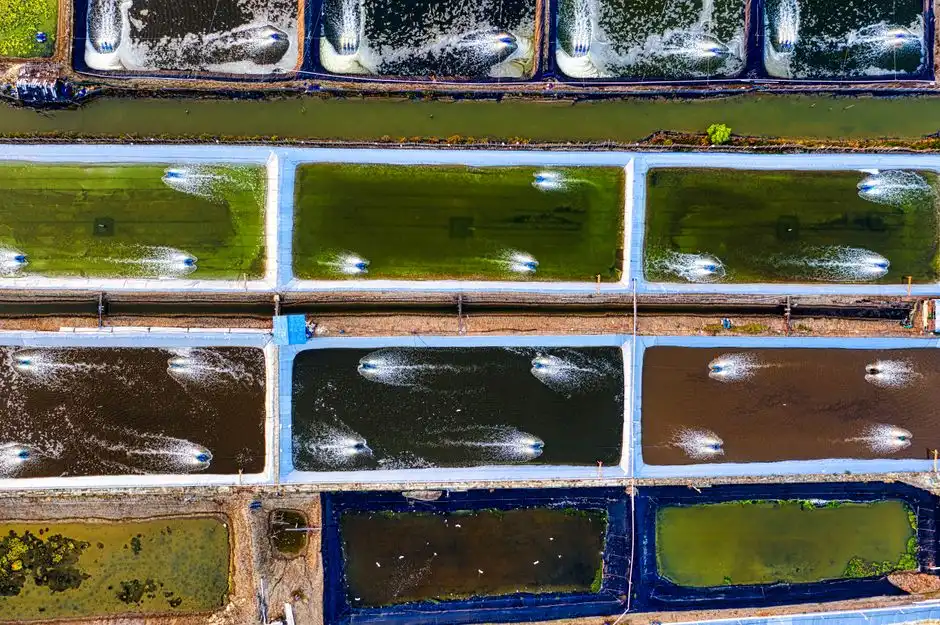
The most-cited Muscat dataset comes from the 2010 monthly sampling campaign at six domestic STPs across Oman, three of which sit inside Muscat Governorate: Rusayl (RSL.D), Darsait (DST) and Ansab (Al-Hashimi et al., 2013, PMC4450684). The table below captures the headline numbers a buyer needs to plan around.
| Parameter | Sample set | Value (Al-Hashimi et al., 2013) | Planning implication |
|---|---|---|---|
| General EC average, RAS | All domestic STPs | 933 µS/cm | Recycled stream carries seasonal salinity; STD values were high. |
| General EC average, WAS | All domestic STPs | 702 µS/cm | Variable salt load on dewatering liquor; size sludge lines accordingly. |
| General EC average, primary sludge | All domestic STPs | 404 µS/cm | Lower conductivity than activated sludge streams. |
| Volatile content average, RAS | All domestic STPs | 68% | Biological sludge; moderate cake solids expected. |
| Volatile content average, WAS | All domestic STPs | 65% | Same conclusion; dewatering selection drives haulage mass. |
| Volatile content average, primary sludge | All domestic STPs | 71% | Highest organic content of the three streams. |
| Phosphate | RAS in SLL.STP; WAS in RSL.D | RAS 26–33,861 mg/kg; WAS up to 32,745 mg/kg | "Very high in all domestic STPs" (Al-Hashimi et al., 2013) — chemical dosing and struvite control are real inputs. |
The phosphate result is worth a second read: the study explicitly recommends further work on the sources of phosphate, and the published anions chart shows the highest phosphate range "in RAS samples in SLL.STP (26 to 33861 mg/kg)" and the widest WAS range in RSL.D reaching 32,745 mg/kg (Al-Hashimi et al., 2013). For a Muscat engineer, that is a direct signal to budget for chemical precipitation, struvite mitigation in sludge lines, and confirmation of the discharge limit for total phosphorus at the chosen reuse class. On routing, the same source describes a tightly choreographed solids chain: "within Muscat Municipality, the dried sludge is transported from the Municipality STPs to Al-Ansab STP. Then, it is collected by Oman Fertilizer Company which transports this sludge to Al-Khabourah (west of Muscat area) for composting. Approximately around 69% of sludge is dispatched to discarding sites" (Al-Hashimi et al., 2013). A buyer should treat Al-Ansab consolidation and the Oman Fertilizer haul to Al-Khabourah as the default Muscat baseline and confirm current operability before design freeze, since the same paper notes that many plants were sending sludge to landfills with secondary pollution risk. This is also where a packaged WSZ A/O package sewage treatment plant typically slots in for compounds and small sites that still need to feed the same downstream chain.
Treatment Trains Used for Domestic Sewage in Muscat
Three realistic process trains cover almost every domestic case in Muscat: conventional extended aeration activated sludge, an A/O (anoxic + aerobic) biological contact oxidation package plant, and a submerged MBR. The Oman research positions extended aeration as the dominant technology, with aerobic pond and anaerobic treatment listed as documented alternatives, and notes that "activated sludge process is an efficient technology to meet stringent standard if properly operated" while it "results in the generation of a large amount of waste activated sludge" (Al-Hashimi et al., 2013). For sites that need a buried, automated unit — compounds, hotels, hospitals, labour camps — the WSZ A/O package sewage treatment plant combines anoxic and aerobic contact oxidation with sedimentation and disinfection in a single buried package, handling 1–80 m³/h with no on-site operator required (HydropureWater product catalog, 2026). Where the effluent target is reuse — irrigation, cooling tower make-up, toilet flush — the MBR membrane bioreactor system with submerged PVDF membranes at a sub-micron nominal pore size delivers a near-reuse effluent on a markedly smaller footprint than conventional activated sludge, and the same article recommends pairing MBR with a structured MBR membrane module troubleshooting field guide for the first year of operation.
| Process train | Typical flow envelope | Effluent envelope | Footprint / civils | Operator skill |
|---|---|---|---|---|
| Extended aeration activated sludge (Al-Hashimi et al., 2013 baseline) | Community-scale; sized on 24 h average and peak factor | Secondary treated; suitable for municipal sewer or further polishing | Largest of the three; open or covered tanks | Trained plant operator; routine WAS control |
| A/O package (WSZ series, 2026 catalog) | 1–80 m³/h (HydropureWater, 2026) | Secondary with disinfection; sewer or controlled discharge | Buried below grade, landscaped over; smallest visible footprint | Fully automated, no on-site operator required (HydropureWater, 2026) |
| MBR (HydropureWater, 2026) | 10–2,000 m³/day skid envelope | Near-reuse quality from submerged PVDF membranes | Significantly smaller than conventional activated sludge; skid-mounted | Skilled operator; membrane cleaning schedule and on-line monitoring |
The same Oman research strand also flags nematode ova monitoring as part of the broader reuse and public-health context, since parasite ova are a recognised parameter in wastewater reuse for irrigation and landscape application (Rivera et al., 2012, OpenAlex W2736553227). A Muscat engineer planning a discharge to a wadi, a landscaped irrigation network or a hotel's green area should ask the supplier which reuse class the design targets and whether the MBR or A/O effluent is being paired with UV or chlorine dioxide to meet that class — and the 2026 selection checklist below shows how this question fits into the overall specification.
Sludge Handling: Where the Real Cost Sits
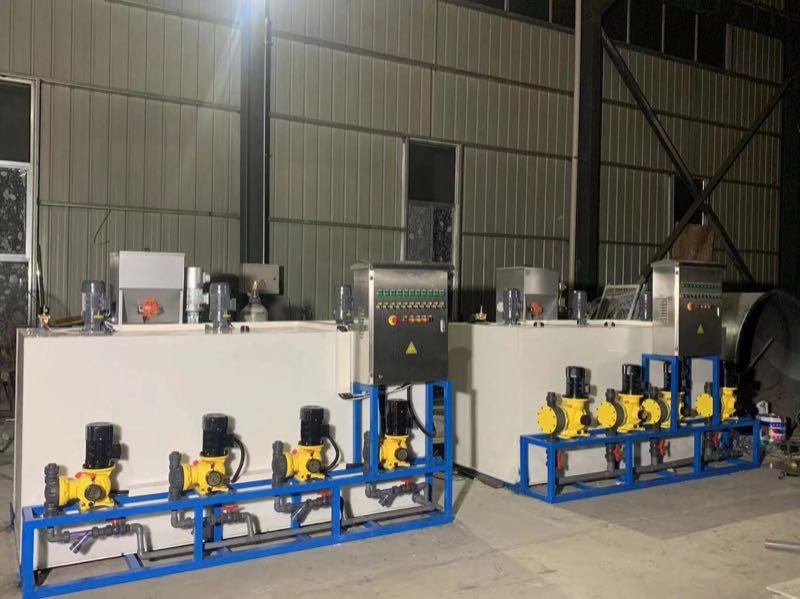
The single most important number in any 2026 Muscat STP budget is the one the published research puts in plain language: "the cost for surplus sludge treatment has been estimated to be up to 60% of the total operating cost of a wastewater treatment plant" (Al-Hashimi et al., 2013, citing reference 3 in that study). On a domestic extended-aeration plant the rest of the OPEX — power, chemicals, labour, membrane replacement — is dwarfed by the dewatering and haulage chain, which is why the paper's recommendation to size sludge drying beds "large enough to handle the produced sludge for better management" is really a financial argument, not just a civil one (Al-Hashimi et al., 2013). A buyer translating that into equipment should plan a thickening step (gravity belt or rotary drum) followed by either a drying-bed layout — matching the "~60% of the visited STPs" baseline — or a mechanical dewatering unit such as a plate and frame filter press when footprint is constrained or the cake has to leave site within a fixed turnaround. For high-phosphate Muscat sludge, cake handling and the composting routing to Oman Fertilizer at Al-Khabourah should be confirmed with the current operator before the dewatering choice is frozen, since polyphosphate can bind water and degrade cake solids (Al-Hashimi et al., 2013). On the headworks side, a rotary mechanical bar screen protects downstream pumps and membranes, while an automatic chemical dosing system handles coagulation, pH trim or struvite control where the influent phosphate warrants it. A 2026 design brief that lists only the biological reactor without naming the dewatering and headworks chain is incomplete on the evidence in the source.
Choosing a Domestic Sewage Treatment Package in Muscat: 2026 Checklist
The 2026 buying decision is less about the reactor and more about the boundary conditions. The six steps below convert the Oman research into a specification a Muscat engineer can hand to a supplier, with the equipment anchors placed against the steps where they usually appear.
| Step | Decision | Action / specification input | Equipment anchor |
|---|---|---|---|
| 1 | Confirm collection route | Municipal sewer, on-site package, or tanker-fed plant — each changes the hydraulic profile and peak factor | — |
| 2 | Size on peak daily flow with a safety factor | Match to a standard capacity band; e.g. 1–80 m³/h for an A/O package (HydropureWater, 2026) or 10–2,000 m³/day for an MBR skid | WSZ A/O package / MBR membrane bioreactor system |
| 3 | Define the effluent target | Municipal sewer acceptance, surface-water discharge, or irrigation reuse — drives MBR vs A/O choice | Disinfection train added in step 6 |
| 4 | Plan sludge routing | Drying beds (Muscat baseline, ~60% of STPs) vs mechanical dewatering; confirm haulage to Al-Ansab STP or an approved composting site (Al-Hashimi et al., 2013) | Plate and frame filter press |
| 5 | Request documented compliance | Ask the supplier for the exact Omani standard applied to the discharge point and reuse class — the published research does not provide numeric limits, so this is a buyer-supplied input | — |
| 6 | Request commissioning data | Phosphate, EC and nitrate data from at least one reference site in a similar climate; pair with a disinfection step sized to the reuse class | UV sterilizer / chlorine dioxide generator |
Two cross-cutting items also belong in the specification envelope. The first is a thickening step sized against the volatile-content averages reported for Muscat sludge (68% RAS, 65% WAS, 71% primary), which is the input a sludge thickener design criteria guide uses to set solids loading and polymer demand. The second is remote monitoring: an online monitoring and cloud platform for SMEs arrangement lets a small Muscat team run an automated package plant without on-site staffing, which is the operating model the WSZ-series product assumes (HydropureWater, 2026). For engineers who want to compare the Muscat envelope against other regional case studies, the parallel domestic sewage treatment in Bristol guide and the domestic sewage treatment in Annaba guide apply the same checklist template to different influent and discharge regimes.
Frequently Asked Questions
What counts as domestic sewage in Oman?
Domestic sewage is the water from toilets, washing, laundry, food preparation and kitchen utensil cleaning, plus the human body wastes carried in it, and is transferred to treatment plants via sewer systems or by tanker from septic containers (Al-Hashimi et al., 2013, PMC4450684). It is separate from industrial wastewater, which is process and cooling water from industrial activities. A residential compound, hotel, hospital or labour camp falls squarely in the domestic category.
How many STPs operate in Oman and which process dominates?
The published survey reports more than 350 wastewater treatment plants distributed across Oman, with 37 plants visited in detail. Of those 37, roughly 96% operate as extended aeration activated sludge, with the remainder being stabilization ponds (Al-Hashimi et al., 2013). A 2026 Muscat buyer is therefore almost always specifying against an extended-aeration design envelope rather than introducing a new process train.
Which Muscat sludge destination should a new plant plan for?
The Muscat baseline is to transport dried sludge from the Municipality STPs to Al-Ansab STP, where it is collected by Oman Fertilizer Company and hauled to Al-Khabourah (west of the Muscat area) for composting (Al-Hashimi et al., 2013). The same source notes that approximately 69% of sludge is dispatched to discarding sites, so a buyer should confirm the current operator, the current haulage tariff and the cake-solids target before design freeze.
What package plant size is realistic for a Muscat compound or hotel?
For an A/O buried package the documented envelope is 1–80 m³/h with full automation and no on-site operator required (HydropureWater WSZ series, 2026). For reuse-class effluent, an MBR skid in the 10–2,000 m³/day envelope is the realistic upgrade path. The right size is set by the peak daily flow with a safety factor applied to the worst-case occupancy of the compound, hotel or camp.
What is the biggest operating cost to plan for?
Surplus sludge treatment is "up to 60% of the total operating cost of a wastewater treatment plant" (Al-Hashimi et al., 2013, citing reference 3). The dewatering choice — drying beds versus a plate and frame filter press — and the cake haulage chain to Al-Ansab STP or an approved composting site are therefore the largest controllable line items in the 2026 budget, ahead of power, chemicals and membrane replacement.
Related Equipment
- MBR membrane bioreactor system — specifications, capacity range, and technical data