What counts as domestic sewage in an Annaba context
Domestic sewage consists of combined blackwater and greywater discharged from residential housing, hotels, hospitals, schools, and light-commercial premises (Kyriienko et al., 2018). In an Annaba context, this means sewage with a biological oxygen demand and suspended-solids profile typical of mixed household and institutional flows, rather than industrial process water, even though the city's industrial rejection is a documented stressor on the receiving environment.
One caveat for the design engineer: the Energy Procedia 2012 paper on urban and industrial rejection in Annaba returned a 404 at the time of writing, so there is no extractable Annaba-specific influent dataset in the supplied research. Treat any quoted local BOD, COD, or nitrogen values as illustrative rather than authoritative, and request the current characterisation from the operator of the receiving municipal sewer or from the local water authority before freezing the design basis.
The parameters that always need to be confirmed on site are BOD₅, COD, TSS, ammonia, total nitrogen, total phosphorus, pH, influent temperature, and the peak factor—every process train discussed in the next section is parameter-sensitive on at least two of these. The coastal Mediterranean climate keeps influent temperatures mild year-round, which simplifies biological kinetics, but tourist-season occupancy in coastal Annaba can push the peak factor well above the dry-weather average, so the hydraulic envelope must be sized for that seasonality rather than the annual mean.
Process trains viable for Annaba at small-to-mid scale
Three process trains cover the small-to-mid domestic envelope in Annaba: an anoxic/aerobic (A/O) biological contact-oxidation package, a membrane bioreactor (MBR), and a septic-tank plus drainage-well train for sites outside the sewer network. Selecting the appropriate system depends on the specific discharge requirements and site footprint.
The A/O contact-oxidation train is the default for 1–80 m³/h package plants, combining biological reaction, sedimentation, and disinfection in a single buried unit and running fully automatic without a dedicated operator (HydropureWater WSZ product catalog). The MBR train is the upgrade when the effluent target is reuse-grade or the site is footprint-constrained, because submerged PVDF membrane modules deliver near-reuse quality from a much smaller footprint than a conventional activated-sludge plant of equivalent throughput.
The septic-tank plus drainage-well train remains the gravity-driven baseline for individual houses, small schools, roadside cafes, restaurants, small railway stations, and camping sites where there is no centralised sewer network, with collection and discharge handled without electricity (Kyriienko et al., 2018). The academic literature also documents decentralised biological options such as vermifiltration meeting statutory discharge standards in semi-arid Zimbabwe, which is a useful reference point on what is biologically achievable off-grid, but it is rarely the first commercial choice in Annaba at this scale (IntechOpen, 2022).
| Criterion | A/O contact oxidation (WSZ) | MBR (submerged PVDF) | Septic + drainage well |
|---|---|---|---|
| Typical flow envelope | 1–80 m³/h packaged | 10–2,000 m³/day packaged | Single building or small cluster |
| Power requirement | Low (automatic, no operator) | Moderate (membrane aeration + backwash) | None (gravity-driven) |
| Footprint | Buried, can be landscaped over | ~60% smaller than conventional plant of equivalent throughput | Tank plus subsurface absorption zone |
| Effluent target | Municipal discharge / irrigation ditch | Reuse-grade | Subsoil dispersal (requires hydrogeological proof) |
| Reference | WSZ product catalog | MBR product catalog | Kyriienko et al., 2018 |
Why nitrogen containment is the make-or-break design constraint
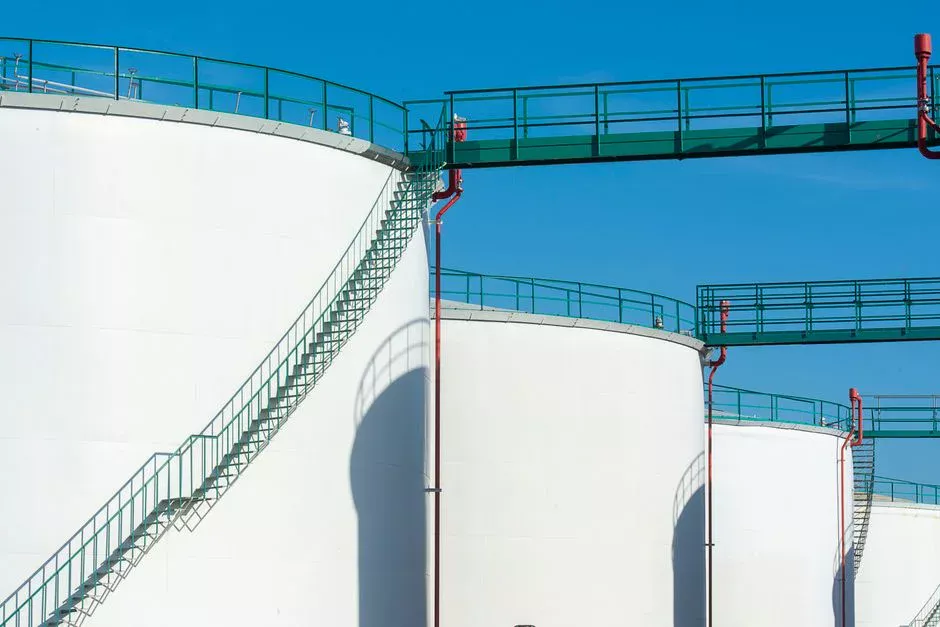
Percolation from a domestic sewage tank elevated dissolved inorganic nitrogen (NH₄⁺, NO₂⁻, NO₃⁻) in the surrounding groundwater, with a 3D hydrogeological model used to map the plume 1.5 years after closure of the tank (Water SA 45(3), 2019). The authors verified their hypothesis that the groundwater was heavily contaminated in the area surrounding the sewage tank, which serves as the quantitative evidence base for treating nitrogen as a make-or-break design constraint.
Translated into a design rule, this means any train relying on soil absorption must be backed by hydrogeological proof that the receiving formation will not become a long-term nitrogen source. Where that proof cannot be produced—which is common in a coastal urban setting like Annaba—the engineer should default to an A/O or MBR train, because both include a defined anoxic stage for nitrogen reduction before the effluent leaves the site. The 2019 study is a one-site, one-time exercise; it is the right reference to cite, but it does not replace a current site investigation carried out at the actual project location.
Package equipment specification for the typical Annaba site
The WSZ underground package sewage treatment plant is specified at 1–80 m³/h, featuring A/O biological contact oxidation, sedimentation, and disinfection in a single buried unit, fully automatic with no operator required, and installable below grade or trailer-mounted for mobile deployment (HydropureWater WSZ product catalog). For the reuse-grade or footprint-constrained route, the MBR membrane bioreactor system features integrated activated sludge with submerged PVDF membrane filtration, near-reuse effluent quality, a 10–2,000 m³/day capacity envelope, and a footprint roughly 60% smaller than a conventional plant of equivalent throughput (HydropureWater MBR product catalog).
Both trains require a screening pre-step to protect downstream pumps and membranes—a rotary mechanical bar screen from the GX series is the standard headworks choice. Both also generate waste activated sludge that must be removed from the site, so the tender should include a sludge-handling endpoint such as a plate and frame filter press for periodic dewatering rather than relying on the local sewer to take it. Excavation depth, pipework routing, and the electrical connection point should be confirmed against the WSZ or MBR general arrangement drawing before the supplier locks the GA, as those three items drive the civil scope more than the process scope.
| Item | Specification | Notes |
|---|---|---|
| Process unit — A/O route | WSZ underground package STP, 1–80 m³/h | A/O contact oxidation + sedimentation + disinfection, fully automatic |
| Process unit — reuse route | MBR with submerged PVDF modules, 10–2,000 m³/day | Near-reuse effluent, ~60% smaller footprint than conventional |
| Headworks | Rotary mechanical bar screen (GX series) | Protects pumps and membranes on both trains |
| Sludge endpoint | Plate and frame filter press | Periodic dewatering of waste activated sludge |
| Site works | Excavation, pipework, electrical connection | Confirm against supplier general arrangement drawing |
For context on how the same equipment family is applied in other North African coastal cities, the engineering guides for Domestic Sewage Treatment in Tangier: 2026 Engineering Guide and Domestic Sewage Treatment in Agadir: 2026 Engineering Guide cover the parallel process choices at similar flow envelopes.
Decision framework: which train fits which Annaba site
The selection rule has three branches determined by site constraints and effluent requirements. For an individual house, roadside cafe, small school, small railway station, or camping site with no central sewer, the septic-tank plus drainage-well train is the documented gravity-driven baseline, provided the absorption zone is hydrogeologically safe (Kyriienko et al., 2018). For a residential compound, hotel, hospital, or small factory in the 1–80 m³/h range discharging to a municipal sewer or irrigation ditch, the A/O contact-oxidation WSZ underground package is the right fit. For a water-reuse project, a tight footprint, or a sensitive receiving water close to the Mediterranean coast, the MBR with submerged PVDF modules is the upgrade path.
One cross-check rule overrides the others: if the site cannot demonstrate a hydrogeologically safe absorption zone, do not select the septic-based option, because the 2019 Water SA study verified heavy groundwater nitrogen contamination in the area surrounding a domestic sewage tank 1.5 years after closure. In that case, choose an A/O or MBR train regardless of the nominal flow, and let the package-equipment spec in the previous section carry the design through the tender.
Where dissolved-air flotation is being considered as a pre- or side-step, the design notes in the DAF System for Domestic Sewage Wastewater Design: 2026 Engineering Guide cover the hydraulic and air-saturation inputs that must be confirmed on the Annaba influent before adding a flotation stage.
Frequently Asked Questions
What flow range does the WSZ underground package cover, and is it the right unit for a hotel or a hospital in Annaba?
The WSZ underground package sewage treatment plant covers 1–80 m³/h in a single buried unit, with A/O contact oxidation, sedimentation, and disinfection in one envelope, which puts a hotel, hospital, or residential compound within its flow capacity (HydropureWater WSZ product catalog).
When should I pick an MBR over the A/O package, given the MBR costs more to buy and run?
The decision is based on footprint and effluent target. If the site needs reuse-grade effluent, has a constrained plot, or discharges near a sensitive receiving water on the Mediterranean coast, the MBR membrane bioreactor system is the upgrade—otherwise, the A/O package delivers the required discharge quality at a lower operating cost.
What is the typical lead time for a packaged STP shipped to Annaba?
The package is factory-built, so on-site work is limited to excavation, pipework, and the electrical connection; the buyer should request a confirmed dispatch and sea-freight schedule from the supplier, as shipping duration into Annaba typically sets the project programme rather than the fabrication time.
What data should I send the supplier to get a sized quotation?
Send the influent characterisation (BOD₅, COD, TSS, ammonia, total nitrogen, total phosphorus, pH, temperature), the design flow and peak factor, the effluent target (municipal sewer, irrigation ditch, or reuse), the available footprint, the groundwater depth, and a site plan showing the inlet, outlet, and electrical connection point—without these inputs, the supplier cannot return a technically defensible sizing.
Related Equipment
- WSZ underground package sewage treatment plant — specifications, capacity range, and technical data
- MBR membrane bioreactor system — specifications, capacity range, and technical data
- rotary mechanical bar screen — specifications, capacity range, and technical data