Why São Paulo Factories Need an Industrial ETP with DAF in 2026
Two regulators control how a São Paulo factory disposes of its wastewater. Direct discharge to receiving waters falls under CONAMA Resolution 430/2011, which sets conditions and standards for effluent release into water bodies across Brazil. Discharge to the public sewerage system is policed by CETESB under São Paulo State Decree 8468/1976, which sets stricter pretreatment limits tailored to the protection of municipal sewage treatment works and the Tietê–Pinheiros basin (CETESB, 1976). A 2026 CAPEX case for a new ETP almost always starts with one question: which route does this factory's effluent take?
Commercial pressure reinforces the regulatory one. CETESB's tariff structure increases the sewer surcharge when influent exceeds contract limits, and the São Paulo Metropolitan Region has faced recurring water scarcity events that elevate the unit cost of potable supply. Reuse economics therefore begin to work in the factory's favour as soon as a packaged ETP can polish effluent to cooling-tower make-up or wash-water quality. Parason's commercial reference list confirms that DAF, sludge dewatering and clarification cells are specified across food processing, pulp & paper, textile, metalworking, petrochemical and municipal pre-treatment applications, and that packaged trains are a normal procurement path rather than a custom build (parason.com). This guide is written for plant engineers, EHS managers and EPC subcontractors in São Paulo State who must specify or upgrade an ETP in 2026. For a vendor-neutral DAF unit selection framework, the deep-dive reference applies globally and is the right starting point when the discharge route has been confirmed.
Matching the ETP Train to Your Factory's Discharge Route
The discharge route is the single biggest design decision before equipment selection. It determines whether the factory can stop at physical-chemical treatment or must add a biological polishing step, and it sets the analytical envelope the vendor must hit in the proposal.
- Route A — direct discharge to a receiving body: governed by CONAMA Resolution 430/2011. Typical train: DAF → biological treatment (MBR, SBR or activated sludge) → disinfection. Required for plants outside the public sewer catchment or where reuse is not the objective.
- Route B — discharge to the public sewer (most common in São Paulo industrial parks): governed by CETESB Decree 8468/1976 pretreatment limits. Often achievable with DAF + physical-chemical treatment alone for low-flow factories with low soluble COD.
- Route C — on-site reuse for cooling tower make-up, wash water or irrigation: DAF + filtration + disinfection is the minimum train, with RO polishing for closed-loop reuse. See the RO membrane design criteria for 2026 when reuse targets are strict.
Influent matrix drives the chemical dose, hydraulic retention and polymer demand on the DAF regardless of route. The five inputs that change every vendor's proposal are TSS, FOG, COD/BOD, pH and temperature. The factory's own wastewater characterization report — typically a 24-hour composite sampled at the EQ tank outlet — must be in hand before any sizing is finalised.
| Discharge route | Governing instrument | Minimum ETP train | Typical DAF position |
|---|---|---|---|
| Receiving water body | CONAMA Resolution 430/2011 | DAF + biological (MBR/SBR/AS) + disinfection | Primary clarification upstream of biology |
| Public sewer | CETESB Decree 8468/1976 | DAF + physical-chemical (pH correction, coagulant/flocculant) | Primary clarification; biological step only if COD is high |
| On-site reuse | Project specification (no single federal limit) | DAF + filtration + disinfection, optional RO | Primary clarification; polishing downstream |
DAF Sizing for a São Paulo Factory: Flow Tiers and Engineering Specs
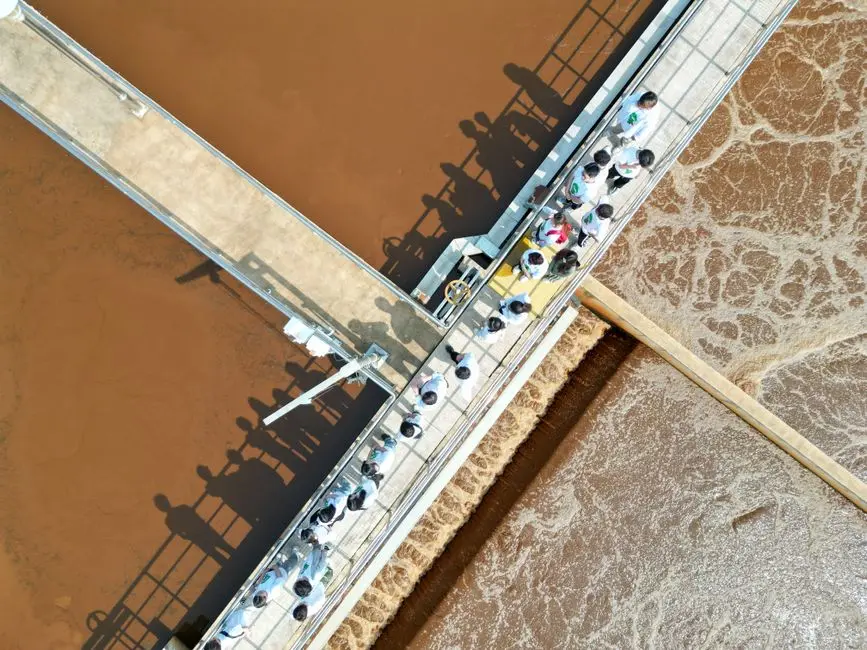
Commercial DAF units for mid-sized industrial plants cover 4–300 m³/h across 13 standard models in the HydropureWater DAF product line. That range covers most food, metalworking, textile and chemical factories in São Paulo State. A paper-mill ETP supplied by Meri for the Kıvanç project in Adana, Turkey, was built for 7,200 m³/day (≈300 m³/h) and a maximum COD load of 57,000 kg/day — useful as a high-end benchmark for sizing conversations (meri.de, project ordered 2021, started up 2024). Most São Paulo plants below the pulp & paper class sit well inside the 4–300 m³/h band, which means a packaged Dissolved Air Flotation (DAF) system is the right procurement category.
The removal benchmark to put in a vendor specification is 95%+ TSS, documented for a comparable industrial flotation cell when combined with appropriate chemical conditioning (parason.com, Parason ETP solutions). That number is the floor a credible proposal must justify or beat. The DAF engineering parameters the engineer should request in writing from every vendor are: hydraulic surface loading rate, air-to-solids ratio, recycle rate, microbubble size distribution, skim removal rate, and the integrated polymer make-down system. These six parameters are the difference between a quote that meets CONAMA 430/2011 and CETESB 8468/1976 and one that only looks like it does on paper.
São Paulo's tropical climate cuts both ways. Ambient temperatures in the 18–30 °C range support year-round biological activity, which reduces the heated-reactor sizing on MBR or SBR steps. The same climate accelerates biological growth in equalization tanks and on screening equipment, so upstream rotary mechanical bar screens and aeration design must be sized for fouling loads, not just nominal flow. For a process-level walk-through of microbubble generation and recycle hydraulics, the DAF engineering deep dive covers the calculations in detail. For plants comparing DAF against a conventional clarifier on a metals-finishing stream, the DAF vs clarifier comparison for fabricated-metals wastewater is the most relevant precedent.
| Flow tier (m³/h) | Typical factory profile | DAF model band | Removal expectation (TSS) |
|---|---|---|---|
| 4–25 | Small food, metalworking or textile lines | Small packaged DAF | 95%+ with chemical conditioning (parason.com) |
| 25–100 | Mid-sized plant, multi-line operations | Mid-range DAF | 95%+ with chemical conditioning (parason.com) |
| 100–300 | Large industrial plant, multi-shift production | Large DAF or multi-unit train | 95%+ with chemical conditioning (parason.com) |
| >300 | Pulp & paper, large chemical complexes | Custom engineered ETP (Kıvanç-class) | Project-specific (meri.de, 7,200 m³/day reference) |
ETP Train Components Beyond the DAF: From Equalization to Sludge Handling
The DAF is one step in a continuous train, and sizing it in isolation is a common procurement error. Headworks screening protects the DAF and downstream pumps from fibres, rags and plastics; a rotary mechanical bar screen sized for continuous duty is the standard choice for São Paulo industrial flows. Equalization must buffer batch discharges from CIP, dye-bath dumps or shift-change flushing, and the EQ tank volume follows directly from the peak-hourly flow the factory's own log records. A PLC-controlled chemical dosing skid then injects pH correction, coagulant and flocculant upstream of the DAF in the dose bands the jar test established.
When Route A applies, or when soluble COD is high, the biological step sits between the DAF and disinfection. An MBR membrane bioreactor delivers near-reuse-quality effluent in a compact footprint; UASB is the alternative for high-strength soluble COD streams, and the CAPEX/OPEX trade-off between the two is covered in the UASB vs CSTR cost breakdown.
Sludge handling closes the loop. Screw press dewatering outputs of 25–28% DS from a 2–3% feed are documented for comparable designs (parason.com). A plate and frame filter press is the alternative for plants that need higher cake solids to reduce hauling cost. Disinfection selection — chlorine dioxide from a chlorine dioxide generator or UV — depends on the discharge route and on whether the polished water enters a reuse loop with downstream contact risk.
Cost Drivers, Supplier Shortlist and 2026 Procurement Checklist
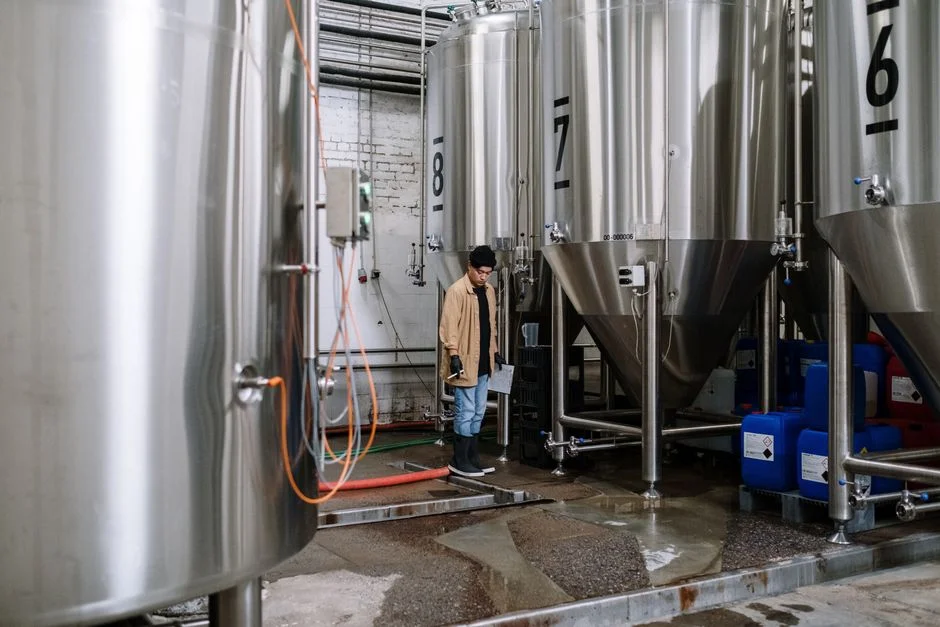
ETP CAPEX in São Paulo is driven by a small number of vendor-controllable variables and a larger number of buyer-supplied inputs. The vendor-controllable cost drivers that move a quote by 20–40% are: flow tier, influent matrix, target discharge limits, containerization versus civil works, automation level, and whether sludge handling is included. The buyer must supply, in writing, a 24-hour composite sample analysis, peak hourly flow, and a list of batch discharges so the equalization tank can be sized correctly. Vendors that quote on flow alone, without these inputs, will under-design the EQ and over-design the DAF.
The supplier shortlist should score on five dimensions: technical compliance against CONAMA 430/2011 and CETESB 8468/1976, reference plants in Brazil or Latin America, local service footprint, lead time, and spare-parts availability. The Kıvanç paper-mill ETP referenced earlier was ordered in 2021, built and assembled from 2022 until 2024, and started up in 2024 (meri.de) — a realistic three-year order-to-commissioning arc for a custom multi-stage plant. Packaged DAF-led ETPs are substantially faster, but the buyer should still confirm PO-to-commissioning in writing, including FAT, shipping, civil works and SAT windows.
For a Brazil-specific comparison and a side-by-side of the Brasília case, the Brasília factory ETP and DAF guide is the closest precedent. For an itemised CAPEX/OPEX view by treatment technology, the Buenos Aires industrial ETP cost breakdown covers the line items a São Paulo buyer should expect to see in vendor proposals, with the caveat that Brazilian import duties, containerization costs and currency exposure will shift the totals.
| Procurement input | Source | Why the vendor needs it |
|---|---|---|
| 24-hour composite sample (TSS, COD/BOD, FOG, pH, T) | Factory's own wastewater characterization | Sets coagulant/polymer dose and DAF surface loading |
| Peak hourly flow | Flow log at EQ inlet | Sizes EQ tank and DAF hydraulic margin |
| Batch discharge schedule | Production planning | Confirms EQ retention time and mixing duty |
| Discharge route confirmation | CETESB / concessionária | Sets compliance envelope (CONAMA 430 vs CETESB 8468) |
| Reuse target (if any) | Project specification | Drives downstream filtration and RO scope |
Frequently Asked Questions
What flow range qualifies a São Paulo factory for a packaged DAF rather than a custom clarifier?
Commercial DAF units cover 4–300 m³/h across 13 standard models, which captures most food, metalworking, textile and chemical plants in São Paulo State. Above that band — typically large pulp & paper or petrochemical complexes — the plant enters custom-engineered ETP territory, as in the 7,200 m³/day Kıvanç paper-mill reference (meri.de).
Which regulation controls — CONAMA 430/2011 or CETESB Decree 8468/1976 — depends on what?
The discharge route. Direct release to a receiving water body triggers CONAMA Resolution 430/2011, while release to the public sewerage system triggers CETESB's pretreatment limits under São Paulo State Decree 8468/1976. The factory must confirm the route with the concessionária and CETESB before the vendor starts sizing.
What credentials and references should a São Paulo buyer demand from an ETP/DAF supplier in 2026?
Ask for reference plants in Brazil or Latin America operating under CONAMA 430/2011 and CETESB 8468/1976, a local service footprint with response-time commitments, documented lead time from PO to commissioning, and a spare-parts inventory list. A supplier that can only point to projects outside Latin America will struggle to support a São Paulo plant through its first CETESB inspection cycle.
Which line items dominate a 2026 São Paulo ETP/DAF CAPEX, and which inputs must the buyer provide?
The dominant line items are the DAF skid itself, the biological step (MBR or UASB) when Route A applies, civil works versus containerization, and the sludge dewatering train. The buyer must provide the 24-hour composite analysis, peak hourly flow, batch discharge schedule, and a confirmed discharge route. Without these, vendors will either refuse to quote or build a 30–40% contingency into the price.
How long does a typical packaged DAF-led ETP take from PO to commissioning in Brazil in 2026?
Packaged DAF-led ETPs are substantially faster than custom multi-stage plants; the Kıvanç reference (ordered 2021, started up 2024) shows a three-year arc for a large custom ETP (meri.de). A São Paulo buyer should request a written PO-to-commissioning schedule covering FAT, shipping, civil works and SAT, and should not accept a proposal that does not commit to a calendar window for each phase.