Why pharmaceutical wastewater in Oman needs more than a standard ETP
Pharmaceutical manufacturing wastewater carries a chemical signature that generic industrial ETP designs were never built to handle. Streams contain residual active pharmaceutical ingredients (APIs), intermediates, and solvents alongside high COD, variable composition, and refractory organics — a profile flagged in both the 2024 Journal of Water Process Engineering review of 229 plants (S3, June 2024) and in the commercial evaporator literature covering PMF effluent (S2). Commercial sources document that WWTPs receiving PMF discharge carry much higher pharmaceutical concentrations than plants without PMF input (S2). The academic review identifies residual pharmaceuticals and antibiotic resistance as documented human-health and environmental hazards that conventional activated sludge does not fully remove (S3, 2024).
Oman adds a second layer of constraints. Coastal and brackish make-up water pushes inlet TDS into ranges that destabilise biological kinetics, and summer ambient temperatures above 40 °C shift oxygen demand, nitrification rates, and membrane fouling behaviour away from temperate defaults. Inland sites often have no municipal sewer within economic reach, which forces a choice between on-site reuse and aggressive volume reduction rather than a simple sewer tie-in. A template ETP copied from a low-salinity, temperate project will tend to underperform on both the chemistry and the hydraulics.
What is actually in pharma effluent: parameters that drive design
Effluent characterisation must occur before any equipment is sized. The 2024 review of 229 plants (S3) tracks the traditional load parameters — COD, BOD, total nitrogen (TN), ammonia nitrogen (NH₃-N), total phosphorus (TP), total suspended solids (TSS), and suspended solids (SS) — alongside residual-API concentrations and refractory organic contaminants. The same review lists toxicity, salinity, and antibiotic activity as persistent inhibitors of standard biological kinetics (S3, 2024). Commercial literature confirms that high COD and waste-stream variability explain why conventional chemical, filtration, and biological systems struggle with pharmaceutical waste (S2).
For an Omani project, a 12-month composite dataset is the minimum usable input. Without it, both biological sizing and RO recovery calculations are guesswork, especially for plants that run campaign-based API production where a Monday batch differs sharply from a Friday batch.
| Parameter | Why it matters for design | Source |
|---|---|---|
| COD / BOD | Sizes biological stage; BOD/COD ratio indicates biodegradability | S3 (2024) |
| TN, NH₃-N | Drives nitrification/denitrification sizing; sensitive to high TDS and temperature | S3 (2024) |
| TP | Needed if biological phosphorus removal is targeted | S3 (2024) |
| TSS / SS | Protects downstream membranes; sets clarification or MBR flux | S3 (2024) |
| Residual APIs / refractory organics | Determines need for Fenton, ozone, or RO polishing | S3 (2024) |
| Conductivity / TDS / chloride | High TDS inhibits biomass; sets RO feed pressure and concentrate load | S3 (2024) |
| pH, temperature | Confirms Fenton operating window and biological kinetics | S3 (2024) |
The standard process train for pharmaceutical wastewater
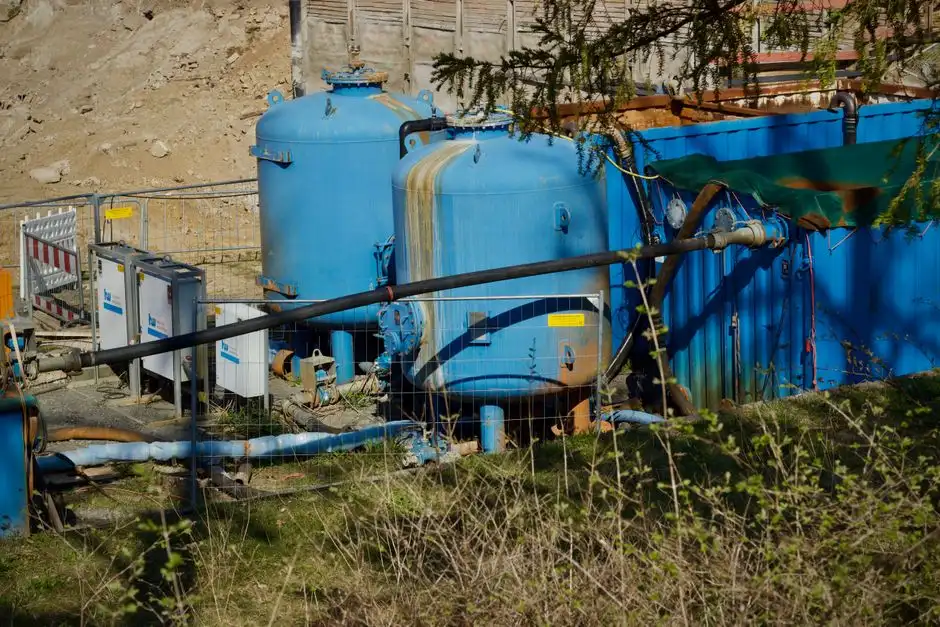
Multi-stage trains are the documented norm. The 2024 review states that most pharmaceutical wastewater treatment plants adopt a combination of pretreatment, biochemical treatment, and advanced treatment technologies, including anaerobic, aerobic, and advanced stages (S3, 2024). These systems bridge the gap between initial raw effluent and final discharge requirements. The pretreatment stage typically equalises pH, removes settleable solids, and breaks emulsions; the biological stage removes the bulk of biodegradable organics; and the advanced stage targets refractory APIs and salts to reach discharge or reuse limits.
Biological options catalogued in the 2024 review include UASB, EGSB, ABR, AFB, SBR, CASS, ICEAS, MSBR, MBR, and BAF (S3, 2024). Selection depends on influent COD strength, toxicity profile, and salinity tolerance — MBR and SBR are the workhorses where land is constrained or effluent variability is high, while UASB or EGSB upstream cuts aeration energy on strong streams. Advanced treatment options documented in the same review's reference base include Fenton and Fenton-like oxidation, ozone and catalytic or photocatalytic ozonation, electrochemical oxidation, and RO/NF for polishing or reuse (S3, 2024).
Evaporator-based volume reduction is a parallel route rather than a substitute for biological and membrane treatment. Manufacturer-stated duty envelopes for the ENCON evaporator line are 2–50 GPH slurry handling and 300–4,000 GPH distillate recovery, with disposal-volume reductions stated as "up to 99% or more" (S2, commercial). That figure applies to the volume reduction step, not to a full ETP's overall pollutant removal, so it belongs in a train that already meets the chemistry and is closing the disposal gap.
Technology comparison for Omani pharma projects
A shortlist for a high-TDS, high-temperature Gulf site starts with the biological step that handles the variable API load, then layers polishing and disposal. MBR is the strong default for sites where a small footprint and reusable permeate are priorities, because the membrane barrier delivers solid-liquid separation well below what conventional activated-sludge clarifiers can achieve and keeps the biomass in the reactor under variable loading. Multi-media filtration upstream of RO is the standard protective step to keep the silt density index inside membrane tolerances when RO polish is added. Fenton, ozone, and other AOPs documented in the 2024 review (S3) handle the residual refractory fraction, but they are chemical- and energy-intensive and should be sized against an actual influent scan rather than a default dose. Mechanical dewatering with a plate and frame filter press and reagent dosing with an automatic chemical dosing system are the supporting units that keep solids handling and chemistry stable across the train.
Evaporators become the right answer when sewer discharge is unavailable, when concentrate disposal is restricted, or when feed is high TDS and high COD and cannot be sent off-site at all. That mirrors the use case the commercial evaporator source targets — minimising wastewater volume and avoiding sewer discharge (S2).
| Technology | Role in train | Strength for Oman | Limit / watch-out | Source |
|---|---|---|---|---|
| MBR (MBR membrane bioreactor system) | Biological + solid-liquid separation | Small footprint; reusable permeate; tolerates variable loading | Membrane fouling control under high TDS and high temperature | S3 (2024) |
| SBR / CASS | Biological in batch mode | Flexible operation; lower capex than MBR | Larger footprint; downstream filtration still needed for reuse | S3 (2024) |
| UASB / EGSB | Anaerobic pre-treatment | Cuts aeration energy on strong streams | Sensitive to toxicity and salinity; needs post-polish | S3 (2024) |
| Fenton / ozone / AOPs | Refractory API removal | Targets compounds biological stages miss | Chemical and energy cost; sizing needs API scan | S3 (2024) |
| Multi-media filter + industrial RO system | Polishing and reuse | Produces reuse-quality water; cuts freshwater draw | Brine disposal and recovery-rate trade-off | S3 (2024); RO membrane design guide |
| Mechanical evaporator | Volume reduction | Stated up to 99% volume cut; handles slurry and distillate in one unit | Energy cost; not a substitute for pollutant removal | S2 (commercial) |
| Multi-media filter | RO pretreatment | Protects RO from SDI excursions | Requires periodic backwash planning | Internal reference |
Reuse, discharge, and ZLD: which end-of-pipe fits Oman
The 2024 review is candid about the trade-off: composite trains can meet emission standards but carry long process chains, large land areas, high costs, and high carbon emissions, which pushes decision-makers toward volume reduction or reuse where site conditions allow (S3, 2024). Choosing an end-of-pipe solution requires matching the technology to the specific site constraints.
Where a municipal or industrial sewer exists and accepts the discharge, the right answer is a compliant multi-stage train that hits the regulator's COD, BOD, TSS, pH, and residual-API limits. Where sewer access is unavailable, or where brine disposal from RO is constrained, the train shifts toward on-site reuse for cooling, boiler feed, or cleaning — and an evaporator-led volume reduction step on the reject. The commercial source frames evaporators as a way to avoid sewer discharge entirely while cutting disposal volume (S2). Selecting RO equipment with a high recovery rate directly reduces the concentrate load that the evaporator or off-site disposal has to handle, which is a key economic lever in Oman where concentrate disposal is the binding constraint. The supporting automatic chemical dosing system keeps pretreatment chemistry stable so that RO recovery and downstream evaporator duty are predictable. Buyers should also map the project against the pH discharge compliance guide and the effluent risk assessment guide before committing to a final train, and use the industrial ETP and DAF guide as a reference for pretreatment and sludge-handling design choices.
Frequently Asked Questions
What CAPEX and OPEX should a pharmaceutical wastewater treatment plant in Oman budget for?
The research base does not supply a published CAPEX or OPEX figure for a full Omani pharma train. Buyers should request a vendor-itemised quote covering civil works, MBR or SBR biological stage, RO skid, evaporator (if required), chemical dosing, and a separate OPEX line for power, chemicals, membrane replacement, and concentrate disposal. Decision criteria for a 2026 procurement should include whether the vendor can quote annual operating cost per cubic metre treated, with the input data you provide.
How do I choose a treatment equipment supplier in Oman for pharmaceutical wastewater?
Shortlist suppliers that can document reference plants in the Gulf handling high-TDS, high-COD pharma effluent and that supply integrated trains rather than single skids. Check that the proposed MBR, RO, and evaporator skids are supported locally for spares and membrane replacement, and ask for a 12-month influent and effluent data review against the vendor's design basis. Compliance risk is reduced when the supplier can show a unit-operation reference close to your influent profile rather than a generic catalogue case.
Which biological reactor handles high TDS and intermittent API spikes best?
MBR and SBR are the documented options for variable, toxic, or saline pharmaceutical influents in the 2024 review (S3, June 2024). MBR offers a smaller footprint and more stable effluent under shock loads, while SBR offers lower capex and operational flexibility; UASB and EGSB can be placed upstream to cut aeration energy on strong streams but need a post-polish stage.
When does an evaporator make economic sense instead of an RO polish?
An evaporator is the documented commercial answer when sewer discharge is unavailable or costly and when feed is high TDS and high COD that cannot be sent off-site (S2, commercial). RO polish is the right choice when on-site reuse for cooling, boiler feed, or cleaning is the goal and concentrate disposal is manageable; evaporator-led volume reduction sits on top of the train when the binding constraint is the disposal route rather than the reuse target.