Why Gustavo Adolfo Madero Changes the Math for Data Center Blowdown
A data center in Gustavo Adolfo Madero, Mexico needs a treatment train that turns cooling-tower blowdown into cooling-tower makeup or safely discharged wastewater. At 4 cycles of concentration roughly 25–30% of makeup water becomes blowdown with TDS 1,200–6,000 mg/L — concentrated in calcium, magnesium, silica, biocides and corrosion inhibitors (Genesis Water Tech, 2026). The standard train is side-stream filtration + ultrafiltration (0.01–0.1 μm, 90–95% recovery) feeding reverse osmosis (50–85% recovery, permeate 10–50 mg/L TDS) (Genesis Water Tech, 2026). For sites pushing toward zero liquid discharge, RO concentrate is fed to mechanical vapor compression (95–98% recovery, distillate <10 mg/L TDS) and a crystallizer (Genesis Water Tech, 2026). In the Valley of Mexico — where water stress is high and NOM-001-SEMARNAT discharge limits are tightening — cooling-tower makeup reuse at 60–85% recovery is usually the highest-value option (Genesis Water Tech, 2026).
Gustavo Adolfo Madero sits inside the Basin of Mexico, a closed valley with no external drainage; the broader CDMX metropolitan area draws on an aquifer system that SACM and CONAGUA have classified as over-exploited, which is the qualitative reason extraction titles and reuse permissions have become politically sensitive. Roughly two-thirds of data centers built since 2022 globally have been sited in water-stressed regions, according to a Bloomberg analysis cited by the Lincoln Institute and reported by Commercial Water Lab (2026), so the Mexico City case is mainstream engineering practice, not an outlier. Discharge to rivers, reservoirs, soils or sewers in Mexico is governed by NOM-001-SEMARNAT-2021, which sets contaminant limits keyed to the receiving body and the average daily flow; the exact applicable limit is a number a local environmental consultant must confirm before sizing. The EPA explicitly flags cooling-tower blowdown as a wastewater stream that may require permits before discharge, and SEMARNAT's permitting logic applies the same gatekeeping in Mexico (Commercial Water Lab, 2026). Mexico City's altitude of approximately 2,240 m lowers air density, which raises evaporative loss per kWh rejected and shifts the cycles-of-concentration versus blowdown-volume balance versus a sea-level U.S. baseline; the exact shift is a site-psychrometrics input, not a value carried over from another region.
What Is in Cooling Tower Blowdown at a CDMX Data Center
Blowdown carries four to eight times the dissolved solids of the makeup water, with a reported TDS range of 1,200 to 6,000 mg/L depending on cycles of concentration and source water (Genesis Water Tech, 2026). At 4 cycles of concentration a cooling tower loses roughly 25–30% of its makeup water as blowdown (Genesis Water Tech, 2026). For a facility using 10 million gallons monthly, that translates to 2.5–3 million gallons of water discharged or wasted — a number worth keeping in mind when sizing the recovery train (Genesis Water Tech, 2026). The species that scale disproportionately are calcium, magnesium, silica and alkalinity, which set the ceiling on RO recovery and the fouling risk on any downstream heat exchanger if blowdown is blended back into makeup (Genesis Water Tech, 2026). Treatment chemistry accumulates in the recirculating loop: biocides, corrosion inhibitors, scale inhibitors and dispersants, with legacy chromate or high-phosphate programs on older sites adding further reuse and discharge complications (Genesis Water Tech, 2026).
Suspended solids typically sit between 10 and 50 mg/L — corrosion products, biofilm fragments and airborne dust pulled into the basin — which is enough to foul RO pretreatment if not removed upstream (Genesis Water Tech, 2026). The biological load includes planktonic bacteria, algae and biofilm-forming organisms that any membrane or reuse step has to control (Genesis Water Tech, 2026). A February 2026 TNFD case study summarized by Water Utility Report (2026) explicitly identifies mismanaged data-center blowdown as a source of high salts, heavy metals and other pollutants, which is the framing Mexican regulators will read when a developer files for a discharge permiso. None of these numbers change qualitatively with altitude, but the evaporation-driven concentration at ~2,240 m compresses the operating window, so the same makeup TDS will push blowdown to the upper end of these ranges faster than a sea-level U.S. site would see.
Treatment Objectives: Reuse, Discharge Compliance or Zero Liquid Discharge
Equipment selection is driven by the end-use objective, not by the blowdown chemistry alone. Cooling-tower makeup reuse returns RO permeate to the tower as high-quality makeup, enables higher cycles of concentration, and carries the highest value proposition, with typical recovery of 60–85% (Genesis Water Tech, 2026). Discharge compliance focuses the design on meeting NOM-001-SEMARNAT-2021 limits and any SACM pretreatment contract terms, and the economics are driven by avoided discharge fees and consentimientos rather than by water savings (Genesis Water Tech, 2026). Zero liquid discharge (ZLD) eliminates liquid waste through membrane concentration, thermal evaporation and crystallization at 95–99% overall recovery, with U.S. data-center ZLD CAPEX cited at $3–8 million and OPEX at $5–15 per 1,000 gallons (Genesis Water Tech, 2026). Partial ZLD or brine minimization hits 80–90% volume reduction at substantially lower cost than full ZLD, with the remaining brine sent to deep-well injection, hauling or periodic permitted discharge (Genesis Water Tech, 2026). For a Gustavo Adolfo Madero site the realistic priority is reuse as cooling-tower makeup first, non-potable process reuse second (irrigation, washdown), then discharge, with full ZLD reserved for sites that have no viable discharge path and a confirmed cost of water or discharge that supports the heat-load penalty.
| Objective | Typical recovery | Primary value driver | When it fits a Gustavo Adolfo Madero site |
|---|---|---|---|
| Cooling-tower makeup reuse | 60–85% | Avoided SACM/Cutzamala makeup, higher cycles of concentration | Default 2026 design for water-stressed metro sites |
| Process / non-potable reuse | 40–70% | Avoided potable demand for irrigation, washdown | When irrigation demand or washdown demand is co-located |
| Discharge compliance to NOM-001-SEMARNAT-2021 | n/a (pollutant removal) | Avoided discharge fees and consentimientos | When reuse demand is smaller than blowdown volume |
| Partial ZLD / brine minimization | 80–90% volume reduction | Lower brine hauling, lower discharge cost | When sewer contract is restrictive but not prohibitive |
| Full ZLD (RO + MVC + crystallizer) | 95–99% | No liquid discharge path required | Only when no discharge path exists and water cost justifies heat-load penalty |
The Core Treatment Train: Filtration, UF, RO and Optional MVC
The first block on the P&ID is a side-stream filter, either self-cleaning spiral or multimedia, at 10–25 μm, sized to 1–5% of total circulation flow (Genesis Water Tech, 2026). It removes suspended solids, biofilm fragments and corrosion products so the rest of the train can run clean; U.S. CAPEX is cited at $50,000–200,000 for typical data center installations (Genesis Water Tech, 2026). A multi-media filter ahead of UF and RO is the conventional way to deliver that, with a PLC-controlled antiscalant and pH dosing skid conditioning the feed for downstream membranes. Next is ultrafiltration, a hollow-fiber UF system for blowdown pretreatment at 0.01–0.1 μm pore size, 10–30 psi, 90–95% recovery, removing bacteria, viruses, colloids and high-MW organics — the standard RO pretreatment and the right choice when biological and particulate control dominate the objective (Genesis Water Tech, 2026).
Reverse osmosis is the workhorse for cooling-tower makeup reuse, with a industrial RO system for cooling-tower makeup reuse operating at 150–400 psi, 50–85% recovery on blowdown, permeate at 10–50 mg/L TDS and 95–99% dissolved-solid removal; U.S. CAPEX is cited at $250,000–500,000 for a 50,000 GPD unit with OPEX at $1.50–3.00 per 1,000 gallons including energy, chemicals, membrane replacement and maintenance (Genesis Water Tech, 2026). Conventional brackish RO plateaus at 75–80% recovery on cooling-tower blowdown because of silica and calcium-salt scaling; to go higher, IDE's MAXH₂O approach separates salt removal from osmotic-pressure limits and intentionally precipitates sparingly soluble salts onto seed material so the remaining brine behaves like a NaCl solution that can be pushed to high recovery (IDE Tech, 2026). Nanofiltration sits at 75–150 psi, 70–85% recovery, permeate TDS 30–50% of feed, and is the lower-pressure option when hardness rather than total TDS is the bottleneck (Genesis Water Tech, 2026).
Mechanical vapor compression at 95–98% recovery, distillate <10 mg/L TDS, and 15–25 kWh per 1,000 gallons is the thermal step that pushes RO concentrate toward ZLD; U.S. CAPEX is cited at $1–3 million for 10,000–30,000 GPD (Genesis Water Tech, 2026). A crystallizer converts the final MVC concentrate to solid salt cake, completing a ZLD loop at 95–99% overall recovery (Genesis Water Tech, 2026). Pretreatment discipline is non-negotiable: feed should be filtered below 10–15 μm, chemically conditioned against scaling, and pH-adjusted for membrane performance (Genesis Water Tech, 2026). For the broader system design basis the RO membrane design criteria engineering guide walks through the same numbers in a vendor-neutral frame.
| Block | Pore / pressure | Recovery | Output quality | U.S. CAPEX (data-center scale) |
|---|---|---|---|---|
| Side-stream filtration (10–25 μm) | 10–25 μm, 1–5% of circulation | Continuous | Reduces TSS load on UF/RO | $50,000–200,000 (Genesis Water Tech, 2026) |
| Ultrafiltration (UF) | 0.01–0.1 μm, 10–30 psi | 90–95% | Removes bacteria, viruses, colloids | Site-specific |
| Reverse osmosis (RO) | 150–400 psi | 50–85% on CTBD | Permeate 10–50 mg/L TDS | $250,000–500,000 per 50,000 GPD (Genesis Water Tech, 2026) |
| Nanofiltration (NF) | 75–150 psi | 70–85% | Permeate 30–50% of feed TDS | Site-specific |
| Mechanical vapor compression (MVC) | 15–25 kWh / 1,000 gal | 95–98% of concentrate | Distillate <10 mg/L TDS | $1–3 million for 10,000–30,000 GPD (Genesis Water Tech, 2026) |
| Crystallizer + brine management | Thermal | Closes 95–99% ZLD loop | Solid salt cake for disposal | Site-specific |
Matching the Train to a Gustavo Adolfo Madero Site
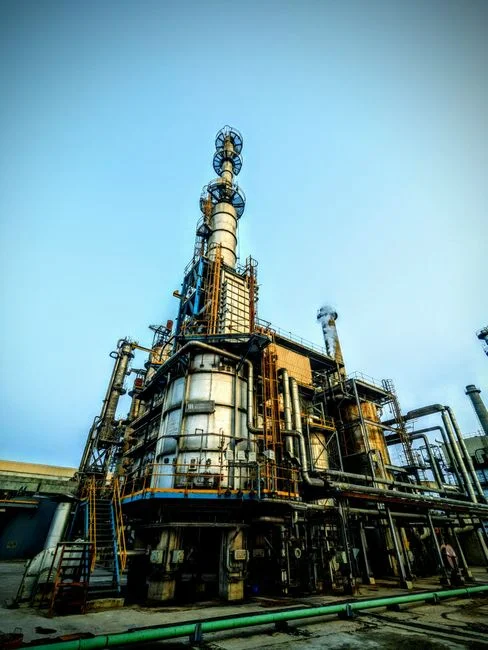
Three site-sized options cover most of the decisions a developer or operator has to put into a CapEx request. A small or edge data center, or a colocation retrofit, runs side-stream filtration plus UF, discharges blowdown to the SACM sewer under pretreatment limits, and skips RO — lowest CAPEX, lowest reuse, and the right answer when the site is small enough that the discharge contract cost is below the recovery system cost. A typical hyperscale or AI-training facility, in the ~100 MW class with up to 2 million liters of water per day (IDE Tech, 2026), runs UF plus RO with concentrate polishing and reuses cooling-tower makeup at 60–85% recovery, which is the standard 2026 design for water-stressed metro sites. A site with no discharge path or strict local pushback runs full ZLD via RO + MVC + crystallizer at 95–99% recovery with solid waste only, justified only when the alternative water cost or discharge cost is exceptional (Genesis Water Tech, 2026). The 300,000 gal/day medium-scale and up to 5 million gal/day hyperscale envelopes cited by UGA Extension (Saha, 2026, TP-121) define the upper and lower bounds the RO and any MVC must cover.
Altitude and ambient psychrometrics at ~2,240 m shift evaporation and drift losses, so cooling-tower cycles and blowdown volume must be recomputed from site data rather than borrowed from a sea-level U.S. example. The Arequipa and Matola blowdown guides cover similar climate-altitude trade-offs in other Latin American metros and are useful references for the psychrometric adjustment step.
| Site class | Treatment train | Recovery | Discharge path | When to choose |
|---|---|---|---|---|
| Small / edge, colocation retrofit | Side-stream filtration + UF | No RO recovery | SACM sewer under pretreatment limits | Smallest sites, lowest CAPEX, lowest reuse |
| Hyperscale / AI-training (~100 MW, ~2 million L/day) | UF + RO with concentrate polishing | 60–85% makeup reuse | Polished concentrate to sewer or partial ZLD | Standard 2026 design for water-stressed metros (IDE Tech, 2026) |
| No discharge path / strict local pushback | RO + MVC + crystallizer | 95–99% overall ZLD | Solid salt cake only | When discharge is not viable and water cost justifies the heat-load penalty (Genesis Water Tech, 2026) |
CAPEX, OPEX and Local Compliance Envelope
U.S. data-center RO blowdown CAPEX sits at $250,000–500,000 for a 50,000 GPD unit, with OPEX at $1.50–3.00 per 1,000 gallons including energy, chemicals, membrane replacement and maintenance (Genesis Water Tech, 2026); that is an order-of-magnitude figure for a CDMX site, with local installation, power and labor factors to be confirmed. Full ZLD adds $3–8 million CAPEX and $5–15 per 1,000 gallons OPEX, and MVC alone is $1–3 million for 10,000–30,000 GPD (Genesis Water Tech, 2026). Avoided direct discharge fees of $5–15 per 1,000 gallons in U.S. water-stressed regions (Genesis Water Tech, 2026), plus avoided NOM-001-SEMARNAT-2021 compliance and consentimiento costs, typically justify reuse over discharge at sites drawing on SACM or the Cutzamala system. Biocide control at the cooling-tower basin matters for downstream membranes, and a UV sterilizer or a chlorine-dioxide generator is the conventional pairing for biological control on the loop.
The compliance checklist before final design: confirm the applicable NOM-001-SEMARNAT-2021 limit based on the receiving body and average daily flow; confirm SACM or local sewer discharge contract terms; verify the CONAGUA extraction title; check Ley de Aguas Nacionales reuse permissions; confirm CUSTF and manifestacion de impacto ambiental requirements. None of these should be carried over from a U.S. CWA / NPDES framing — they are items to verify with a local environmental consultant, and the exact limits and fees are inputs to request, not numbers to assume. Inputs to hand a supplier: blowdown flow in m³/day or GPD, blowdown chemistry (TDS, hardness, silica, alkalinity, residual biocides), site altitude and ambient psychrometrics, target reuse rate, target discharge limits, available power and floor space, and any site-specific restrictions on brine hauling or deep-well injection. Local labor rates, power tariffs and duty on imported membrane skids are the figures that move the order-of-magnitude U.S. bands into a defensible CDMX number.
| Cost line | U.S. data-center range (Genesis Water Tech, 2026) | CDMX adjustment |
|---|---|---|
| RO blowdown (50,000 GPD) CAPEX | $250,000–500,000 | Local installation, power and labor to be confirmed |
| RO blowdown OPEX | $1.50–3.00 per 1,000 gal | Tariff-adjusted |
| MVC (10,000–30,000 GPD) CAPEX | $1–3 million | Tariff- and import-duty-adjusted |
| Full ZLD CAPEX | $3–8 million | Tariff- and import-duty-adjusted |
| Full ZLD OPEX | $5–15 per 1,000 gal | Tariff-adjusted |
| Avoided discharge fees (water-stressed U.S.) | $5–15 per 1,000 gal | Substitute NOM-001-SACM contrato figures when obtained |
Frequently Asked Questions
Is it better to reuse cooling-tower blowdown or discharge it at a Gustavo Adolfo Madero site?
Reuse as cooling-tower makeup at 60–85% recovery is the default for water-stressed metros because it cuts SACM/Cutzamala demand, raises cycles of concentration, and avoids NOM-001-SEMARNAT-2021 compliance and discharge costs (Genesis Water Tech, 2026). Discharge becomes competitive only when reuse demand is small, the sewer contract is cheap, or the site cannot accommodate an RO skid. Inputs to request from a local consultant: the applicable NOM-001-SEMARNAT-2021 limit, the SACM contrato terms, and the avoided potable water tariff to weigh against the RO CAPEX band of $250,000–500,000 per 50,000 GPD (Genesis Water Tech, 2026).
What CAPEX and OPEX should a board paper carry for cooling-tower blowdown reuse?
Use the U.S. data-center bands as an order-of-magnitude envelope and adjust for local power, labor and membrane import duty: RO blowdown $250,000–500,000 CAPEX and $1.50–3.00 per 1,000 gallons OPEX for a 50,000 GPD unit, MVC $1–3 million CAPEX for 10,000–30,000 GPD, and full ZLD $3–8 million CAPEX with $5–15 per 1,000 gallons OPEX (Genesis Water Tech, 2026). The figure that converts these bands into a defensible CDMX number is the local CFE industrial tariff and the landed cost of membrane skids; both should be requested from a shortlisted EPC before sizing.
How do I size the train for a hyperscale site versus a colocation retrofit in GAM?
Hyperscale and AI-training facilities in the ~100 MW class, drawing up to 2 million L/day (IDE Tech, 2026), need UF + RO with concentrate polishing and 60–85% makeup reuse; colocation retrofits and edge sites can run side-stream filtration plus UF and discharge under SACM pretreatment limits. The decision driver is whether avoided SACM/Cutzamala demand over a 5–10 year horizon pays back the RO CAPEX band; the inputs to request from operations are blowdown flow, blowdown chemistry and the local power tariff.
What supplier and compliance inputs should I confirm before signing a treatment-train order in Mexico City?
Shortlist suppliers with documented NOM-001-SEMARNAT-2021 and SACM contrato experience, ask for CFDs on the proposed RO and MVC skids at the site's actual altitude and ambient psychrometrics, and verify CONAGUA extraction title, Ley de Aguas Nacionales reuse permissions, CUSTF registration and manifestacion de impacto ambiental before placing the order. The check that catches most retrofit risk is asking the supplier to confirm skid dimensions and weight against the site's freight elevator and floor-loading limits at ~2,240 m, where air-handling and acoustic ratings differ from sea-level references.
Related Equipment
- industrial RO system for cooling-tower makeup reuse — specifications, capacity range, and technical data