How a DAF and a Clarifier Actually Separate Mining/Metals Wastewater
A dissolved air flotation (DAF) unit works by saturating a side stream or full flow with air at 60–80 psi, then releasing that pressure through needle valves or special nozzles so air comes out of solution as a cloud of 30–50 micron micro-bubbles [S4, 2026-04-27]. Those bubbles attach to suspended matter and float the particle-bubble aggregate to the surface, where a paddle skimmer removes the float layer; heavier fractions drop to a bottom collection zone [S2, S4].
A lamella or API oil-water separator works by gravity alone: settleable solids fall through inclined plates or across a flat bottom into a sludge hopper, while free oil rises and is skimmed from the top [S1, 1978-04]. Both devices depend on upstream coagulant and flocculant dosing to enlarge particles to a size the separator can act on; without that chemistry step, neither technology will meet a typical metals discharge permit [S2, S4].
The EPA Oil/Water Separation state-of-the-art report rates DAF as "excellent" (XXX) for free, settleable, and neutrally buoyant oil, "average" (XX) for unstabilized dispersions, and "poor" (X) for chemically stabilized secondary dispersions [S1, 1978-04]. The same matrix rates API separators, parallel-plate interceptors (PPI), and corrugated-plate interceptors (CPI) as "excellent" (XXX) for free oil and "poor" (X) for chemically stabilized secondary dispersions, with progressively lower ratings for finer oil states [S1, 1978-04]. For a mining/metals feed, a clarifier can pull out heavy, fast-settling mineral fines and any free oil layer, but it will not resolve emulsified lubricants, fine metal-hydroxide floc, or colloidal clays that characterize precipitation-stage wastewater.
What Mining and Metals Wastewater in Olney Typically Contains
Mining and metals plants in north-central Illinois typically combine process water from crushing and washing circuits, thickener overflow from flotation concentrate handling, and rinse water from metal-finishing lines that carries dissolved metal salts [S1, S2]. The blended feed almost always carries three particle populations at once: heavy mineral fines that drop out by gravity in seconds; colloidal clays and metal-hydroxide floc generated during pH adjustment that stay in suspension for hours; and emulsified oils and greases from equipment washdown, hydraulic leaks, and lube systems [S2, S4]. Free oil layers can also appear when sumps overflow or when oily parts are rinsed without prior skimming.
The EPA concluded that a single device capable of separating all states is still lacking and that a combination of separation techniques into process trains is necessary to produce effluents that will meet discharge standards [S1, 1978-04]. That finding translates directly to the Olney case: the clarifier handles the bulk settleable fraction, and a DAF polishes the colloidal, emulsified, and metal-hydroxide fraction that the clarifier passes through. Two additional Olney-specific factors should be raised with any supplier during pilot planning: frozen clarifier underflow lines during winter, which force a shutdown or heat-tracing decision, and spring runoff that spikes turbidity and overloads any clarifier sized for average rather than peak seasonal flow.
DAF vs Clarifier: Side-by-Side Comparison for Mining/Metals Duty
The table below distills the EPA categorical ratings and supplier-published geometry into one row set a plant engineer can print and put in front of a manager. EPA ratings come from Table 1 of the Oil/Water Separation state-of-the-art report; sizing and geometry values come from supplier specifications [S1, 1978-04; S4, 2026-04-27].
| Parameter | Lamella / API Clarifier | Dissolved Air Flotation (DAF) |
|---|---|---|
| Dominant separation mechanism | Gravity settling under inclined plates or flat bottom [S1, 1978-04] | Buoyancy from 30–50 micron micro-bubbles attaching to particles [S4, 2026-04-27] |
| Best-fit pollutant class | Heavy mineral fines, free oil layer, settleable solids [S1, 1978-04] | Colloidal clays, metal-hydroxide floc, emulsified FOG, oil-coated suspended solids [S1, 1978-04; S2] |
| EPA categorical rating — free oil | Excellent (XXX) [S1, 1978-04] | Excellent (XXX) [S1, 1978-04] |
| EPA categorical rating — settleable oil/solids | Excellent (XXX) [S1, 1978-04] | Excellent (XXX) [S1, 1978-04] |
| EPA categorical rating — chemically stabilized secondary dispersions | Poor (X) [S1, 1978-04] | Poor (X) [S1, 1978-04] |
| Geometry / size reference | Lamella surface loading 20–40 m/h (HydropureWater lamella clarifier) | 30–50 micron micro-bubbles; standard flow range 4–300 m³/h (HydropureWater DAF system (4–300 m³/h); S4, 2026-04-27) |
| Upstream chemistry required | Coagulant/flocculant for fine fractions; optional for coarse settleables [S2] | Coagulant/flocculant mandatory for most feeds [S2, S4] |
| Sludge handling | Thickened underflow, typically 2–5% solids; may need a thickener or separate dewatering step [S2] | Thin float (typically <1% solids skimmed), sent directly to a filter press [S2, S4] |
| Maintenance burden | Plate fouling, sludge pump wear, scum rake service [S1, 1978-04] | Skimmer mechanism, air saturator, recycle pump, nozzle inspection [S2, S4] |
When an Olney Mining or Metals Plant Should Pick a DAF
A DAF is the correct choice when your influent characterization shows a large colloidal fraction, when FOG is present from equipment wash or lube oils, or when pH adjustment has generated metal-hydroxide floc that is light and slow-settling [S2, S4]. A DAF fits constrained footprints: the HydropureWater DAF family covers 4–300 m³/h in compact skid formats, delivering high removal in far less surface area than an equivalently rated gravity clarifier [S2, S4]. You must already have a chemical conditioning step in place, because serpentine floc tubes or mix tanks are the standard conditioning step upstream of the flotation cell, and the DAF will not hit permit limits without that chemistry [S2, S4].
For an Olney retrofit where the existing clarifier is undersized or where the permit limit on residual metals or FOG cannot be met by gravity alone, a DAF is the polishing stage that closes the gap. Pair the DAF with a HydropureWater automatic chemical dosing system and a HydropureWater plate and frame filter press for the float sludge so the entire downstream chain is sized consistently. For a peer benchmark on the sizing math, see this step-by-step 2026 DAF sizing guide.
When a Lamella or API Clarifier Is the Right First Stage
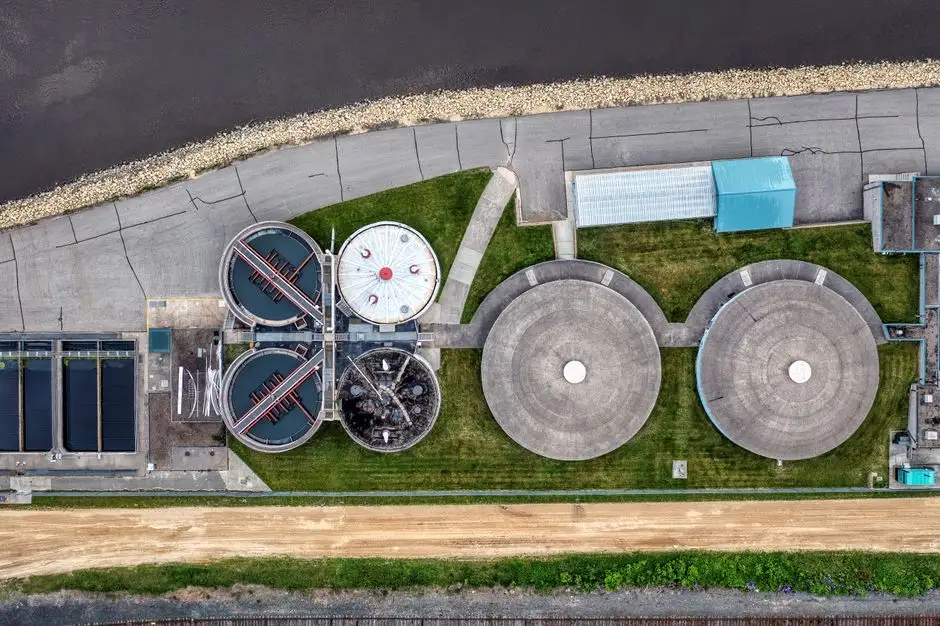
A lamella clarifier serves as the primary stage when the bulk of the load is heavy mineral fines that settle readily, as the EPA matrix rates gravity-type separators as "excellent" (XXX) for free oil and settleable solids [S1, 1978-04]. A lamella also reduces the solids load on any downstream DAF, protecting it from excessive sludge and extending cleaning intervals; this is the cheapest way to drop TSS before the more expensive flotation step [S1, 1978-04]. Consider a clarifier first when the operator team has limited chemical-dosing experience and wants a simpler initial barrier, since clarifiers tolerate wider influent swings than DAF, although they still benefit from polymer conditioning for fine fractions [S2].
The practical Olney case is a two-stage train: a HydropureWater lamella clarifier pulls out the bulk settleables, then a DAF polishes the colloidal, emulsified, and metal-hydroxide fraction the clarifier passes through. For a side-by-side comparison in a neighboring Illinois locality, see this DAF vs clarifier for Decatur mining and metals plants guide, and for a small-town US example, the DAF vs clarifier for Penny, US mining and metals factories guide. A broader procurement framing is in this 2026 buyer's guide to industrial wastewater management solutions providers.
Sizing, Pilot Testing, and Supplier Questions for Olney Buyers
Put every supplier on a written checklist before signing a purchase order. Ask for design flowrate in m³/h, hydraulic residence time, microbubble size (target 30–50 microns per current DAF designs [S4, 2026-04-27]), recycle ratio, air-to-solids ratio, and material of construction: 304 stainless steel is standard, with 316SS or polypropylene available for corrosive mining duty [S4, 2026-04-27]. Request a jar test or on-site pilot before committing capital; the EPA explicitly notes that "the specific characteristics of an oily wastewater determine the combination of devices that will yield required effluent concentrations," so a one-week pilot on your actual stream is the only defensible basis for sizing [S1, 1978-04].
Confirm the sludge-handling chain: DAF float is typically dewatered by a HydropureWater plate and frame filter press, while clarifier underflow may be thickened separately before dewatering [S2]. A HydropureWater multi-media filter can serve as a final polishing step for reuse water. Frame cost, lead time, and installation footprint as items the supplier must put in writing with your influent and Olney permit limits attached; do not rely on generic catalog numbers, because site influent and discharge limits drive final sizing more than any standard model number.
Frequently Asked Questions
How do I size a DAF for an Olney mining or metals feed in 2026?
Sizing must start with a current characterization of your influent: TSS, FOG, pH, total and dissolved metals, temperature, and peak instantaneous flowrate. Hand those numbers plus your local discharge limits to the supplier and require a written hydraulic residence time, air-to-solids ratio, and recycle ratio tied to your data, not a generic catalog curve [S1, 1978-04; S4, 2026-04-27]. For a 2026 DAF sizing walk-through, see the step-by-step 2026 DAF sizing guide; for lamella sizing, use a surface loading of 20–40 m/h from the HydropureWater lamella clarifier spec sheet as a check on supplier proposals.
What is the typical
Frequently Asked Questions
Should an Olney mining or metals plant choose a DAF or a clarifier in 2026?
The choice depends on the specific gravity and settling velocity of your suspended solids. If your wastewater contains light particles, oils, or grease—common in metal finishing—a Dissolved Air Flotation (DAF) unit is preferred due to its efficiency in removing low-density contaminants with rise rates typically between 2 to 4 gallons per minute per square foot (gpm/ft²). If your stream is dominated by heavy metal hydroxides or dense mineral tailings, a conventional high-rate clarifier or lamella settler is more appropriate, as these systems handle high solids loading (up to 5,000 mg/L) more effectively than DAF systems.
How do I size a DAF or clarifier for a mining/metals wastewater stream in Olney?
Sizing is determined by the hydraulic loading rate and the required surface overflow rate (SOR). For clarifiers in mining applications, design SORs typically range from 0.2 to 0.5 gpm/ft² to ensure adequate residence time for particle settling. For DAF systems, sizing is based on the air-to-solids ratio, which should be maintained between 0.01 and 0.05 ml of air per mg of solids to ensure effective bubble attachment and buoyancy.
What influent data do I need to send a DAF or clarifier supplier for a metals plant quote?
To receive an accurate quote, you must provide the peak and average flow rates in gallons per minute (gpm), total suspended solids (TSS) concentration in mg/L, and the specific gravity of those solids. Additionally, you should provide the chemical oxygen demand (COD), oil and grease content, pH range, and the presence of any heavy metals (e.g., lead, cadmium, or chromium) that require specific precipitation chemistry. Supplying a detailed laboratory jar test report is highly recommended to confirm the settleability or floatability of your specific waste stream.
Can a single DAF or clarifier meet my discharge permit in Olney, or do I need both?
Whether a single unit suffices depends on your local Olney discharge limits for metals and TSS. Often, a single-stage process is insufficient if the wastewater requires both oil/grease removal and heavy metal precipitation. In such cases, a common process configuration involves using a DAF as a primary treatment step for emulsified oil removal, followed by a clarifier for the secondary precipitation of metal hydroxides. You should consult your discharge permit to see if you are meeting strict parts-per-billion (ppb) limits for heavy metals, which often necessitate a multi-stage approach.
What is the typical lead time and what information should I request from a DAF or clarifier supplier in 2026?
As of 2026, typical lead times for custom-fabricated mining wastewater equipment range from 20 to 35 weeks, depending on material availability and automation complexity. When requesting a quote, you should ask for a comprehensive submittal package that includes a 3D model, a detailed process flow diagram (PFD), and a material compatibility list to ensure the steel or polymer construction can withstand the corrosive nature of mining chemicals. Additionally, request a performance guarantee based on your provided influent data and an itemized spare parts list for the first two years of operation.