Why Dombivali Data Centers Need a Dedicated Blowdown Strategy
A hyperscale or colocation facility sited in the Dombivali MIDC belt sits on top of a stressed water system and under the eyes of the MPCB, so cooling tower blowdown cannot be designed as a generic utility drain. A 100 MW data center can use up to 2 million liters of water per day for cooling, according to IDE Tech, and the MIDC industrial area draws from the Ulhas basin, where summer stress and tightening intake restrictions already shape how operators are permitted to withdraw.
At 4 cycles of concentration, a typical data-center cooling tower loses 25–30% of its makeup water to blowdown, which for a facility using 10 million gallons monthly translates into 2.5–3 million gallons that must either be reused or discharged, as reported by Genesis Water Tech. The chemistry of that blowdown is brackish rather than benign: TDS 1,200–6,000 mg/L, suspended solids 10–50 mg/L, and concentrated Ca, Mg, silica, alkalinity, and legacy treatment chemicals (biocides, scale and corrosion inhibitors) per Genesis Water Tech industry data, not from Dombivali-specific sampling. Discharge consents in MIDC areas increasingly restrict TDS, temperature, and chemical residuals; direct discharge fees in water-stressed regions are reported by Genesis Water Tech at $5–15 per 1,000 gal, but Indian haulage and discharge economics in this range must be confirmed against the current MPCB consent conditions for the specific Dombivali site before any design freezes. The upshot is that a generic global playbook — discharge the blowdown and forget it — does not survive the consent conditions, the basin stress, or the project owner's water-positive targets in this corridor.
Cooling Tower Blowdown Chemistry and How It Constrains Treatment
Blowdown TDS is typically 4–8× makeup-water TDS and ranges 1,200–6,000 mg/L depending on cycles of concentration and source water quality, according to Genesis Water Tech. That is the single number that determines whether a membrane train will work: brackish-water reverse osmosis (BWRO) hits a scaling wall on these streams well before osmotic limits do, so conventional BWRO plateaus at 75–80% recovery before silica, calcium carbonate, or calcium sulfate scaling becomes unmanageable, as documented by IDE Tech. Suspended solids are the second constraint: corrosion products, biofilm fragments, and airborne particulates accumulate at 10–50 mg/L despite basin filtration, per Genesis Water Tech, which is why side-stream filtration ahead of any membrane stage is non-optional. Biological load and accumulated treatment chemicals — biocides, scale inhibitors, dispersants — are the third constraint, and they are site-specific; Genesis Water Tech flags legacy chromate and high-phosphate chemistries as particularly problematic for both reuse and discharge, but the exact blowdown composition for a Dombivali facility has to be confirmed by jar testing and historical water-treatment logs before final train selection.
Three parameters set the design envelope for any vendor you brief:
| Parameter | Typical blowdown range | Why it matters for treatment |
|---|---|---|
| TDS | 1,200–6,000 mg/L (4–8× makeup) | Sets osmotic pressure; caps RO recovery at 75–80% without chemistry control |
| Suspended solids | 10–50 mg/L | Fouls RO/NF membranes; mandates side-stream filtration and UF |
| Silica, Ca, Mg, alkalinity | Concentrated to scaling thresholds | Drives antiscalant selection; forces high-recovery designs into controlled precipitation |
Hand these numbers, plus the full cooling-water treatment chemical inventory, to every vendor in the bid list. If a quotation does not address silica, calcium sulfate, and the biocide carry-over explicitly, the design is not yet site-specific.
The Reuse, Discharge, or ZLD Decision for a Dombivali Site
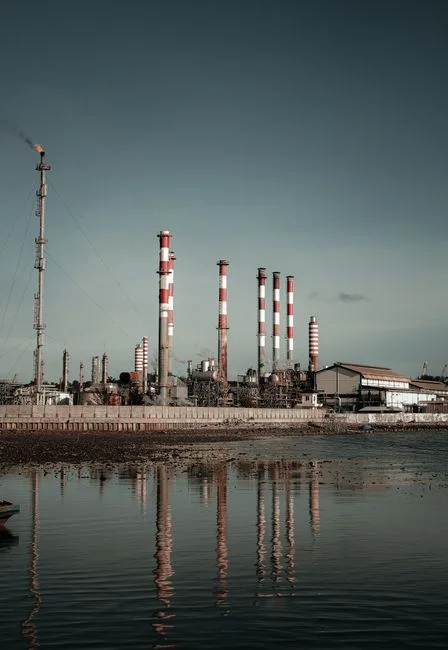
Cooling-tower makeup reuse is the highest-value path: 60–85% recovery, permeate returned as high-quality makeup, and direct reduction in freshwater draw plus discharge volume, per Genesis Water Tech. It is also the path that aligns with hyperscaler water-positive mandates, which are increasingly written into MIDC and state-level expectations even where they are not yet codified. Discharge compliance is justified only when reuse is not feasible, and the economics depend on MPCB consent limits for TDS, TSS, temperature, and residual chlorine/biocides, plus the per-kL discharge fee in the Dombivali MIDC area — the specific fee must be confirmed against the site's consent order, since the supplied research does not contain a numeric MIDC tariff. Zero liquid discharge (RO + MVC + crystallizer) achieves 95–99% overall water recovery but costs $3–8M CAPEX and $5–15 per 1,000 gal OPEX (Genesis Water Tech, USD) — justified only where discharge is prohibited or freshwater is rationed. The 2026 LCA from Open Engineering Inc. shows reuse can roughly double GWP versus freshwater due to treatment energy, which accounts for roughly 80% of the gap, but the GWP gap collapses under a decarbonized grid while water savings accrue at full value — a directly relevant data point for Indian sites contracting renewable power, since a system commissioned today and operated through 2050 will spend most of its life under progressively cleaner grid conditions. Reuse also has a residual indirect water penalty of about 0.93 L/m³ from upstream electricity and chemical inputs, which the same 2026 LCA finds is less than 0.1% of the direct freshwater displacement benefit.
Recommended Treatment Train: Side-Stream Filtration → UF → RO → Optional MVC
Step 1 — Side-stream filtration at 1–5% of circulation flow, 10–25 µm, self-cleaning spiral units. A multi-media filter for side-stream cooling water drops suspended solids to a level downstream membranes can handle. Genesis Water Tech reports CAPEX of $50k–$200k for typical data-center installations, with minimal operating expense beyond solids disposal and routine maintenance. Step 2 — Ultrafiltration with 0.01–0.1 µm PVDF membranes, 10–30 psi, 90–95% recovery, backwash with permeate, chemical clean every 1–3 months (Genesis Water Tech). A PVDF ultrafiltration system for blowdown pretreatment functions as the RO pretreatment guard. Step 3 — Brackish-water reverse osmosis at conservative 75–80% local recovery with antiscalant dosing, permeate 10–50 mg/L TDS, overall recovery 50–85% on blowdown, per Genesis Water Tech. An industrial RO system for cooling tower makeup reuse sized at 50,000 GPD carries CAPEX of $250k–$500k and OPEX of $1.50–$3.00 per 1,000 gal. Step 4 (optional, high-recovery) — Controlled precipitation of silica and Ca salts in a fluidized bed reactor, then dynamic RO operation to push overall recovery to about 95%, with permeate silica around 1 mg/L, following the IDE Tech MAXH₂O design philosophy. Step 5 (only for ZLD) — MVC evaporation at 95–98% recovery, distillate below 10 mg/L TDS, 15–25 kWh per 1,000 gal distillate, $1–3M CAPEX for 10,000–30,000 GPD (Genesis Water Tech), followed by a crystallizer for solid salt cake. An automatic antiscalant and biocide dosing skid should be coordinated with the downstream discharge or reuse limit; Genesis Water Tech recommends phosphate-free, low-toxicity programs to avoid membrane fouling and consent violations.
| Stage | Function | Key operating numbers | Indicative CAPEX |
|---|---|---|---|
| Side-stream filtration | Drop TSS before membranes | 1–5% of circulation, 10–25 µm | $50k–$200k (Genesis Water Tech) |
| UF (PVDF) | RO pretreatment guard | 0.01–0.1 µm, 90–95% recovery, 10–30 psi | Site-specific (request quote) |
| BWRO | Permeate to cooling-tower makeup | 75–80% local recovery, 10–50 mg/L TDS permeate | $250k–$500k for 50,000 GPD (Genesis Water Tech) |
| Controlled precipitation + dynamic RO | Push overall recovery to ~95% | Permeate silica ~1 mg/L | Site-specific (IDE Tech MAXH₂O) |
| MVC + crystallizer (ZLD only) | Brine minimization to solid cake | 95–98% recovery, distillate <10 mg/L TDS, 15–25 kWh/1,000 gal | $1–3M MVC + ZLD system $3–8M (Genesis Water Tech) |
The 2026 LCA from Open Engineering Inc. is worth quoting into the design basis: a UF+RO reuse scenario raises treatment energy above five times that of freshwater, but the energy penalty is offset by improvements in cycles of concentration that reduce blowdown and chemical consumption. That trade-off only works in your favor if the chemistry program is redesigned around the higher cycles — not bolted on.
Indian Regulatory and Cost Context: MPCB Consent, INR Economics, and the Ulhas Basin
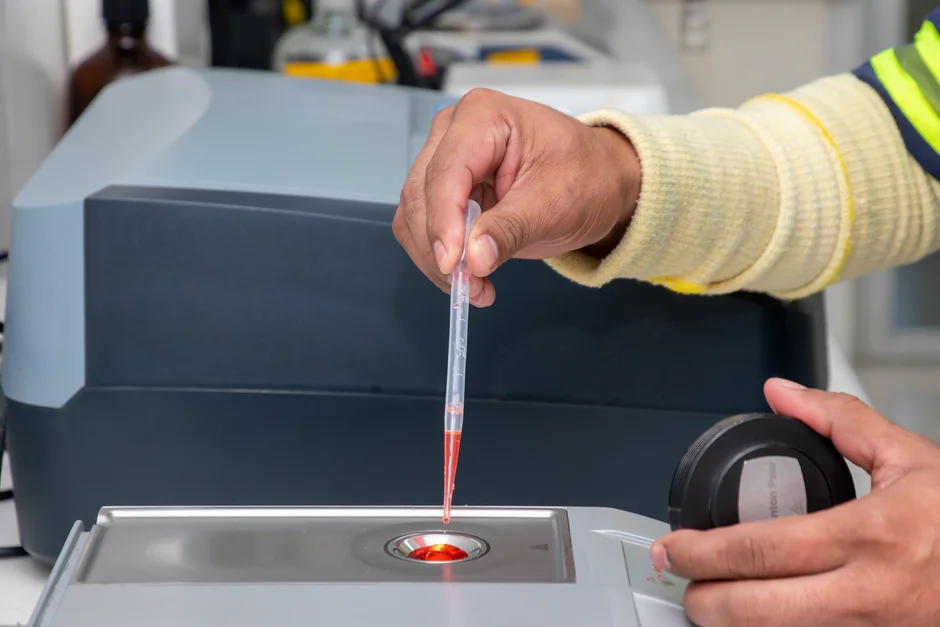
MPCB consent conditions typically set site-specific limits on TDS, TSS, BOD/COD, temperature, oil and grease, and residual chlorine/biocides for any discharge to sewer or surface water under the Water Act and EPA rules, and the exact Dombivali-MIDC limits must be pulled from the site consent order, since the supplied research does not contain numeric CPCB or MPCB effluent values. Engineers should also benchmark any plan against the 2026 CPCB and BIS discharge standards in India, because emerging contaminant limits and BIS product standards increasingly shape equipment selection. The 2026 LCA from Open Engineering Inc. notes that reclaimed water can save up to 300 MGD of freshwater across Texas power plants when substituted for cooling, and an analogous potential exists in water-stressed Indian industrial corridors, but a Dombivali-specific water-balance study is required to confirm local savings — do not import the 300 MGD figure as a Dombivali claim. CAPEX bands in USD from Genesis Water Tech (e.g., $250k–$500k for a 50,000 GPD RO) should be converted to INR at current 2026 rates and uplifted for India logistics, duty, and installation, but the final budgetary figure must come from a vendor quote, not from a converted USD band. Where discharge is allowed, total cost of reuse must be benchmarked against MIDC sewer charges and any haulage cost for RO concentrate; where discharge is restricted or expensive, ZLD economics shift in favor of MVC plus crystallizer despite the higher CAPEX.
Decision Framework: Which Configuration Fits Your Dombivali Data Center?
Use this triage before detailed design: if freshwater is available and discharge consent allows moderate TDS, run side-stream filtration plus UF plus BWRO at 75–80% local recovery, send permeate to cooling-tower makeup, and discharge concentrate to sewer under consent. A dissolved air flotation unit for pretreatment solids and a high-efficiency sedimentation tank for TSS reduction are useful adjuncts where basin-side clarification is needed ahead of membranes. If discharge is restricted or expensive, or hyperscaler water-positive targets apply, add controlled salt precipitation plus dynamic RO to push overall recovery to about 95%, per the IDE Tech MAXH₂O design philosophy. If zero liquid discharge is mandated or freshwater is rationed, specify full ZLD: BWRO → MVC (95–98% recovery, distillate below 10 mg/L TDS) → crystallizer for solid cake, accepting $3–8M CAPEX and $5–15 per 1,000 gal OPEX (Genesis Water Tech). If blowdown volume is small (under 50 m³/day) and consent is permissive, side-stream filtration alone is enough and blowdown can go to the existing MIDC sewer — the simplest, lowest-CAPEX option, and the right one to specify when the numbers do not justify a membrane train.
| Scenario | Configuration | Overall recovery | When to choose |
|---|---|---|---|
| Permissive consent, freshwater available | Side-stream + UF + BWRO | 50–85% | MPCB consent allows moderate TDS; freshwater is reliable |
| Restricted consent, water-positive target | Add controlled precipitation + dynamic RO | ~95% | Discharge fees or hyperscaler targets push toward minimum liquid discharge |
| Discharge prohibited, freshwater rationed | Full ZLD: BWRO + MVC + crystallizer | 95–99% | Regulator mandates ZLD or freshwater is unavailable |
| Small blowdown, permissive consent | Side-stream filtration only | n/a (sent to sewer) | Blowdown under 50 m³/day and consent allows it |
Frequently Asked Questions
What CAPEX should a Dombivali data center budget in INR for a BWRO blowdown train?
Genesis Water Tech reports $250k–$500k for a 50,000 GPD BWRO system treating blowdown, plus $50k–$200k for side-stream filtration. Convert at current 2026 rates and uplift for India logistics, duty, freight, and installation, then request a fixed-price vendor quote that itemizes membrane area, high-pressure pump, energy-recovery device, antiscalant skid, and civil works. The USD band is a budgetary starting point, not a procurement figure.
How do I choose between a reuse, discharge, and ZLD supplier in the Dombivali MIDC belt?
Shortlist vendors that can demonstrate a working reference plant on brackish cooling-tower blowdown, that supply the antiscalant and cleaning chemical program as part of the package, and that will guarantee permeate TDS, recovery, and energy consumption at the proposed feed chemistry. Require a site-specific feed characterization, a mass balance, and a confirmed MPCB consent compatibility statement before awarding; suppliers unwilling to put those guarantees in writing are not yet qualified for a hyperscale project. Regional case studies in adjacent markets, such as data center blowdown treatment in Belgrade and data center blowdown treatment in Bien Hoa, Vietnam, are useful to compare engineering approaches but do not substitute for Dombivali-specific feed data.
What sizing input do I need before I can get a firm vendor quotation?
Provide the daily and peak blowdown flow in m³/day, the makeup-water analysis (TDS, hardness, silica, alkalinity, chloride, sulfate), the target cycles of concentration, the current cooling-water treatment chemical inventory, and the MPCB consent limits for TDS, TSS, BOD, temperature, and residual chlorine. Without those, any quotation is a budget placeholder, not a bid.
What is the realistic lead time for a BWRO plus UF train delivered to a Dombivali MIDC site?
Lead time depends on membrane and high-pressure pump sourcing, skid fabrication, and MIDC delivery slots, and the supplied research does not contain a current India lead-time figure. Request a milestone schedule from each vendor that separates engineering, procurement, fabrication, FAT, shipping, installation, and commissioning, and tie payment milestones to FAT and site acceptance tests rather than to calendar dates alone.
Related Equipment
- filter press for ZLD or pretreatment solids — specifications, capacity range, and technical data