
Why Tea Processing Wastewater Is a Different Filter-Press Problem
Tea-processing wastewater is a complex slurry containing spent-leaf fines, tannin- and polyphenol-laden wash water, and process liquor from fermentation or extraction. This waste stream is high in BOD and COD, intensely coloured, and dominated by compressible organic solids rather than mineral grains. Cake from this material behaves like a compressible sludge — particle size is small, the matrix binds water and colour, and dewatering kinetics are governed as much by floc structure as by feed solids. Most tea-factory feeds arrive at the press well below the 50–60% solids window where filtration presses are most effective, per the iwtremont filter-press guide, which is why a press in isolation is rarely the right unit operation. Polyphenol-bound colour also means supernatant quality — not just cake dryness — is a design driver, a parameter generic filter-press explainers often overlook.
Two practical consequences follow. First, the design basis for any tea-factory dewatering line must start with sludge characterisation (total/variable solids, volatile fraction, polyphenol load, pH, temperature) rather than a press model number. Second, every downstream choice — press geometry, cloth type, pre-treatment train — must answer a specific question about that sludge: how compressible it is, how much colour it carries into the filtrate, and whether the cake will release cleanly from the cloth. The numbers used in this article are framed the same way: where the research is peer-reviewed on a directly comparable feed, the value is cited; where it is not, the gap is named so the engineer can close it with a jar or pilot test rather than assume a number from a generic guide.
Plate-and-Frame, Recessed-Plate or Membrane Press: Which Fits Tea Sludge
Plate-and-frame geometry is the original and most widely used filter-press configuration, according to both the iwtremont guide and the Wikipedia filter-press article. It is appropriate for batch operation on lower-throughput orthodox lines and where cake washing is needed to recover soluble tea solids or rinse colour from the cake. Recessed-plate presses drop the frames; each plate has a recess with sloping edges, so the cake forms directly between two plates and falls out cleanly when the press opens. The US EPA Fact Sheet: Recessed-Plate Filter Press (EPA 832-F-00-058, September 2000) states that recessed-plate presses "can produce the highest cake solids concentration of any mechanical dewatering equipment" and are more commonly used in industrial applications than in municipal wastewater facilities — a direct fit for tea-factory duty. Membrane presses add an elastomeric membrane behind each plate and a hydraulic squeeze phase that drives final cake solids higher still, at the cost of capex and more complex maintenance; they are justified on high-throughput CTC black-tea or instant-tea lines, not on small orthodox factories. A fully automatic filter press, per the Wikipedia filter-press article, can run unattended 24/7 — relevant where tea factories run seasonal peaks and want to de-couple press operation from shift cover.
| Geometry | Best fit for tea sludge | Cake-solids outcome | Operating notes |
|---|---|---|---|
| Plate-and-frame | Batch, lower-throughput orthodox lines; cake washing | Formed up to 50 mm of cake, extendable to 200 mm (Wikipedia, Filter press) | Most widely used geometry; simple, lower capex (iwtremont) |
| Recessed-plate | Industrial tea-factory duty; highest cake solids target | "Highest cake solids concentration of any mechanical dewatering equipment" (EPA 832-F-00-058, 2000-09) | More common in industrial than municipal use (EPA 832-F-00-058, 2000-09) |
| Membrane (squeeze) | High-throughput CTC or instant-tea lines | Higher final cake solids via squeeze phase | Higher capex; justified on throughput, not on small lines |
| Fully automatic | Seasonal peak operation; lights-out running | Same geometry as manual, automated cycle | Unmanned 24/7 operation (Wikipedia, Filter press) |
For most tea-factory brownfield upgrades, the choice reduces to recessed-plate for highest cake dryness on a single geometry, or membrane where the throughput and disposal cost justify the squeeze stage. A plate and frame filter press remains the right reference unit for bench and pilot work because the geometry is simple and the data scale to a production press.
Cloth and Filter Media: Cotton, Polypropylene or Multi-Layer
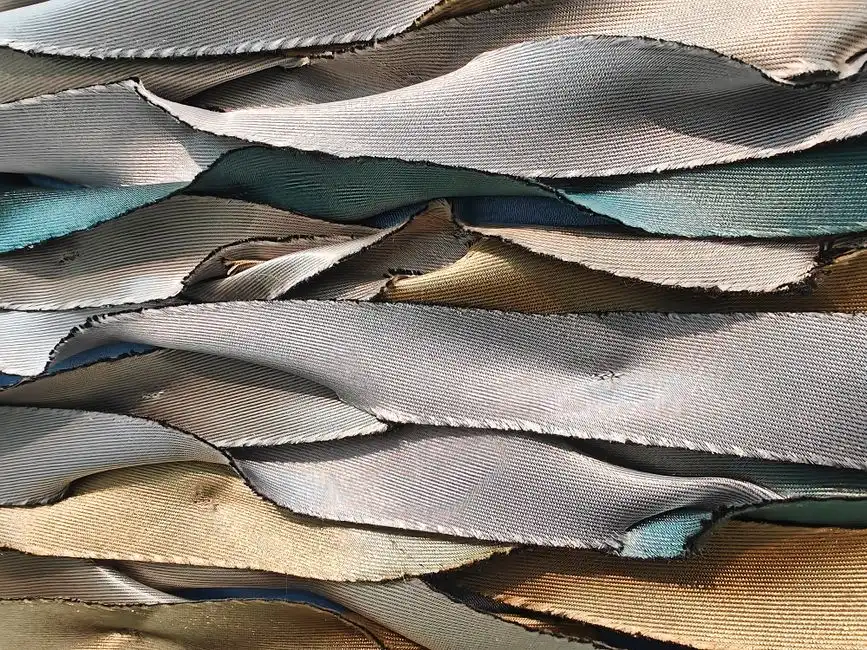
Cloth choice is a frequently misused variable in vendor quotations. The most directly comparable published cloth-comparison evidence in the research is the BRIN ejournal plate-frame study (JTL article 218), which used cotton cloth and drill cloth to filter simulated activated sludge (CaCO₃) at 1–4% w/w and reported that cotton cloth produced better performance, with a solute efficiency of 56.00% at 4% w/w CaCO₃. This is not a tea-factory number, but it is a directional finding for compressible organic solids: a woven natural-fibre cloth gave better solids retention than a heavier drill cloth in a plate-frame geometry. The same study did not report a comparable figure for synthetic cloths on the same feed, so any switch from cotton to a synthetic should be justified by an on-site jar or Büchner test on actual tea sludge, not by a cloth datasheet.
For tea effluent specifically, woven mono- or multifilament polypropylene cloths are commonly specified for chemical and pH tolerance across the polyphenol and acid-wash range a tea line will see. The Wikipedia filter-press article notes that typical cloth areas range from 1 m² or less on a laboratory scale to 1000 m² in a production environment, with plates available up to 2000 m², and that air blowing is viable for cake dewatering where cake permeability is in the 10⁻¹¹ to 10⁻¹⁵ m² range. This permeability band is the number to request from the cloth supplier for the chosen cloth on tea sludge, rather than a value assumed from a generic curve.
Pre-Treatment Sequencing: Getting the Feed into the 50–60% Solids Window
Filtration presses are most effective on slurry of 50–60% solids, and feeds with a lower solids ratio should pass through a clarifier first. A clarifier-plus-press train can purify 90–95% of the liquid stream, with the remainder leaving in the solids. For a tea factory, that means the design must start upstream of the press: thicken first, then press. Coagulation or flocculation as pre-treatment increases cake porosity and improves filtration rate, per the Wikipedia filter-press article — a critical point for compressible tea sludge, where floc strength controls both filtrate clarity and cycle time.
In practice, the upstream train on a food or beverage line is usually a DAF pre-thickener or a lamella clarifier thickener, followed by an automatic polymer dosing skid to deliver coagulant or flocculant into the press feed at a controlled rate. The thickening step brings feed solids into the 50–60% band, while the dosing step protects the cloth from pore blockage by fine tea particles — the Wikipedia article flags pore blockage as the limiting failure mode when feed particles are small.
Design Parameters and Sizing Inputs
The table below collects the only numbers in the research that can be defended in a design review without an on-site test, and labels the inputs that must come from a jar or pilot run. Where a number is not tea-specific, it is flagged as such so the engineer can present it as an anchor, not as a final answer.
| Parameter | Value or band | Source | Tea-specific? |
|---|---|---|---|
| Cake thickness, plate-and-frame | Up to 50 mm, extendable to 200 mm in extreme cases | Wikipedia, Filter press | Anchor only — confirm in pilot |
| Reference cloth area, "standard" press | ~216 m² (vs ~15 m² for a standard belt filter) | Wikipedia, Filter press | Order-of-magnitude anchor |
| Cloth area envelope | 1 m² (lab) to 1000 m² (production); plates up to 2000 m² | Wikipedia, Filter press | Envelope only |
| Cake permeability for air blowing | 10⁻¹¹ to 10⁻¹⁵ m² | Wikipedia, Filter press | Request from cloth supplier for tea sludge |
| Feed-solids effectiveness band | 50–60% solids | iwtremont filter-press guide | Not tea-specific; sets thickening target |
| Liquid recovery, clarifier + press train | 90–95% | iwtremont filter-press guide | Mass-balance framing |
| Relative operating cost vs belt press / rotary drum | About 1/6 of comparable belt press or rotary drum | iwtremont filter-press guide | Capex/opex framing; not tea-specific |
| Solids-removal benchmark, cotton cloth on 4% w/w CaCO₃, plate-frame | 56.00% | BRIN ejournal JTL article 218 | Directional only — not a tea feed |
| Cycle time on tea sludge | No published tea-specific figure in research | Gap | Must come from pilot press run |
| Polymer dose on tea sludge | No published tea-specific figure in research | Gap | Must come from jar test |
| Final cake-solids target on tea sludge | No published tea-specific figure in research | Gap | Must come from pilot press run and disposal route |
The EPA statement that recessed-plate presses produce the "highest cake solids concentration of any mechanical dewatering equipment" (EPA 832-F-00-058, 2000-09) is the most useful single line in the design review because it sets a defensible upper bound on what any press geometry will deliver; the tea-specific number still has to come from a pilot run on the actual sludge.
Step-by-Step Filter-Press Design Workflow for a Tea Factory
- Characterise the sludge. Measure total and dissolved solids, volatile fraction, polyphenol and COD load, pH, and temperature across at least one full season. Tea lines swing with flush events, fermenter discharges and cleaning-in-place rinses, so a single sample is not a design basis.
- Jar-test the chemistry. Run coagulant and polymer screens on thickened sludge, record dose, floc size, supernatant clarity and filter-leaf or Büchner cake-specific resistance. This is where compressibility is first quantified.
- Pilot the press geometry. Run a bench or pilot plate-and-frame test on thickened sludge; measure cake solids, filtrate colour and COD, cycle time and cloth blinding. Use the 50–60% feed-solids band (iwtremont) as the thickening target going into the pilot.
- Size the production press. Choose plate-and-frame, recessed-plate or membrane from the cake-solids target, then set cloth area and cake thickness inside the limits the research supports (1–1000 m² cloth area, plates up to 2000 m²; up to 50 mm cake thickness, extendable to 200 mm per Wikipedia, Filter press).
- Specify the upstream train. Lock the DAF or lamella thickener and the polymer dosing skid so the press is fed slurry inside the 50–60% band (iwtremont), and confirm the chemistry in a longer pilot run before procurement.
Cross-reference the operating-cost framing from the iwtremont guide (about 1/6 of the cost of a comparable belt press or rotary drum) and the recessed-plate cake-solids statement from EPA 832-F-00-058 when the design goes to management, but treat both as framing, not as tea-specific numbers. The filter press advantages and disadvantages guide covers the broader capex/opex picture, and the DAF vs clarifier factory guide covers the upstream thickening choice in more depth.
Frequently Asked Questions
What capex range should a tea factory budget
Frequently Asked Questions
What type of filter press is best for tea processing wastewater?
For tea processing wastewater, a recessed plate filter press with automatic plate shifting and high-pressure core blowing is the industry standard. This configuration is preferred because tea sludge, which often contains high concentrations of organic tannins and fine particulate matter, requires a system capable of handling high-solids loading and facilitating rapid cake release.
Specifically, a membrane filter press is recommended if the sludge exhibits high compressibility or if shorter cycle times are required to meet 2026 environmental discharge compliance. The membrane squeeze mechanism allows for the reduction of cake moisture content to below 65%, significantly lowering disposal costs for tea factories.
What cloth should be used in a filter press for tea factory sludge?
Polypropylene (PP) multifilament or monofilament filter cloths with a medium air permeability rating (typically 100-200 L/dm²/min) are most effective for tea sludge. These materials provide the necessary chemical resistance to the acidic nature of tea wastewater and prevent the "blinding" of pores often caused by the sticky, organic residue found in tea processing effluents.
For operations utilizing lime or polymer conditioning, a satin weave cloth is preferred to ensure optimal solids retention while maintaining efficient filtrate flow rates. It is critical to select a cloth with a high tensile strength to withstand the standard operating pressures of 7 to 15 bar common in tea wastewater treatment facilities.
What solids concentration should the feed to the press be at?
The optimal feed solids concentration for a filter press in a tea processing plant is between 2% and 5% by weight. If the influent concentration is below 2%, pre-thickening via a gravity belt thickener or a dissolved air flotation (DAF) unit is required to prevent excessive cycle times and mechanical strain on the feed pump.
Feeding the press at concentrations above 5% can lead to premature clogging of the feed ports and uneven cake formation. Consistent monitoring of the feed consistency is essential to maintain the pressure differential required for efficient dewatering, typically aiming for a final cake solids content of 30% to 45% depending on the specific tea processing method.
How much does a tea-factory filter press cost in 2026 and what is the typical lead time?
As of 2026, the capital expenditure for an industrial-grade filter press system for a tea processing facility ranges from $45,000 to $120,000, depending on the plate size, automation level, and materials of construction. This price point typically includes the frame, plates, automatic hydraulic system, and the primary control panel.
Typical lead times for these units currently range from 14 to 22 weeks. This timeline accounts for custom engineering, procurement of high-grade stainless or epoxy-coated carbon steel components, and the integration of automated safety protocols mandated by current industrial standards.
How do I size a plate and frame filter press for a black or green tea line?
Sizing a filter press requires calculating the total daily volume of sludge generated by the tea line, typically measured in cubic meters per day, and dividing this by the desired number of daily cycles. For black tea processing, which generates higher organic loading, a sizing factor of 0.8 to 1.2 kg of dry solids per square meter of filter area per cycle is commonly applied.
Engineers must account for the specific gravity of the tea sludge, which generally ranges from 1.05 to 1.15, and ensure the chamber volume is sufficient to hold the calculated daily sludge mass. A 20% safety margin should be incorporated into the total surface area calculation to accommodate seasonal fluctuations in tea production volume and variations in wastewater organic content.