Why Petroleum Wastewater in Defuniak Springs Is a Different Decision
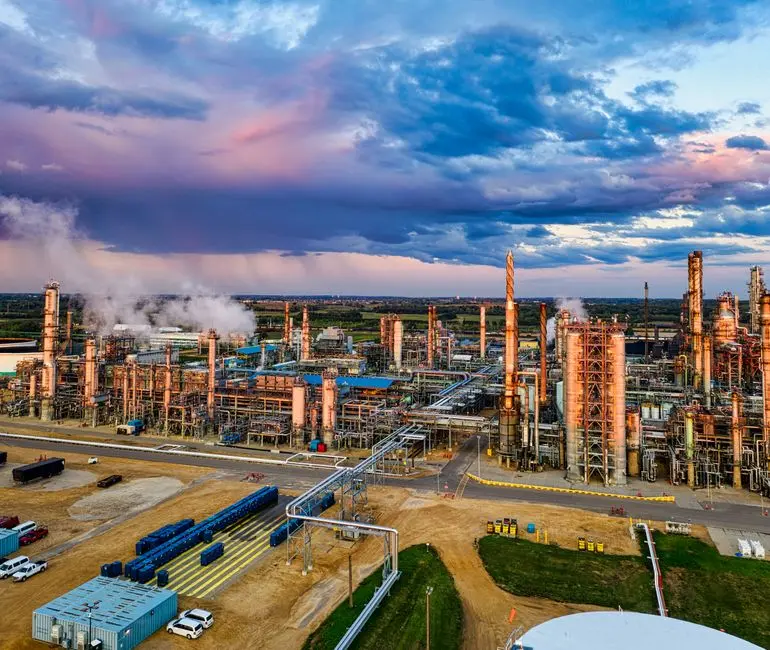
Petroleum wastewater is not a generic industrial stream, and treating it in Defuniak Springs carries site-specific constraints a 2026 procurement engineer must price in. A refinery desalter effluent, a bulk-terminal slop-oil stream, or a tank-farm washdown typically carries free oil, emulsified FOG, light suspended solids, and — after stormwater ingress — sand and scale carried in from the containment pad. Defuniak Springs sits in Walton County in the high-rainfall Florida Panhandle belt, where a single summer storm can re-suspend settled hydrocarbons in an equalization basin and double the FOG load to the primary separator in minutes.
The S1 Kemco reference lists oil refineries among the canonical DAF applications, alongside food processing, industrial laundries, paper mills, and metal finishing — confirming that dissolved air flotation is a benchmark step for refinery wastewater recovery. The same reference frames a complete DAF train as coarse filtration, physical-chemical treatment, and sludge dewatering, not a standalone tank. The S5 Ecologix comparison makes the trade space explicit: on a high-oil industrial stream a DAF reaches about 95% FOG removal against roughly 70% for a clarifier, while on a heavy-sediment mining stream the same clarifier hits about 90% solids reduction. A petroleum plant almost never sees one of those streams in isolation; it sees both, and the specification has to acknowledge that.
The takeaway for a 2026 specifier is straightforward: classify the stream by free-oil fraction, emulsified FOG fraction, and grit content before opening a vendor datasheet. That classification — not a generic food-processing case study — is the input the rest of this guide assumes.
How DAF and Clarifiers Actually Separate Oil, FOG and Solids
DAF and gravity clarifiers solve opposite buoyancy problems, and understanding that asymmetry is what makes a petroleum decision defensible.
Dissolved air flotation clarifies wastewater by dissolving air in the stream under pressure and then releasing the air at atmospheric pressure inside a flotation tank, according to the S1 Kemco reference. The released air forms tiny bubbles that attach to suspended matter, oil, and grease, floating the agglomerated mass to the surface where a skimming device removes it. Coagulant and flocculant are dosed upstream to pull colloids and emulsified oil into larger flocs that the bubbles can lift. The same source notes that a hydrocyclone or shaker screen is normally placed before the DAF to strip sand, scale, and lint that would otherwise settle inside the flotation cell and defeat the skimmer.
The S4 SigmaDAF/Clearwater reference pins the bubble-generation window at 30–50 microns, generated inside a 304SS (or optional 316SS or polypropylene) clarifier vessel. After chemical conditioning, flocculated solids enter the DAF clarifier; a paddle skimmer scrapes the floated layer, and an auger pulls heavier settleable solids from a bottom collection zone. SigmaDAF's COMPACT DAF handles flows up to 66 GPM on a single skid and steps to a modular two-skid layout above 66 GPM, with PLC-controlled dosing, skimmer speed, and sludge discharge.
A clarifier, in the S5 Ecologix framing, relies on gravity sedimentation: heavier solids settle to the bottom and are raked out as sludge, while anything that does not readily settle — including most emulsified FOG and free oil — passes through. That is the defining physics boundary for petroleum streams: free oil and emulsified FOG float, so they belong in a DAF; sand, scale, and heavy grit sink, so they belong in a clarifier or a coarse-removal step in front of either.
DAF vs Clarifier: Head-to-Head for an Oil-Laden Stream
The S5 Ecologix comparison provides the primary metrics for this decision. On a high-oil industrial stream, DAF reaches about 95% oil and grease removal versus about 70% for a clarifier; on a heavy-sediment stream the same clarifier reduces solids by about 90% while DAF is weaker on grit without an upstream coarse-removal step. The table below restates these numbers alongside the operational and footprint factors a 2026 specifier weighs.
| Parameter | DAF system | Gravity clarifier |
|---|---|---|
| FOG / free-oil removal on a high-oil stream | ~95% (S5 Ecologix, 2026) | ~70% (S5 Ecologix, 2026) |
| Suspended-solids reduction on a heavy-sediment stream | Targets TSS; weaker on grit | ~90% (S5 Ecologix, 2026) |
| Footprint at a given flow | Compact, high-rate; ≤66 GPM single skid, modular above (S4 SigmaDAF/Clearwater) | Larger surface area for equivalent flow |
| Typical OPEX drivers | Air compressor, saturation pump, chemical dosing (S5 Ecologix) | Lower routine OPEX; sludge pumping (S5 Ecologix) |
| Upstream protection needed | Hydrocyclone or shaker screen for sand/scale (S1 Kemco) | Oil/FOG removal step normally required upstream |
| Best fit | Refinery desalter, slop oil, bilge, emulsified FOG | Tank-farm washdown, heavy grit, soil carry-over |
Clarifiers generally have lower operational cost, but DAF systems can be more cost-effective for specific contaminants like oils. S1 Kemco frames the DAF system scope as coarse filtration, physical-chemical treatment, DAF, and sludge dewatering by filter press — a full train, not a single vessel. S5 Ecologix explicitly recommends hybrid DAF + clarifier trains for complex streams, which is the most direct 2026 answer for a petroleum plant that sees oil, FOG, TSS, and grit in the same influent.
Matching the Choice to Your Defuniak Springs Influent Profile
The decision rule that follows the comparison table is the one a 2026 specifier should pin to a wastewater characterization report.
- If free oil and emulsified FOG dominate the analysis — a refinery desalter, a slop-oil receipt, or a bilge-water stream — specify DAF first. The S5 Ecologix 95% FOG figure on a high-oil stream supports this default.
- If heavy grit, sand, or scale dominate — a petroleum bulk-terminal runoff with soil carry-over, or a tank-farm washdown — lead with a clarifier. The S5 Ecologix 90% solids figure on a heavy-sediment stream supports this default.
- If both are present — the common petroleum case in the Florida Panhandle, where stormwater re-suspends hydrocarbons in the equalization basin — specify a hybrid train: coarse removal (S1 Kemco hydrocyclone or shaker screen), pH control via an automatic chemical dosing system, coagulant/flocculant conditioning, then a dissolved air flotation (DAF) system, followed by an optional polishing clarifier or a downstream biological step such as an MBBR.
At very low flows (≤66 GPM per S4 SigmaDAF/Clearwater), a single-skid compact DAF with integrated chemical conditioning is a defensible single-vendor scope. Above that threshold, a modular two-skid DAF or a parallel train of multiple compact units is more typical. For plants comparing analogous decisions in other chemical or pulp-and-paper streams, the DAF or clarifier for chemicals wastewater in Madison and DAF or clarifier for pulp and paper wastewater in Franksville guides apply the same decision tree to different influent profiles; for a parallel petroleum case outside Florida, the DAF or clarifier for petroleum bulk wastewater in Hopewell guide walks through a similar refinery stream.
A 2026 Siting and Supplier Checklist for Defuniak Springs
A 2026 procurement engineer in Walton County should pressure-test every DAF or clarifier proposal against the same short list before signing a PO.
| Checklist item | What to confirm in the proposal | Source |
|---|---|---|
| Bubble-generation technology and size window | 30–50 micron microbubbles, saturator included | S4 SigmaDAF/Clearwater |
| Documented FOG/TSS removal on an oil/refinery stream | Project references, not generic food case studies | S5 Ecologix (95% FOG benchmark) |
| Full train scope | Coarse filtration + pH control + DAF + sludge dewatering (filter press) | S1 Kemco |
| Material of construction for coastal-Florida chloride exposure | 304SS standard, 316SS or polypropylene option | S4 SigmaDAF/Clearwater |
| Automation scope | PLC control of dosing, skimmer, sludge discharge | S4 SigmaDAF/Clearwater |
| Stormwater / equalization sizing | Equalization sized for Florida Panhandle storm events, not just average DAF flow | S1 Kemco (EQ precedes DAF) |
| Sludge-handling endpoint | Plate and frame filter press sized to DAF skimmings | S1 Kemco |
For a deeper look at clarifier-side sizing inputs that still apply when a polishing clarifier is retained downstream, the industrial primary clarifier design specifications 2026 reference provides the surface-overflow-rate and detention-time checks to run against any vendor proposal. If a supplier's FOG number is not on an oil/refinery stream, ask for the pilot data and the jar-test protocol behind it before accepting the figure.
Frequently Asked Questions
What is the realistic 2026 budget split between a DAF unit and a clarifier for a petroleum stream?
Neither S1, S4, nor S5 publishes a current price list, so a defensible 2026 budget needs a vendor quote. A buyer should request a line-item proposal that separates the dissolved air flotation (DAF) system from the chemical-conditioning skid, the equalization basin, and the downstream plate and frame filter press, then benchmark each line against at least two competing bids sized to the same GPM and the same FOG/TSS target.
How do I shortlist DAF and clarifier suppliers for a Defuniak Springs refinery or terminal project?
Shortlist on three documented criteria rather than brochure claims: a 30–50 micron bubble-generation spec per S4 SigmaDAF/Clearwater, a published oil/refinery FOG removal number (S5 Ecologix's 95% on a high-oil stream is the most-cited comparison reference), and a full-train scope that includes coarse filtration, pH control, and sludge dewatering as defined by S1 Kemco. Reject any proposal that cannot document all three for an oil/refinery stream.
What influent data do I need to size a DAF for a petroleum stream in 2026?
The minimum characterization a DAF supplier needs is flow (GPM, with peak and storm-event values), free-oil and emulsified FOG concentrations, TSS, pH range, temperature, and chloride content for materials selection. The S1 Kemco reference ties pH control and coarse-filtration sizing directly to those numbers, and the S4 SigmaDAF/Clearwater skid sizing rules (single skid ≤66 GPM, modular two-skid above) only become meaningful once GPM and TSS are pinned.
Do I need both a DAF and a clarifier, or can one unit handle a petroleum stream alone?
S5 Ecologix recommends hybrid DAF + clarifier trains for complex streams, and S1 Kemco