Why Bristol Mining and Metals Plants Face a Real DAF-vs-Clarifier Choice in 2026
Bristol, US mining and metals plants in 2026 generally run two very different wastewater populations side-by-side: dense, fast-settling ore and slime slurries, and lighter, colloidal or reagent-bearing overflows that carry oils, greases, and fine metal-bearing particles. Both dissolved air flotation (DAF) and lamella or gravity clarifiers are credible primary units in 2026, but the right pick depends on which solid population dominates a given stream. Compliance is the silent third option — HydropureWater states its DAF system is designed to meet US EPA effluent guidelines and EU Industrial Emissions Directive requirements, and SigmaDAF USA / Clearwater Industries states its DAF systems are designed to meet site-specific discharge standards, which means US EPA alignment is the baseline for either technology (hydropurewater.com, clearwaterind.com, 2026-04-27). This guide maps a plant's wastewater profile to the correct unit and provides a Bristol-area engineer with a procurement-grade checklist.
How DAF Actually Clarifies Mining and Metals Wastewater
A DAF unit generates a dense cloud of micro-bubbles that attach to suspended particles and float them to the surface, where automatic skimmers scrape them off. HydropureWater specifies its bubble size at 20–60 μm, and SigmaDAF USA specifies 30–50 μm microbubbles for the same lift-and-separate duty (hydropurewater.com, clearwaterind.com, 2026-04-27). The dissolved-air process also raises dissolved oxygen in the clarified stream, which benefits any downstream biological polishing step that a mine or mill may run for metals-bearing effluent (hydropurewater.com).
For metalworking and electroplating duty specifically, HydropureWater lists DAF as a proven application alongside food, pulp and paper, textile, petrochemical, and municipal pre-treatment (hydropurewater.com). Chemical conditioning is necessary if the unit is to hit its published numbers — SigmaDAF USA emphasizes serpentine flocculator mix tubes or chemical mix tanks as part of the standard DAF package, because coagulation and flocculation grow particles to a size the bubbles can lift (clearwaterind.com, 2026-04-27). For primary-stage DAF, HydropureWater cites TSS reduction up to 85%, COD 30%, and color 40%, with the caveat that higher removals are achievable when DAF is paired with optimized chemical dosing and downstream biological treatment (hydropurewater.com). For a deeper look at one turnkey skid option, see the HydropureWater DAF system and the SigmaDAF COMPACT DAF family discussed below.
How Gravity and Lamella Clarifiers Handle the Same Wastewater
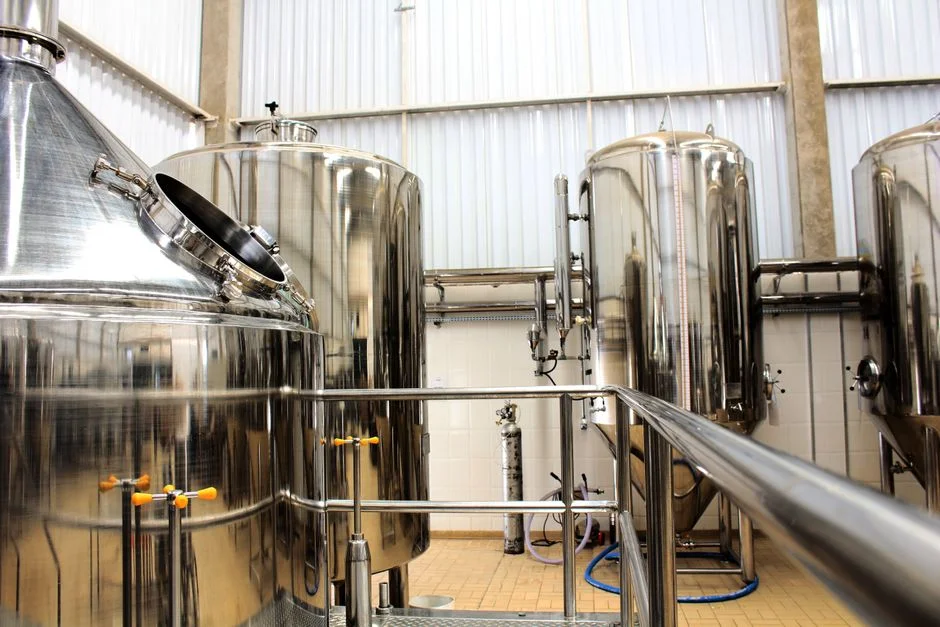
Conventional gravity clarifiers separate solids by density and quiescent settling, so they work best when particles are heavy, coarse, and largely free of FOG or attached air. Lamella or high-efficiency sedimentation tanks accelerate that settling by stacking inclined plates inside the tank, multiplying the effective settling area inside a small footprint. The HydropureWater catalog specifies surface loading rates of 20–40 m/h for its lamella design and states the inclined-plate geometry uses up to 30% less chemical than conventional layouts (product catalog).
That compact footprint is an advantage in space-constrained Bristol retrofits, and the lower chemical demand is an operating-cost advantage on steady, dense-solids streams. The limitation is the same one DAF is built around: lamella and gravity units struggle with colloidal, emulsified, or near-buoyant particles, which is the fraction DAF outperforms them on. The practical implication for a mining or metals plant is that a lamella clarifier is the right primary unit when the stream is dominated by fast-settling ore particles, scalping-screen underflow, thickener overflow, or heavy slimes, and FOG or reagent loading is low. For a turnkey lamella unit to evaluate, see the HydropureWater high-efficiency sedimentation tank.
DAF vs Clarifier: Parameter Comparison for Bristol Mining and Metals Duty
The table below details the trade-offs a procurement lead or process engineer needs to shortlist vendors and units. Removal values and flow ranges are taken from the two named vendors' published product pages; clarifier-only removal figures are not enumerated in the same form in the supplied research, so that cell is left as the input a buyer must request per stream.
| Parameter | DAF (HydropureWater) | DAF (SigmaDAF USA / Clearwater Industries) | Lamella / Gravity Clarifier |
|---|---|---|---|
| Separation mechanism | Micro-bubble flotation, bubbles 20–60 μm attach to particles and float them (hydropurewater.com) | Microbubble flotation, bubbles 30–50 μm lift solids to surface skimmers (clearwaterind.com, 2026-04-27) | Inclined-plate gravity settling; surface loading 20–40 m/h per HydropureWater catalog |
| Best-fit solids | Light, colloidal, oil/FOG-bearing, flotation-reagent residues, fine metal colloids (hydropurewater.com) | Suspended solids, oils, fats, low-buoyancy particles; FPBC uses lamella pack to handle low-buoyancy loads (clearwaterind.com, 2026-04-27) | Dense, fast-settling ore particles, scalping underflow, thickener overflow, heavy slimes |
| Primary-stage removal | TSS up to 85%, COD 30%, color 40% as primary stage; higher with optimized dosing (hydropurewater.com) | SigmaDAF USA states high removal of organic load, solids, oils and fats; stream-specific (clearwaterind.com, 2026-04-27) | Stream-specific; not enumerated in the supplied research — request pilot data per wastewater |
| Standard flow range | 13 standard models, 4–300 m³/h; custom designs up to 500 m³/h (hydropurewater.com) | COMPACT DAF single skid ≤66 GPM; >66 GPM on two-skid modular layout (clearwaterind.com, 2026-04-27) | Set by surface loading 20–40 m/h and footprint per HydropureWater catalog |
| Footprint and chemistry | Aeration-positive; pairs with chemical dosing skid (hydropurewater.com) | Pre-assembled COMPACT DAF skid includes conditioning, clarifier, sensors, PLC (clearwaterind.com, 2026-04-27) | Compact inclined-plate footprint; up to 30% lower chemical consumption per catalog |
| Standard materials of construction | Not enumerated in supplied research — request per model | 304SS standard; 316SS and polypropylene available on request for chloride or acidic mine water (clearwaterind.com, 2026-04-27) | Not enumerated in supplied research — request per model |
| Compliance posture | Designed to meet US EPA effluent guidelines and EU IED (hydropurewater.com) | Designed to meet site-specific discharge standards; EPA alignment is the baseline (clearwaterind.com, 2026-04-27) | Compliance is stream- and local-authority-specific; pair with EPA-aligned downstream polishing |
For a plant blending both populations—common in Bristol-area mills that combine wet ore handling with metalworking rinsewater—the same table points to the chemical dosing train that any DAF or coagulant-assisted clarifier will need. The automatic chemical dosing skid is the standard way to deliver coagulant and flocculant to either technology.
Decision Framework: When a Bristol Mining or Metals Plant Should Pick DAF, Clarifier, or Both
Pick DAF as the primary clarifier when the wastewater carries oils, greases, flotation reagents, fine metal colloids, or any stream where settleability is poor. HydropureWater lists metalworking, electroplating, and tannery as proven DAF applications, and SigmaDAF USA's COMPACT DAF is designed around exactly this profile — chemical conditioning, skimming, and PLC-controlled dosing on a single skid (hydropurewater.com, clearwaterind.com, 2026-04-27).
Pick a lamella or gravity clarifier as primary when the stream is dominated by dense, coarse ore particles, scalping underflow, or thickener overflow, and FOG or reagent loading is low. This is the lower-energy, lower-chemical path on steady dense-solids service, and it leaves the lamella footprint available for retrofits where floor space is the binding constraint.
Pick both — DAF first, lamella or gravity clarifier as polishing or sludge-thickening step — when the plant must hit very low total suspended solids for reuse or for a strict NPDES limit. SigmaDAF USA states that DAF technology should be paired with proper chemical coagulation and flocculation, and that heavier solids are also collected in the unit's bottom auger zone rather than just floated off the top (clearwaterind.com, 2026-04-27). For context on how the same trade-off plays out in adjacent sectors, see the chemicals wastewater DAF vs clarifier guide and the pulp and paper DAF vs clarifier guide.
Sizing, Supplier Selection, and 2026 Procurement Checklist
Start with the regulatory category. Identify whether the Bristol-area facility falls under 40 CFR Part 437 (Ore Mining and Dressing), Part 440 (Ore Mining Subcategory), or another effluent guideline, and confirm with the local pretreatment coordinator whether DAF or clarifier effluent is acceptable to sewer — the relevant framing is laid out in the mining pretreatment compliance guide and the mining and metals sewer discharge guide. Then match the technology to the dominant solid type using the comparison table above; do not pick by familiarity.
Request from each vendor: bubble size range, certified removal data for the actual stream, materials of construction (304SS vs 316SS vs polypropylene for chloride or acidic mine water), flow turndown, PLC scope, and chemical consumption. SigmaDAF USA discloses 304SS as standard and lists lamella, cross-flow, and countercurrent variants inside its DAF family (clearwaterind.com, 2026-04-27). Check vendor service footprint for the Bristol region: SigmaDAF USA is manufactured in Brown Deer, WI through Clearwater Industries, and Sigmadaf Clarifiers has completed 800+ projects in 25+ countries since 1994 (clearwaterind.com, 2026-04-27). Plan the chemistry train in parallel — DAF removal rates rise sharply with optimized coagulant and flocculant dosing, so budget an automatic chemical dosing skid at the same time as the clarifier, and budget a downstream polishing step such as a multi-media filter if reuse or strict TSS limits are in scope.
Frequently Asked Questions
What is the typical installed cost difference between a DAF and a lamella clarifier for a Bristol mining plant in 2026?
The supplied research does not publish installed-cost figures for either technology, so any specific dollar comparison would be speculative. The input a buyer should request from each shortlisted vendor is the all-in skid price for the certified flow range, the chemical dosing skid as a separate line item, the PLC scope, freight to Bristol, and commissioning — then compare those line items against each other.
Which regulatory category should a Bristol-area ore or metals plant confirm before specifying a DAF or clarifier?
Confirm with the local pretreatment coordinator whether the site discharges under 4
Frequently Asked Questions
For a Bristol, US mining or metals plant in 2026, is DAF or a lamella clarifier the better primary clarifier for wastewater with oils, flotation reagents, and fine metal colloids?
For wastewater containing emulsified oils and flotation reagents, Dissolved Air Flotation (DAF) is superior because these contaminants have a specific gravity near or below 1.0, making them difficult to settle via gravity alone. DAF utilizes micro-bubbles to float these low-density particles, achieving removal efficiencies often exceeding 95% for oil and grease.
Conversely, lamella clarifiers are better suited for dense, inorganic metal colloids with specific gravities significantly greater than 1.2. If your Bristol facility handles a complex stream containing both oils and heavy metal solids, a hybrid approach—using a DAF unit for oil/reagent removal followed by a lamella clarifier for dense metal solids—is the standard industry recommendation to maintain consistent effluent quality.
What flow rate range and micro-bubble size should we specify when sizing a DAF system for a small to mid-sized Bristol metals factory in 2026?
For small to mid-sized operations, specify a hydraulic loading rate typically ranging from 2 to 6 gallons per minute per square foot (gpm/ft²) of surface area. Ensure the system is sized based on the peak flow rate plus a 20% safety factor to account for surge conditions common in metal processing discharge cycles.
The micro-bubble size is critical for effective collision with metal colloids and oil droplets; specify a bubble diameter range of 30 to 70 microns. Bubbles within this range maximize the total surface area for particle attachment, which is essential for achieving the high-clarity effluent required by modern industrial discharge standards.
Which DAF or clarifier suppliers actively serve the Bristol, US region in 2026, and what materials of construction should we require for acidic or high-chloride mine water?
Major industrial water treatment vendors such as Evoqua, Veolia Water Technologies, and WesTech Engineering maintain active service and supply chains for the Bristol, US region. These firms provide regional technical support for both DAF and lamella systems specifically engineered for the mining and metals sector.
For acidic or high-chloride environments typical in mining, avoid standard carbon steel. Specify high-grade materials such as 316L stainless steel, or consider FRP (Fiber Reinforced Plastic) or HDPE-lined tanks to prevent corrosion. If chlorides exceed 500 mg/L, 316L stainless steel may still be susceptible to pitting; in these cases, specify duplex stainless steels (such as 2205) or epoxy-coated concrete basins to ensure a design life of 20+ years.
How do DAF and lamella clarifier operating costs compare in 2026, and which cost drivers should we ask each vendor to itemize in the quote?
DAF systems generally have higher operational costs than lamella clarifiers due to the energy consumption of air saturation pumps and the continuous requirement for chemical flocculants or coagulants to assist in bubble-particle attachment. Lamella clarifiers are primarily passive, with costs dominated by sludge dewatering and occasional plate cleaning.
Request that vendors itemize the following in their quotes: annual electricity consumption (kWh), polymer and coagulant dosage rates (mg/L), maintenance labor hours per month, and the projected service life of mechanical wear parts like flight scrapers or saturation nozzles. Comparing these specific line items will provide a more accurate Total Cost of Ownership (TCO) than purchase price alone.
What US EPA or 40 CFR effluent limits apply to mining and metals primary clarification in 2026, and could picking the wrong technology put our NPDES permit at risk?
Primary clarification must align with 40 CFR Part 434 (Coal Mining) or 40 CFR Part 440 (Ore Mining and Dressing), which set strict limits on Total Suspended Solids (TSS), oil and grease, and specific heavy metals like copper, lead, and zinc. These federal regulations are incorporated into state-level NPDES permits, which are increasingly stringent regarding the discharge of flotation reagents into local watersheds.
Picking the wrong technology poses a significant risk to your NPDES permit compliance. A lamella clarifier alone may fail to meet oil and grease discharge limits, leading to permit violations and potential fines. Conversely, a DAF system may not be sufficient to capture dense metal fines, leading to TSS exceedances. Always perform bench-scale jar testing with your actual wastewater stream before finalizing your technology selection to ensure the chosen process can consistently meet your specific permit limits.