The regulatory stack an Ary mine has to clear in 2026
Determine the category from the mineral, actual operation and wastewater source before selecting a separator. Part437 is Centralized Waste Treatment: it covers specified treatment/recovery of wastes received from off-site, with subcategories for metals, oils, organics and multiple wastestreams, and exclusions. It is not an ore-mining category and does not automatically cover a mine treating its own wastewater. Part440 concerns covered ore mining/dressing; Part436 concerns covered mineral mining/processing, with several reserved subparts. Other operations can require different category assessments, including covered metal finishing under433.10. A reserved subpart does not establish that no other permit or numerical requirement applies.
| Discharge route | Design document to obtain | Key distinction |
|---|---|---|
| Surface-water discharge | Applicable NPDES authorization, process category/subcategory and site limits | Do not substitute a generic437 table or sewer limits. |
| Connection to a POTW | Actual receiving authority, applicable pretreatment category determination, local limits and control mechanism | 403.5 prohibitions apply to each user; not every POTW must operate an approved local programme under 403.8. |
| Process reuse | End-use quality specification, concentrate and residual destinations, any applicable authorization | A reuse specification is not a discharge permit. |
Compare only requirements that actually cover the same discharge, pollutant, units and statistical period. This article establishes no common local copper, zinc, lead or TSS limit for all plants in the area. Drinking-water lead action levels, an unverified rulemaking date and a city name cannot supply that missing sewer limit. Obtain the current written conditions before fixing a performance guarantee.
What the wastewater actually looks like at a mining or metals site
Mining wastewater comprises multiple distinct streams, and the operator must identify each to select the correct unit operations. Acid mine drainage (AMD) is the most prevalent mining water quality problem and shows up wherever sulfide minerals (pyrite, pyrrhotite) are disturbed; oxidation produces sulfuric acid that leaches Fe, Mn, Cu, Zn, As, and Cd at concentrations far exceeding regulatory limits (AMPAC USA, 2025-09). Process water from ore processing — flotation, heap leaching, cyanide gold extraction, chlorination circuits — typically runs high in TDS and may carry cyanide, ammonia, or chloramines depending on the circuit (AMPAC USA, 2025-09). Tailings pond effluent is the liquid fraction of tailings impoundments and contains fine solids, processing chemicals, and leached metals (AMPAC USA, 2025-09).
Dewatering discharge is the fourth common stream — water pumped from underground or open-pit workings to maintain access — and its quality varies sharply with geology, running relatively clean in some settings and heavily metal-loaded in others (AMPAC USA, 2025-09). Mining operations consistently produce some of the most chemically complex wastewater of any industrial sector: AMD, heavy metal leachate, processing chemicals, and suspended solids from tailings all present treatment challenges that conventional approaches handle poorly (AMPAC USA, 2025-09). A copper mine, a coal operation, and a dimension-stone quarry produce fundamentally different wastewaters and cannot share a single default treatment train, which is why an Ary-area operator must characterize influent stream by stream before talking to a treatment supplier.
The six-step treatment train that holds up in 2026
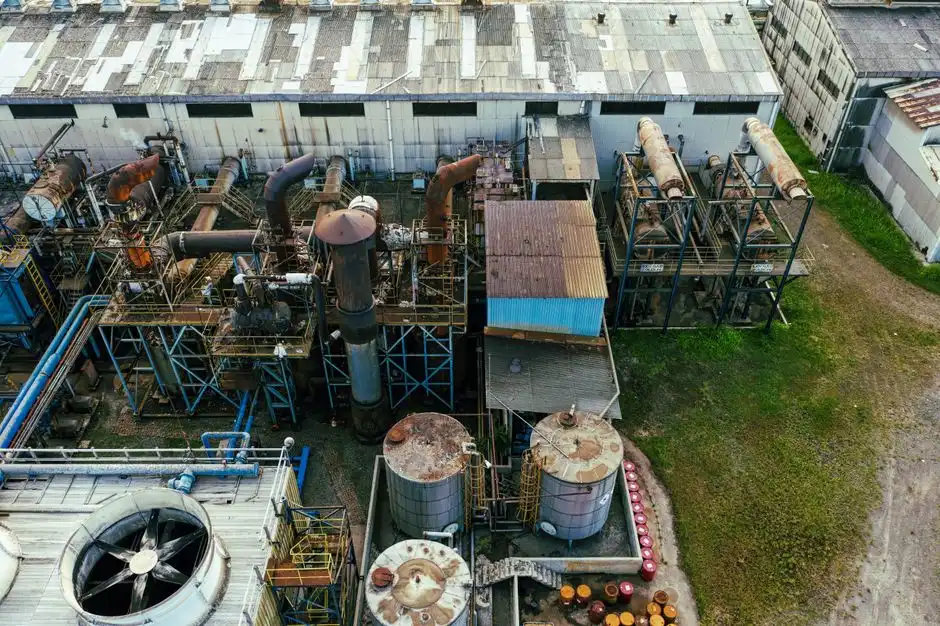
The defensible process sequence for 2026 is six steps, and each step maps to a specific unit operation. Equalization feeds the train at a steady chemistry, followed by pH correction, coagulation, dissolved-air flotation (DAF) or lamella clarification, multimedia filtration, and reverse osmosis, with PLC/HMI monitoring and POTW self-monitoring on the back end (Genesis Water Technologies; PMC review, 2024-02). pH correction uses lime raise to pH >10 so dissolved metals precipitate as hydroxides and gypsum drops out before thickening (PMC review, 2024-02). Coagulants and flocculants then aggregate suspended solids and fine metal particles into settleable or floatable flocs, and the coagulant/flocculant pair is selected for the floc density that the next step actually needs.
Clarification is the choice point: a dissolved air flotation system for buoyant floc or for streams carrying oils and floatable fines; a lamella clarifier for metal-hydroxide sludge where footprint and sludge volume are the constraint (Genesis Water Technologies, 2025-11). A multi-media filter then drops turbidity and colloids to protect downstream membranes, and the basis of design should be the target SDI after the filter, not inlet turbidity. Reverse osmosis is the polishing step that conventional methods cannot replace; an industrial RO system rejects >99% of dissolved metals and salts, with 50–70% recovery on AMD feed and 70–85% as the RO stage of a ZLD train (AMPAC USA, 2025-09). A PLC-controlled chemical dosing skid ties the chemistry dosing, the PLC/HMI, and the membrane skid into one integrated system with continuous pH, flow, and conductivity logging (LiqTech, 2025-08). Solids produced by chemical precipitation are then handled with a plate and frame filter press sized to the cake volumes the precipitation train actually produces.
| Step | Unit operation | Design driver | Key spec to put in the RFQ |
|---|---|---|---|
| 1. Equalization | EQ basin + mixing | Peak vs. average flow | Volume for highest anticipated daily discharge |
| 2. pH correction | Lime raise, chemical dosing | Metal solubility curve | Lime dose, target pH >10, gypsum handling |
| 3. Coagulation / flocculation | Coagulant + flocculant injection | Floc density for next step | Polymer type, dose, residence time |
| 4. Clarification | DAF or lamella | Floc buoyancy vs. sludge volume | Air-to-solids ratio or plate spacing |
| 5. Multimedia filtration | Multi-media filter | Downstream membrane protection | Target SDI after filter, not inlet turbidity |
| 6. Membrane polish | UF + RO | Dissolved salts and trace metals | >99% rejection; recovery curve |
How local POTW limits and reuse economics reshape the sizing decision
POTW programme duties depend on 403.8(a), and local controls on the applicable 403.5(c) conditions. Do not assume that every industrial receiver operates its own approved programme. Evaluate reuse separately using the required end-use quality, measured recovery, concentrate destination and operating costs; reuse does not remove applicable discharge or residual-management duties.
Even with reuse, any volume not recycled still has to meet local limits on metals, pH, and TDS, so the sizing logic becomes "reuse as much as economics allow, then polish the rest to sewer quality" (AMPAC USA, 2025-09). Peak flows — not averages — drive equalization basin volume and pump selection, so the operator should size against the highest anticipated daily discharge rather than the daily mean. For a small Ary-area site, that distinction is often the difference between an EQ basin that buffers a real storm event and one that overflows on the first wet season. The published comparison between DAF and lamella for mining applications is covered in more depth in the DAF vs clarifier for mining/metals wastewater factory guide.
Building the 2026 RFQ: basis-of-design inputs a supplier actually needs
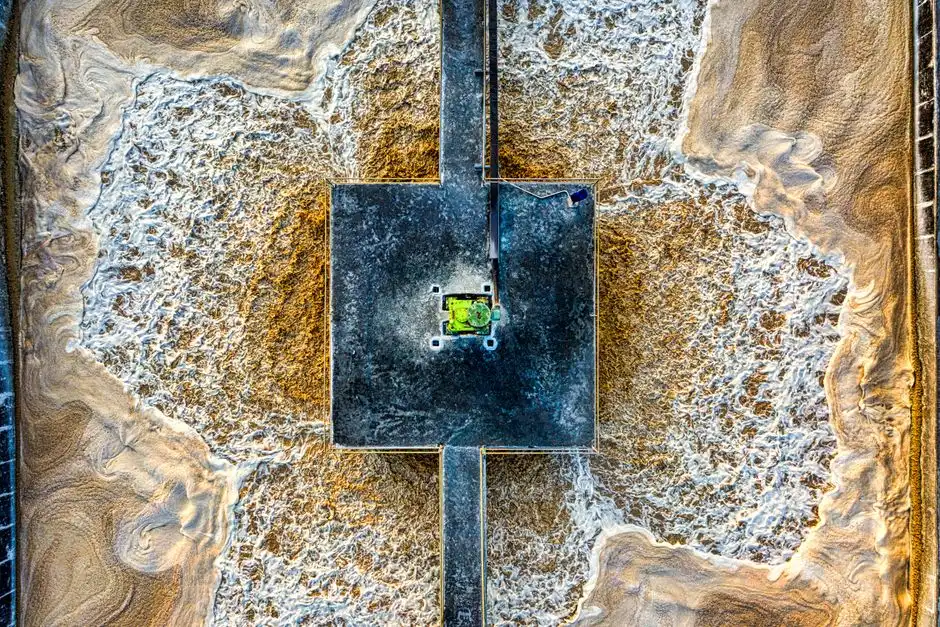
The buyer must request a quotation against their own basis of design rather than rely on a published range, as no industry-standard price points exist for a complete pretreatment train. The minimum inputs to put in that RFQ are peak and average flow in m³/h, influent pH and metal profile from a representative sampling round, the local sewer authority's discharge limits for metals, pH, and TSS, and the desired recovery percentage if reuse is in scope. With that basis of design in hand, the supplier can quote the same six-step train — equalization, pH correction, coagulation, DAF or lamella, multimedia filtration, and RO — at the >99% rejection of dissolved metals and salts that the literature reports (AMPAC USA, 2025-09).
Frequently asked questions
Does Part437 establish a universal mining discharge table?
No. It is a CWT category with specified off-site-waste coverage and exclusions. Determine the actual mine, processing, metal-finishing or waste-treatment category and the discharge route before selecting any table.
Does compliance require DAF followed by a clarifier?
The category name does not establish a mandatory separator sequence. Compare settling and flotation on representative conditioned wastewater. Measure residual suspended and dissolved pollutants, chemical use, sludge and energy; a dissolved-metal problem may require precipitation or another treatment before solids separation.
What must a supplier prove before equipment acceptance?
Provide actual written requirements and measured feed variability. Require an agreed mass balance, throughput and residual-pollutant tests, consumables, residual handling and safe upset response. Equalization moderates load variations; it does not remove pollutant mass or authorize dilution instead of treatment.