What a Water Treatment Plan Actually Covers in 2026
A water treatment plan is a single engineering document that ties source-water or wastewater characterization to a ten-year-plus capacity horizon, unit-process selection, pilot validation, and a regulator-approvable schedule of capital works. The municipal version is structured as a master plan with chapters for Objectives and Organization, a city Profile, Water Supply and Distribution, and Wastewater Collection and Treatment, as illustrated in the City of Baltimore's comprehensive water and wastewater plan, which the Maryland Department of the Environment reviews with input from the Maryland Department of Planning and which must demonstrate that supply and treatment capacity will be sufficient at least ten years into the future (baltimorecity.gov, 2006 Water Wastewater Master Plan, adopted November 2006).
For an industrial reuse project, the plan is not complete until the pilot phase is closed out, because laboratory data rarely survives contact with full-scale influent variability. Integrated resource planning provides the connecting methodology: it requires disaggregating demand into end-uses, evaluating the cost of demand reduction, and modelling the cost trade-offs between supply expansion and wastewater discharge, all in a single least-cost framework (Water International, "Integrated Resource Planning for Water and Wastewater," 1999). The same plan must also state a resource-conservation goal, because every cubic metre of unconserved water carries a treatment and pumping energy cost; the US Environmental Protection Agency estimates that letting a faucet run for five minutes uses the same energy as a 60-watt bulb lit for 14 hours (baltimorecity.gov, 2006 Master Plan).
Master Plan Governance: Who Approves, What They Require
The regulator of record for a municipal system is the state environment agency, and the plan is co-reviewed by the state planning agency. The Maryland Department of the Environment reviews and approves Baltimore's plan, with additional guidance from the Maryland Department of Planning, and periodic updates are required to keep the document current (baltimorecity.gov, 2006 Master Plan). The plan must carry four mandatory appendices: a Six Year Capital Improvement Program project list, a Water Distribution map, a Sewage System map, and references to interjurisdictional water and wastewater agreements (baltimorecity.gov, 2006 Master Plan).
For an industrial reuse site the same four-chapter logic still applies, but the approving body changes. The pilot phase is governed by ISO 22524, which defines the considerations, methods, criteria, and processes that bridge laboratory data and full-scale design (BSI, ISO 22524 product page). Discharge compliance runs through the site's NPDES permit, and the conservation goal is reported through corporate ESG channels rather than a state plan. The table below maps municipal and industrial governance side by side so a reader can see which artefact satisfies which reviewer.
| Plan element | Municipal master plan reviewer | Industrial reuse equivalent |
|---|---|---|
| Demand and capacity horizon (≥10 years) | State environment department (e.g., Maryland Department of the Environment) | Corporate planning, NPDES permit cycle |
| Capital improvement program list | State planning department (e.g., Maryland Department of Planning) | Internal capex committee |
| Pilot scope and post-pilot analysis | Not required for conventional filtration | ISO 22524 pilot charter |
| Interjurisdictional or off-take agreements | Plan appendix | Customer or municipal offtake contract |
| Resource-conservation goal | Plan chapter | ESG / sustainability report |
Demand, Capacity, and the Linkage Engineers Get Wrong
The most common planning failure is sizing supply and wastewater assets independently. Integrated resource planning fixes that by forcing a single least-cost model that disaggregates demand into end-uses and models the link between supply and sewerage simultaneously, rather than sizing each asset in isolation (Water International, 1999). A municipal case study in scale: the City of Baltimore operates three reservoirs and three water filtration plants to distribute an average of 265 million gallons of drinking water daily, and the current supply and treatment programme is projected to meet growth beyond 2030 on the strength of named capital decisions such as the Fullerton Water Treatment Plant and the Back River and Patapsco enhanced nutrient reduction designs (baltimorecity.gov, 2006 Master Plan).
Capacity targets in the plan must be named, dated, and traceable. The Patapsco Wastewater Treatment Plant's projected capacity of 81 MGD by 2013 is the kind of dated, named figure the regulator expects, and the equivalent in an industrial plan is a per-shift and per-day flow target with the same year stamp. Where the research has no numeric data for a specific industry, the reader should still assemble a checklist of design flow, design load, peak factor, and reuse yield before sizing, and treat each item as an input to be requested from operations rather than an assumed number. The plan fails on review when any of these four items is missing or dated only to "current".
Designing the Pilot Under ISO 22524
ISO 22524 provides the fundamental principles and guidelines for industrial wastewater treatment technology pilot studies, covering a wide range of industrial water treatment systems intended for water reuse. It includes the critical considerations, methods, criteria, and processes that must be in every pilot, from initial planning through post-pilot analysis of the data collected (BSI, ISO 22524 product page). Two exclusions are absolute and must be acknowledged in the pilot charter: the standard does not address laboratory research and development, nor the study or testing of a given technology in isolation, and it does not cover reuse applications such as irrigation (BSI, ISO 22524 product page).
Industrial wastewater is rarely steady, and the standard calls this out directly: characteristics vary seasonally or are driven by changes in industrial processing and product generation, so the pilot must test different operating conditions and control strategies to find the highest efficiency and the most suitable economic operating point (BSI, ISO 22524 product page). With the necessary modifications, the same framework supports comparative testing of existing proven commercial solutions against a specific site, which is the typical route from a shortlisted supplier list to a single-source purchase recommendation (BSI, ISO 22524 product page). Where pilot duration and cost data are not in the research, the reader should request vendor-specific figures, since ISO 22524 sets the framework but not the run-length or budget.
| Pilot phase | ISO 22524 expectation | Buyer input to request |
|---|---|---|
| Planning | Define influent variability envelope and end-use reuse target | Site flow and load audit |
| Setup | Multiple operating conditions and control strategies to be tested | Vendor pilot rig specification |
| Operation | Cover seasonal and process-driven variability | Pilot run-length and sampling plan |
| Post-pilot analysis | Comparative analysis against proven commercial solutions | Vendor performance report and CAPEX/OPEX model |
Unit Process Selection Matrix for Industrial Plants
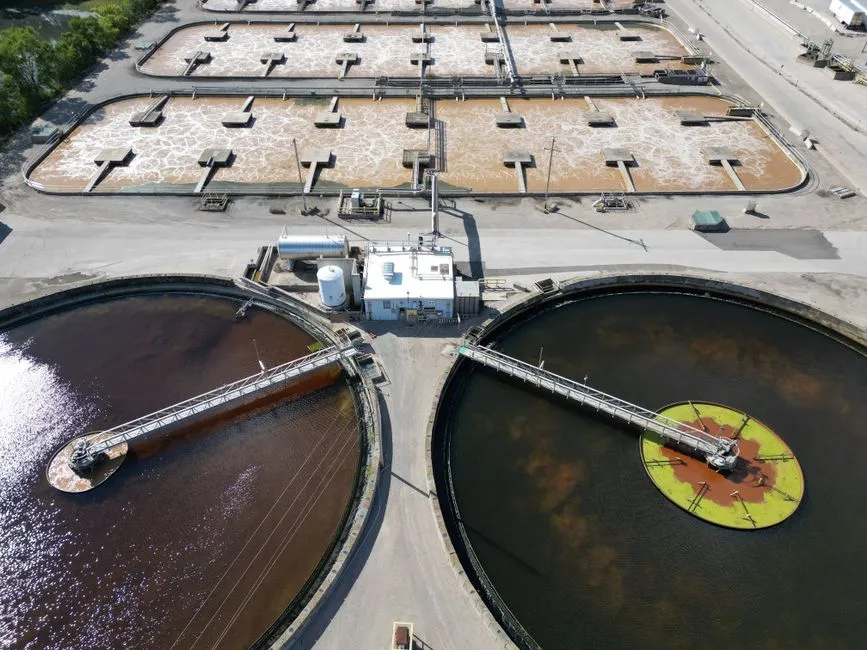
Selection is driven by three inputs, in this order: the seasonal and process-driven influent variability the pilot must accommodate, the reuse target quality dictated by the offtake, and the discharge permit limits that bound the worst case (BSI, ISO 22524 product page). A biological contact-oxidation stage such as A/O handles organic load swings with operational simplicity; a membrane bioreactor tightens the effluent envelope and is the usual choice when reuse quality demands low total suspended solids; dissolved air flotation handles high suspended-solids loads and emulsions ahead of the biological stage. The research does not provide removal-efficiency numbers for these options, so the reader should request site-specific pilot data and vendor guarantees rather than rely on typical ranges.
Disinfection selection is a qualitative trade-off between chlorine dioxide, ultraviolet, and ozone based on residual control, footprint, and the presence of oxidisable compounds in the reuse stream; the research does not include dose or log-reduction figures, so those numbers must be sourced from the pilot and the vendor. Sludge dewatering becomes a downstream requirement once biological and physicochemical stages are fixed, and the equipment list for the procurement team must include it from the first draft to avoid a stranded sludge stream. Readers interested in a related biological selection can also consult the EGSB reactor process flow diagram engineering guide and the IFAS retrofit and upgrade guide for intensifying existing tanks.
| Unit process | Best-fit driver | Selection input to request |
|---|---|---|
| A/O biological contact oxidation | Variable organic load, simple operation | Pilot COD removal data |
| Membrane bioreactor | Tight effluent envelope for reuse | Vendor flux and cleaning interval |
| Dissolved air flotation | High suspended solids or emulsions upstream | Site TSS and oil/greak profile |
| Disinfection (ClO₂ / UV / O₃) | Reuse end-use and residual control | Pilot CT or dose data |
2026 Equipment Procurement Framework
Once the pilot is closed and the unit processes are fixed, the procurement framework should follow a single decision tree: pilot-validated process, standard skid selection, factory acceptance test, then site installation and commissioning. Industrial reuse projects typically pair an MBR membrane bioreactor system with a DAF system for industrial wastewater as the biological and pre-treatment core, with a package sewage treatment plant used where a small-footprint, buried installation is required. For operations expecting large wet-weather or production-side flow swings, the high water volume management best practices for manufacturing guide covers the buffer and equalisation steps that sit in front of this core.
The framework should record, for each equipment category, which compliance documentation is required: drinking-water approvals where the reuse stream contacts a potable-grade system, and discharge-directive documentation for any stream routed to a sewer or receiving water. Specific clause numbers and approval identifiers must be requested from the supplier, since the research does not enumerate them. Pricing, lead time, and warranty terms are likewise vendor-specific inputs the buyer should request in writing before issuing a purchase order, rather than assumed from benchmark numbers.
Frequently Asked Questions
What budget should a buyer plan for a 2026 industrial water treatment plan and pilot?
The research does not quote a price for a plan or pilot, and costs vary with influent variability, reuse target, and the number of unit processes shortlisted. Buyers should request a written fixed-price proposal from each shortlisted supplier that itemises the master plan chapter authorship, the ISO 22524 pilot scope and run-length, the equipment supply, and the factory acceptance test, then compare the four line items separately rather than on a lump-sum basis.
How should a buyer select a water treatment equipment supplier in 2026?
Filter the shortlist to suppliers who can deliver an ISO 22524-aligned pilot report, name the unit processes they manufacture in-house, and provide documented compliance evidence for the discharge permit and the reuse end-use. The same supplier should also commit to a factory acceptance test before shipment, since that is the single step that catches integration defects before they reach the site.
How long should an ISO 22524 pilot run before procurement commits to full-scale equipment?
ISO 22524 requires the pilot to cover the seasonal and process-driven variability the site actually exhibits, but it does not set a fixed duration (BSI, ISO 22524 product page). The buyer should ask each bidder to specify, in weeks, the run-length that covers the site's expected variability envelope and the number of operating conditions to be tested, and to put that number in the proposal.
What compliance risk does a 2026 water treatment plan need to flag for the procurement team?
The plan should record, for each unit process, the discharge permit conditions that constrain the design and the reuse end-use approvals the offtake requires, and the procurement team should require every supplier to provide matching compliance evidence before contract award. Where the research does not enumerate the specific clauses, the buyer should request the clause references from the regulator and the supplier in writing rather than rely on a generic statement of compliance.