Why IFAS Retrofit Is the Default 2026 Answer for Capacity and Nutrient Compliance
Intensification, not new concrete, is the 2026 default for plants facing tighter ammonia and total nitrogen limits inside a fixed footprint. An IFAS retrofit — integrated fixed-film activated sludge — is a hybrid process that adds free-floating biofilm carrier media and retention screens inside an existing aeration basin, so nitrifying and heterotrophic bacteria grow as attached biomass in parallel with the conventional mixed liquor (per the Ecologix technical description, 2025). Because the biofilm handles a large share of the biological load, the suspended-growth MLSS does not have to scale with retrofit capacity — and the clarifier solids loading on the back end stays roughly constant.
The financial hook is direct: an IFAS or MBBR retrofit typically runs 40% to 60% lower in initial CAPEX than pouring new concrete basins of equivalent treatment capacity, with a design life of roughly 20 years (source: waterandwastewater.com commercial guidance, 2025-09). The process hook is equally direct — IFAS increases the equivalent biomass inventory in the same footprint by 2x to 3x, which is why operators can run higher SRT for nitrification without expanding the aeration tank (source: waterandwastewater.com, 2025-09). The maturity hook is now peer-reviewed: Sadri Moghaddam and Mahmoudisharabiani published a full-scale hospital extended-aeration-to-MBBR retrofit in Numerical Methods in Civil Engineering 10(3):80-91 (2026, doi 10.66224/NMCE.2601.1123), confirming that biofilm retrofits are a deliverable option for regulated sites, not a pilot gamble. For a board or regulator in 2026, the defensible summary line is: a 40-60% CAPEX reduction, 2x-3x biomass gain, 20-year life, and a recently published full-scale reference — all inside the existing tank walls. The engineering detail that makes those numbers real is covered in the IFAS Energy Consumption Reduction: 2026 Engineering Data & ROI Guide and the hospital-specific IFAS for Hospital Wastewater in 2026: Process Design, Removal Data & Equipment Guide.
IFAS Process Design: The Parameters You Actually Specify
An IFAS retrofit should be specified from five defensible parameters, not from a vendor cut sheet. Treating the upgrade as a "drop-in" is the single most common specification error (source: waterandwastewater.com, 2025-09). The following is the methodology a consulting engineer can lift directly into a 2026 P&ID set.
Step 1 — Characterize the influent. Close the data loop before sizing media fill. Capture BOD₅ and COD, TKN, NH₃-N, temperature profile across all four seasons, peak diurnal factor, and any toxicant events (phenols, cyanides, solvents, cleaning CIP surges). An IFAS retrofit magnifies influent variability because the biofilm responds on a different timescale than the suspended MLSS; under-characterized feeds produce under-performing retrofits.
Step 2 — Choose media fill. Typical IFAS media fill runs 30% to 50% of the aerated volume for municipal BNR, dropping to 20% to 35% for industrial roughing where toxicity events or high temperature are factors (HydropureWater engineering consensus, 2026). The design target is the 2x-3x biomass gain, not the maximum fill — over-packing drives screen blinding, diffuser fouling, and elevated headloss. Effective specific surface area on modern PE carriers sits in the 500 to 1,200 m²/m³ range.
Step 3 — Set MLSS and SRT. IFAS keeps conventional MLSS so the operator can run higher SRT for nitrification while biofilm carries the BOD load. A defensible envelope for combined BOD/TKN removal is MLSS of 3,000 to 5,000 mg/L and SRT of 10 to 25 days, with the higher end of SRT reserved for cold-weather or strict ammonia permits.
Step 4 — Aeration and DO. IFAS uses heavy-duty fine-bubble diffusers (EPDM or silicone) when protective zones and grid layouts are designed around the media, or coarse-bubble stainless grids for MBBR-style operation (source: waterandwastewater.com, 2025-09). DO setpoint in aerobic zones is typically 1.5 to 2.5 mg/L; biofilm-driven nitrification tolerates the lower end better than suspended growth alone.
Step 5 — Hydraulic profiling. Per the waterandwastewater.com guidance (2025-09), hydraulic profiling is the most common point of failure in an IFAS/MBBR retrofit. Address equalization upstream, budget 100 to 250 mm of clean headloss across the retention screens, and consider step-feed for plug-flow basins that cannot be re-plumbed.
| Parameter | Typical IFAS Range (Municipal BNR) | Typical IFAS Range (Industrial) | Design Driver |
|---|---|---|---|
| Media fill (% aerated volume) | 30% to 50% | 20% to 35% | Target 2x-3x biomass gain without screen blinding |
| Carrier specific surface area | 500 to 1,200 m²/m³ | 500 to 1,200 m²/m³ | Biofilm inventory vs oxygen transfer |
| MLSS | 3,000 to 5,000 mg/L | 2,500 to 4,500 mg/L | Clarifier capacity and SRT control |
| SRT (combined BOD/TKN) | 10 to 25 days | 8 to 20 days | Nitrification reliability at low temp |
| HRT (aerobic zone) | 4 to 8 h | 3 to 6 h | Peak factor and equalization |
| DO setpoint (aerobic) | 1.5 to 2.5 mg/L | 2.0 to 3.0 mg/L | Coarse vs fine bubble selection |
| SALR (aerobic) | 4 to 8 g BOD/m²·d | 6 to 12 g BOD/m²·d | Carrier surface loading |
| Screen clean headloss budget | 100 to 250 mm | 100 to 250 mm | Peak instantaneous flow |
Cross-check the energy assumption against the IFAS Energy Consumption Reduction: 2026 Engineering Data & ROI Guide, which documents a 38% to 46% energy cut when DO control and diffuser selection are properly specified.
Retention Screens, Media Retention, and Mechanical Risk Control
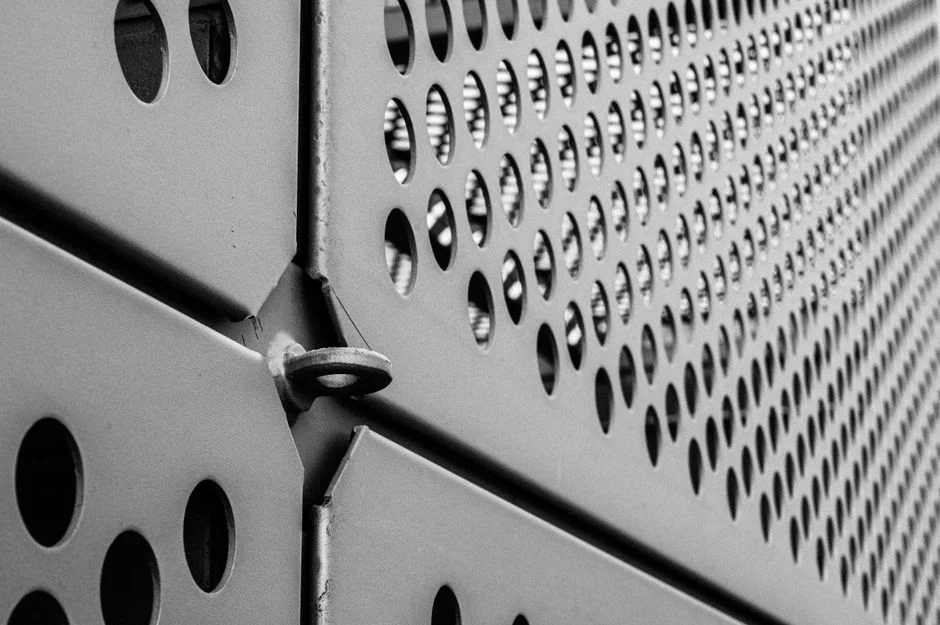
Retention screens are the most critical mechanical component in an IFAS or MBBR retrofit — and the most common single point of unexpected OPEX (source: waterandwastewater.com, 2025-09). They belong in the CAPEX line, not the accessories line. Specify perforated plate screens for MBBR-style outlets and wedge-wire cylindrical screens for IFAS reactors with internal recirculation, with slot openings matched to the media manufacturer's published dimension (typically 6 to 12 mm for PE carriers in the 10 to 25 mm size range). Stainless steel 304 or 316 is the standard material for MBBR coarse-bubble and IFAS retention assemblies because of biofilm-driven corrosion at the air-water interface (source: waterandwastewater.com, 2025-09; Ecologix lagoon retrofit guidance, 2025-08).
When an IFAS or MBBR retrofit underperforms, the symptoms usually fall into two categories — biological or mechanical — and the first 30 days tell you which (source: waterandwastewater.com, 2025-09). Biological symptoms show up as slow nitrification, rising effluent NH₃-N, or visible biofilm sloughing after a toxicity event. Mechanical symptoms show up as rising screen differential pressure, visible media carryover in the clarifier, or fouled diffusers. Triage starts with the screen DP gauge, not the lab — if DP is under 150 mm at design flow, the problem is biological; if DP is climbing toward 300 to 500 mm, the problem is mechanical. For a parallel reference on membrane-based intensification risk control, see the MBR Retrofit and Upgrade: 2026 Engineering Guide to Converting Existing Tanks.
IFAS vs MBBR: Choosing the Right Hybrid for Your Site
IFAS and MBBR both use free-floating biofilm carriers, but they are not interchangeable. IFAS is a hybrid of attached and suspended growth — it keeps a conventional MLSS population alongside the carriers — while MBBR is pure attached growth with no return activated sludge (per the Ecologix technical description, 2025). The selection rule is driven by what you need the reactor to do, not by what a vendor stocks.
IFAS is the right answer for municipal BNR upgrades and lagoon retrofits where total nitrogen limits are very low, because the suspended MLSS supports a dedicated denitrification stage with internal recycle. MBBR is the right answer for industrial roughing, high-toxicity influents, or sites where managing RAS and WAS is operationally undesirable, because biofilm is highly resilient to toxicity and shock loading (source: waterandwastewater.com, 2025-09).
| Selection Driver | IFAS | MBBR |
|---|---|---|
| Biomass mode | Hybrid: attached biofilm + suspended MLSS | Pure attached biofilm |
| Typical application | Municipal BNR, lagoon upgrade to low TN | Industrial roughing, high-shock or toxic feeds |
| Nutrient removal capability | BOD/COD, nitrification, denitrification in one train | BOD/COD and ammonia; denitrification requires a separate stage |
| Clarifier dependence | Yes — relies on existing clarifier and RAS | No — effluent goes to downstream clarifier or DAF |
| Toxicity / shock resilience | Good (biofilm buffer) | Excellent — biofilm is highly resilient |
| Operator complexity | Higher — must manage MLSS, SRT, RAS | Lower — no RAS/WAS to manage |
| Footprint intensity | 2x-3x biomass gain over CAS | Comparable; sized to surface area |
| Typical hydraulic profile | Equalization and step-feed often required | More forgiving under variable flow |
Rule of thumb: if you need a denitrification polish and an existing clarifier train is in place, specify IFAS. If your bottleneck is loading variability, toxicity, and you would rather not run a biological sludge wasting program, specify MBBR (source: waterandwastewater.com, 2025-09). For sequencing batch reactor alternatives, the SBR Design Guide 2026: Process Parameters, Reactor Sizing & Cycle Calculations lays out the equivalent parameter set.
Retrofit vs Replace: A 20-Year Total Cost of Ownership View
The total cost of ownership analysis is the ultimate arbiter in the retrofit-vs-replace decision (source: waterandwastewater.com, 2025-09). For a board or regulator in 2026, the question is not "is the retrofit cheaper to install?" — it is whether the discounted-cash-flow delta over a 20-year design life favors intensification or new concrete. The answer, in almost every municipal and industrial case where footprint is finite, is intensification.
The CAPEX delta is the headline number: an IFAS or MBBR retrofit runs 40% to 60% lower in initial CAPEX than pouring new concrete basins of equivalent treatment capacity, because the civil scope collapses to screen frames, diffuser grids, media, and instrumentation — not new walls and foundations (source: waterandwastewater.com, 2025-09). The OPEX delta goes the other way: the retrofit carries higher aeration energy, screen maintenance, media replacement at the 15- to 20-year mark, and elevated mixing energy to keep the media in suspension (source: waterandwastewater.com, 2025-09; Ecologix lagoon retrofit guidance, 2025-08). The OPEX penalty is partially recoverable — the IFAS energy data shows a 38% to 46% cut versus the original CAS baseline when DO control and diffuser selection are properly specified (per the IFAS Energy Consumption Reduction: 2026 Engineering Data & ROI Guide).
| Cost Driver (20-year horizon) | New Concrete Basins | IFAS / MBBR Retrofit |
|---|---|---|
| Initial CAPEX (equivalent capacity) | 100% baseline | 40% to 60% of baseline |
| Civil / structural scope | Excavation, rebar, walls, foundations | Screen frames, supports, minor structural mods |
| Equipment scope | Aeration, blowers, clarifiers, RAS | Media, screens, diffusers, blower upsizing |
| Annual aeration energy | Lower (sized to new tank volume) | Higher; recoverable by 38% to 46% with DO control |
| Screen / media maintenance | Not applicable | Annual screen service; media replacement at year 15 to 20 |
| Permit / schedule risk | Higher — 18 to 36 month construction | Lower — 4 to 9 month retrofit window |
| Discharge compliance during construction | At risk during tie-in | Generally maintained in existing basin |
The schedule risk often decides the bid before the numbers do. A 4 to 9 month IFAS retrofit can be sequenced inside an existing basin with the clarifier still online, while a new-basins project typically requires 18 to 36 months and a temporary bypass — and the bypass is where permit excursions happen. For a downstream solids-handling reference that often rides the same upgrade, see the plate-frame filter press duty cycle on retrofitted sludge streams.
Commissioning and First-90-Day KPIs for an IFAS Retrofit
Treat the IFAS retrofit as a new process, not a CAS restart. Media fill and biofilm establishment take 4 to 8 weeks before design rates are reliable, and the first 30 days are the period in which biological and mechanical problems can be cleanly separated (source: waterandwastewater.com, 2025-09). The KPI set below is the run-sheet a consulting engineer should hand the operator on day one.
Daily KPIs — first 30 days. NH₃-N profile across each aerobic zone (target within 1.5 mg/L of design effluent goal by day 21); DO at every aerobic probe (1.5 to 2.5 mg/L); MLSS and F:M ratio; screen differential pressure (alert at 200 mm, action at 300 mm); SVI in the downstream clarifier (target < 150 mL/g).
30/60/90-day pass criteria. At day 30: NH₃-N trending to target, no media carryover in the clarifier, screen DP within design envelope, MLSS stable. At day 60: SVI stable, observed yield consistent with design, no diffuser fouling. At day 90: full design loading achieved with all effluent parameters at permit, and the operator's standard operating procedure updated with the new media-aware controls. If performance drifts, apply the two-category triage: biological symptoms (loss of nitrification, high effluent TSS) point to influent toxicity, SRT, or DO; mechanical symptoms (screen blinding, diffuser fouling, media attrition) point to hydraulic profile, air-grid balance, or screen specification (source: waterandwastewater.com, 2025-09). The hospital retrofit reference case in the IFAS for Hospital Wastewater in 2026: Process Design, Removal Data & Equipment Guide shows a comparable 4 to 8 week biofilm establishment curve on a full-scale MBBR conversion.
Frequently Asked Questions
How much does an IFAS retrofit cost vs new concrete basins?
An IFAS or MBBR retrofit runs 40% to 60% lower in initial CAPEX than pouring new concrete basins of equivalent treatment capacity, with a 20-year design life and partially recoverable OPEX penalty (source: waterandwastewater.com, 2025-09).
What media fill percentage is typical for IFAS?
Typical IFAS media fill is 30% to 50% of aerated volume for municipal BNR and 20% to 35% for industrial roughing, designed around a 2x to 3x biomass gain in the existing footprint (HydropureWater engineering consensus, 2026).
When should I choose MBBR over IFAS?
Choose MBBR when the feed is variable or toxic and you want to avoid managing RAS/WAS; choose IFAS when you need combined BOD and total nitrogen removal with an existing clarifier train (source: waterandwastewater.com, 2025-09).
Can an IFAS retrofit be done without major civil work?
Yes — the IFAS/MBBR retrofit installs biofilm carriers, retention screens, and upgraded diffusers inside the existing aeration basin, avoiding new walls or foundations in the standard case (source: waterandwastewater.com, 2025-09).
How much energy does an IFAS retrofit use?
Aeration energy is the largest OPEX line, but with proper DO control and diffuser selection an IFAS retrofit achieves a 38% to 46% energy reduction versus the original CAS baseline (per the IFAS Energy Consumption Reduction: 2026 Engineering Data & ROI Guide).
Related Equipment
- MBR membrane bioreactor wastewater treatment system — specifications, capacity range, and technical data
- dissolved air flotation system — specifications, capacity range, and technical data
- rotary mechanical bar screen — specifications, capacity range, and technical data
- automatic chemical dosing system — specifications, capacity range, and technical data