What counts as domestic sewage in a Sharjah project
Domestic sewage in a Sharjah context is the combined flow of blackwater from toilets and greywater from kitchens, laundries and bathrooms generated by residential, hospitality, healthcare, school and labour-accommodation occupancies (S3). This is the influent envelope that a packaged A/O packaged sewage treatment plant (WSZ series) or an MBR membrane bioreactor wastewater treatment system is designed to treat, and it is the same envelope referenced in active Sharjah wastewater service descriptions operated by local providers (S3).
Several flows look domestic but are not, and routing them into the wrong tank creates an avoidable compliance problem. Industrial effluent, vehicle-wash recycle water, FOG from commercial kitchens and grease-trap waste are managed as separate Sharjah-regulated streams with their own service categories and equipment trains (S3). A villa or labour-camp kitchen that discharges FOG, for example, must be routed through a dedicated dissolved air flotation (DAF) system upstream of — or entirely separate from — the domestic biological stage.
Sharjah STP influents are also known to carry trace pharmaceuticals and other emerging contaminants at low microgram-per-litre levels, which means designers cannot assume the load is only settleable solids and BOD (S2, S5). The exact Sharjah Municipality influent acceptance criteria for an on-site STP are project-specific and must be confirmed with Sharjah City Municipality before the design basis is frozen; this guide intentionally does not list numeric influent limits that have not been published.
2026 compliance and approval landscape for Sharjah domestic STPs
UAE Federal Law No. 24 of 1999 on the protection and development of the environment and Federal Decree-Law No. 45 of 2021 on water resources are the umbrella instruments that govern wastewater discharge and reuse across the Emirates, including Sharjah. Any 2026 design basis for a domestic sewage treatment plant in Sharjah should cite these two instruments by name in the project compliance matrix, then layer Sharjah-specific implementing rules on top. The exact 2026 numerical effluent limits for sewer discharge, tanker removal or landscape irrigation are project-specific and must be confirmed with Sharjah City Municipality and the receiving authority before bid.
The approval touchpoints a Sharjah domestic STP project normally touches are: Sharjah City Municipality building control for the structural and site permit, the sewer-connection or tanker-collection operator for the discharge permit, and the supervising consultant's environmental reviewer for the design-package sign-off. Sharjah wastewater service providers also run clearly separate product lines for industrial effluent, vehicle-wash recycle, greywater reuse, FOG and organic solid waste (S3), so a supplier who proposes a single unit to cover all of those streams is signalling that the project scope has not been split correctly.
2026 design briefs in the UAE are increasingly written around a reuse plan — landscape irrigation, cooling-tower makeup or toilet flushing — rather than disposal-only, consistent with federal water-security policy direction. The table below summarises the realistic compliance envelope a buyer should ask a supplier to fill in against a specific plot and receiving authority.
| Compliance item | Instrument or authority | What the buyer must request |
|---|---|---|
| Umbrella environment law | UAE Federal Law No. 24 of 1999 | Citation in design basis; project-specific applicability note |
| Water resources | UAE Federal Decree-Law No. 45 of 2021 | Permit route for any reuse or controlled discharge |
| Local building / site permit | Sharjah City Municipality | Building-control submission package and approval timeline |
| Discharge or collection permit | Sewer operator or tanker-collection contractor | Receiving-authority effluent limits and sampling protocol |
| Design sign-off | Supervising consultant / environmental reviewer | Compliance matrix tied to the instruments above |
| Reuse plan (irrigation, cooling, toilet flush) | Sharjah City Municipality + receiving party | End-use quality target and cross-connection control |
Process options: A/O packaged, MBR and decentralised units
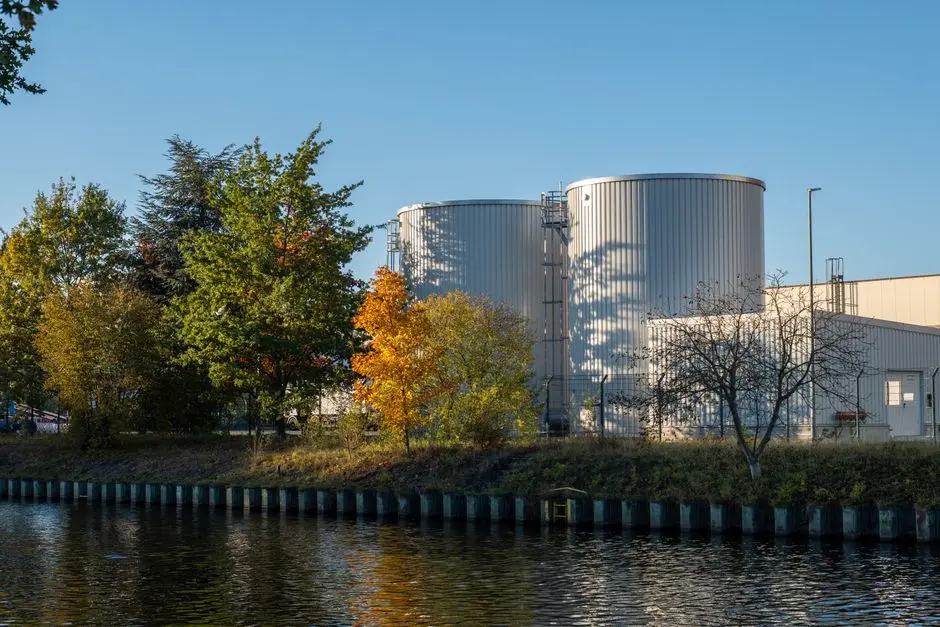
For a villa, labour camp, hotel or small community in Sharjah, the process decision collapses to three realistic options: an anoxic/aerobic (A/O) packaged plant, an MBR membrane bioreactor, or a decentralised / containerised unit. The right answer depends on discharge vs reuse, footprint, and whether a sewer connection is available at all.
The A/O packaged plant is the baseline. It combines anoxic and aerobic biological contact oxidation with sedimentation and disinfection in a single buried unit, runs fully automated with no operator, and is rated for 1–80 m³/h in residential communities, hotels, hospitals, factories and rural areas (S6). It is the right answer for disposal-only or tanker-remove duty where the receiving authority does not require near-reuse quality.
The MBR membrane bioreactor is the right step when reuse quality or footprint is the binding constraint. Submerged PVDF membrane modules deliver near-reuse effluent at sub-micron pore size in a footprint materially smaller than conventional activated sludge of the same throughput, with integrated aeration keeping the membranes clean. This is the train to specify when the 2026 design brief calls for irrigation, cooling-tower makeup or toilet-flush reuse, and the project is too large or too quality-sensitive for a basic A/O packaged unit.
Decentralised and containerised STPs are the right answer for remote labour camps, construction sites or phased villa communities where there is no sewer connection nearby and tanker removal is the realistic disposal path. The same packaged MBR equipment can be skid- or trailer-mounted for these sites, which is why a Sharjah-specific sizing guide for containerised MBRs is the natural next read after this overview. Vermifiltration and other nature-based options appear in the academic literature for domestic sewage (S4) but are not the mainstream 2026 Sharjah regulatory path for commercial developments, and should be treated as research-stage rather than procurement-ready. The comparison below maps the three options to typical Sharjah duty profiles.
| Process train | Typical duty in Sharjah | Effluent quality | Footprint / civils | Operator needs |
|---|---|---|---|---|
| A/O packaged (WSZ) | Villa, labour camp, hotel, small community; disposal or tanker remove | Meets typical sewer-discharge / tanker-remove criteria (confirm with authority) | Buried single unit; minimal civils | None routine; automated |
| MBR (submerged PVDF) | Hotel, school, larger community, reuse-driven projects | Near-reuse; suitable for irrigation, cooling, toilet flush | Smaller than CAS at same throughput; tank + membrane skid | Membrane cleaning schedule; basic instrumentation |
| Decentralised / containerised | Remote labour camps, construction sites, phased villa clusters | Same envelope as the process inside the container | Skid or trailer; no deep excavation | Plug-and-play; periodic service |
Sizing a domestic sewage treatment plant for Sharjah
Sizing a domestic STP in Sharjah starts with five inputs the engineer must lock down before talking to a supplier: number of residents or equivalent population, per-capita water use, peak factor, trade-waste contribution from kitchen grease and laundry lint, and the disposal vs reuse target. None of these is a guess that the supplier should be asked to make; the supplier can size the equipment once the engineer has fixed these five.
The realistic packaged plant envelope for domestic duty in the UAE is 1–80 m³/h, which covers most villa-compound, labour-camp, school and small-community scenarios in Sharjah in a single A/O packaged sewage treatment plant (WSZ series) (S6). For larger or reuse-driven projects, the MBR envelope starts around 10 m³/day and scales to multi-thousand-PE schemes, delivered in a MBR membrane bioreactor wastewater treatment system on a containerised or skid-mounted frame.
For projects in the hundreds-of-PE range, the containerised MBR STP sizing guide for Sharjah walks through the same five inputs against containerised MBR skids and is the natural next step before issuing an enquiry. The 2026 2026 domestic sewage wastewater treatment solution reference compiles the engineering specs and cost logic that sit behind that sizing decision.
Pre-treatment, disinfection and sludge handling around the STP

A domestic STP is a system, not a single tank, and the headworks, disinfection and sludge-handling choices around it decide uptime, operator time and compliance risk. Skipping any of them is the most common reason a packaged plant underperforms on a Sharjah site.
Pre-treatment starts with a rotary mechanical bar screen at the headworks to protect the downstream biological stages from rags, plastics and fibrous debris that arrive in labour-camp and villa flows. FOG control is the next decision: where food-service or labour-camp kitchens feed the same sewer, a dissolved air flotation (DAF) system upstream of the biological stage keeps fats, oils and grease out of the aeration tank and protects both A/O and MBR trains from fouling. Disinfection is the final barrier — a UV steriliser for water treatment delivers a chemical-free kill step that is effective against chlorine-resistant organisms and is the usual choice where the effluent is going to irrigation or toilet flush.
Sludge is the part most design briefs under-size. Surplus biological sludge has to be thickened and dewatered before off-site disposal, and a plate-and-frame filter press at 1–500 m² filtration area covers both municipal and on-site domestic STPs at the scales discussed here. The same equipment line-up — screen, DAF, biological stage, UV, filter press — is what a serious Sharjah supplier should be quoting against, not a single tank.
Frequently Asked Questions
How much does a domestic sewage treatment plant cost in Sharjah in 2026?
The research supplied to this article does not publish a 2026 price list for domestic STPs in Sharjah, so a meaningful budget can only be built against a written enquiry. The buyer should send the supplier the five sizing inputs (population, per-capita flow, peak factor, trade-waste load, reuse target) plus the receiving-authority effluent limits and ask for a split quotation covering equipment, civil works, instrumentation, installation, commissioning and a 12-month service contract. Without those inputs, any number quoted is a placeholder, not a price.
How do I pick a packaged STP supplier in Sharjah without getting locked into the wrong process?
Shortlist suppliers who can quote the full headworks-to-sludge envelope — screen, DAF, biological stage, UV, filter press — rather than a single tank, and ask each one to name the influent limits they have designed to and the reuse end-uses they have delivered in the UAE. A supplier who can reference both an A/O packaged line and an MBR line for the same site conditions is more likely to recommend the right process than one with a single product to sell.
Which Sharjah authority approves a domestic STP for a labour camp or villa compound?
Approval typically involves Sharjah City Municipality for the building and site permit, the sewer operator or tanker-collection contractor for the discharge permit, and the supervising consultant's environmental reviewer for the design sign-off, with UAE Federal Law 24/1999 and Federal Decree-Law 45/2021 as the umbrella instruments. The exact 2026 influent and effluent limits for a given plot are project-specific and must be confirmed in writing with Sharjah City Municipality before the design basis is frozen.
What pre-treatment and disinfection do I need around a packaged domestic STP?
At minimum, a rotary mechanical bar screen at the headworks, FOG removal with a DAF unit where kitchens feed the same sewer, UV or chlorine-dioxide disinfection as the final barrier, and a plate-and-frame filter press for sludge dewatering. Skipping any of these four is the most common reason packaged plants underperform on Sharjah sites, and a supplier that does not include them in the scope is signalling an incomplete bid.