What 'High-Performance' Actually Means in a 2026 Dosing System
High-performance dosing systems in 2026 are defined by measurable engineering features rather than brand labels. The strongest performers combine repeatable precision — such as ±1% metering accuracy or incremental control from 0.1 ml to 2,000 ml per minute — with closed-loop automation, chemical-resistant wetted materials, and built-in safety functions including leak detection and tool-free pumphead replacement. They also support rapid maintenance intervals to cut process downtime and total cost of ownership. With EU Directive 91/271/EEC demanding that effluents from plants serving 100,000+ people be free of pharmaceuticals, pesticides, and manufacturing chemicals by 2040, and the US EPA Safe Drinking Water Act setting legal limits on over 90 contaminants, accurate dosing is no longer optional — it is a compliance gate.
A high-performance system is one that delivers repeatable, linear, and verifiable chemical injection under varying flow, pressure, and viscosity conditions. That definition needs to be made explicit in the technical specification, because most vendor proposals still describe pumps as "high efficiency" or "precise" without numbers attached. Translate those marketing adjectives into four measurable axes before signing a purchase order: dose accuracy, turndown ratio (the spread from minimum to maximum flow), control signal compatibility, and mean time between maintenance interventions.
Underdosing compromises safety and effluent quality. Overdosing wastes chemicals, generates excess sludge, and inflates transport and disposal costs. The WMFTS process-industries brief frames the cost-control logic precisely: utilities must "stay competitive in a global market and maintain cost control" while regulatory limits tighten, which is only achievable when the dosing step is quantified. A defensible specification therefore anchors every performance claim to a number a vendor must warrant in writing. Engineers building a dosing skid spec can shortlist hardware — including a HydropureWater automatic chemical dosing system — once those four axes are fixed.
Precision and Dose-Range Features
Specifying precision starts with two numbers: metering accuracy across the full turndown range, and the minimum-to-maximum flow the pump can deliver without reconfiguration. A useful industry benchmark is the Grundfos SMART Digital Dosing platform, which the manufacturer states delivers "±1% precision" while dosing small volumes with "unmatched accuracy" (Grundfos, 2026). A second benchmark, useful when the chemistry is viscous or shear-sensitive, is the WMFTS Qdos peristaltic range, which "enable[s] precise, incremental adjustments from 0.1 ml up to 2,000 ml per minute" (WMFTS, 2023). These two numbers — ±1% and 0.1–2,000 ml/min — are the lowest-acceptable floor for any shortlist considered "high-performance" in 2026.
Accuracy at one mid-range setpoint is not a high-performance dosing system. Repeatability and linearity across the entire turndown range are what make the difference between a pump that passes the FAT and a pump that holds calibration in service. Demand documented performance under varying process conditions — flow, pressure, and viscosity — not just a single-point accuracy figure on a brochure. A pump datasheet that publishes a single accuracy number without showing the curve is hiding a procurement risk.
The table below sets the minimum numeric anchors a 2026 specification should require. Numbers are taken directly from the cited supplier literature; empty cells indicate the research did not provide a comparable vendor figure and the engineer must request the data.
| Parameter | Minimum spec for 2026 RFQ | Reference benchmark | Source |
|---|---|---|---|
| Metering accuracy | ±1% across turndown range | Grundfos SMART Digital Dosing, ±1% precision | Grundfos, 2026 |
| Turndown range | 0.1–2,000 ml/min, linear and repeatable | WMFTS Qdos, 0.1–2,000 ml/min | WMFTS, 2023 |
| Linearity/repeatability data | Documented across full range, not single setpoint | WMFTS "accurate, linear and repeatable chemical dosing" | WMFTS, 2023 |
| Performance under varying flow/pressure/viscosity | Required as a tested curve, not a claim | Grundfos FCM adjusts dosing to flow and pressure | Grundfos, 2026 |
Engineers evaluating a HydropureWater automatic chemical dosing system should expect each of these four parameters to be answered in the vendor's datasheet before the system is added to the shortlist.
Control, Automation, and Signal Integration
A dosing pump that is precise on the bench but operates as an island on the plant floor is not a high-performance system. In 2026, the control layer is the difference between a dosing skid that responds to process changes and one that drifts out of calibration between operator rounds. The minimum control set a 2026 specification should require is a feedback loop that monitors flow and pressure and adjusts the pump output in real time. Grundfos documents this capability directly: its SMART Digital Dosing pumps with Flow Control Monitoring (FCM) "continuously monitor flow and pressure, automatically adjusting dosing to ensure consistent and optimal chemical delivery" (Grundfos, 2026).
Volatile chemistries — chlorine, hydrogen peroxide, peracetic acid — add a second requirement. Air bubbles in suction lines or dosing heads cause underdosing when production resumes, and the WMFTS and Grundfos evidence both flag this failure mode. Grundfos addresses it with a "built-in degassing function" on its FCM-equipped pumps, detecting and eliminating air bubbles to "ensure consistency and maintain precise dosing" (Grundfos, 2026). The specification should require that air-bubble handling is integrated into the pump head rather than added as an external degassing vessel, because every external auxiliary is another leak and maintenance point.
Remote monitoring, data logging, and alarm outputs convert dosing from a manual round into an auditable compliance record. The specification should require the dosing system to expose its setpoint, actual flow, fault states, and maintenance counters to the plant SCADA/DCS over the same control inputs the rest of the plant uses — typically 4–20 mA, pulse, or a fieldbus such as Modbus or Profibus. The peer-reviewed literature on polymer dosing for sludge dewatering reinforces the same point from a process angle: the relationship between filtrate suspended solids, sludge rheology, and optimum dose is sensitive enough that manual setpoint control is unreliable (IntechOpen, 2023). The control integration requirement is therefore a process-performance requirement, not a convenience feature.
Chemical Compatibility and Wetted Materials
The most common field failure on a dosing skid is not an accuracy problem — it is a materials problem. A pump that is "accurate on water" but degrades, leaks, or contaminates the chemical in service is the wrong pump. The 2026 specification must therefore map the wetted materials (pumphead, seals, diaphragms, check valves) to the full chemical regime the plant actually runs: coagulants, flocculants, pH adjusters, oxidizing biocides, and any specialty additives. Generic chemical names such as "sodium hypochlorite" or "ferric chloride" are not enough; the engineer must verify compatibility against the maximum concentration and temperature the system will see in service, not the textbook value.
High-viscosity polymers and coagulants require their own qualification step. The Grundfos product literature describes a Slow Mode function that "enables handling of high-viscosity coagulants with precision, ensuring the right chemical balance" (Grundfos, 2026). For a polymer dosing application — for example, a belt press where filtrate suspended solids and yield stress track the optimum dose — the slow-mode or high-torque capability is the difference between reliable floc formation and stringy, overdosed sludge (IntechOpen, 2023). The specification should ask vendors to demonstrate performance at the upper end of the viscosity range the plant actually encounters, not the clean-water viscosity on the data sheet.
Oxidizing or off-gassing chemicals — sodium hypochlorite, hydrogen peroxide, peracetic acid — require degassing capability that is built into the pump head rather than added externally. The chemistry compatibility statement should explicitly list every reagent in service, the maximum concentration, the maximum temperature, and the documented wetted materials. A vendor that cannot answer all four is not yet qualified for the shortlist.
Safety Features That Reduce Operator Exposure and Spill Risk
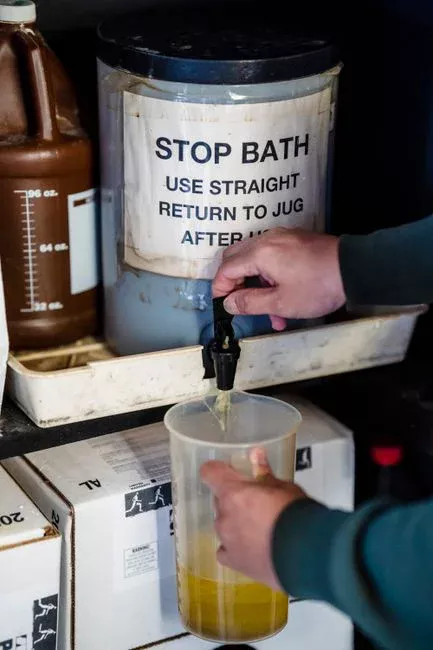
Safety features on a dosing skid are not optional accessories — in 2026 they are compliance deliverables and ESG evidence. The specification should require four explicit safety capabilities, each tied to a failure mode the engineer can name.
First, leak detection with automatic shutoff and operator alarm on pumphead failure. WMFTS documents this directly: its Qdos pumps "stop automatically and alert operators in the event of a pumphead failure" (WMFTS, 2023). Second, tool-free pumphead replacement with integral shutoff valves, so maintenance does not require contact with the chemical. WMFTS again: "the pumphead can be quickly and easily replaced without tools or spillages for safe maintenance … minimises the possibility of operators coming into contact with chemicals and prevents chemical spills into the environment" (WMFTS, 2023). Third, comparison against traditional pump types that require disassembly for repair — those designs "risk chemical spillage and expos[e] staff to potential contact with chemicals" (WMFTS, 2023), and the specification should reject them on this ground alone.
Fourth, reduce the number of external auxiliaries. Pulsation dampeners, external degassing valves, and back-pressure valves are each an additional leak and maintenance point. The WMFTS Qdos design explicitly removes them, contributing to "long product life" and "lowering the overall cost of ownership" (WMFTS, 2023). A dosing skid that ships with the minimum auxiliary count, ideally zero external dampeners or back-pressure valves, is the safer and cheaper design over the asset life. These four items belong in the capital-approval package as line items, not as marketing copy.
Lifecycle Cost: Maintenance Intervals and Uptime
The lowest purchase price is the most common procurement trap on a dosing skid. The 2026 specification must force the vendor to publish mean time between maintenance interventions, pumphead replacement time, and total cost of ownership assumptions on the datasheet — not in marketing copy. WMFTS positions its Qdos peristaltic range on this exact ground: "a peristaltic pump has a long product life and does not require pulsation dampeners, degassing valves or back pressure valves," which "reduces the impact of process downtime" and "lowers the overall cost of ownership" (WMFTS, 2023). The fewer auxiliaries, the fewer failure points and the longer the mean time between interventions.
Chemical cost dominates lifecycle cost on most dosing applications, not pump purchase price. High metering accuracy allows the plant to dose at the lower edge of the target band and still hit compliance, which reduces chemical use directly. WMFTS makes the linkage explicit: "the high accuracy of Qdos pumps enables the use of more concentrated chemicals and smaller, more efficient dosing systems, which in turn reduces both energy and transport costs" (WMFTS, 2023). The engineer should ask each vendor for a chemical-savings calculation tied to a documented case, not a generic percentage.
One such documented case is the Hessisch-Lichtenau WWTP in Germany, where a Qdos Conveying Wave Technology (CWT) pump was installed for ferric chloride sulphate dosing. The reported result, attributed directly to the installation, is "a 97.5% reduction in phosphorus load over the first year since installation" while meeting strict environmental discharge limits (WMFTS, 2023). A specification that does not require a comparable case study from each shortlisted vendor will end up with a pump that is cheap to buy and expensive to run. When sizing an automatic chemical dosing system for a municipal or industrial duty, the lifecycle questions belong in the RFQ as numbered items, not as closing pleasantries.
Feature Matrix: Matching Dosing Technology to Application
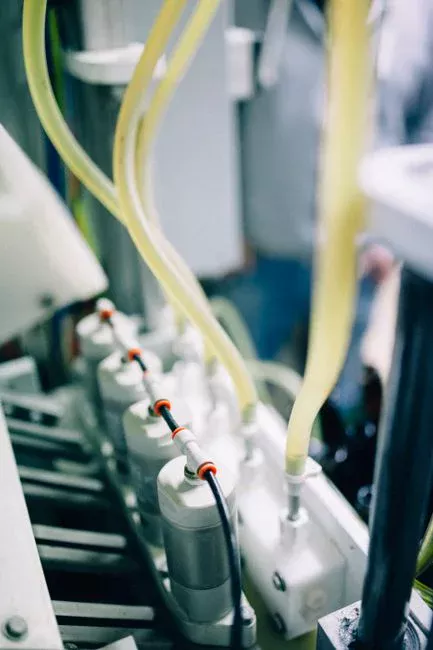
Selecting a dosing pump by brand familiarity is the second most common procurement trap. The matrix below maps the four principal dosing technology classes against the engineering criteria established in the previous sections. Where the research provided qualitative behavior, the matrix reports that behavior; where the research did not provide a number, the cell is left for the engineer to populate with vendor data.
| Criterion | Peristaltic (e.g. Qdos) | Digital diaphragm with FCM (e.g. Grundfos SMART Digital Dosing) | Solenoid diaphragm | Motorized / hydraulic diaphragm |
|---|---|---|---|---|
| Documented metering accuracy | Linear, repeatable, 0.1–2,000 ml/min turndown (WMFTS, 2023) | ±1% precision (Grundfos, 2026) | Request from vendor | Request from vendor |
| Air-bubble / degassing handling | No external degassing valve required (WMFTS, 2023) | Built-in degassing via FCM (Grundfos, 2026) | Request from vendor | Request from vendor |
| High-viscosity handling | Suitable for many viscous polymers; verify on duty | Slow Mode function for high-viscosity coagulants (Grundfos, 2026) | Limited at high viscosity | Verify on duty |
| Leak detection / auto shutoff | Yes, with operator alarm (WMFTS, 2023) | FCM-based flow/pressure monitoring (Grundfos, 2026) | Request from vendor | Request from vendor |
| Tool-free pumphead change | Yes, with integral shutoff valves (WMFTS, 2023) | Request from vendor | Typically requires disassembly | Typically requires disassembly |
| External auxiliary count | Zero — no dampeners, degassing, or back-pressure valves (WMFTS, 2023) | Reduced via integrated degassing | Often requires pulsation dampener | Often requires back-pressure valve |
| Best-fit chemistry class | Coagulants, flocculants, polymers, sodium hypochlorite, ferric chloride sulphate | Oxidizing/volatile biocides (chlorine, H₂O₂, peracetic acid), coagulants, antiscalants | Low-viscosity, non-degassing reagents | Higher-pressure, non-degassing reagents |
The matrix surfaces the trade-offs a single-vendor shortlist would hide: peristaltic pumps win on safety and maintenance simplicity, digital diaphragm with FCM wins on degassing and closed-loop control. Engineers evaluating a HydropureWater automatic chemical dosing system should run their actual chemistry and duty profile down the right-hand column and discard any technology class that cannot answer the criterion in writing.
2026 Procurement Checklist for a Dosing-System Specification
The checklist below is designed to be pasted into an RFQ. Each line forces a vendor commitment that can be evaluated against another vendor on equal terms.
- Documented dose accuracy of ±1% or better across the full turndown range, with linearity and repeatability curves attached to the bid.
- Full turndown range, with the 0.1–2,000 ml/min Qdos figure (WMFTS, 2023) as the minimum benchmark and adjustment steps quantified.
- Chemical compatibility statement for every reagent in service, listing wetted materials, maximum concentration, and maximum temperature.
- Control input list: 4–20 mA, pulse, and fieldbus (Modbus/Profibus) accepted natively, with setpoint, actual flow, faults, and maintenance counters exposed to plant SCADA/DCS.
- Built-in air-bubble or degassing handling for oxidizing/volatile reagents, integrated in the pump head rather than added externally.
- Safety: leak detection with automatic shutoff, tool-free pumphead replacement with integral shutoff valves, and the lowest practical external auxiliary count.
- Published maintenance intervals, pumphead replacement time, and a written total cost of ownership assumption, supported by a comparable case study — for example, the 97.5% phosphorus-load reduction at Hessisch-Lichtenau WWTP (WMFTS, 2023).
For specifiers working on related process selections, the same vendor-neutral framework applies to total nitrogen removal in wastewater treatment and to the head-of-works choice between a DAF vs clarifier for mining and metals wastewater: quantify accuracy, turndown, and lifecycle cost before the brand conversation starts.
Frequently Asked Questions
What dose accuracy should I specify for a wastewater chemical dosing system in 2026?
Use ±1% metering accuracy as the floor benchmark, drawn from the Grundfos SMART Digital Dosing specification (Grundfos, 2026), and require the same accuracy to be demonstrated across the full turndown range, not at a single mid-range setpoint. Pair the accuracy figure with a turndown benchmark — the 0.1–2,000 ml/min Qdos range is a defensible reference (WMFTS, 2023). The accuracy number matters because EU Directive 91/271/EEC sets a 2040 deadline for effluent from plants serving 100,000+ people to be free of pharmaceuticals, pesticides, antibiotics, and manufacturing chemicals (WMFTS, 2023), and the US EPA Safe Drinking Water Act sets legal limits on over 90 contaminants (WMFTS, 2023). Underdosing breaches those limits; overdosing wastes chemical and inflates sludge handling cost. The buyer action: ask the vendor for linearity and repeatability curves across the full turndown, and reject any bid that offers a single-point accuracy figure only.
How do I choose between peristaltic, solenoid, and motorized diaphragm dosing pumps?
Choose by chemistry class, not by brand. Peristaltic pumps suit coagulants, flocculants, polymers, and reagents where tool-free pumphead changeout and zero external auxiliary valves reduce operator exposure — Qdos is the documented reference (WMFTS, 2023). Digital diaphragm pumps with Flow Control Monitoring suit oxidizing and off-gassing biocides (chlorine, hydrogen peroxide, peracetic acid) because the built-in degassing function holds setpoint on plant restart (Grundfos, 2026). Solenoid and motorized diaphragm pumps typically suit lower-viscosity, non-degassing reagents at lower pressure. The buyer action: list the viscosity, off-gassing tendency, and abrasiveness of every reagent in service, then map each reagent to the technology class whose documented behavior matches it — and reject any vendor who cannot document performance on the actual duty.
What safety features are mandatory on a chemical dosing skid for an industrial plant?
Four are non-negotiable. Leak detection with automatic shutoff and operator alarm on pumphead failure (WMFTS, 2023). Tool-free pumphead replacement with integral shutoff valves, so maintenance does not put staff in contact with the reagent (WMFTS, 2023). Elimination of external pulsation dampeners, degassing valves, and back-pressure valves where possible, because each is a leak and maintenance point (WMFTS, 2023). Real-time flow and pressure feedback with closed-loop adjustment, so a pumphead fault is detected and alarmed rather than discovered on the next operator round (Grundfos, 2026). The buyer action: include the four items as numbered line items in the RFQ, and require the bidder to mark each one "complies" or "deviates" with a written explanation.
How much does a high-performance automatic dosing system cost?
Published pump prices vary by capacity, wetted materials, control scope, and whether the unit is skid-mounted or component-level, and the research supplied does not provide a single list price that an engineer can use as a benchmark. Rather than rely on a generic price, request a quotation against the seven-item procurement checklist in the previous section, and ask each bidder to break out pump, instrumentation, skid assembly, and lifecycle cost over an agreed run hour window. The buyer action: require a written chemical-savings assumption in the bid, supported by a comparable case study — the Hessisch-Lichtenau WWTP case (WMFTS, 2023) is one published reference point — so lifecycle cost is compared on the same basis across bidders.