
DAF vs Clarifier for Pulp & Paper Wastewater: The Real Decision
The decision on a Delaware Township mill floor in 2026 is rarely "DAF or clarifier for the whole mill," but rather a selection per effluent stream based on regulatory requirements and the receiving body. DAF (dissolved air flotation) pressurizes a side stream with air and releases it at atmospheric pressure, generating micro-bubbles that attach to suspended matter and float it; a clarifier (gravity settling tank or a lamella plate pack) drops heavy solids out of suspension (Clearwater Industries; Ecologix Environmental Systems).
The two engineering drivers that decide the match are particle density versus water and the form in which you want the captured solids — a float blanket or an underflow sludge. Above that engineering match sits the regulatory floor: 40 CFR Part 430 sets categorical effluent limits for the US pulp and paper segment, the Delaware River Basin Commission can layer basin-wide requirements, and the receiving POTW's sewer-use ordinance sets local limits on TSS, BOD, and color (WEF FD-3, 2008, Section 1, Chapter 6, p. 210). Most Delaware Township facilities end up running a hybrid train — a clarifier on heavy streams, DAF on light, fiber-laden streams — rather than a single technology across the whole mill.
How Each Technology Actually Treats Pulp & Paper Effluent
DAF works by saturating a pressurized side stream with air and releasing it into the flotation tank at atmospheric pressure; the pressure drop nucleates micro-bubbles in the 30–50 micron range that attach to fibers, fillers, inks, and oil and grease, lifting them into a surface blanket that a skimmer sweeps off (Clearwater Industries). This technology is well matched to pulp and paper because wood fibers, broke, deinking ink particles, and filler fines have densities close to water, so they linger in suspension and respond to bubble attachment rather than gravity (Ecologix). A clarifier — a simple gravity basin or a lamella plate pack — reduces upward velocity enough that heavy solids fall into a sludge hopper, and clarified water overflows a peripheral weir (HydropureWater high-efficiency lamella clarifier). Both technologies share the same chemical conditioning front end: coagulant, flocculant, and pH adjustment are dosed upstream to either build a floatable floc for DAF or grow settleable floc for a clarifier (Clearwater Industries). The 1973 EPA state-of-the-art review records that some pulp and paper streams — filled and coated papers, and waste paper reclamation (deinking) — contain finely dispersed pigments and debris that even chemical coagulation plus settling cannot fully clarify; this is the historical motivation for adopting flotation on those streams (nepis.epa.gov, 1973, "Clarification" section).
Side-by-Side Comparison: DAF vs Clarifier for the Mill Floor
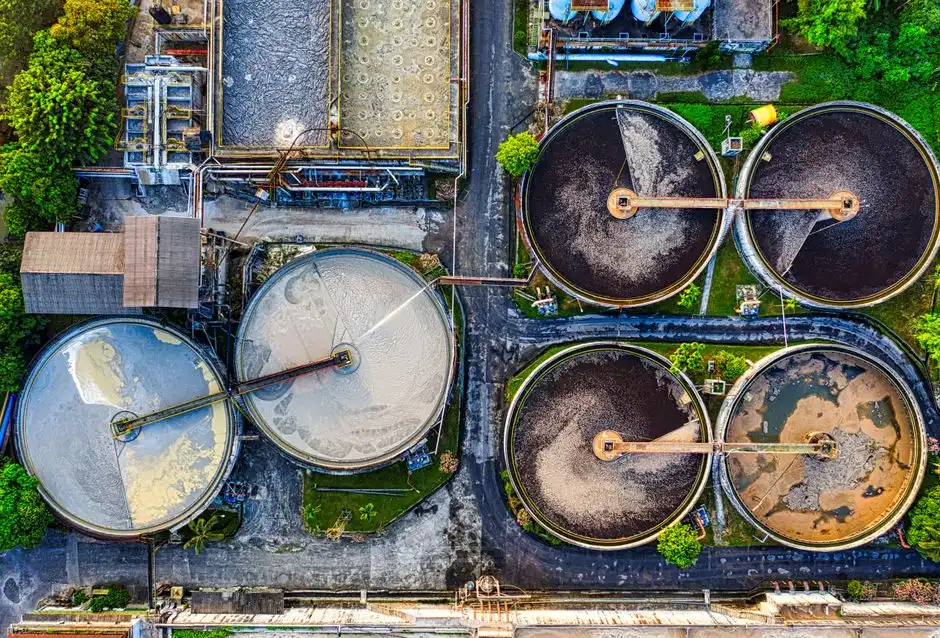
The table below distills the trade-offs a Delaware Township engineer weighs before determining the per-stream fit. HydropureWater's DAF system (4–300 m³/h, 13 standard models) and high-efficiency lamella clarifier are referenced where their catalog specs anchor a row.
| Decision parameter | Dissolved air flotation (DAF) | Gravity or lamella clarifier |
|---|---|---|
| Best-fit streams | Fiber-rich white water, deinking, NSSC, kraft primary, bleaching (Ecologix; EPA 1973) | Wood prep / barking, grit, heavy paperboard broke, some paperboard mill effluent (EPA 1973, Section X) |
| Primary removal target | TSS, FOG, entrained fibers, color, ink particles (Clearwater Industries; Ecologix) | Settleable TSS, grit, dense fillers (EPA 1973) |
| Mechanism | 30–50 micron micro-bubbles attach to particles and float them (Clearwater Industries) | Gravity settling, with lamella plates to increase effective surface area (HydropureWater lamella clarifier) |
| Hydraulic behavior | Short residence, compact footprint | Lamella surface loading rates per manufacturer spec (HydropureWater lamella clarifier) |
| Chemical use | Coagulant + flocculant typical to build floatable floc (Clearwater Industries) | Coagulant + flocculant typical to grow settleable floc; lamella design can reduce chemical consumption by design (HydropureWater lamella clarifier) |
| Sludge form | Thick float blanket; high-solids, dewaterable | Heavier underflow sludge; typically needs further thickening |
| Footprint | Compact, often skid-mounted; e.g. Clearwater COMPACT DAF (Clearwater Industries) | Compact per m² with lamella plates; needs hopper depth for underflow |
| Regulatory anchor | 40 CFR Part 430 categorical limits (WEF FD-3, 2008, p. 210) | 40 CFR Part 430 + local POTW ordinance |
Pulp & Paper Sub-Streams: Where Each Technology Wins
The EPA's 1973 state-of-the-art review catalogued sub-stream settleability differences that require technology choices to be made per stream rather than per mill. The mapping below identifies these specific applications.
| Pulp & paper sub-stream | Dominant particle character | Typical primary technology choice | Source |
|---|---|---|---|
| Wood preparation / barking | Heavy, sandy, fast-settling solids | Gravity or lamella clarifier; DAF only as polishing if fines escape | EPA 1973, Section X, wood preparation tables |
| Mechanical pulping (groundwood, refiner mechanical, chemi-mechanical) | Very fine fibrous solids that barely settle | DAF as standard primary clarifier | Ecologix; EPA 1973 groundwood / refiner sections |
| NSSC (neutral sulfite semi-chemical) | High suspended-solids loss, high BOD, recycle streams | DAF as primary or secondary clarification | EPA 1973 NSSC section |
| Kraft and soda pulping | Dark color, high BOD, decker filtrate with high dissolved and suspended load | DAF for fiber capture and color load reduction ahead of biological | Ecologix; EPA 1973 kraft / soda section |
| Acid sulfite pulping (with and without liquor recovery) | Distinct effluent character between soluble-base recovery and calcium-base non-recovery mills | DAF for fiber recovery; clarifiers on cooling-water-side streams | EPA 1973 acid sulfite section |
| Bleaching | Low volume, high color and high COD | DAF or DAF coupled with chemical precipitation; clarifier alone rarely sufficient | EPA 1973 bleaching section; Ecologix |
| Deinking (waste paper reclamation) | Finely dispersed pigments, opalescence — explicit EPA flag | DAF with coagulation; the established route | EPA 1973 deinking section; Ecologix |
| Paper / paperboard white water | Light fibers, filler fines, broke | DAF — fiber recovery, filler recovery, and water reuse in one step | Ecologix; HydropureWater DAF product catalog (pulp & paper listed) |
Delaware Township, US: Compliance and Site Constraints That Decide the Spec
Three external layers can override a purely engineering choice. First, 40 CFR Part 430 sets categorical effluent limits for the US pulp and paper segment by subcategory (WEF FD-3, 2008, Section 1, Chapter 6, p. 210). Second, the Delaware River Basin Commission can apply basin-wide flow and water-quality requirements, and the local POTW's sewer-use ordinance will set site-specific TSS, BOD, and color limits if the mill sends waste to the municipal plant. Third, site constraints — colder Delaware Township winter temperatures change biological-stage kinetics and can affect DAF saturation efficiency; in 2026, the drive to close the loop on white water and machine supply favors DAF on light streams because the float-captured fibers can be returned to the machine (EPA 1973, "Water Reuse and Reclamation" section; Ecologix). For a mill that already runs a clarifier overloaded on fiber streams, adding a DAF upstream is usually a lower-risk capex option than expanding the clarifier.
Decision Framework: How to Choose in 2026
The framework below provides a process for a Delaware Township engineer to coordinate with procurement, the DRBC, and the receiving POTW.
- Characterize each stream by TSS, FOG, color, fiber content, and settleability. The EPA 1973 sub-stream tables are a usable starting checklist when site-specific jar data is not yet available.
- Map each stream to a target. Float it (DAF), settle it (clarifier), or polish — clarifier under a DAF, or DAF under a clarifier — for streams with mixed character.
- Apply the regulatory floor. Confirm 40 CFR Part 430 subcategory limits, the local POTW ordinance, and the DRBC requirements; this often forces a specific technology on a specific stream.
- Score on footprint, chemical use, sludge handling, and energy. HydropureWater's DAF system (4–300 m³/h, 13 standard models) covers the flow range typical of a Delaware Township plant, and the high-efficiency lamella clarifier is sized for compact high-surface-loading installations.
- Decide on a hybrid train if streams are mixed. The most common 2026 configuration for a Delaware Township pulp and paper facility is lamella clarifier on heavy streams plus DAF on fiber and white-water loops, with biological treatment downstream for BOD reduction.
Frequently Asked Questions
Is DAF or a clarifier cheaper to install for a Delaware Township pulp and paper retrofit in 2026?
Capex depends on flow rate, materials of construction, and the level of chemical conditioning packaged with the unit. The right buyer input to send a supplier is design flow (m³/h) per stream, peak factor, influent TSS profile, target effluent TSS, available footprint, and discharge destination (POTW vs. surface water). With those, a vendor can quote both DAF and lamella options on the same basis. The Ecologix and Clearwater pages confirm that both technologies ship as skid- or modular-packaged units, which tends to compress installation cost versus a stick-built concrete clarifier.
How do I choose between DAF suppliers for a Delaware Township fiber-rich stream?
Shortlist on three things the engineering team can verify before a site visit: published flow range that brackets your design flow without forcing a custom build, documented reference installations on pulp and paper or deinking streams, and a chemical-conditioning package that is pre-engineered for the expected influent. Ask each shortlisted vendor for a written statement of how their unit hits 40 CFR Part 430 subcategory limits for your subcategory and the local POTW ordinance. For a sizing sanity check, the HydropureWater DAF system (4–300 m³/h, 13 standard models) covers most single-stream flows at a Delaware Township facility without a custom build.
Which sub-streams should stay on a clarifier rather than be converted to DAF?
Wood preparation and barker effluent, grit-laden streams, and heavy paperboard broke are the clearest cases for keeping a gravity or lamella clarifier — the EPA 1973 review documents these streams as dominated by heavy, fast-settling solids. The 1973 review also flags filled and coated paper streams and deinking streams as the ones where chemical coagulation plus settling cannot deliver the close to 100% suspended-solids removal needed to eliminate opalescence — those are the streams to put on DAF.
What site data should I collect before specifying a DAF or clarifier in the Delaware River Basin?
Collect per-stream 24-hour composite samples for TSS, BOD₅, COD, color, FOG, and fiber content; jar-test settleability versus floatability with and without coagulant and flocculant; record design and peak hourly flow per stream; confirm the regulatory stack (40 CFR Part 430 subcategory, any DRBC basin requirement, and the local POTW ordinance limits); and note the available footprint and the lowest expected winter wastewater temperature. With that package, a supplier can size