What an EGSB Reactor Is and How It Differs from UASB
An EGSB (Expanded Granular Sludge Bed) reactor is a UASB variant introduced by Lettinga and co-workers, modified for better hydrodynamics rather than for a fundamentally different biology (ScienceDirect, S4). It is the second most widely deployed high-rate anaerobic digester after the conventional UASB, and as of 2008 more than 200 full-scale EGSB reactors had been built worldwide, typically in the 30–5,000 m³ volume range (ScienceDirect, S4, table 11). That scale matters: this is not a pilot curiosity, but a commercial technology with two decades of operating data behind it.
The reactor relies on three operating principles (ScienceDirect, S4): exclusive use of granular sludge, slight bed expansion of that sludge bed, and the expectation that granules remain stable and continue to grow their biofilms. What distinguishes it mechanically from a UASB is the higher superficial upflow velocity, 4–10 m/h, achieved either by a greater height-to-diameter ratio, by effluent recirculation, or by both. That velocity is the entire reason an EGSB exists: it improves hydraulic mixing, reduces dead volumes, and pushes substrate from the bulk liquid to the liquid–granule interface more effectively (ScienceDirect, S4). The biology is anaerobic methanogenic granules; the engineering change is the fluid regime around them.
The trade-off in that higher velocity is direct. Because the bed is partially fluidised, coarse suspended particles and colloids are not effectively entrapped or hydrolysed, which confines EGSB to essentially soluble wastewaters (ScienceDirect, S4). For an engineer evaluating anaerobic pretreatment, that single constraint — soluble influent — is the most important fact in this section, because every advantage downstream flows from the same hydrodynamic choice that creates it.
EGSB vs UASB vs IC Reactor: Parameter Comparison
A side-by-side parameter table is the most useful way to see where EGSB sits against its two closest competitors. The numbers below are drawn from the ScienceDirect overview of granular sludge blanket reactors (S4) and from the salt/sulfate envelope reported by Processes (S2); no value outside those sources has been substituted.
| Parameter | EGSB | UASB | IC |
|---|---|---|---|
| Organic loading rate (kg COD/m³/d) | Up to ~35; table 11 lists 25 as a reliable operating point | Typically fails above ~5 | Up to 35 |
| Upflow velocity | 4–10 m/h | Low (no effluent recirculation) | 8–20× the UASB value in the first compartment |
| HRT | ~5 h at <2,000 mg/L COD influent | Longer; sized for medium strength | 8–24 h for high strength; as low as 2.6 h for low strength |
| Typical influent COD range | <150 mg/L (low strength) up to high strength; envelope tested at 18,000 mg/L with 8,000 mg/L sulfate (S2) | 3,000–7,000 mg/L (medium strength) | 1,000–23,000 mg/L |
| Lowest operating temperature | Down to 10 °C for acidified wastewaters (4–10 °C band cited) | Mesophilic in practice | Mesophilic in practice |
| Treatment efficiency | ~85% on low-strength streams; 65–80% on slaughterhouse waste at OLR 15 kg COD/m³/d | Comparable where applicable; medium-strength envelope | 80–90% on dairy, brewery, food |
| Solids tolerance | Essentially soluble wastewaters only | Somewhat more forgiving for particulates, but still needs good influent distribution | Essentially soluble wastewaters only |
Two patterns stand out. First, EGSB and IC both push the loading envelope to roughly 35 kg COD/m³/d, but IC gets there with higher internal upflow and a gas-lift–driven recirculation that requires no external pump, while EGSB relies on either a tall reactor geometry or an effluent recirculation pump. Second, the temperature row is the place where EGSB has a real edge: the 4–10 °C psychrophilic band for acidified wastewaters is unusual among high-rate anaerobic reactors and is not a documented operating point for either UASB or IC in the same source set (S4).
The Core EGSB Advantages
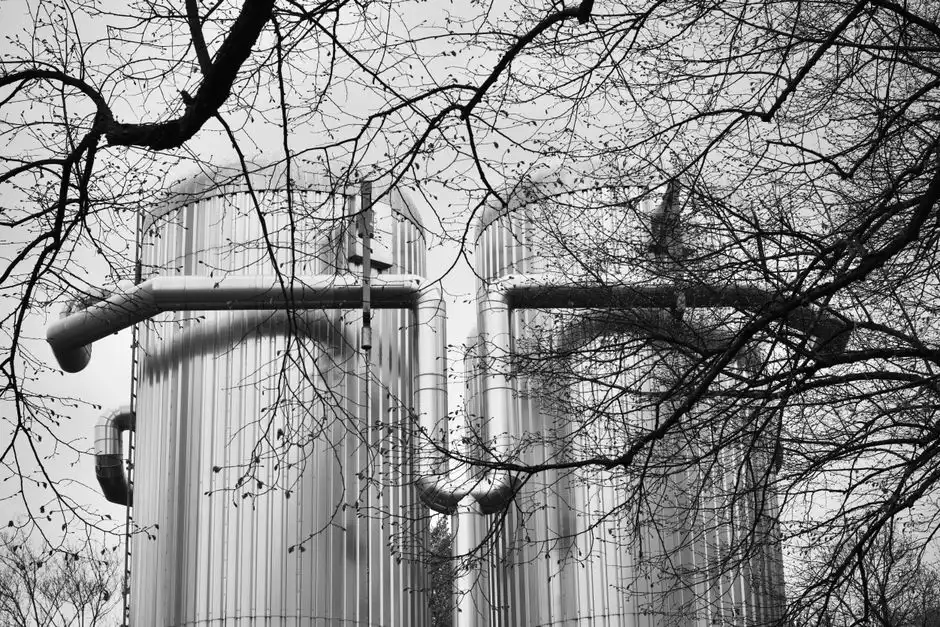
EGSB's advantages follow directly from the higher upflow velocity and the tall H/D geometry. The first is loading capacity: stable operation up to 25–35 kg COD/m³/d, compared with a UASB failure point near 5 kg COD/m³/d (ScienceDirect, S4). For a plant whose influent strength is high or variable, that headroom determines whether the anaerobic stage can be the workhorse or only a polishing step.
The second advantage is influent strength range. EGSB treats low-strength wastewaters down to <150 mg/L COD because the high upflow velocity prevents short-circuiting, and it treats high-strength streams because the same hydraulic mixing avoids dead volumes (S4). Few anaerobic reactor classes cover both ends of that range in one envelope; UASB is restricted to medium strength, and IC, while it also handles low strength at 2.6 h HRT, is most often specified for the 1,000–23,000 mg/L band (S4).
The third advantage is mass transfer. The upflow velocity improves substrate diffusion from the bulk liquid to the liquid–granule interface, which accelerates biodegradation (S4). For slowly degradable substrates this is a real rate enhancement, not a marketing claim.
The fourth is psychrophilic feasibility. Documented operation down to 10 °C for acidified wastewaters makes EGSB one of the few high-rate anaerobic options for cool or temperate sites without reactor heating (S4). The fifth is inhibitory-compound tolerance: effluent recirculation dilutes the reactor contents, which lets EGSB treat streams containing tannin, phenol, phthalate, formaldehyde, and lauric acid that would otherwise accumulate and shut down a UASB (S4). Slaughterhouse wastewater is the documented case, with OLR up to 15 kg COD/m³/d and 65–80% COD removal reported in the ScienceDirect table (S4, table 11).
The Real EGSB Disadvantages (What Vendor Pages Skip)
The same high upflow velocity that delivers EGSB's advantages is also the source of its most important failure modes, and these are the points vendor literature tends to omit.
Restricted to soluble wastewaters. Coarse suspended particles and colloids are not effectively entrapped or hydrolysed at the high superficial velocity, so EGSB demands robust upstream screening and frequently a DAF pre-treatment for EGSB influent or a lamella clarifier (ScienceDirect, S4). Plants that try to skip that step see washout of unsettleable solids and chronic effluent suspended-solids excursions.
Granular-sludge dependency. The reactor depends entirely on stable granules that resist washout at slight bed expansion. Toxic shocks, lipid surges, and a poorly seeded startup can compromise granule integrity, and recovery is slower than for a floc-based UASB because the community structure is more specialised (S4). Sourcing seed granules is itself a procurement risk that should be priced into the project schedule.
Higher design and pumping cost than UASB. Tall reactor geometry plus an effluent recirculation pump means continuous energy draw on every stream treated, which is a real operating-cost line that marketing pages do not price. For a low-strength influent that a UASB could handle, the OPEX penalty is rarely justified.
Salt and sulfate sensitivity with a narrow operating envelope. In high-salt fatty-acid production wastewater, the practical envelope is roughly 18,000 mg/L COD and 8,000 mg/L sulfate, with a C/S ratio that should stay above 2.8 and never fall below 1.5; below that, sulfate reduction dominates and biogas quality degrades (Processes, S2). A design that does not control the C/S ratio is a design that will fail.
Lower HRT robustness than IC at the top of the envelope. For very high-strength streams, the IC reactor reaches 35 kg COD/m³/d at higher internal upflow without an external pump; EGSB approaches its ceiling in the same range. If the design point sits above 25 kg COD/m³/d, IC is often the more forgiving choice (S4).
When EGSB Is the Right Specification (and When It Isn't)
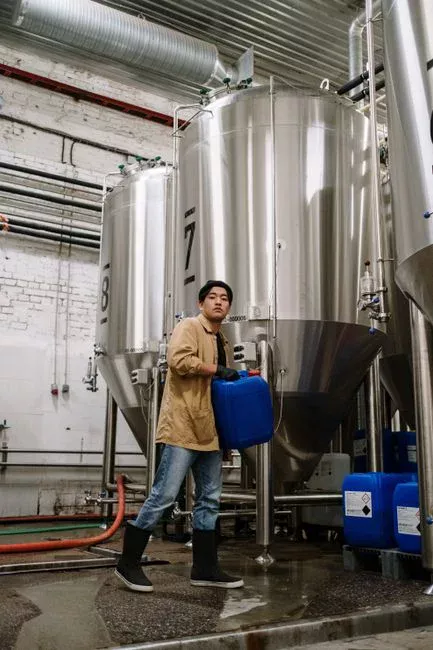
The previous sections become a decision only when they are turned into a fit test against a specific influent. The table below maps the most common application envelopes to the reactor that the research actually supports.
| Influent profile | Best-fit reactor | Reasoning |
|---|---|---|
| Largely soluble, 150–18,000 mg/L COD, temperature can dip to 10 °C, mild toxins (tannin, phenol, formaldehyde) present | EGSB | Matches the documented EGSB envelope; recirculation dilutes inhibitors (S2; S4) |
| Heavy suspended solids, oil and grease, or coarse particulates requiring hydrolysis | UASB (or DAF-protected EGSB) | EGSB cannot entrap or hydrolyse coarse particles at high upflow; UASB's lower velocity is more forgiving (S4) |
| High-strength brewery, dairy, or food at 1,000–23,000 mg/L COD, design OLR >25 kg COD/m³/d | IC | Higher internal upflow without external pump, 35 kg COD/m³/d envelope (S4) |
| Low-strength domestic sewage at moderate temperature, low OPEX priority | Conventional UASB | Lower capital and no recirculation energy; EGSB's extra cost is not justified (S4) |
The non-obvious row is the low-strength domestic case. Engineers sometimes default to EGSB for any new anaerobic specification, but the data does not support that. A conventional UASB is the workhorse for low-to-medium-strength sewage, and adding an EGSB on top of an integrated underground sewage treatment train is an OPEX penalty without a clear loading benefit. For applications where the goal is polishing downstream of EGSB or replacing a clarifier, an MBR polishing stage downstream of anaerobic pretreatment is a more defensible use of the same budget.
Sizing Notes and What to Ask an EGSB Supplier
The supplier checklist is short and unforgiving. First, confirm the claimed upflow velocity in the 4–10 m/h band (S4) and ask how it is achieved — tall geometry, recirculation, or both. The answer tells you whether the proposal carries a continuous pump load or whether geometry alone is doing the work. Second, request documented performance on a stream matching yours, with paired OLR, HRT, temperature, COD removal, and granule stability data; vendor brochures that quote only headline COD removal numbers should be treated as incomplete. Third, verify influent screening and pre-treatment requirements, because EGSB is essentially limited to soluble wastewaters and a rotary bar screen ahead of an EGSB reactor is often the minimum acceptable upstream step, with DAF as the typical follow-on for emulsified or colloidal material (S4). Fourth, ask about startup granule sourcing, recirculation pump energy demand in kWh/m³, and the supplier's response plan for a sulfate or salt excursion — the C/S >2.8 / not <1.5 guardrail from the high-salt fatty-acid study is the design line the supplier should be able to defend in writing (S2).
For context on how EGSB effluent compares with downstream polishing options, the MBR vs conventional activated sludge comparison for chemical wastewater and the DAF vs clarifier selection guide for industrial wastewater cover the adjacent decisions an engineer usually faces in the same project. If the broader train ends in a sludge dewatering step, the filter press design guide for food processing wastewater addresses the cake-handling side of the balance sheet.
Frequently Asked Questions
What is the main disadvantage of an EGSB reactor?
EGSB is essentially limited to soluble wastewaters because the high upflow velocity prevents entrapment and hydrolysis of coarse suspended particles and colloids (ScienceDirect, S4). It also depends on stable granular sludge, which is harder to recover than a floc-based community after a toxic or lipid shock.
How much does an EGSB reactor cost compared to a UASB?
The supplied research does not provide a capital or operating cost figure for EGSB versus UASB reactors. To obtain a defensible comparison, request from each supplier a priced proposal on the same influent flow and load, including the recirculation pump kWh/m³ at design OLR, the seed-granule sourcing cost, and the upstream screening or DAF pre-treatment that each design requires (S4).
Is EGSB or IC better for high-strength food and brewery wastewater?
Both reach about 35 kg COD/m³/d, but IC achieves that envelope with internal gas-lift circulation rather than an external pump, and it has a broader track record specifically in brewery, food, and dairy applications at 1,000–23,000 mg/L COD (ScienceDirect, S4). EGSB is the better choice when the design point is in the low-to-medium range or when psychrophilic operation is required.
What influent screening does an EGSB need?
Fine screening is mandatory and DAF or lamella clarification is commonly required upstream because the high superficial velocity does not retain coarse particles in the sludge bed (ScienceDirect, S4). A rotary bar screen at the head of the works is a typical minimum; the specific aperture and DAF surface loading should be specified against the supplier's solids tolerance data, not against a generic guideline.