What Boxborough Semiconductor Wastewater Looks Like in 2026
Semiconductor fabs on the Greater Boston / Route 495 corridor — including Boxborough, MA — produce a low-volume but high-purity reject stream that mixes floatable FOG from back-grind, colloidal silica, fluoride-bearing wet-bench discharges, and CMP slurry residues. None of these match the float-heavy or settle-heavy case studies in food or refinery DAF brochures, which is why the clarification choice is being revisited in chip-plant water strategy papers.
The 2025 International Water Conference paper IWC 25-75, "Exploring a semiconductor reclaim wastewater treatment plant operational optimization" (Sessouh Akowanou, Fluor; discusser Audrey Karl, CDM Smith), explicitly studies semiconductor reclaim WWTP optimization, confirming that primary-clarification selection is a current engineering decision in fab water strategy. The reuse pressure behind that decision sharpened in September 2026, when industry reporting noted that SK hynix had cut Korean chip-plant water use by 170,000 t/day — a benchmark that Boxborough plants are now being asked to match, as covered in the SK hynix 170,000 t/day fab water-use cut (Sept 2026) analysis.
How DAF Works in a Fab Pretreatment Train
DAF clarification generates 30–50 µm micro-bubbles that attach to conditioned floc and float it to the surface, where a skimmer removes the sludge blanket and clarified water is recovered between the float layer and any settled sludge below (Clearwater Industries, 2026-04-27). The chemical conditioning step — coagulant, pH adjustment, and polymer flocculant — is typically done in a serpentine flocculation tube at 15–45 s flash-mix contact, with longer mix-tank contact reserved for chemistries that need it; Clearwater Industries recommends jar testing to set actual contact time. For a Boxborough fab, the key sizing axes are peak flow, FOG/TSS load, and whether downstream is reuse or POTW. The dissolved air flotation system for fab FOG and back-grind streams covers a wide flow envelope, and the compact single-skid configuration handles up to 66 GPM (≈15 m³/h) for modular fab expansions, with larger capacities built on multi-skid or full clarifier layouts. ClearFox DAF documentation (clearfox.com) flags two real limitations: DAF is weak where COD is mostly dissolved and biodegradable, and stable pH plus coagulant control are required to keep performance from drifting — both of which appear in fab wet-bench streams.
How Lamella Clarifiers Work on the Same Streams
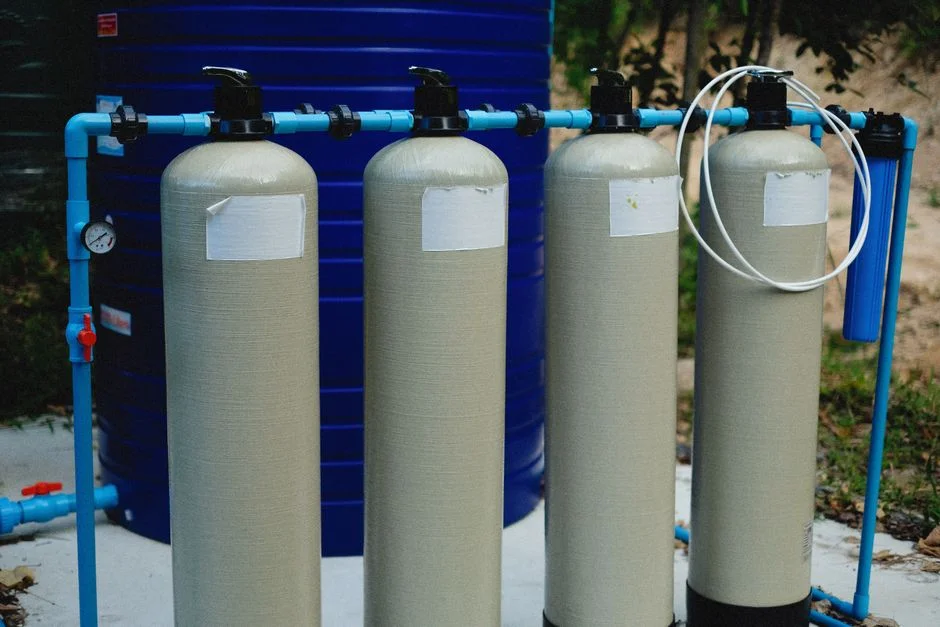
A lamella (inclined-plate) clarifier settles destabilized particles on closely spaced plates, exploiting gravity rather than buoyancy. The lamella clarifier for colloidal silica and fluoride precipitates is rated for 20–40 m/h surface loading and claims up to 30% lower chemical consumption than conventional settlers. That matters in fab service because the streams a DAF handles poorly — colloidal silica from CMP rinse-down, fluoride co-precipitated with calcium, and fine slurry residues — are exactly the streams that respond to coagulation–sedimentation. The plate-pack format also delivers a compact rectangular footprint suited to tight fab mechanical rooms and skid-mounting, where a circular clarifier would not fit. Lamella performance depends on getting floc dense enough to slide down the plates, so the upstream coagulant program — best handled by a PLC-controlled coagulant and flocculant dosing skid — has to be tuned to the specific fab reject.
DAF vs Clarifier, Side by Side, for a Fab
Engineers in Boxborough must determine which technology fits the dominant particle population in their stream and which secondary unit operations are required. The table below maps the two unit operations onto fab-relevant parameters using only values present in supplied sources; vendor-specific numbers should be confirmed on each RFQ.
| Parameter | Dissolved Air Flotation (DAF) | Lamella / Sedimentation Clarifier |
|---|---|---|
| Primary mechanism | 30–50 µm micro-bubbles attach to floc and float it (Clearwater Industries, 2026-04-27) | Gravity settling of destabilized colloids on inclined plates (HydropureWater lamella spec) |
| Best-fit fab stream | Floatable FOG, oils, back-grind fines, surfactant residues | Colloidal silica, fluoride/Ca precipitates, CMP slurry residues |
| Flow / loading envelope | 1–250 m³/hr (ClearFox); 4–300 m³/h across 13 models; compact single-skid to 66 GPM (Clearwater Industries) | 20–40 m/h surface loading rate (HydropureWater spec) |
| Footprint | Longer tank with skimmer, sediment basin, and auger (Clearwater Industries) | Compact rectangular plate-pack suited to skid-mounting in tight fab mechanical rooms (HydropureWater) |
| Chemical intensity | Coagulant + flocculant + pH trim; ClearFox vertical-upflow round-tank design claims up to 15% less chemical use than rectangular systems | Lamella spec states up to 30% lower chemical consumption than conventional settlers |
| Material / corrosion | 304SS standard; 316SS, polypropylene, or other materials on request (Clearwater Industries); ClearFox builds in PP/HDPE for chloride/acid resistance | Stainless or coated options; confirm alloy with vendor for fluoride service |
| Documented limitations | Weak when COD is mostly dissolved and biodegradable; performance sensitive to stable pH and coagulant control (ClearFox) | Requires well-conditioned, settleable floc; less effective on emulsified oils and free FOG |
| Typical role in 2026 fab train | Primary FOG/TSS step at the front of pretreatment | Primary where floatable load is low, or polishing after DAF before RO/UF reuse |
Supplied sources indicate that these two technologies are not substitutes in most fab trains; DAF protects downstream equipment from FOG upset events, and a lamella (or MBR) protects RO/UF membranes from colloidal fouling. Procurement should plan for both when the fab handles CMP, fluoride, and back-grind waste in the same plant.
Three Boxborough Scenarios That Decide the Choice
CMP-heavy back-end line. CMP wastewater is the canonical DAF-upstream / lamella-downstream case: floatable slurry fines and surfactant residues lift cleanly in a DAF, while a downstream lamella or sedimentation step captures residual colloidal silica and protects any reuse polishing. The IWC 25-75 reclaim optimization paper (Akowanou, Fluor) frames the primary-clarifier choice around fab reclaim, and the engineering specs for CMP wastewater treatment by coagulation–sedimentation (2026 engineering specs) support this.
Wet-bench fluoride / ammonium stream. Where fluoride is precipitated upstream with calcium and the reject contains little free FOG, the dominant particle population is settleable precipitate plus fine silica — a lamella clarifier is the correct primary, with DAF added only if the stream is contaminated by oils from concurrent tool maintenance. Pairing a chemical precipitation reactor with a lamella matches the chemistry-driven design that IWC 25-75 highlights as a live fab optimization lever.
High-reuse polishing train. A fab targeting the SK hynix 2026 water-reduction benchmark needs a polishing step after primary clarification to protect RO/UF. A lamella or MBR placed downstream of DAF removes the carry-over colloids that foul membranes and is consistent with the reclaim focus of IWC 25-75. For 2026 capacity planning, this DAF-primary, lamella/MBR-polish configuration maps to a Boxborough-scale reuse KPI. This architectural logic applies to pharma reject streams in the parallel DAF vs clarifier for API and formulation pharma wastewater (2026) review.
Building the 2026 Selection Checklist for Procurement
Before issuing an RFQ, the engineering team should provide procurement with a document detailing daily and peak flow (m³/h), the FOG/TSS split, colloidal silica and fluoride concentrations, the downstream reuse target, the available footprint, and current Greater Boston POTW pretreatment limits. Clearwater Industries and ClearFox state that these are the inputs required to size a DAF correctly, and they apply equally to lamella sizing. Choose DAF when floatable FOG or back-grind fines dominate, choose lamella when settleable colloids and precipitates dominate, and combine them when both populations are present. Open vendor and qualification items to include in the RFQ are requested CAPEX/OPEX ranges, skid delivery lead time, 304SS vs 316SS vs PP construction (Clearwater Industries offers all three), remote-monitoring capability, and 2026 fab water-reuse KPI compatibility. The DAF unit can be specified as a dissolved air flotation system for fab FOG and back-grind streams, the clarifier as a lamella clarifier for colloidal silica and fluoride precipitates, and the chemistry package as a PLC-controlled coagulant and flocculant dosing skid sized to the same stream envelope.
Frequently Asked Questions
How should a Boxborough fab budget a DAF vs lamella clarifier decision in 2026?
Budget figures are not in the supplied research. The defensible procurement action is to send each shortlisted vendor the same stream dataset — flow, FOG/TSS split, silica and fluoride concentrations, footprint, reuse target — and request a sized quotation with an itemized chemical-consumption line. ClearFox documents up to 15% lower chemical use versus rectangular DAF, and the lamella spec states up to 30% lower chemical consumption than conventional settlers. Comparing those two line items across vendors provides a comparable OPEX signal.
What should a Boxborough fab check when qualifying a DAF or clarifier supplier in 2026?
Confirm that the vendor has documented semiconductor or comparable high-purity experience, can supply the material of construction required for fluoride and chloride exposure (Clearwater Industries lists 304SS, 316SS, and PP; ClearFox builds in PP/HDPE specifically for chemical resistance), and offers remote monitoring for an unattended fab mechanical room. Ask for a reference list of installed units on fab reject streams, not generic food or refinery case studies, and confirm willingness to jar-test on a Boxborough-representative sample before sizing.
How is sizing actually decided for a fab reject stream that mixes FOG and colloidal silica?
Jar testing on a representative 24-hour composite sets the coagulant and flocculant doses, which then drives hydraulic residence and surface-loading requirements on each unit. Clearwater Industries specifically recommends jar testing to set flocculation contact time before DAF sizing. For a mixed stream, the practical outcome is usually a DAF sized for the floatable load followed by a lamella sized for the colloidal load, rather than picking one technology for the whole stream.
What compliance risk should a Boxborough fab flag before choosing a primary clarifier?
Pretreatment-compliance risks include FOG, TSS, fluoride, and metals limits that are tightening in 2026 alongside water-reduction benchmarks. The supplied research does not contain specific Greater Boston POTW limits; the buyer must obtain current local discharge limits and any new 2026 amendments from the receiving POTW before sizing, and confirm that the selected DAF or lamella can meet them with the proposed chemistry program. The IWC 25-75 reclaim optimization paper (Akowanou, Fluor) is a useful citation when justifying capital spend to line management for the polishing step that protects compliance and reuse simultaneously.