Why Aswan's Nile Corridor Changes Domestic Sewage Design
A 2025 spatial study recorded mainstream COD of 4.97–6.69 mg/L and BOD of 2.82–3.84 mg/L in the Aswan-to-Edfu stretch of the Nile, a 120 km corridor that supports domestic supply, agriculture, fisheries, navigation, and industrial activity (Nature 2025). Around the Kom Ombo sugar works and adjacent paper and ferroalloy plants, these baseline numbers spike into pollution plumes of high COD/BOD, nutrients, TSS, turbidity, and phenols, especially where the Berba Drain meets the river. Targeted effluent treatment, year-round monitoring, and enforcement of Law 48/1982 are essential to safeguard the corridor (Nature 2025). For any domestic plant discharging or reusing water inside this corridor, polishing past secondary biology is necessary, as the receiving water already carries a measurable pollution load from upstream industries.
Water demand in the governorate is dominated by sugar-cane irrigation, followed by domestic consumption, industrial use, and fisheries; every cubic meter of treated wastewater reused on-site offsets a Nile withdrawal (Nature 2025). Egypt's Nile share is 55 BCM/year against national demand above 90 BCM/year, with per-capita availability at 570 m³/year in 2018, well below the 1,000 m³/capita/year water-scarcity threshold (Wikipedia). Treated wastewater covered 74% of the national stream by 2022, and the country has been classified as water-scarce since 2005 (Wikipedia). Law 48/1982 is the enforcement anchor for inland Nile discharge; reuse quality is governed by the Ministerial Decree framework cited in regional tenders as SDC 1890/2020. A 2026 design must reference both, with the buyer requesting the current decree text and any updates from the Ministry of Water Resources and Irrigation before signing.
2026 Design Loads for an Aswan Domestic STP
Installed capacity in Upper Egypt, rather than the national average, provides the most accurate baseline for a 2026 sizing exercise. National domestic use was estimated at 200 L/c/d, but installed supply ranges from 70 L/c/d in Upper Egypt to 330 L/c/d in Cairo; the lower end is the realistic baseline for Aswan unless the operator has site-specific HCWW records showing higher (Wikipedia). The per-capita BOD₅ load is typically 40–60 g/c/d for domestic sewage, and a 20–30% margin is appropriate where the collection sewer receives mixed industrial-municipal flow, common in Upper Egypt towns. Site-specific influent sampling is the only defensible basis for guarantees; treat any per-capita number as a starting point to be replaced by measured data.
Tourism and resort operations in Aswan create fluctuating loads. Hotels, cruise boat shore facilities, and seasonal compounds see occupancy swings that an HCWW design report rarely reflects. Apply a peaking factor of 1.5–2.0× to the average dry-weather flow when sizing equalization, biological tanks, and disinfection contact chambers. Design for wastewater temperature at or above 25 °C year-round, as biological kinetics at that temperature are faster than the temperate defaults found in many vendor libraries, affecting the required volume of the aeration tank. Set internal outlet targets at TSS ≤30 mg/L and NH₃-N ≤10 mg/L to stay safely below Law 48/1982 limits for inland Nile discharge, and confirm the exact numerical limits against the current decree text and any updates from EEAA before procurement.
| Parameter | Design value (2026 baseline) | Source / buyer action |
|---|---|---|
| Per-capita flow | 70 L/c/d installed (Upper Egypt), 200 L/c/d national upper bound | Wikipedia; request site-specific HCWW records |
| Peaking factor (tourism) | 1.5–2.0× average dry-weather flow | No published Aswan ratio; buyer to confirm with site sampling |
| Per-capita BOD₅ load | 40–60 g/c/d, +20–30% margin for mixed sewers | Standard domestic range; confirm with influent sampling |
| Design temperature | ≥25 °C | Aswan climate; verify with site logger |
| Outlet TSS target | ≤30 mg/L | Confirm against current Law 48/1982 text |
| Outlet NH₃-N target | ≤10 mg/L | Confirm against current Law 48/1982 text |
Buried Package A/O vs MBR: Which Fits Aswan in 2026?
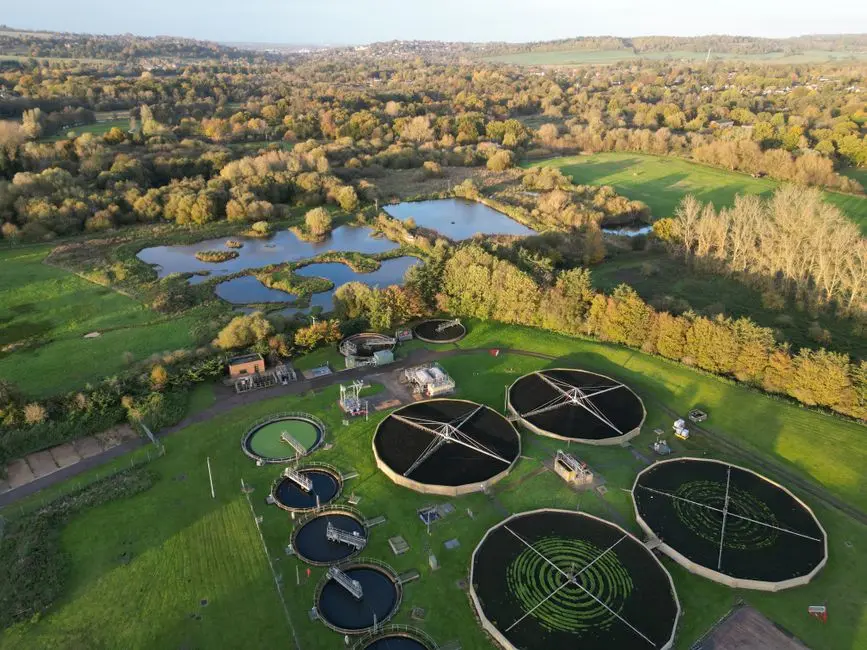
Two configurations dominate the 1–500 m³/day domestic segment in Upper Egypt. The first is a buried package A/O plant, exemplified by the WSZ series underground integrated unit combining anoxic/aerobic contact oxidation with sedimentation and disinfection in a single buried package, handling 1–80 m³/h for residential communities, hotels, hospitals, factories, and rural areas (HydropureWater WSZ series). The second is an MBR membrane bioreactor with submerged PVDF membranes, which delivers high-quality effluent and occupies roughly 60% of the footprint of a comparable CAS plant; capacity examples in the supplier's catalog run 10–2,000 m³/day depending on module count (HydropureWater MBR series). For a site with high groundwater, landscaped grounds, and intermittent septic-tank feeds — a common pattern in Upper Egypt — a buried package A/O sewage treatment plant eliminates visible plant footprint, runs unattended on PLC, and has no membrane replacement line in the budget. Where reuse on landscape is mandatory and the operator wants stable TSS below 5 mg/L with sub-micron filtration, an MBR membrane bioreactor system handles tourism-driven load swings without bulking-sludge failure.
Both configurations require a tertiary step. A/O effluent typically lands at 20–30 mg/L TSS and still needs UV or ClO₂ polishing to meet reuse or inland-Nile standards; MBR effluent, while lower in TSS, is not sterile and requires disinfection before reuse. MBR disadvantages include membrane cleaning, scheduled replacement of modules every few years, and the aeration energy required to keep the mixed liquor suspended—request lifecycle numbers from the supplier, not just FOB price, before deciding. A/O disadvantages are capital-cost-driven when reuse targets are tight, as a polishing step plus tertiary filtration often must be added. Both configurations should be followed by UV or ClO₂ polishing because inland Nile discharge and reuse on landscape both demand reliable disinfection; the choice depends on the irrigation distribution line length, residual requirements, and whether by-products are a concern downstream.
| Criterion | Buried package A/O (WSZ) | MBR with submerged PVDF |
|---|---|---|
| Flow envelope | 1–80 m³/h in a single buried unit | 10–2,000 m³/day modular |
| Footprint | Landscaped above grade; high groundwater tolerant | ~60% of CAS footprint |
| Effluent TSS | Typically 20–30 mg/L before tertiary | <5 mg/L; sub-micron filtration |
| Recurring OPEX | No membrane replacement; low aeration energy | Membrane cleaning, replacement, aeration energy |
| Reuse on landscape | Requires tertiary disinfection and filtration | Direct reuse often compliant after UV/ClO₂ |
| Intermittent septic feeds | Well suited (A/O tolerates shock loads) | Sensitive to slug loads; needs equalization |
Tertiary Step: Disinfection, Polishing, and Sludge Handling
The tertiary step is where Aswan designs most often fail compliance. UV sterilizer units handle chlorine-resistant organisms such as Cryptosporidium and Giardia with no chemical by-products, making them suitable for landscape irrigation where residual chlorine would damage turf and shrubs. Chlorine dioxide generator units, available in eight configurations from 50 g/h to 20,000 g/h, deliver a residual that survives long distribution lines and oxidizes taste-and-odor compounds, which is beneficial for resort grounds where the reuse line runs hundreds of meters. Pick UV when reuse is local and the line is short; pick ClO₂ when the reuse line is long or when the water also enters a cooling tower. Both options are valid under SDC 1890/2020 reuse limits as long as the supplier can document the dose and contact time at the design peak flow.
Sludge handling needs to be specified with the STP, not retrofitted after commissioning. A plate and frame filter press handles the small sludge volume typical of 1–500 m³/day plants and produces a cake that can be hauled to an HCWW-licensed disposal site. Coordinate sludge routing with HCWW in advance, because trucks emptying septic tanks in Upper Egypt do not always discharge septage at WWTPs and sometimes dump in the environment (Wikipedia); a 2026 design that does not lock in the disposal route will become a compliance problem within the first year. For project sizing and reference cost logic, see the Effluent Treatment Plant in Giza 2026 guide and the containerized MBR STP sizing guide for the modular-MBR envelope that applies to hot-climate tourist loads.
Buyer's Checklist for a 2026 Aswan Domestic STP
Before issuing a purchase order, the EPC, hotel developer, or hospital engineer should verify five specific items against the supplier's written offer.
- Peak flow, not average. Confirm the unit treats the design peak flow and that the equalization tank is sized for at least 6–8 hours of peak — critical for hotels, cruise operations, and resort compounds where occupancy swings seasonally.
- Guaranteed effluent at the outlet. Ask for guaranteed parameters at the outlet, not "typical" values, and tie payment milestones to a Performance Test using an Egyptian MoHP-accredited lab; reject offers that quote only influent-side numbers.
- Compliance documentation. Request documented compliance with Law 48/1982 and the reuse decree referenced as SDC 1890/2020, and ask for the supplier's last three Aswan or Upper Egypt reference sites with contactable end users.
- PLC, HMI, and spares. Verify PLC telemetry, Arabic and English HMI, and that membrane modules, UV lamps, and dosing pump heads are stocked in Cairo or Aswan with quoted lead times in days.
- Lifecycle cost, not FOB. Request a full lifecycle cost covering energy, membranes, chemicals, and sludge hauling before purchase; lifecycle numbers, not the FOB equipment price, decide which bid is cheaper.
Frequently Asked Questions
What does a domestic sewage treatment plant in Aswan actually cost in 2026?
No 2026 unit price for an Aswan domestic STP is available in the supplied research, as pricing depends on flow envelope, effluent class, reuse intent, and civil works. Request a written quote that breaks out equipment, civil works, installation, and a separate OPEX line for energy, membranes (if MBR), chemicals, and sludge hauling; compare bids on lifecycle cost rather than FOB price, and confirm the quote is valid for at least 60 days.
Which supplier should an EPC in Aswan select for a buried package or MBR plant?
Shortlist suppliers that can document at least three commissioned Aswan or Upper Egypt reference sites within the last 24 months, with contactable end users and a MoHP-accredited lab Performance Test on file. Ask for the supplier's HCWW or EEAA approval letter, the HMI language set (Arabic and English), and the Cairo or Aswan warehouse address that holds membrane modules, UV lamps, and dosing pump heads; reject any supplier that quotes only FOB and cannot name a local spares route.
What is the typical lead time for a 1–500 m³/day buried package or MBR plant delivered to Aswan?
The supplied research does not contain a quoted lead time for Aswan-bound STPs. Ask each shortlisted supplier for a written manufacturing slot