Why Replace an Underperforming Plant with a Modular System
Replacing an underperforming wastewater treatment plant with a modular system becomes unavoidable when the existing facility shows one of four failure modes: chronic effluent non-conformance against discharge limits, hydraulic overload beyond the original design envelope, aging concrete infrastructure that has reached structural limits, or energy and sludge-handling operating costs that have eroded the plant's economics. Each of these modes carries a different cost of inaction — consent decree exposure, consent agreement fines, capacity loss, and OPEX leakage — and any one of them is sufficient to justify a procurement process for a modular replacement train. The decision is usually forced when the existing activated sludge plant is energy-intensive, slow to recover from shock loads, or producing out-of-spec effluent, which is the same profile described in the only published modular-scale calibration study on this class of problem (ScienceDirect, 2023).
AUC Group's commercial note on decentralized systems makes a resilience argument that resonates with plant managers weighing replacement: when a large, centralized plant fails, it can stay down for months, but smaller, decentralized treatment plants can often be quickly restored to operation soon after electricity is restored (aucgroup.net). Modular plants are factory-built, skid- or container-mounted, factory-tested, and expandable in parallel — typically 50–150 m³/day for true modular STPs and up to 2,000 m³/day for packaged MBR systems, the same envelope covered by the underground A/O package sewage treatment plant range. Against the two alternatives — extending the existing aeration basin and clarifiers in place, or rebuilding on the same footprint — replacement wins when the concrete is failing or when compliance deadlines cannot absorb a multi-year rebuild. Extend is the right call only when the existing biological stage is sound and the bottleneck is downstream solids or disinfection; full rebuild dominates only when footprint and discharge permit force a like-for-like concrete replacement.
Modular Treatment Technologies Compared: MBR, MBBR, and A/O Package
Three modular technologies cover almost every 50–500 m³/day replacement scenario a buyer will face, and the choice between them should be made on influent variability and effluent target rather than on unit cost alone. Packaged MBR (membrane bioreactor) uses sub-1 µm membrane filtration to deliver reuse-quality effluent suitable for irrigation, cooling make-up, or toilet flushing. MBBR (moving bed biofilm reactor) is an attached-growth process that handles shock loads well and produces less waste activated sludge than conventional activated sludge. A/O package plants combine an anoxic zone with an aerobic zone for biological nitrogen removal in a buried or skid-mounted envelope, which matters when footprint or aesthetics drive the install.
MBBR's operating envelope is the most clearly quantified in the research. ScienceDirect (2023) reports that MBBR systems operate at 4–6 hour HRT versus 8–12 hours for conventional activated sludge, with stronger resistance to shock loads due to a stable biofilm-forming property, lower sludge production than ASP, and faster ammonia removal because the biofilm consortium favors nitrifiers. The same source flags the design point buyers most often miss: for effective denitrification in an MBBR plant, a separate pre-anoxic tank is often required, with volume and recirculation ratio sized to the influent C/N ratio. This is the retrofit mechanism used at the IIT Jammu 100 m³/day case discussed in the next section.
Map each technology to the discharge objective: choose MBR when reuse-quality effluent is mandatory, MBBR when shock load resilience and lower aeration energy are the priorities, and A/O package when footprint and buried installation drive the project. The corresponding equipment lines are the packaged MBR membrane bioreactor system for the reuse case, an MBBR skid for shock-load sites, and the underground A/O package sewage treatment plant for footprint-constrained sites. The ScienceDirect 2023 source also notes that MBBR with an anoxic tank can substitute for a costly MBR in many modular applications, which is a useful OPEX lever for buyers comparing lifecycle cost.
| Selection criterion | Packaged MBR | MBBR + anoxic tank | A/O package |
|---|---|---|---|
| Typical capacity window (research / product range) | 10–2,000 m³/day (MBR product range) | 50–150 m³/day at modular scale (ScienceDirect, 2023) | 1–80 m³/h (WSZ underground series) |
| HRT vs ASP | Higher than MBBR due to membrane tank | 4–6 h vs 8–12 h for ASP (ScienceDirect, 2023) | Comparable to conventional ASP |
| Shock load resistance | Good (membrane decouples clarification) | Strong — biofilm buffers shock (ScienceDirect, 2023) | Moderate |
| Sludge production vs ASP | Higher mixed liquor, lower yield per m³ treated | Lower than ASP (ScienceDirect, 2023) | Comparable to ASP |
| Effluent quality | Reuse-grade (sub-1 µm filtration) | Discharge-grade; polishing needed for reuse | Discharge-grade; polishing needed for reuse |
| DN requirement | Built into anoxic zone | Requires dedicated pre-anoxic tank (ScienceDirect, 2023) | Anoxic zone integral |
| Best fit | Reuse, tight effluent BOD/TSS limits | Variable influent, OPEX-sensitive sites | Buried install, footprint-driven sites |
Case Evidence: 100 m³/day MBBR Modular Retrofit at IIT Jammu
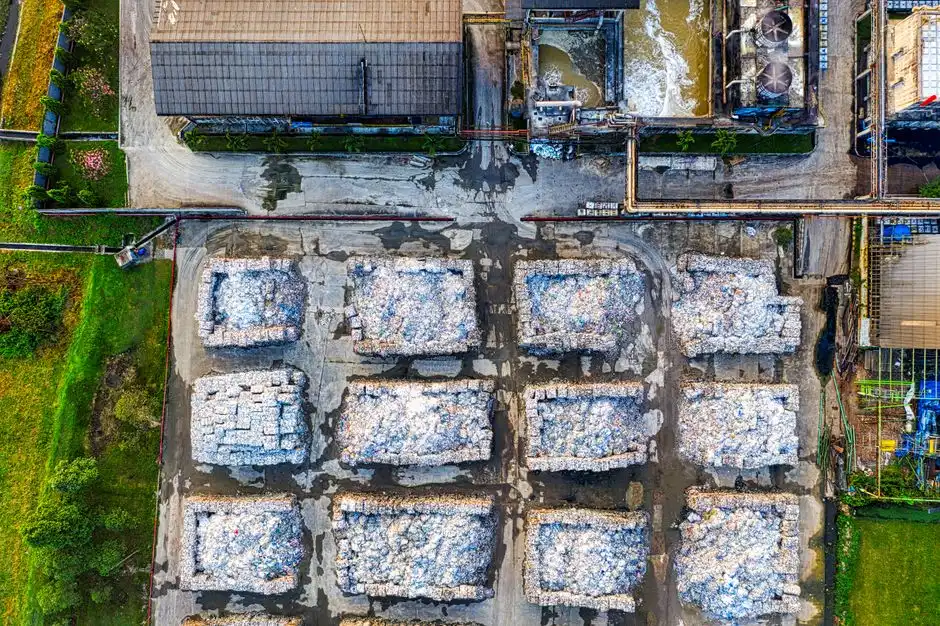
The strongest published evidence for a modular retrofit at the 50–150 m³/day scale is the IIT Jammu case, a 100 m³/day MBBR-based modular sewage treatment plant on the Indian Institute of Technology Jammu campus that had been underperforming on nitrification-denitrification and partial BOD removal, with effluent originally used for horticulture (ScienceDirect, 2023). The plant owner needed a remediation path that did not require wholesale replacement of the biological train.
The solution documented in the study was the addition of a pre-anoxic tank, with its volume and recirculation ratio sized against the measured C/N ratio of the influent — a design choice the same paper flags as the general remedy for low ammonia removal in modular MBBR plants (ScienceDirect, 2023). The plant was then modeled in GPS-X 8.5 and calibrated against 8 months of operating data (7 months static and 1 month dynamic).
Calibration quality was quantified: Theil's inequality coefficient (TIC) came in below 0.10, with better than 90% accuracy between simulated and measured effluent for COD, TKN, suspended solids, and NOx (ScienceDirect, 2023). The buyer takeaway is direct — a modular plant that fails to meet spec can often be retrofitted with a small assisting unit (here, a pre-anoxic tank) rather than replaced wholesale, which keeps the capital cost of remediation an order of magnitude below a full modular replacement train. The same modeling discipline is portable to any 50–150 m³/day site where the owner has 6–8 months of operating data and a competent process engineer with access to GPS-X, BioWin, STOAT, or WEST.
Replace vs Extend vs Rebuild: A Decision Framework
Three project paths compete for the same budget: replace with a modular train, extend the existing plant in place, or full rebuild on the same footprint. Each path trades off deployment time, capital cost, downtime, compliance risk, and future scalability differently, and the right answer depends on which constraint binds first at the site. AUC Group's commercial note captures the deployment-speed argument: modular package systems can be deployed faster than municipal utility tie-ins, and self-contained modular systems can be quickly restored to operation after power or process failure, making replacement the right call when compliance deadlines are tight (aucgroup.net).
A simple rule of thumb separates the three. If downtime tolerance is weeks (not months), modular replacement wins because the new skids can be commissioned in parallel with the failing plant. If the existing aeration basin and clarifiers are sound and the bottleneck is downstream — clarification, disinfection, or solids handling — extend with a targeted modular add-on (an MBR cassette, a UV train, a chemical dosing skid). If the concrete basin is failing or the hydraulic envelope is permanently undersized, a full rebuild on the same footprint dominates, even though it carries the longest downtime and the highest permitting burden. A buyer who frames the choice this way avoids the most common error: choosing extension when the real failure is structural, or choosing replacement when the existing biological stage has years of useful life left.
| Decision dimension | Replace with modular | Extend existing | Full rebuild |
|---|---|---|---|
| Deployment time vs municipal tie-in | Faster than municipal utility tie-ins (aucgroup.net) | Tied to existing plant outage windows | Longest — concrete cure, commissioning |
| Downtime exposure | Weeks (parallel install possible) | Days to weeks per outage | Months |
| Compliance risk if delayed | Lowest — skids can be commissioned in parallel | Medium — depends on outage length | Highest — extended non-conformance window |
| Future scalability | Add skids in parallel (modular by definition) | Limited by existing basin footprint | Set by new footprint at design time |
| When this path dominates | Compliance deadline ≤ a few months; failing biological stage | Sound basins, downstream bottleneck | Failing concrete, undersized hydraulic envelope |
Phased Replacement: How to Swap a Plant Without Shutting Down
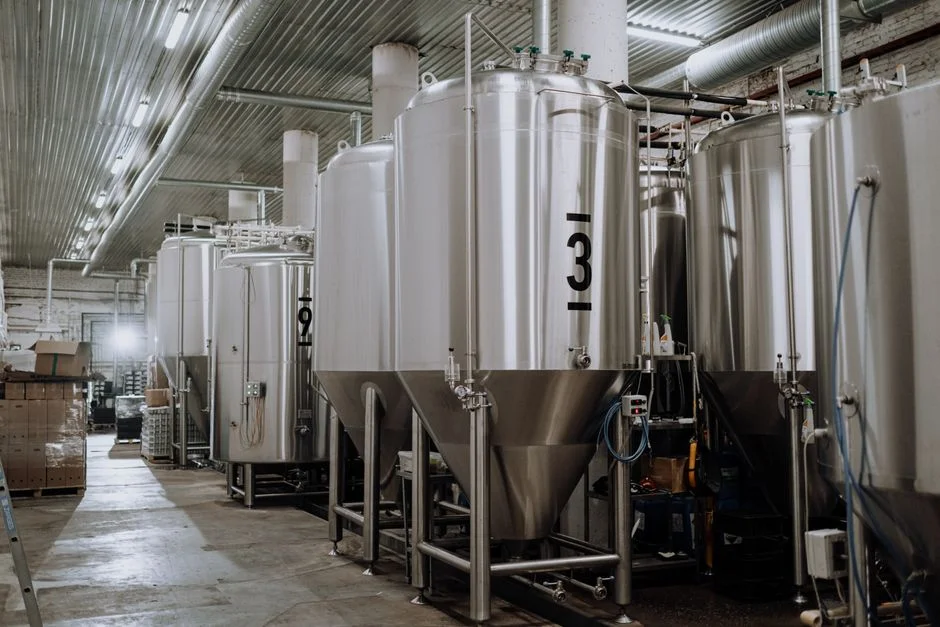
The defining operational advantage of modular replacement is that the old plant does not have to stop when the new plant arrives. A four-step parallel-deployment sequence keeps the existing plant in service through cutover and lets the new train be validated against real flow before the failing unit is decommissioned.
- Benchmark the failure. Run a 2–4 week influent and effluent bench test against target discharge limits. Confirm whether the failure is organic overload, nitrification collapse, solids carryover, or hydraulic — this determines whether the modular replacement needs an MBR cassette, an MBBR skid, or an A/O package.
- Install modular skids in parallel. Set the new skids upstream or in parallel with the existing aeration basin and tie them to the existing outfall through temporary pipework. No shutdown is required at this stage; both trains can run together for the validation period.
- Route full flow through the modular train. Once effluent from the modular skids is stable against the discharge permit, divert full flow to the new train and keep the old unit on standby. Only decommission the failing unit after the new train has held compliance for the validation period agreed with the regulator.
- Repurpose the freed footprint. Use the area vacated by the old aeration basin or clarifier for tertiary polishing — a pipeline UV sterilizer for disinfection, a chlorine dioxide generator for residual control, or a chemical dosing skid for nutrient trim. Avoid expanding the biological stage on the freed footprint, because the modular train is already sized for current and near-term load.
Buyer Checklist: Specs, Lead Time, and Total Cost to Replace
Quotes for modular replacement are only comparable when every supplier is given the same input set and asked to separate CAPEX from OPEX. The list below is the minimum data package a procurement lead should send before asking for a price, and the questions to put to each bidder in the same format. Confirm reference plants in your discharge jurisdiction and whether the system is pre-permitted or requires fresh permitting — the permitting path drives overall project lead time as much as factory lead time does.
| Category | Inputs to send the supplier | Questions to ask the supplier |
|---|---|---|
| Hydraulic | Design flow (m³/day), peak factor, daily flow profile | Confirm skid dimensions and number of skids for the design flow |
| Influent | BOD, COD, TSS, ammonia, temperature, pH | Factory acceptance test (FAT) scope and pass criteria |
| Effluent target | Permit limits for BOD, TSS, ammonia, total nitrogen, fecal coliform | Reference plants in your discharge jurisdiction; reuse-grade polish available? |
| Site | Footprint, power supply (kW, voltage), access for skids, discharge mode (reuse or sewer) | Civil works scope; whether skid-mounted chemical dosing system is included |
| Commercial | Required delivery date, commissioning support, BOO/lease interest | Build-own-operate (BOO) or lease options (aucgroup.net); lead time in weeks; OPEX separated from CAPEX |
| Compliance | Permit number, jurisdiction, pre-permitted equipment list | Pre-permitted in this jurisdiction or requires fresh permit application |
On cost framing, the only OPEX lever the research quantifies is aeration: ScienceDirect (2023) confirms MBBR has less aeration requirement than conventional activated sludge, which translates directly into blower energy at the site. Other OPEX line items — membrane replacement, chemical consumption, sludge haulage — are site-specific and must be requested from the supplier with the same input package. The buyer who separates CAPEX from OPEX at the quote stage gets a 5–10 year total cost of ownership comparison rather than a sticker-price comparison, which is the only comparison that matters for board-level approval.
Frequently Asked Questions
When does it make more sense to extend the existing plant than to replace it with a modular system?
Extension is the right call when the existing aeration basin and clarifiers are structurally sound and the failure is downstream — disinfection, solids handling, or a single unit operation. If the concrete is failing, the hydraulic envelope is permanently undersized, or compliance deadlines will not absorb a multi-year rebuild, modular replacement dominates because the new skids can be commissioned in parallel with the old plant.
What does a 100 m³/day modular wastewater treatment plant cost in 2026?
The research does not supply a current price for a 100 m³/day modular system, so any number quoted without a site-specific input set should be treated as indicative only. To get a comparable quote, send each supplier the same data package: design flow and peak factor, influent BOD/COD/TSS/ammonia, target effluent limits, available footprint, power supply, and discharge mode (reuse or sewer), and ask for OPEX (energy, chemicals, membrane replacement) broken out separately from CAPEX.
How do I compare a packaged MBR against an MBBR skid for the same replacement project?
Compare on three axes: effluent target, influent variability, and lifecycle OPEX. MBR delivers reuse-grade effluent because of sub-1 µm membrane filtration; MBBR delivers discharge-grade effluent with stronger shock-load resistance and lower aeration energy, per ScienceDirect (2023). For sites with variable influent and tight OPEX, MBBR with a pre-anoxic tank is the lower-lifecycle-cost option; for sites that need reuse-quality water, MBR is the only practical choice.
What should I check on a modular wastewater system supplier before I sign the purchase order?
Confirm reference plants in your discharge jurisdiction, whether the system is pre-permitted by your regulator, and the lead time in weeks from order to factory acceptance test. Ask for build-own-operate (BOO) or lease options if capital is constrained (aucgroup.net), and request a factory acceptance test scope document so the handover criteria are not negotiable at commissioning. Skid dimensions, commissioning support, and membrane or media replacement terms should be in the contract, not in a later change order.
Related Equipment
- DF series flat sheet MBR modules — specifications, capacity range, and technical data