Why Transportation-Equipment Wastewater in Riverside Is Different
Transportation-equipment plants in Riverside — heavy-truck assembly, transit-bus maintenance, rail servicing and aerospace parts — generate a wastewater envelope that gravity clarifiers handle poorly and that DAF clarifiers were effectively designed for. The stream is dominated by emulsified oils from parts washers, stamping lubricants, machining and grinding coolants (often phosphate- or nitrite-bearing), drawing compounds, diesel and rail-flush water, and skimmable FOG from cafeteria and floor drainage. Total suspended solids are usually moderate, but the troublesome fraction is colloidal: oils sheared into sub-100 micron droplets that stay suspended for hours and form the milky "cutting-oil" cloud most plant engineers recognize immediately.
That cloud is the technical reason a conventional clarifier underperforms. Stokes' law says a droplet settles only if gravity overcomes drag; for a 20-micron oil droplet the theoretical settling velocity is on the order of centimeters per hour, so a 2-hour clarifier will barely remove any of it. A DAF sidesteps settling entirely by attaching 30–50 micron microbubbles to the droplet, dropping its effective density below water and floating it in minutes (Clearwater Industries / SigmaDAF USA, 2026-04-27).
Regulatory pressure amplifies the technical case. Riverside plants discharge to POTWs operating under California pretreatment programs, and ongoing 2026 drought-driven scrutiny of industrial discharges has tightened enforcement on FOG, oil & grease, and TSS. Federal categorical standards stack on top: 40 CFR Part 413 (electroplating), Part 433 (metal finishing) and Part 468 (metal products) frequently apply to the same facilities and may force oil removal upstream of any clarifier regardless of which unit operation you choose. The federal framework is detailed further in this fabricated metals pretreatment near Maple Grove guide, which covers the parallel 40 CFR Part 433/468 pretreatment logic for stamping and finishing lines.
Direct procurement evidence supports the DAF default. A September 8, 2026 Maryland Transit Administration contract — MARC Riverside Upgrades, Contract No. T-1986-0350R, NAICS 238220 — specifies a DAF clarifier with flocculation equipment, air saturation, sludge skimmer and subnatant collection, plus a temporary 80 gpm DAF to keep the facility operational during installation (cleat.ai, posted 2026-09-08). When a transit agency is willing to put a temporary DAF on site to avoid downtime, that is a strong procurement signal that operators are no longer treating DAF as optional.
How a DAF Clarifier Actually Works (and Why It Beats Gravity on Oil)
A DAF clarifier is a flotation device, not a settling tank, and its mechanism is what makes it the right tool for oil-laden streams. Four functional blocks do the work, and they line up exactly with the equipment list in the MARC Riverside Upgrades scope: chemical coagulation and flocculation, air saturation, micro-bubble release, and float/skim removal. The same scope is what you would specify in a Riverside RFQ, so treating the four blocks as your spec checklist keeps the bid defensible.
Coagulation and flocculation come first because raw oil droplets are too small and too negatively charged to attach to bubbles on their own. A coagulant (typically a ferric or aluminum salt) neutralizes charge, and a flocculant polymer bridges the neutralized droplets into a pin floc large enough for a bubble to lift. Without this step, a DAF is just an aerated tank. SigmaDAF USA notes that DAF technology must be paired with proper chemical coagulation and flocculation to achieve the published removal performance, and that the chemical train can be serpentine floc tubes or mix tanks (Clearwater Industries, 2026-04-27).
Air saturation is the heart of the unit. Recycle water is pressurized to roughly 60–80 psig in a saturation tank with dissolved air, then released through needle valves or nozzles at atmospheric pressure inside the flotation cell. The pressure drop nucleates a cloud of 30–50 micron bubbles that rise through the flocculated stream, preferentially attaching to oil droplets and floc particles because those surfaces are more hydrophobic than clean water. The bubble-floc aggregate is buoyant and reaches the surface in 3–5 minutes, where a paddle skimmer scrapes the floated layer into a sludge trough.
Material options matter for Riverside's water chemistry. SigmaDAF USA / Clearwater Industries ships standard units in 304 stainless steel with 316SS, polypropylene and other alloys available on request, which is the same material envelope you should anchor in an RFQ for any facility with chloride-bearing cutting fluids or high-temperature parts-washer effluent. The floated sludge is then dewatered, often through a HydropureWater plate and frame filter press, while subnatant (the clarified water under the float) flows forward to pH adjustment, biological polishing or discharge.
A conventional clarifier inverts that logic. It relies on gravity settling of heavy suspended solids, needs a large footprint, a long hydraulic residence time, and a bottom scraper or auger for sludge. It handles dense grit and metal-hydroxide sludge well, but it does essentially nothing to a colloidal oil cloud, which is precisely the fraction that drives most Riverside POTW excursions. SigmaDAF notes the same DAF collection zone also captures heavier settleable solids with an auger at the bottom, so a DAF is not blind to heavy fractions — it just handles the troublesome fraction first.
Head-to-Head Comparison: DAF vs Conventional Clarifier
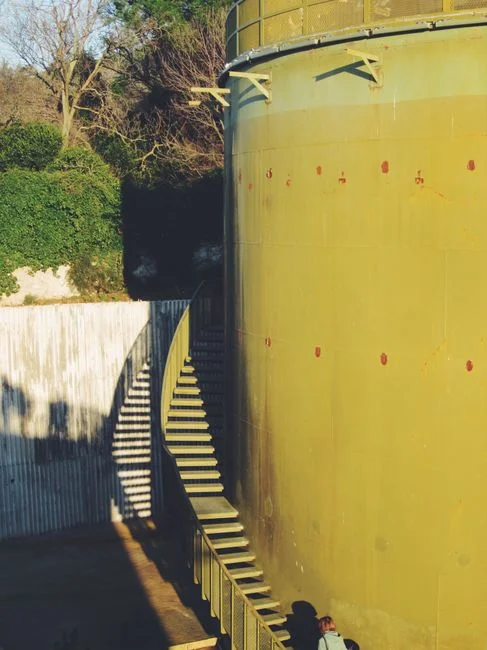
This is the table to paste into a recommendation memo. The numbers below are anchored to the supplied research: the SigmaDAF Compact DAF flow thresholds (≤66 GPM single skid, >66 GPM modular) and the 80 gpm temporary DAF in the MARC Riverside Upgrades contract for DAF sizing (Clearwater Industries, 2026-04-27; cleat.ai, 2026-09-08). Conventional clarifier hydraulic loading and surface-loading rate are described qualitatively because the research did not supply a specific m/h value for this duty; request site-specific values from vendors in the bid stage rather than assume them.
| Parameter | DAF Clarifier | Conventional / Lamella Clarifier |
|---|---|---|
| Target pollutant | Emulsified oil, FOG, free oil, light TSS | Heavy settleable TSS, grit, metal hydroxide sludge |
| Mechanism | 30–50 µm microbubbles attach to oil/floc, float to surface | Gravity settling of dense particles; long residence time |
| Skimming efficiency on emulsified oil | High; designed for colloidal oil | Poor; colloidal oil does not settle at practical HRT |
| Skid/footprint envelope (research-anchored) | ≤66 GPM single skid, >66 GPM modular (SigmaDAF Compact DAF); 80 gpm temporary DAF in T-1986-0350R (2026-09-08) | Qualitatively larger footprint per m³/h and longer HRT than DAF; no specific m/h value in supplied research |
| Sludge character | Float layer skimmed from top; heavy settleables augered from bottom | Bottom sludge, scraped or augered |
| Startup time | Quick start-up, fully automated (SigmaDAF Compact) | Slower; sensitive to flow and density changes |
| Chemical demand | Coagulant + flocculant required for stated performance | Often lower chemical demand, sometimes polymer aid only |
| Typical 2026 CAPEX envelope (decentralized systems) | $500–$2,000 per m³ of capacity (Ecologix, 2026) | $500–$2,000 per m³ of capacity (decentralized envelope, Ecologix, 2026); centralized $1,000–$5,000/m³ for retrofit benchmark |
| Energy envelope | 0.1–0.3 kWh/m³ (decentralized, Ecologix, 2026) | 0.5–1 kWh/m³ (centralized, Ecologix, 2026) — use only to benchmark retrofit |
| Reference procurement | MARC Riverside Upgrades, T-1986-0350R, 2026-09-08 (DAF with flocculation, air saturation, sludge skimmer, subnatant collection) | No Riverside 2026 transit contract in supplied research |
Use the CAPEX and energy envelopes from Ecologix (2026) as an order-of-magnitude check against supplier quotes, not as a fixed price; the 85–95% BOD/TSS reduction figure from the same source is a downstream secondary-treatment benchmark and should not be cited as DAF or clarifier primary removal. A DAF is typically paired with a HydropureWater DAF system on the oil-removal step and a HydropureWater lamella clarifier when a high-rate settling stage is also needed.
Three Riverside Factory Scenarios and the Right 2026 Choice
The DAF-vs-clarifier answer depends on what is in your Influent, not on the equipment vendor's catalog. Three sub-scenarios cover the bulk of Riverside transportation-equipment plants, and the decision rule is simple: choose DAF when emulsified oil or FOG dominates the influent characterization; choose clarifier when settleable inorganics dominate and oil is minor.
| Scenario | Typical plant | Influent signature | 2026 recommendation |
|---|---|---|---|
| A — High emulsified oil / coolant load | Heavy-truck transmission plant, bus rebuilder, rail wheel-bore shop | High FOG, high emulsified oil, low settleables | DAF; specify flocculation + air saturation + sludge skimmer + subnatant collection to match MARC Riverside Upgrades T-1986-0350R scope (cleat.ai, 2026-09-08) |
| B — Mixed load with heavy grit and metal hydroxide | Stamping plant, machining line with iron-phosphate or alum sludge | Moderate FOG plus heavy settleables | Lamella clarifier for the heavy fraction; DAF polish step if FOG remains above the local POTW limit. Consider pairing with a HydropureWater automatic chemical dosing system to keep coagulant feed stable across both stages |
| C — High flow, low oil, mostly parts-washer rinse | Aerospace parts washer, light components line | High flow, low oil, low TSS, mostly rinse water | Lamella or high-rate sedimentation tank; escalate to DAF only if 2026 sampling shows FOG excursions above the local limit. Sizing should still respect the SigmaDAF Compact DAF thresholds of ≤66 GPM single skid and >66 GPM modular (Clearwater Industries, 2026-04-27) |
For plants that mirror the MARC Riverside Upgrades duty — an 80 gpm temporary DAF keeping a transit facility online during permanent installation — the same flow band falls inside the SigmaDAF modular range, so a single Compact DAF skid is the right reference design. Procure a temporary unit first if your existing clarifier is failing, and run the permanent DAF in parallel during cutover rather than accepting a discharge excursion. Comparable framing for a Florida site is in this DAF or clarifier for transportation equipment wastewater in Fort Pierce guide.
What to Put in a Riverside 2026 RFQ for Either System
An RFQ that gets comparable bids is an RFQ that forces every vendor to answer the same questions. For a DAF, the spec fields every 2026 Riverside bid should carry are: design flow in GPM or m³/h, peak factor, influent FOG / TSS / oil envelope, target effluent limits, microbubble size band (30–50 microns per SigmaDAF USA), material of construction (304SS default, 316SS optional), sludge handling destination, controls level (PLC, remote telemetry), and whether a temporary or turnkey unit is required during construction. The 80 gpm temporary DAF in MARC Riverside Upgrades T-1986-0350R (2026-09-08) is a real 2026 precedent for the temporary-unit line item, and the same contract's ASTM A48/A240 piping requirement is the corrosion-resistant above- and below-grade piping benchmark for any Riverside site with chloride-bearing cutting fluids.
For a clarifier or lamella retrofit, the parallel spec fields are: surface loading rate (m/h), hydraulic retention time, lamella vs conventional geometry, sludge collection mechanism, chemical conditioning integration, and whether the unit is sized to handle the design peak with one cell out of service. A HydropureWater lamella clarifier bid that does not state surface loading rate and HRT explicitly is one you cannot compare against the next vendor.
Attach the following inputs to every RFQ so suppliers can quote against the same envelope: 2025–2026 influent sampling data (FOG, TSS, oil & grease, pH, temperature), the local POTW discharge limits and any 2026 permit special conditions, the site footprint and available headroom, power and chemical storage constraints, and the desired commissioning window. Where polymer or coagulant feed is part of the train, the HydropureWater automatic chemical dosing system and the HydropureWater plate and frame filter press for downstream sludge dewatering should be specified as integrated line items, not afterthoughts. The 40 CFR Part 433 / 468 / 413 overlay — also covered in the DAF or clarifier for fabricated metals wastewater in Plant City guide — should be cited verbatim in the spec so bidders price the right categorical compliance.
Frequently Asked Questions
What 2026 CAPEX should a Riverside plant budget for a DAF or clarifier?
Use the Ecologix (2026) decentralized envelope of $500–$2,000 per m³ of capacity as a 2026 order-of-magnitude check, then validate against at least three vendor quotes. The supplied research does not contain a per-GPM DAF price, so request a line-item quote tied to your design GPM, material of construction, and sludge handling destination rather than accepting a rounded number.
What is the compliance risk of staying on a failing clarifier in 2026?
A FOG or oil & grease excursion at a Riverside POTW can trigger 40 CFR Part 403 Significant Noncompliance (SNUR) enforcement and California State Water Resources Control Board action, including permit re-issuance with stricter limits. For an oil-heavy transportation-equipment stream, a DAF is the lower-risk 2026 default; request three months of 2025–2026 influent and effluent sampling from your POTW before signing any retrofit PO.
How long does a DAF retrofit take, and is there a way to stay operational during construction?
Lead time scales with unit size, material upgrades, and controls scope, so request a schedule with engineering, fabrication, ship and commissioning milestones rather than a single date. A temporary DAF — the same 80 gpm unit specified in MARC Riverside Upgrades T-1986-0350R (2026-09-08) — is the standard 2026 approach to keep a facility operational while the permanent unit is being built and tested.
How do I size a DAF for a Riverside transportation-equipment plant?
Size to your peak hourly flow multiplied by an appropriate peak factor, and confirm against influent characterization rather than nameplate flow. Use the SigmaDAF Compact DAF thresholds — single skid for flows ≤66 GPM, modular two-skid for flows >66 GPM (Clearwater Industries, 2026-04-27) — as a 2026 sizing anchor, and require bidders to state microbubble size band, material and sludge handling on the same line.