Why a Containerized MBR STP Fits a Warsaw Residential or Camp Project
A membrane bioreactor (MBR) replaces the secondary clarifier of a conventional activated-sludge plant with an ultrafiltration membrane step, which allows higher biomass concentration, eliminates the clarifier, and improves effluent quality (HUBER Technology, MENA-Water MBR Sewage Treatment Plants). The small footprint of the resulting package "enables the systems to be integrated in natural, picturesque surroundings" (MENA-Water), which is precisely the constraint a developer faces on a residential courtyard or seasonal camp site in the Mazowieckie region. For a Warsaw project outside the municipal collector, a containerized MBR delivered as a pre-assembled ISO skid shortens on-site civil works and limits the disturbance to a plot that may already host occupied buildings or paying campers. Typical disinfection performance is documented at 99.9999% virus and bacteria reduction, achieved by ultrafiltration membranes arranged on stainless-steel frames inside the container (MENA-Water).
The membrane module most often specified for containerized municipal MBRs is a submerged hollow-fiber ultrafiltration element at 0.04 µm nominal pore size, built from thermally induced phase-separation (TIPS) PVDF, which Pure Aqua describes as "the most compact, simple, and reliable solution" for municipal and industrial MBR duty. HUBER further places the ultrafiltration pore-size band at 2–100 nm — small enough to retain activated-sludge flocs and the smallest solid particles — which is why the downstream effluent can be reused for irrigation or discharged to a sensitive receiver without a separate tertiary polish. A containerized MBR system rated 10–2,000 m³/day typically covers the residential-block and seasonal-camp capacity band that a Warsaw planner faces; where above-grade visual impact is unacceptable, the same biological stage can be paired with an underground buffer and aeration tank while the membrane cassette stays above ground.
Step 1 — Convert Population and Camp Load into Daily Flow
Start sizing with the per-capita flow allowance. Pure Aqua's containerized MBR datasheet uses an "Approximate Population (50 gpd per Capita)" line, with the explicit caveat that "*Values presented here do not represent guarantees" — so 50 gpd per capita (≈ 190 L/capita/day) is a sizing anchor, not a contractual effluent figure. The first arithmetic step is therefore straightforward: multiply the design population by approximately 190 L/c·d to get an average dry-weather flow, then layer infiltration and peak factors on top of that base.
For a Polish project, the design population itself is a more sensitive input than the per-capita coefficient. Polish wastewater engineering commonly expresses sizing load in RLM (Równoważna Liczba Mieszkańców — equivalent population), which is tied to a per-capita BOD load rather than a per-capita flow. The exact RLM-to-flow conversion in force for a given permit is set by the local wodociąg and the relevant Starostwo and should be confirmed in writing before any container is ordered; do not assume a numeric factor that is not in your permit conditions. For a seasonal camp or worker accommodation, the design population must be the peak occupancy, not the annual average, because the hydraulic and organic peak-to-average ratio at such sites routinely exceeds 2:1 over a few summer weeks. A 200-person residential block at ~190 L/c·d produces a base flow in the tens of m³/day; add the local infiltration allowance and a peak factor per Polish design practice to obtain the design flow that drives container selection.
Step 2 — Match the Flow to a 20' or 40' High-Cube Container
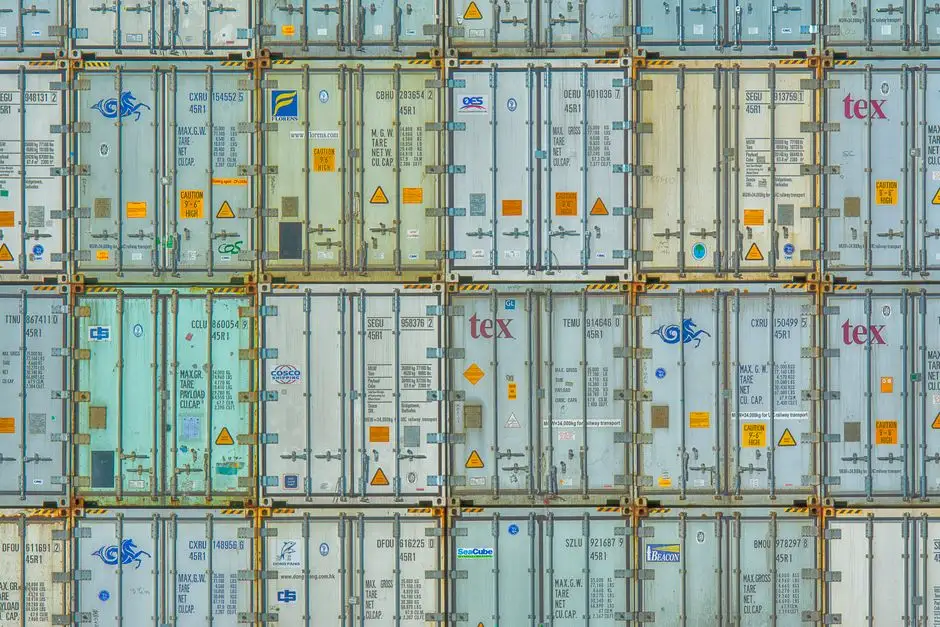
Once the design flow is fixed, the next decision is which standardized ISO housing to buy. Pure Aqua's MBR-C product is offered in "40' and 20' high cube (HC) containers depending on capacity," with insulated walls, zero water leakage, enhanced container structure, and seaworthy container construction — all of which matter for a cold, humid Masovian winter. MENA-Water documents the upper end of the band explicitly: "more than 1,200 m³/day can be filtered in one 40-feet ISO container," with inside tanks in stainless-steel sheets and factory quality testing that "enables Plug & Play solutions at site." MENA-Water's standard product range starts "from a daily throughput of a few cubic meters, reaching to some thousands of cubic meters per day" (HUBER Technology), so the same supplier family covers both a 50-person camp and a 500-person residential block.
Two MENA-Water configuration options are directly relevant to a Warsaw project. The I-Version is a "fully integrated" containerized plant aimed at "mobile applications or if the plants need to be shifted to new locations" — the right choice for a seasonal camp that is dismantled and re-erected each year. The U-Version keeps aeration and buffering "inside underground water tanks" while the membrane cassette remains above grade, which is the right choice where the local Starostwo or a residential HOA is sensitive to the visual impact of an ISO container in a landscaped courtyard. Both versions arrive as "complete MBR package plants, pre-assembled as containerized system (ISO sizes)" with "all main components" inside the housing and the necessary equipment for external structures in the scope of supply (HUBER Technology).
| Container option | Typical flow band | Best-fit Warsaw use case | Key supplier feature |
|---|---|---|---|
| 20' HC ISO container | Small community / camp (a few m³/day to low tens of m³/day) | Seasonal camp, 50–150 peak occupants, tight footprint | I-Version (fully integrated, mobile) |
| 40' HC ISO container | Mid-size residential block (tens to hundreds of m³/day) | 200–500-person block, permanent installation | Plug & Play factory test, insulated seaworthy walls (Pure Aqua) |
| 40' HC ISO container — max configuration | > 1,200 m³/day (MENA-Water documented ceiling) | Large mixed-use or multi-block schemes | Stainless-steel internal tanks, MENA-Water documented maximum |
| U-Version (underground buffer) | Same as parent container, with buried buffer | Where above-grade visual impact must be minimized | Aeration and buffering in underground water tanks (MENA-Water) |
Step 3 — Validate the Membrane Module and Hydraulic Capacity
The membrane step inside the container is what differentiates an MBR from a conventional package plant. Pure Aqua's MBR-C uses "submerged membrane module (SMM) products featuring the best-in-class thermally induced phase separation (TIPS) polyvinylidene difluoride (PVDF), innovative modules, and skid designs" at 0.04 µm nominal pore size, treating feed that has already passed through a 1.5 mm drum screen. HUBER Technology defines ultrafiltration as a polymer membrane process with pore sizes in the 2–100 nm range, which retains activated-sludge flocs and the smallest solid particles. Because the membranes operate below the 100 nm threshold, the clarification-stage effluent is essentially solids-free before disinfection.
Hydraulic capacity is sustained by continuous air-scour rather than by chemical cleaning. MENA-Water specifies that "filter surfaces are continuously aerated through bubble diffusers to keep them clean" and that "the membranes don't need regular chemical cleaning except one or two maintenance clearings per year" — a maintenance burden that a small camp or a residential-block HOA can actually plan around. The membrane area itself (m²) and the design flux (L/m²·h) determine whether a given module count will meet the design flow; this calculation belongs in the supplier's selection sheet, but a Polish engineer should require the flux value and the assumed water temperature to be written into the purchase order. Where a flat-sheet geometry is preferred over hollow fiber — for example, for tolerance to fibrous debris — a PVDF flat-sheet MBR module (0.1 µm, 32–135 m³/day per module) is an alternative submerged configuration.
| Parameter | Submerged hollow-fiber UF (Pure Aqua MBR-C) | Submerged flat-sheet MBR module (reference) |
|---|---|---|
| Membrane material | TIPS PVDF, hollow fiber | PVDF flat sheet |
| Nominal pore size | 0.04 µm | 0.1 µm |
| Pre-treatment | Drum screen, 1.5 mm perforation | Fine screening (vendor-specific) |
| Air-scour / cleaning | Built-in coarse-bubble air-scour; 1–2 maintenance clearings/year (MENA-Water) | Vendor-defined air-scour and cleaning interval |
| Pathogen log reduction | 99.9999% virus/bacteria (MENA-Water) | Defined per module datasheet |
Step 4 — Address Warsaw-Specific Operating Risks
Generic sizing guides routinely skip the climate, electrical, and regulatory friction that a Warsaw buyer actually faces. The first risk is temperature. Pure Aqua's MBR-C is rated for an "Operating temperature range: 68–86°F (20–30°C)" and a "Design temperature: 68°F (20°C)" — a window that is essentially the opposite of a Masovian winter. No source in the available research publishes a cold-weather derating factor for this MBR family, so the engineer should request one in writing from the supplier, alongside any heat-tracing or enclosure-heating provisions for the membrane tank. For seasonal camps that sit idle in winter, the specifier should also require an explicit cold-soak and restart procedure.
The second risk is electrical supply. Pure Aqua's standard electrical supply is 460 V / 3 Ph / 60 Hz; Polish three-phase sites operate at 400 V / 3 Ph / 50 Hz. A transformer or a vendor variant rated for European mains is therefore mandatory and must be priced into the quotation, not added as a site retrofit. The third risk is the regulatory fit. Container construction itself is not the bottleneck — Pure Aqua specifies "seaworthy container" and "insulated container walls," both relevant to a cold, humid winter and to a site that may sit idle for part of the year. The bottleneck is the discharge and reuse permit, which depends on the capacity band and the receiver; confirm with the local Starostwo and with the Warsaw Water Authority (MPWiK) which Polish Regulation applies before purchase, and refuse any quotation that does not name the regulatory band it is sized against.
Step 5 — Build a Pre-Purchase Specification Checklist
A specifier who sends the same six-line email to three vendors gets three incompatible quotations back. The list below is the minimum input set a Polish engineer should pin down before requesting a price, drawn from the equipment and operating parameters documented in the research.
- Design inputs the buyer must provide: peak population and average population, peak-to-average flow ratio, influent BOD/COD if known, effluent quality target, available footprint, power supply (400 V / 3 Ph / 50 Hz for Poland), and the lowest expected wastewater temperature in the membrane tank.
- Equipment confirmations the vendor must return in writing: container size (20' HC or 40' HC), membrane material and pore size (TIPS PVDF, 0.04 µm per Pure Aqua, or a documented alternative), air-scour system, anoxic zone for denitrification, standby pumps for redundancy (Pure Aqua lists these as available), and a cold-weather design margin against Pure Aqua's 20°C design / 20–30°C operating range.
- Vendor deliverables the quotation must include: factory test report, Plug & Play commissioning scope, remote-monitoring offer (MENA-Water explicitly offers this from its back office), and a membrane cleaning interval stated at 1–2 times per year (MENA-Water).
- Documentation the supplier must sign: reference list of installed MBR units in a comparable climate, nameplate power at 400 V / 50 Hz, and a written statement of which Polish regulation the proposed unit is sized against.
The same checklist, sent as a one-page table, is also the fastest way to compare a sizing a containerized MBR STP in Manila (2026 guide) project against a Warsaw project — most of the membrane and container numbers transfer, but the electrical supply and the winter temperature window do not.
Frequently Asked Questions
What realistic budget should a Warsaw developer plan for a containerized MBR STP for a 200-person block?
The research supplied does not publish a price list, and no source provides a Warsaw-specific installed cost. Treat any single-figure budget from a sales deck as illustrative only, and ask each vendor for a line-item quotation that breaks out the container, the membrane modules, the 400 V / 50 Hz electrical package, commissioning, and remote monitoring. The line items, not the headline number, are what allow two quotations to be compared.
How do I choose a containerized-MBR supplier who can actually deliver to Warsaw?
Shortlist on three written confirmations: a European-voltage variant (400 V / 3 Ph / 50 Hz), a documented cold-weather design margin against Pure Aqua's 20°C design / 20–30°C operating window, and at least one reference unit operating in a climate comparable to central Poland. The cheapest quotation without those three documents is not a like-for-like comparison.
How many containers do I need for a 50- to 500-person residential block or seasonal camp?
Use the per-capita flow anchor of approximately 50 gpd (≈ 190 L/capita/day) from Pure Aqua, multiplied by the peak population for a camp or by the design population for a block, plus the local infiltration and peak factors. Map that design flow to Pure Aqua's 20' HC and 40' HC options and to MENA-Water's documented ceiling of more than 1,200 m³/day in a single 40-ft ISO container; for seasonal mobility specify the I-Version, and for minimized visual impact specify the U-Version.
What is the realistic delivery and commissioning lead time for a containerized MBR STP shipped into Poland?
The research does not state a specific lead time. A 20' or 40' HC ISO container built on a documented product platform with factory testing (Pure Aqua, MENA-Water) is a shorter schedule than a greenfield concrete plant, but the engineer should still ask the vendor for a written schedule covering fabrication, factory acceptance test, sea or road freight, customs clearance, and Plug & Play commissioning on site, and should treat any supplier who will not put that schedule in writing as a delivery-risk supplier.
Related Equipment
- containerized MBR system (10-2,000 m³/day) — specifications, capacity range, and technical data
- PVDF flat-sheet MBR module (0.1 µm, 32-135 m³/day) — specifications, capacity range, and technical data
- 0.03 µm PVDF ultrafiltration system — specifications, capacity range, and technical data