Why Industrial Plants Now Need a Tertiary Step for Ammonia
Tertiary treatment is the polishing step that sits downstream of primary clarification and secondary biology, targeting residual contaminants — chiefly ammonia — that secondary biology cannot reliably strip to today's permit levels. During the current UK Asset Management Plan period, site-specific environmental permits frequently set effluent ammonia at or below 3 mg/L, with the exact number driven by the sensitivity of the receiving water (Veolia Water Technologies UK blog, 2024).
That is well inside the comfort zone of a healthy secondary stage only when the secondary stage is healthy. In practice, low influent ammonia starves nitrifying bacteria and slows their growth, storm events can push ammonia loading to two to three times the normal envelope, and cold temperatures depress nitrification rate further (Veolia Water Technologies UK blog, 2024). Industrial sites that inherited a secondary system designed for older, looser permits are the ones now discovering the gap, and that gap is where tertiary ammonia polishing earns its place. The selection question — which tertiary technology, at what footprint, with what control philosophy — is the subject of the rest of this article. For a broader view of how tertiary fits into a full plant train, see the industrial wastewater treatment equipment selection guide.
How Tertiary Nitrification Works: From Ammonia to Nitrate
Tertiary nitrification is a two-step biological oxidation: ammonia-oxidizing bacteria first convert NH4+ to NO2-, and nitrite-oxidizing bacteria then finish the conversion to NO3-; both steps require aerobic conditions, and the rate at which they proceed sets the tank size (Veolia Water Technologies UK blog, 2024). Nitrifiers are slow growers compared with heterotrophic bacteria, so any operational disturbance — washout, low dissolved oxygen, pH excursion, or a cold spell — can collapse the nitrifier population faster than it can rebuild, and the secondary effluent drifts out of compliance before the operator notices. Nitrification rate also falls as the target effluent ammonia level falls: pushing toward single-digit mg/L is straightforward, pushing toward 1 mg/L or below requires proportionally more reactor volume because the driving concentration gradient shrinks (Veolia Water Technologies UK blog, 2024). One important boundary to keep on the page: converting ammonia to nitrate does not remove total nitrogen — it only changes the species. A plant that needs to hit a total-nitrogen limit, not just an ammonia limit, still needs a downstream denitrification step. The remainder of this article stays focused on ammonia polishing, which is where tertiary biology and tertiary chemicals are specified.
MBBR as the Workhorse Tertiary Ammonia Technology
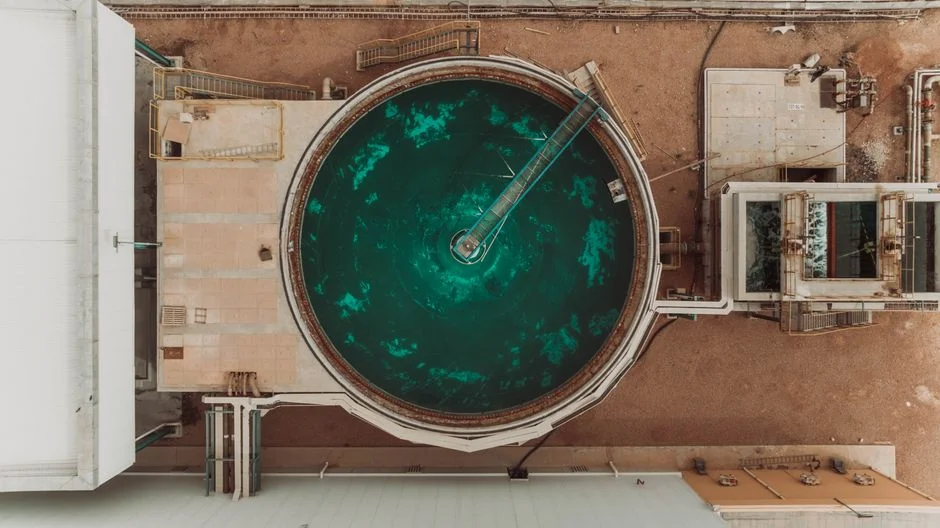
Moving Bed Biofilm Reactor (MBBR) is the most widely deployed tertiary ammonia technology for sites that need to retrofit a polishing step onto an existing secondary stage. The mechanism is straightforward: virgin or recycled high-density polyethylene (HDPE) carriers provide a protected surface for nitrifying biofilm, and aeration keeps the carriers in motion so the biofilm is continually exposed to dissolved substrate and oxygen rather than being buried in settled sludge (Veolia Water Technologies UK blog, 2024). The headline case data comes from the UK, where Veolia commissioned the country's first tertiary MBBR onto a plant of two primary settlers, three trickling filters, and two humus tanks; the design target was to drop effluent ammonia from 15 mg/L to at least 3 mg/L and TSS from 40 to 15 mg/L, and the operating result was a 95th-percentile effluent ammonia consistently below 0.8 mg/L sustained over four years (Veolia Water Technologies UK blog, 2024). A second UK site, commissioned between 2016 and 2017, was designed to reduce effluent ammonia from 2.6 mg/L to below 1.2 mg/L; in operation it averaged below 1 mg/L even through multiple peak overloads, with no filtration added because influent solids were already low (Veolia Water Technologies UK blog, 2024). Across the UK fleet, nine tertiary MBBR plants have been commissioned since 2012 and now operate in the 1–5 mg/L effluent ammonia band (Veolia Water Technologies UK blog, 2024). The control philosophy that makes these numbers repeatable is simple: when ammonia load rises, raise aeration to push more dissolved oxygen into the tank; when load falls, trim aeration to cut energy (Veolia Water Technologies UK blog, 2024). Two design edge cases are worth flagging. First, a long stretch of low and steady ammonia makes it hard to establish and maintain the nitrifying biofilm, so the reactor effectively has to be oversized to stay alive. Second, storm-driven peak events can double or triple ammonia load, so the aeration control envelope and the tankage margin both have to be sized for that peak, not for the average. The table below summarizes the documented operating envelope.
| Documented UK MBBR case (Veolia, 2024) | Influent NH3-N | Effluent NH3-N target | Achieved effluent NH3-N | Notes |
|---|---|---|---|---|
| First UK tertiary MBBR retrofit | 15 mg/L | ≤ 3 mg/L | 95th percentile < 0.8 mg/L over 4 years | TSS also dropped 40 → 15 mg/L; discfilter polishing added |
| Second UK tertiary MBBR (2016–2017) | 2.6 mg/L | < 1.2 mg/L | Average < 1 mg/L through multiple peak overloads | No filtration required; influent solids already low |
| Nine-plant UK fleet (since 2012) | Variable | Variable | 1–5 mg/L across sites | Industrial and municipal duty |
Design Parameters a Specifier Should Pin Down
Translating the case data above into a defensible vendor specification means locking down a small set of parameters before a supplier is asked to quote. The research base is enough to define the parameters and the qualitative design direction; numeric setpoints the buyer will need to confirm with the vendor or from site-specific pilot data are flagged as such. Start with the HDPE carrier fill fraction and the protected surface area per cubic metre of tank, because those two numbers set the inventory of nitrifying biomass the system can hold and therefore the ammonia load the reactor can process at a given effluent target (Veolia Water Technologies UK blog, 2024). Next, pin down the dissolved oxygen control philosophy — fixed DO setpoint versus ammonia-linked DO setpoint — since aeration is the dominant operating cost and the research case data explicitly relies on raising DO when ammonia load rises and trimming it when load falls (Veolia Water Technologies UK blog, 2024). Third, define the influent variability envelope, both normal and peak, drawing on the documented two-to-three-times peak event range cited in the operating experience (Veolia Water Technologies UK blog, 2024). Fourth, name the effluent ammonia target the plant must hit, because each step down in target requires disproportionately more tankage as the nitrification rate falls. Finally, confirm whether the downstream suspended-solids consent is strict; MBBR effluent solids are normally low, but when the consent is tight, a discfilter or similar polishing step is added to the train, as the first UK retrofit demonstrates (Veolia Water Technologies UK blog, 2024). The table below is the parameter list a specifier should hand to a vendor.
| Parameter to specify | Why it matters | Direction the research supports |
|---|---|---|
| HDPE carrier fill fraction and protected surface area | Sets nitrifying biomass inventory and therefore load capacity | Higher surface area supports lower effluent targets and lower-load streams (Veolia, 2024) |
| Dissolved oxygen setpoint and control logic | Dominant OPEX; primary control handle for load swings | Ammonia-linked DO control raises DO on rising load, trims on falling load (Veolia, 2024) |
| Influent variability envelope (normal vs. peak NH3-N) | Sizes tankage and aeration for peak, not average | Design for 2–3× normal load during storm events (Veolia, 2024) |
| Effluent ammonia target (mg/L NH3-N) | Lower targets need more tankage at lower rates | Documented UK results: < 0.8 mg/L 95th percentile and < 1 mg/L under peaks (Veolia, 2024) |
| Downstream TSS consent and polishing step | Decides whether discfilter or similar is required | Add discfilter when TSS consent is strict; first UK retrofit did, second did not (Veolia, 2024) |
When MBBR Is Not the Right Answer: Alternative Tertiary Technologies

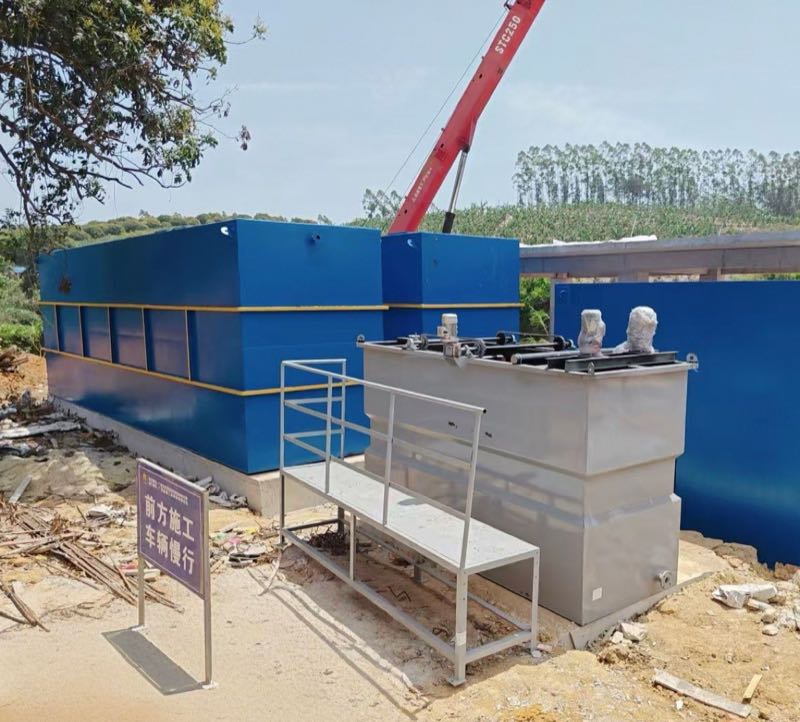
MBBR is the default for many industrial sites, but it is not the only option, and four alternatives cover the cases where tertiary biology either cannot meet the permit or cannot meet it at a sensible footprint. MBR polishing adds submerged membranes — typically PVDF — downstream of the biology to provide a physical barrier that drives both ammonia (via the upstream biology) and TSS down sharply in a small footprint, which is the configuration to consider when the plant is also pursuing water reuse, since reuse-quality water needs both tight ammonia and very low TSS. A side-by-side of an MBR vs conventional activated sludge comparison for chemical-industry duty is useful background when the biology has to coexist with a variable influent; a packaged MBR membrane bioreactor system is the typical equipment package a vendor will quote. Breakpoint chlorination oxidizes ammonia directly with chlorine; it is viable for small flows where the chemistry is manageable, but it raises chlorine-byproduct formation and chemical-handling questions — including the dose-control loop and the dechlorination step — that the buyer has to resolve before specifying, and an automatic chemical dosing system is the equipment package that makes the chemistry controllable. Selective ion exchange using ammonia-selective resins fits very low and steady ammonia streams, or final polishing duty after a biological step, with brine regeneration as the standing operating cost. Reverse osmosis removes ammonia as part of total dissolved solids and is specified when the plant already needs reuse-quality water and the cost can be justified; for most ammonia-only polishing duties, RO is over-specified. The Water Environment Federation paper on MBBR for high-temperature industrial wastewater supports the industrial pedigree of MBBR specifically, but the alternatives above do not have head-to-head numeric case data in the research base; the buyer should request that data from each shortlisted vendor before committing.
| Alternative technology | Mechanism | Where it fits vs. MBBR | Numeric evidence in research |
|---|---|---|---|
| MBR polishing (submerged membranes + biology) | Physical barrier on TSS, biology on ammonia | Tight ammonia and TSS targets; small footprint; reuse duty | Not in supplied research; request from vendor |
| Breakpoint chlorination | Chemical oxidation of NH3 to N2 | Small flows, simple chemistry, byproduct trade-off | Not in supplied research; request from vendor |
| Ion exchange (selective resins) | Adsorption onto resin, brine regeneration | Very low and steady ammonia; polishing duty | Not in supplied research; request from vendor |
| Reverse osmosis | Membrane rejection of dissolved species | Reuse-quality water; ammonia as part of TDS | Not in supplied research; request from vendor |
Choosing the Right Tertiary System: A 2026 Decision Framework
The decision is straightforward once the influent envelope and the effluent target are pinned down. Default to a tertiary MBBR when the plant already has a working secondary stage, ammonia variability is moderate to high, and the effluent target sits in the 0.5–3 mg/L band, because the documented UK operating data — 0.8 mg/L 95th percentile sustained over four years, and below 1 mg/L under repeated peak overloads — sits inside that envelope (Veolia Water Technologies UK blog, 2024). Escalate to MBR polishing when the ammonia target and the TSS target are both tight, or when the site is moving toward reuse; the membrane barrier is what unlocks the reuse case, not the biology alone. Escalate to breakpoint chlorination, ion exchange, or RO when tertiary biology cannot reach the permit at any reasonable footprint, when the influent ammonia is already very low and uniform (which makes biofilm hard to maintain), or when reuse-quality water is the next project anyway. In every case, the buyer should request pilot or reference-plant data at the same temperature and load range as the site under design before specifying, because the case-study data in the research is the only verifiable performance benchmark available; a vendor's generic guarantee is no substitute for an operating reference at the same conditions. The industrial wastewater treatment equipment selection guide covers the broader plant-train context for sites that are specifying more than just the tertiary step.
Frequently Asked Questions
What ammonia level can tertiary nitrification actually deliver on a working plant?
Documented UK MBBR retrofits have held a 95th-percentile effluent ammonia below 0.8 mg/L for four years at one site and averaged below 1 mg/L through multiple peak overloads at a second site, with the broader nine-plant UK fleet operating in the 1–5 mg/L band (Veolia Water Technologies UK blog, 2024). The actual number a buyer can guarantee depends on the site-specific temperature, load envelope, and the effluent target the permit sets.
What is the typical capital and operating cost of a tertiary MBBR versus the alternatives?
The supplied research does not include capital or operating cost figures for any of the technologies, so no quoted price or payback can be supported here. A buyer should request a site-specific budgetary quote that itemizes tankage, HDPE carrier volume, blower sizing, and annual energy for MBBR; membrane replacement and energy for MBR; chlorine demand and dechlorination for breakpoint chlorination; resin replacement and brine disposal for ion exchange; and membrane replacement and energy for RO, then compare on the same influent and target basis.
What operating envelope disqualifies MBBR as the right tertiary choice?
Two envelopes disqualify it on the research evidence: a long, steady stretch of very low influent ammonia, which starves the nitrifying biofilm and forces oversized tankage, and a permit target so tight that even the low end of documented MBBR performance is not enough, in which case MBR, ion exchange, or RO has to be specified instead (Veolia Water Technologies UK blog, 2024).
What should a buyer verify with a tertiary-system supplier before placing an order?
Ask for reference-plant data at the same temperature range, same influent ammonia range, and same effluent target as the site under design, because the case-study data in the research is the only verifiable performance benchmark. Confirm in writing the carrier fill fraction and protected surface area being offered, the DO control philosophy (fixed versus ammonia-linked), the design margin for peak events, and whether discfilter or equivalent polishing is included in the quoted train when the TSS consent is strict.