What a Containerized MBR STP Is and Why Amsterdam Projects Use It
A containerized membrane bioreactor sewage treatment plant (MBR STP) is a biological wastewater treatment system combined with ultrafiltration membranes, pre-assembled inside a standard ISO shipping container. The membrane stage replaces the secondary clarifier used in conventional activated-sludge plants, so the bioreactor can run at a higher mixed-liquor suspended solids concentration and still deliver a solids-free effluent suitable for surface-water discharge or on-site irrigation reuse (huber-se.com).
The containerized form factor packages blowers, membrane cassettes, control panel, and pre-treatment into a 20-ft or 40-ft high-cube (HC) ISO frame, allowing plug-and-play site installation with minimal civil work. MENA-Water documents this factory-built approach and notes that the standardized ISO container design enables easy transport and on-site quality testing (mena-water.com, pureaqua.com). Pure Aqua's MBR-C system uses 0.04 µm PVDF hollow-fiber ultrafiltration paired with a 1.5 mm drum screen, all housed in an insulated seaworthy container (pureaqua.com).
For Amsterdam projects — dense infill housing, student accommodations, refugee reception sites, or seasonal worker camps — the small above-grade footprint and mobility of an integrated MBR membrane bioreactor system matter more than throughput. Plots are tight, laydown space is short, and permits favour factory-tested packages that can be commissioned in days rather than months of in-situ concrete work.
Step 1: Establish the Design Population and Wastewater Load
The sizing calculation starts with the population and how they actually use water. For Amsterdam residential blocks, student housing, and worker camps, this is rarely a single number: occupancy profiles differ sharply between a permanent apartment block, a reception site with rotating populations, and a seasonal camp with synchronized meal and shift-change peaks.
The first quantitative input is per-capita wastewater contribution. A published MBR sizing reference cites approximately 50 gallons per day per capita (50 gpd per capita) as the basis for sizing the population a given containerized plant can serve (pureaqua.com). For a Dutch residential project, convert this to litres per capita per day and cross-check against any project-specific water audit — student and camp populations often run higher than the benchmark because of shared kitchens, laundry rooms, and food-service waste streams.
The second input is the peak factor, which captures synchronized demand such as morning showers, lunch clean-up, and end-of-shift laundry loads. A peak factor of 1.5–1.8 is typical for stable residential blocks where occupancy is spread across the day, while 2.0–2.5 is more appropriate for camps with synchronized water use. The peak factor does not need to be added directly to the design flow if the buffer tank is sized to absorb it; it is the basis for that buffer.
Finally, add an allowance for non-domestic sources on the same site. A residential block with a ground-floor restaurant, a camp with a central kitchen, or a student complex with a shared laundry each contribute BOD, fats, oils, and grease that the membrane plant must see in its influent profile.
Step 2: Convert Daily Flow into a Process and Hydraulic Target
Defining the parameters the membrane supplier needs is the next step once the average daily flow in m³/day is established. The containerized MBR must handle typical Dutch domestic sewage characteristics for BOD, COD, TSS, and total nitrogen at the design temperature of the site.
Temperature matters because membrane permeability and biological activity both slow as water cools. Pure Aqua's MBR-C system is rated for an operating range of 68–86°F (20–30°C) with a design point of 68°F (20°C) (pureaqua.com). An Amsterdam plant will see influent closer to 10–15°C in winter, so any cold-weather operation below the rated range should be discussed with the supplier before procurement — biological kinetics, not membrane flux, are usually the limiting factor.
From the average daily flow, calculate both the average and the peak hourly flow. The peak hourly flow sets the equalization buffer volume; the average flow sets the membrane area and aeration demand. The standard engineering rule is to size the membrane plant on average flow, and manage the hydraulic peak through buffering rather than by oversizing the membrane area. Containerized systems are typically paired with, or include, a buffer tank to smooth hydraulic load on the membranes (mena-water.com).
The submerged PVDF MBR flat sheet membrane module in the bioreactor handles the steady-state flow, while the upstream buffer absorbs the morning and evening peaks.
Step 3: Match the Calculated Flow to a Container Size
Translating the flow in m³/day into a container size is the next logical step. MENA-Water states that its containerized MBR package plants cover a wide range of capacities, starting from a few m³/day up to several thousand m³/day, with one design demonstrated at more than 1,200 m³/day inside a single 40-ft ISO container (mena-water.com, huber-se.com). Pure Aqua's MBR-C ships in either 40-ft or 20-ft high-cube containers with insulated walls, a seaworthy structure, and a 1.5 mm drum screen for pre-treatment (pureaqua.com).
The decision rule is straightforward. Small residential blocks with a few m³/day up to low double digits typically fit a 20-ft HC frame. Larger residential developments, hotels, and camps usually require a 40-ft HC unit, often with multiple units in parallel for redundancy. Two 40-ft units in parallel also give the operator the ability to take one off-line for membrane maintenance without discharging untreated sewage.
A second choice is between the I-Version and the U-Version. The I-Version is fully integrated inside the container and is mobile, which suits temporary camps. The U-Version places aeration and buffering in underground tanks while the container above grade holds the membranes, blowers, and controls — a better fit where above-grade footprint is constrained but a permanent installation is acceptable (mena-water.com). For Dutch winter conditions, confirm that the container walls are insulated and that freeze protection is specified for piping, blowers, and the control panel.
The table below maps typical design flows to container configurations for an Amsterdam project.
| Design flow (m³/day) | Typical population served (≈50 gpd per capita) | Container size | Layout recommendation |
|---|---|---|---|
| 5–25 | ~25–130 | 1 × 20-ft HC | I-Version (fully integrated), small residential block or pilot installation |
| 25–100 | ~130–530 | 1 × 40-ft HC | U-Version with underground buffer; student housing or small camp |
| 100–500 | ~530–2,650 | 1–2 × 40-ft HC in parallel | U-Version; mid-size residential development, reception site, or worker camp |
| 500–1,200+ | ~2,650–6,300+ | Multiple 40-ft HC in parallel | Large residential scheme or mixed-use development; redundancy built in |
Population figures in this table derive from the 50 gpd per capita sizing reference published by Pure Aqua (pureaqua.com); project-specific water-use audits should override these where available.
Step 4: Specify the Membrane Module and Pretreatment
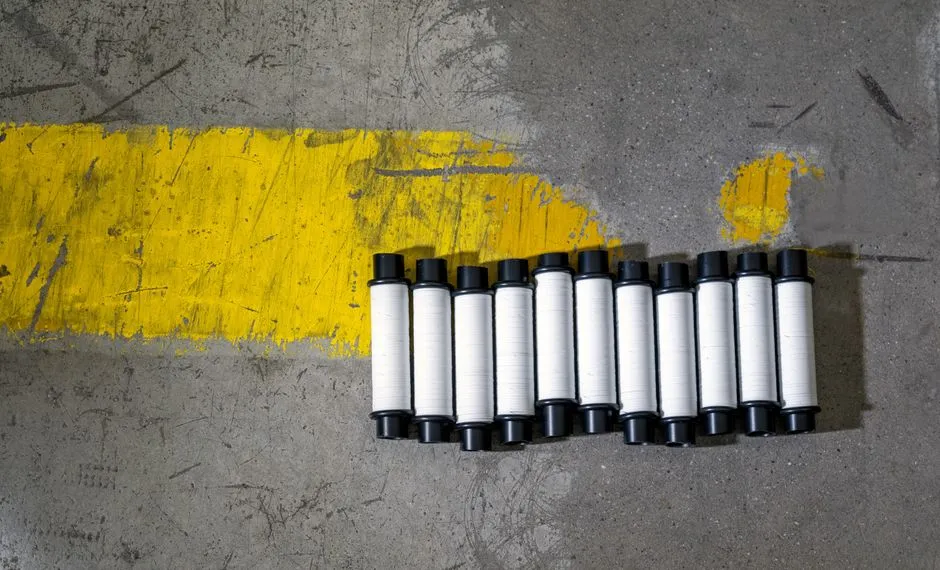
Equipment-level decisions determine effluent quality and maintenance effort. Specify submerged hollow-fiber ultrafiltration modules with a nominal pore size of 0.04 µm using PVDF membrane chemistry. Pure Aqua's MBR-C uses TIPS (thermally induced phase separation) PVDF modules designed for compact, simple, and reliable MBR operation in municipal and industrial applications (pureaqua.com). MENA-Water frames its membranes on stainless-steel carriers and reports that the filtration step reduces virus and bacteria by 99.9999% (mena-water.com).
Upstream of the bioreactor, a 1.5 mm drum screen is the standard pre-treatment on containerized MBR packages and protects membrane surfaces from suspended solids, rags, and fibres (pureaqua.com). Inside the membrane tank, coarse-bubble air-scour continuously cleans the membrane surface, which limits chemical cleaning to one or two maintenance clearings per year (mena-water.com).
Decide whether an anoxic zone is required. If the Dutch discharge or reuse target requires nitrate removal, an anoxic zone for denitrification is part of the biological train rather than an add-on (pureaqua.com). If the effluent is destined for on-site landscape irrigation rather than surface-water discharge, plan a post-treatment step — UV sterilization or a chlorine dioxide generator — to meet reuse-quality targets.
Step 5: Site Integration, Controls, and Dutch Permitting
The final design step brings the calculation back to the Amsterdam plot. Power supply is the first reconciliation point: reference containerized MBR systems are configured for 460V/3Ph/60Hz, while the Dutch supply is 400V/3Ph/50Hz (pureaqua.com). Confirm whether the vendor supplies a 400V/3Ph/50Hz panel variant or whether a transformer is required, and size the incoming cable accordingly.
Plan container placement for truck access during delivery and periodic sludge removal, leaving clearance for the drum screen, blowers, and control panel. Add standby pumps and remote monitoring — both standard options on containerized MBR packages — so the operator can diagnose faults without driving to site (pureaqua.com, huber-se.com).
For the Dutch permitting track, coordinate early with the local waterschap or municipality on discharge limits, surface-water or sewer connection points, and any on-site irrigation reuse requirements. Decentralized discharge and surface-water reuse in the Netherlands are governed by the waterschap's local keur and by national effluent rules, and the membrane plant's effluent quality must be demonstrably aligned with the chosen discharge route before procurement. Engineers specifying a project similar to those in nearby jurisdictions can also review sizing a containerized MBR STP for Frankfurt projects for an analogous European cold-climate workflow, or the MBR wastewater treatment systems in Denmark guide for Nordic compliance framing. For hospitality-style occupancy profiles, the packaged MBR STP selection for hospitality projects piece covers a different but instructive use case.
Sizing Checklist for an Amsterdam Containerized MBR Project
Use this list as the last pass before issuing a purchase order.
- Population × per-capita flow (50 gpd per capita reference) × peak factor → average and peak m³/day.
- Buffer tank sized to absorb peak hourly flow; membrane plant sized on average flow.
- Container size chosen as 20-ft HC or 40-ft HC based on daily flow, footprint, and mobility needs; I-Version for temporary, U-Version for permanent installations.
- Membrane: 0.04 µm PVDF hollow-fiber UF, submerged, with coarse-bubble air-scour cleaning.
- Pre-treatment: 1.5 mm drum screen; post-treatment: UV or chlorine dioxide if irrigation reuse is planned.
- Dutch-specific: power (400V/3Ph/50Hz), freeze protection, coordination with the local waterschap on discharge or reuse permit before procurement.
Frequently Asked Questions
What is a realistic budget for a containerized MBR STP in Amsterdam?
The published research does not provide a price for a containerized MBR system in euros. A buyer should request a written quote that itemizes the container (20-ft HC vs 40-ft HC), membrane area, buffer tank volume, anoxic zone, pre- and post-treatment, and the
Frequently Asked Questions
What population size can a 20-ft containerized MBR STP handle in Amsterdam?
A standard 20-ft containerized Membrane Bioreactor (MBR) Sewage Treatment Plant (STP) is typically designed to handle a Population Equivalent (PE) ranging from 100 to 250, depending on the specific hydraulic and organic loading rates. In the context of Amsterdam’s strict effluent standards, this capacity assumes a typical domestic wastewater generation rate of 120 to 150 liters per person per day.
Because the footprint is constrained by the ISO container dimensions, the actual capacity is often limited by the surface area of the membrane modules and the aeration requirements for biological nutrient removal. Projects exceeding 250 PE generally require a modular approach, utilizing multiple 20-ft units connected in parallel to maintain effluent compliance.
How is the design flow calculated for a containerized MBR STP serving a camp or residential project?
Design flow is calculated using the formula Q = PE × q, where PE represents the number of residents and q is the specific water consumption per capita. For residential developments in the Netherlands, a standard design value of 150 liters/PE/day is commonly applied, though this must be adjusted for peak hourly flow factors, which typically range from 2.5 to 4.0 for small systems.
Engineers must also account for the Biological Oxygen Demand (BOD5) loading, typically calculated at 60 grams of BOD5 per PE per day. In Amsterdam, where environmental discharge permits are stringent, the design flow must be verified against the hydraulic retention time (HRT) required for nitrification and denitrification processes within the bioreactor tanks.
Which ISO container size should I choose — 20-ft HC or 40-ft HC — for a residential MBR STP in the Netherlands?
For most residential projects, the 20-ft High Cube (HC) container is the preferred choice due to its balance of internal volume and transport logistics within Amsterdam's urban infrastructure. The HC variant provides an additional 30 centimeters of vertical clearance, which is essential for accommodating the internal piping, membrane racks, and necessary headspace for maintenance access.
A 40-ft HC container should only be specified if the project requires a centralized treatment hub for a larger development (exceeding 300 PE) or if the site layout permits the larger footprint. Using a 20-ft HC unit is generally more cost-effective for shipping, crane rental, and site preparation on constrained Dutch residential plots.
What influent parameters should I confirm with a Dutch water authority before specifying a containerized MBR STP?
Before specification, you must confirm the discharge limits set by the local Waterschap (Water Authority), focusing on Chemical Oxygen Demand (COD), BOD5, Total Nitrogen (TN), and Total Phosphorus (TP). Dutch regulations often require nitrogen removal to levels below 10 mg/L and phosphorus below 1 mg/L for sensitive discharge areas.
Additionally, you must verify the maximum allowable flow rate (m³/day) and any specific requirements for fecal coliform counts, as MBR systems are frequently used to achieve high-quality effluent suitable for non-potable reuse. Confirming whether the influent is strictly domestic or includes greywater variations is critical, as this impacts the sizing of the equalization tank and the required membrane flux rate.
How much does a containerized MBR STP cost for a small residential or camp project in Amsterdam in 2026?
In 2026, the capital expenditure (CAPEX) for a fully commissioned 20-ft containerized MBR STP in Amsterdam typically ranges from €85,000 to €150,000. This price variation depends heavily on the level of automation, the inclusion of integrated tertiary treatment (such as UV disinfection), and the specific membrane brand specified for long-term reliability.
Operational expenditure (OPEX) should be estimated at an additional 10% to 15% of the initial cost per annum, covering electricity for aeration, membrane cleaning chemicals, and quarterly service inspections by certified Dutch technicians. These figures assume site access is standard and that utility connections for electrical power and influent piping are pre-installed at the boundary of the installation pad.