Why Water Reduction Is Now a Compliance Issue, Not Just a Sustainability One
Water management at a regulated manufacturing site in 2026 sits on top of three converging pressures: EPA categorical pretreatment standards that cap what can be discharged to a publicly owned treatment works, EPA effluent guidelines that govern direct discharges, and disclosure frameworks such as the CDP Water Security questionnaire and the Alliance for Water Stewardship (AWS) Standard that require facilities to publish a water-risk profile (LinkedIn Advice, 2024). For a plant engineer or EHS lead, this means a freshwater-reduction project is no longer a sustainability talking point — it is a permit and disclosure deliverable. The cost of getting it wrong includes consent-order risk, rejected ESG submissions, and supply-chain audit findings from customers who are themselves reporting against the same frameworks.
The 20%-over-five-years reduction target shown in the LinkedIn Advice (2024) agricultural ESG example is a public-commitment benchmark rather than a universal number. Regulated industrial sites should treat the figure as an order-of-magnitude reference and back-calculate their own target from the categorical limits that apply to their SIC code and the local pretreatment program. The framework used in this article combines two audit-based first steps (a unit-operation water audit and a life-cycle assessment) with engineering and behavioural follow-through, so that the same dataset supports both the permit file and the ESG report. This dual-use approach turns a water project from a contested capital request into a defensible one in front of finance, the regulator, and the customer's sustainability auditor.
Step 1: Run a Unit-Operation Water Audit Before You Spend Any Capital
A baseline water audit must produce measured numbers at every withdrawal, use, and discharge point rather than estimated allocations from a mass balance (Brears, 2024). In a regulated plant the typical meter map covers cooling-tower makeup and blowdown, once-through and recirculating rinse baths, boiler feed and boiler blowdown, scrubber makeup, equipment and floor wash-down, and product water that leaves the site as a constituent of the shipped good. Each line needs a dedicated meter or a documented derivation method so the audit is defensible when a pretreatment inspector asks where a kilogram of contaminant came from.
Pair the operational audit with a life-cycle assessment (LCA) to surface "hidden" water hotspots in the upstream supply chain and across manufacturing tiers; the LinkedIn Advice (2024) source recommends this approach explicitly when setting tier-specific reduction targets. The LCA work also forces the conversation about water-quality-damaging chemicals in purchased inputs, which volume-only targets cannot address. Track consumption when production is offline as well: the LinkedIn Advice (2024) guidance flags that idling leaks, cooling-tower drift in standby mode, and unmetered utility streams are routinely counted as "process" water and inflate the baseline (LinkedIn Advice, 2024).
Repeat the audit at least annually. Brears (2024) notes that regular audits are how manufacturers track progress and optimise use over time; for a regulated site, the same cadence lines up with the monitoring period most pretreatment permits already require for flow and pollutant loads, so the data collection can be consolidated. The output of Step 1 is a single table of intake, recycle, reuse, and discharge volumes per unit operation, dated and signed, that the rest of the project references.
Step 2: Use the Right Risk and Disclosure Frameworks for 2026
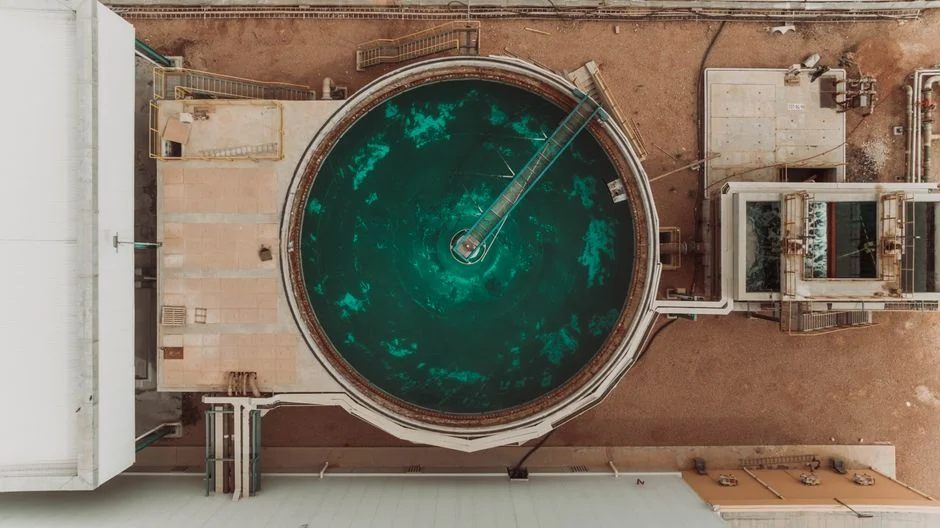
Audit data becomes useful to outside stakeholders once it is run through a recognized risk and disclosure framework. The LinkedIn Advice (2024) source names three tools that convert raw audit numbers into a water-risk profile auditors and customers will accept: the Water Risk Filter, the CDP Water Security questionnaire, and the Alliance for Water Stewardship (AWS) Standard. Running at least one of these — and ideally all three if the site is in a customer's reported supply chain — turns an internal water program into something that can be cited verbatim in an ESG submission.
Structure reduction targets by manufacturing process and by supply-chain tier rather than as a single site-wide percentage, the structure LinkedIn Advice (2024) recommends for credible target-setting. A site-wide "20% reduction" headline hides the fact that the rinse bath in Building 3 and the boiler feed in the utility block have different unit costs, different water qualities, and very different reuse options. Tier-specific targets also make the link to capital planning explicit: each target carries its own unit operation, its own mass balance, and its own candidate technologies.
Ensure targets address water-quality-damaging chemicals in the upstream production and supply chain, not just volumetric intake. Reducing intake without controlling what is dissolved or suspended in the water does not move a categorical-standard exceedance closer to compliance, and the pretreatment permit does not reward a lower flow if the pollutant load is unchanged. The framework and the audit must therefore produce both a volume target and a mass-of-pollutant target per unit operation.
Step 3: Match Engineering Strategies to the Unit Operations You Actually Run
The high-level strategy list in most 2026 water-reduction articles is correct but often too abstract for a regulated plant. In practice, cooling systems require high-efficiency cooling towers with side-stream filtration, and treated blowdown is reused for non-contact cooling or scrubber makeup rather than discharged. Closed-loop process water — recycling rinse water and wash water inside the process — is highlighted by Brears (2024) as a direct lever for cutting freshwater intake. Reuse of treated wastewater for cooling or cleaning is explicitly endorsed by Brears (2024) as a way to cut demand for fresh water while managing wastewater discharge. Process optimization via lean-manufacturing analysis (Brears, 2024) reduces waste across the production flow and lowers peak water demand by smoothing batch scheduling.
The table below maps each engineering lever to the unit operations where it actually applies in a typical regulated plant, and to the disclosure or compliance artefact the lever supports.
| Engineering lever | Unit operations it applies to | Compliance / disclosure artefact it supports |
|---|---|---|
| High-efficiency cooling towers with side-stream filtration | Cooling-tower makeup, condenser cooling, compressor cooling | CDP Water Security W1–W5 disclosures; pretreatment flow reduction |
| Closed-loop rinse / wash recycle | Rinse baths, parts washers, equipment wash-down | AWS Standard outcome on water quality; site intake reduction KPI |
| Reuse of treated wastewater for cooling or cleaning | Scrubber makeup, non-contact cooling, floor wash | Discharge-mass reduction on the categorical-standard permit |
| Lean process optimization to smooth batch water demand | All batch processes, CIP, formulation skids | Internal water KPI; supports LCA tier targets (LinkedIn Advice, 2024) |
Two equipment categories do most of the heavy lifting across these levers. MBR membrane bioreactor systems are commonly used to produce a reuse-quality effluent from the combined rinse and wash stream, and PLC-controlled chemical dosing keeps that reuse loop inside its conductivity and pH window without operator intervention. For a regulated site, the choice of treatment train is a compliance decision as much as a cost decision, so the audit from Step 1 must be finished before either is specified.
Step 4: Decide Between Closed-Loop Recycling, Side-Stream Reuse, and Zero-Liquid-Discharge
Choosing the appropriate level of closure is a critical decision for regulated plants. Closed-loop recycling is the right answer where water quality requirements are stable and the same water can be repeatedly treated within a single process loop, for example a rinse bath whose conductivity and pH window is set by the chemistry of the part, not by the chemistry of the incoming city water (Brears, 2024). Capital cost is modest, energy cost is low, and payback is driven almost entirely by reduced freshwater purchase and lower discharge fees.
Side-stream reuse — for example routing treated wastewater from one process into cooling or cleaning elsewhere in the plant — is the fastest-payback option when the discharge permit is tight but full ZLD is not yet economic. The water is treated to a lower specification than the original process needs, so the treatment train is shorter and the energy penalty is smaller. ZLD becomes attractive only when local water cost, discharge fees, regulatory pressure, or basin-level scarcity make the energy penalty worthwhile; this is the decision branch that determines whether a project is approved or rejected at the capital committee.
Whatever the chosen level, document it with a mass balance that shows intake, recycle, reuse, and discharge volumes per unit operation. The mass balance is what an inspector, an AWS auditor, and a CDP reviewer will all ask for, and the same document supports an industrial RO polishing specification when the reuse loop needs to be tightened.
| Closure level | Best-fit plant condition | Typical water-quality requirement | Key trade-off to disclose |
|---|---|---|---|
| Closed-loop recycle inside one process | Stable water-quality window, single process owner | Match the host process spec | Upset in one loop can halt that line until water is dumped and re-made |
| Side-stream reuse to a lower-spec use (cooling, cleaning, scrubber) | Tight discharge permit, mixed unit operations on one site | Cooling-tower makeup or wash water spec, not process spec | Cross-process cross-connections need backflow prevention and a separate permit review |
| Zero-liquid-discharge (ZLD) | High local water cost, restrictive discharge limits, or basin scarcity | All recovered water meets the strictest onsite spec; salts/brines handled separately | Energy penalty is material; brine disposal route must be permitted before ZLD is sanctioned |
The site-specific inputs that decide between these three are the local water tariff, the categorical and local pretreatment limits in the current permit, the cost of the energy needed to concentrate the blowdown, and the availability of a permitted brine or solid-waste disposal route. These numbers should be pulled directly from the utility bill, the permit, the plant's energy model, and the site's waste hauler before the matrix is used to choose a level.
Step 5: Lock Savings in With Training, Monitoring, and Maintenance
Engineered savings erode quickly without an explicit human-side program. Brears (2024) flags employee training and engagement as critical to water-conservation success; without them, even a well-designed reuse loop will be bypassed by operators who revert to a familiar routine when a batch goes off-spec. The training content should be specific to the unit operation the operator runs — a rinse-bath operator needs to know what conductivity setpoint to hold and what to do when it drifts, not a generic water-stewardship briefing.
Schedule water-meter reviews and leak-detection walks into routine maintenance so the Step 1 audit baseline is continuously re-validated. A small, scheduled meter check is a far cheaper way to catch a slowly growing leak than the next annual audit, and it produces a data series that satisfies the AWS continuous-improvement requirement. Energy-efficiency comparisons of wastewater pumps are a useful sanity check here, because a pump that has drifted off its curve is often the first sign of a hidden leak or a fouled heat exchanger.
Tie water KPIs to shift-level dashboards so operators see their own impact, a practical extension of the "engaging employees" recommendation in Brears (2024). For a regulated site, the same dashboard is the early-warning system for a pretreatment excursion: a conductivity or pH trend going out of band on the reuse loop is usually visible to the operator minutes before it becomes a permit issue. A lamella clarifier specification review belongs in the same maintenance window, because the clarifier upstream of the reuse loop is typically the first unit to drift when the influent changes.
For sites in water-stressed basins, the same monitoring discipline also feeds the data set needed for the 2026 cooling-blowdown treatment guide style of basin's planning conversations. This does not replace a permit; it makes the permit easier to hold and the disclosure easier to defend.
Frequently Asked Questions
What does it actually cost to reduce water consumption in a regulated manufacturing plant in 2026?
The research supplied does not quote a unit cost for water-reduction projects, so any 2026 figure a buyer sees elsewhere should be treated as a placeholder. The inputs a buyer must request from a vendor are
Frequently Asked Questions
What is the single most effective strategy to reduce water consumption in a regulated manufacturing plant?
The implementation of closed-loop process water recycling is the most effective strategy, frequently reducing total facility freshwater withdrawal by 60% to 90%. By integrating advanced filtration and treatment technologies directly into process lines, plants can transition from once-through cooling or rinsing systems to recirculating systems that minimize discharge and demand.
How much does it cost to retrofit a closed-loop water reuse system in a 2026 regulated plant?
Retrofit costs for a mid-sized manufacturing facility typically range from $500,000 to $3 million, depending on the complexity of the existing piping infrastructure and the required water quality standards. Capital expenditure (CAPEX) is highly variable based on the volume of throughput, typically averaging $15 to $40 per gallon of daily capacity saved, excluding ongoing operational energy and chemical costs.
Which equipment is required to reuse treated wastewater for cooling tower makeup?
To safely reuse wastewater for cooling towers, facilities must employ a treatment train consisting of multi-media filtration, ultrafiltration (UF) or membrane bioreactors (MBR) for solids removal, and reverse osmosis (RO) to control dissolved solids and prevent scaling. Additionally, automated chemical dosing systems for corrosion inhibitors, biocides, and pH adjustment are required to maintain water chemistry stability and prevent microbial growth, such as Legionella.
How do EPA categorical pretreatment standards affect my water-reuse options in 2026?
EPA categorical pretreatment standards under the Clean Water Act dictate the maximum allowable concentrations of specific pollutants before discharge into Publicly Owned Treatment Works (POTW). When plants implement water reuse, they must ensure that concentrated waste streams (reject water from RO units) still comply with these standards, as the reduction in total discharge volume does not grant an exemption from mass-loading or concentration limits for regulated constituents like heavy metals or organics.
How long does a water audit and reuse system installation typically take for an industrial plant?
A comprehensive industrial water audit typically requires 4 to 8 weeks of site-specific data collection and utility analysis to establish a baseline. Following the audit, the design, permitting, and installation phases for a water reuse system generally span 12 to 24 months, with the timeline heavily influenced by the complexity of environmental compliance permitting and the need to integrate new systems during scheduled plant maintenance shutdowns.