
What CPCB Norms Actually Cover and How the Regulatory Stack Works
CPCB norms are the wastewater discharge standards issued by India's Central Pollution Control Board under the Water (Prevention and Control of Pollution) Act, 1974, and they set legally binding limits on parameters such as pH (typically 5.5 to 9.0), BOD, COD, TSS, oil and grease, TDS and temperature for industrial effluent. Standards are tiered by receiving environment — inland surface water, public sewers, land application and marine outfalls — and are further tightened by individual State Pollution Control Boards through the Consent to Operate (CTO). Sector-specific rules now mandate Zero Liquid Discharge for distilleries and tanneries in critical zones and tightened COD/BOD limits for pharmaceutical and API manufacturers.
Understanding the regulatory stack separates a unit that passes an inspection from one that gets a 21-day shutdown notice. The Central Pollution Control Board sits under the Ministry of Environment, Forest and Climate Change and issues national effluent standards; State Pollution Control Boards — the Maharashtra PCB (MPCB) being the most cited example — implement those standards and issue the binding Consent to Establish (CTE) and Consent to Operate (CTO). Perfect Pollucon Services states directly: "Always refer to your Consent to Operate (CTO) from your State Pollution Control Board (e.g., MPCB), as it may impose stricter standards than CPCB." That single sentence addresses the most common compliance gap: an engineer pulls the CPCB general table, builds the ETP to those numbers, and then fails an SPCB audit because the CTO tightened three parameters.
Two adjacent obligations also sit inside this stack. Form V, the annual environmental statement, must be filed by every unit that discharges or treats effluent under EPA rules regardless of size. And CPCB has publicly warned, via a notice on its own portal, that it has not appointed any consultants, so any third party claiming to be a "CPCB consultant" is not authorised and should be reported to the Chief Vigilance Officer (CPCB public notice).
The Core Parameters: pH, BOD, COD, TSS, Oil & Grease, TDS
The core parameters CPCB monitors for general industrial discharge are pH, BOD, COD, TSS, oil and grease, TDS, temperature, and additional sector-specific entries (Perfect Pollucon Services, 2025). The pH range for general discharge is typically 5.5 to 9.0, per the S2 FAQ — but SPCBs may impose tighter limits in the CTO, so the CTO is the controlling document, not the CPCB general table.
BOD and COD are the two parameters that show up most often in audit failure reports. Perfect Pollucon Services documents a pharma client that consistently failed COD despite an apparently efficient ETP; the root cause was a hidden bypass drain, not poor biology. Once the bypass was sealed, the client achieved full compliance within 10 days. A COD exceedance frequently points to untreated inflow before it points to a biological-stage problem.
TSS and oil and grease removal map to the primary/physico-chemical stages of the ETP train: screening, grit removal, Dissolved Air Flotation, and primary settling. TDS is one of the parameters that CPCB has historically not specified consistently; Perfect Pollucon Services notes that TDS limits have been reinforced in groundwater-sensitive areas, but operators should always confirm the value against their own CTO. Biological parameters (BOD, COD, ammoniacal nitrogen) are addressed by the biological stages — activated sludge, MBBR, or MBR — with the technology choice driven by influent load, footprint, and discharge destination rather than by the parameter name alone.
| Parameter | Indicative General Range | Source / Caveat |
|---|---|---|
| pH | 5.5 to 9.0 | S2 FAQ (2025); CTO may tighten |
| BOD | Subject to receiving environment and sector | |
| COD | ≤250 mg/L (general) | Pharma/API norms tightened for AMR |
| TSS | ≤100 mg/L (general) | Often tightened in CTO |
| Oil & Grease | ≤10 mg/L (general) | Marine outfalls may differ |
| TDS | Not consistently specified by CPCB | Confirm against CTO; groundwater zones reinforced |
| Temperature | As specified by receiving environment | Marine outfalls stricter |
Use this table as a starting point for design conversations, not as a substitute for the CTO. Every SPCB reserves the right to tighten one or more of these values, and the variance between the general range and the consent value is where most engineering effort is lost.
Four Receiving Environments, Four Different Limits
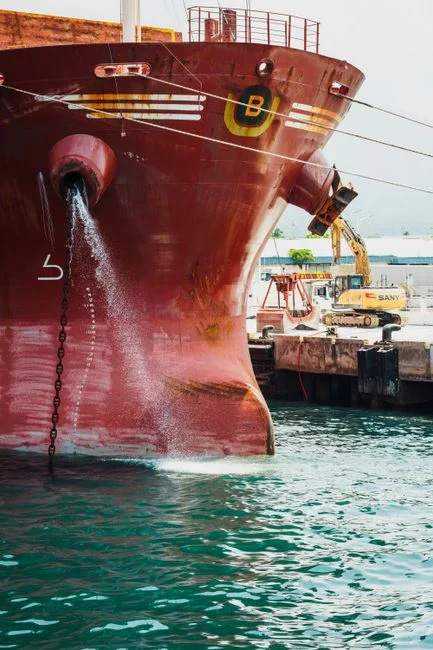
Perfect Pollucon Services explicitly classifies treated wastewater discharge into four primary receiving environments: inland surface water, public sewers, land application, and marine outfalls (S2, 2025). Each destination has its own permissible limits for pH, BOD, COD, TSS, oil and grease, and additional parameters — meaning the same effluent can pass at one site and fail at another purely because of where it goes.
A Gujarat textile dyeing unit learned this the hard way: the unit released high-COD effluent directly into the public sewer, assuming that dilution would absorb the load. CPCB flagged the discharge during an inspection, and the company had to shut operations for 21 days, upgrade the ETP, and pay penalties. Discharging to a public sewer does not exempt a unit from the limits; it shifts the receiving-environment row in the table and the SPCB still enforces against it.
Land application and reuse — for irrigation, gardening, or cooling-tower make-up — are permitted only if the reuse parameters are met and the SPCB explicitly allows that route. Marine outfalls are typically more relaxed for BOD and COD but stricter for toxicity, oil, and temperature. For engineers selecting equipment, the receiving environment determines the ETP's design target, not just the discharge pipeline. The same logic applies to oil and grease — see oil and grease discharge limit benchmarks for a cross-jurisdiction reference that helps frame the Indian numbers against regional norms.
Sector-Specific Tightening: ZLD, Pharma, Textiles, E-waste, CETPs
Sector-specific tightening is where generic CPCB reading goes wrong. Zero Liquid Discharge (ZLD) was made mandatory for distilleries and tanneries in critical zones, with the stated objective of preventing groundwater contamination (Perfect Pollucon Services, 2025). Many small units struggled with the evaporation capacity; the engineering response is to add pre-treatment that reduces the load on the evaporator train, plus a sludge-handling system that can keep up with the concentrate.
Pharmaceutical and API bulk-drug effluent standards were tightened to address Antimicrobial Resistance (AMR) in receiving water bodies, with BOD and COD limits reduced. Perfect Pollucon Services notes that many clients were unaware the limits had changed until they failed an audit — which is why a pharma effluent treatment process train built on general CPCB assumptions is no longer adequate for AMR-era compliance. E-waste recyclers, dyeing units, and Common Effluent Treatment Plants (CETPs) received updated discharge norms targeting toxic metal loads from smaller clusters; many CETPs needed flow equalisation to handle shock loads.
Per Perfect Pollucon Services, the regulatory arc has moved from baseline general standards in the early 2000s, through sector tightening, to ZLD mandates, and now into digital monitoring (GPS-tagged sampling, OCEMS). Discharge to groundwater-sensitive areas has seen particular focus on TDS limits; operators in such zones are advised to request explicit TDS clarification in their CTO. The CMO of a 300+-client environmental services firm states that the practical impact of the arc is that consent values, not CPCB general values, are what the SPCB will measure against during an inspection.
From Limit to ETP: Which Unit Operation Addresses Which Parameter
The bridge between the regulatory table and the engineering question is the unit-operation map. Oil and grease and floatable solids are removed at the head of the train by a Dissolved Air Flotation (DAF) system, the standard primary step for food, FOG, dairy, and refinery effluents. Suspended solids and TSS at headworks are handled by mechanical bar screens — a rotary mechanical bar screen sized to the peak flow — which protect downstream biological stages from rag and grit carry-over. Bypass or undersized screening is one of the most common audit findings because the failure mode is silent until biology collapses.
BOD and COD reduction in dissolved form is the job of the biological stage. Conventional activated sludge, Moving Bed Biofilm Reactor (MBBR), or MBR membrane bioreactor system configurations are the workhorses; MBR delivers sub-micron solid-liquid separation and consistent effluent quality, which matters when the discharge destination is a sensitive receptor or a reuse line. For a fuller view of selection logic, see the COD/BOD removal technology comparison.
Refractory COD, colour, and recalcitrant compounds — the problem in most pharma and textile effluents — need advanced oxidation (Fenton, ozone) and activated-carbon polishing. Perfect Pollucon Services documents Fenton oxidation pre-aeration for a dyeing client meeting Tamil Nadu SPCB colour limits, which is a useful working pattern for any high-colour stream. TDS control and ZLD compliance require RO followed by Multiple-Effect Evaporator (MEE) or Mechanical Vapour Recompression (MVR) — the standard ZLD train for distilleries and tanneries. pH excursions are best stabilised with an automatic chemical dosing system rather than manual intervention; Perfect Pollucon Services documented a pharma unit where tablet-coating effluent was pulling pH to 4.5, and an automatic lime dosing system brought the unit back into compliance. Final disinfection for reuse or sensitive discharge is typically handled by a chlorine dioxide generator or UV train.
Monitoring, Audits and the Move to Digital Compliance
Inspections in 2026 are no longer paper-based. GPS-tagged sampling locations and digitally signed lab reports are now required during audits (Perfect Pollucon Services, 2025), so paper-only records are not audit-defensible. Real-time effluent monitoring (RT-EM) with online pH, COD, and BOD sensors linked to SPCB servers is being expanded to large ETPs in pharma, chemicals, food, and CETPs, with a forward-look that includes direct API integration of ETP logs into SPCB servers.
Perfect Pollucon Services recommends geo-tagging internal audit reports and maintaining lab reports with source photos to ensure traceability. NABL accreditation is not strictly mandated by CPCB, but is required by many SPCBs; using a NABL-accredited lab strengthens audit readiness. The same source lists the most common audit failures: hidden bypass drains, missed SPCB circular updates, Form V mismatches, and pH excursions during batch discharges. All four are process-control failures rather than equipment failures, which is why ETP audit-readiness in 2026 is as much a documentation and training problem as it is a hardware problem.
Frequently Asked Questions
What is a realistic CAPEX band for a new ETP built to current CPCB norms?
The research does not provide a current 2026 CPCB-anchored CAPEX figure — costs depend on flow rate, influent load, receiving environment, and whether ZLD applies — so request a vendor quotation that itemises equipment, civil work, and OCEMS instrumentation against your specific CTO values rather than against the CPCB general table.
How do I choose an ETP supplier, and what should I check before signing?
Verify that the supplier's reference plants are operating against SPCB CTOs (not just CPCB general limits) in the same sector as yours, and ask for operating data — effluent values, sludge handling, downtime — from at least two running installations; Perfect Pollucon Services warns that "clients follow general limits, only to fail audits because the SPCB had tightened specific norms in their consent" (S2, 2025).
My CTO is stricter than CPCB general limits — what happens if I comply only with CPCB?
You risk legal action, penalties, and shutdown under the Water Act, and your Form V may be rejected (Perfect Pollucon Services FAQ, 2025); the CTO is the controlling document, so design, operate, and report against