Why Bingham Canyon Mining and Metals Wastewater Is a Different Problem
Bingham Canyon is a large open-pit copper operation where pit dewatering, contact water from waste rock and tailings, and process water converge on a single biological step, each carrying elevated sulfate, hardness, and dissolved metals such as copper, molybdenum, and zinc. The EPA membrane bioreactor (MBR) fact sheet confirms that MBRs are well suited for some industrial and commercial applications, but every performance number on that sheet is municipal; applying it directly to a Bingham Canyon influent requires jar testing and site-specific sampling before any vendor guarantee is signed.
Flow variability is the defining parameter for any comparison. The EPA fact sheet warns that MBR peak design flow should not exceed 1.5 to 2 times the average design flow, and that equalization must be added above that ratio. Bingham Canyon's contact-water flows swing with storm events, pit-dewatering surges, and mill uptime, so the peak-to-average ratio almost always crosses that line. Receiving-water and reuse targets—Bingham Creek, the broader Jordanelle Reservoir watershed, or on-site process reuse—set the effluent bar, which determines whether a downstream polish is needed after a conventional activated sludge (CAS) train or whether an MBR permeate is required up front.
How Conventional Activated Sludge Treats Mine Water Today
Conventional activated sludge (CAS) relies on a suspended-growth biomass followed by gravity clarification and typically sand filtration. The EPA fact sheet states that the membrane filtration system can replace the secondary clarifier and sand filters in a typical activated sludge treatment system. This provides a clear baseline: a CAS train already carries the civil and mechanical cost of both a clarifier and a filter, so the MBR capex case must beat the cost of equipment the plant already owns.
CAS has clear strengths at mining scale. The biology is proven, the membrane-replacement risk is zero, the operator skill set is widely available, and biosolids handling is straightforward. The EPA fact sheet notes that waste sludges from MBRs can be processed using standard technologies used for activated sludge processes (Fleischer et al. 2005), which implicitly makes CAS waste activated sludge (WAS) the benchmark for downstream dewatering on a plate-and-frame press. The weaknesses are well known: clarifier sensitivity to sludge bulking and upset, amplified in mining influents that shift pH, salinity, and toxicity across a shift, and a hydraulic limit—the fact sheet states that bioreactor sizing is often limited by oxygen transfer rather than the volume required to achieve the required SRT (Crawford et al. 2000)—which becomes binding when COD and salinity push oxygen demand up.
How an MBR Changes the Same Treatment Train
An MBR keeps the activated-sludge biology and adds a submerged microfiltration membrane—typically 0.1 μm PVDF hollow fiber or flat sheet—that physically retains biomass and most suspended solids. HydropureWater's product literature specifies a 0.1 μm PVDF submerged membrane in a 10–2,000 m³/day capacity envelope for an integrated submerged MBR system. Per the EPA fact sheet, MBRs can be operated at longer solids residence times (SRTs)—which can lower sludge production—but this is not a requirement, as more conventional SRTs have been used (Crawford et al. 2000).
Two physical configurations exist: immersed (membranes in the aeration tank) and external/side-stream (membranes in a separate vessel). Immersed is the lower-energy and lower-shear option; external tolerates higher mixed liquor suspended solids (MLSS), which matters when mining COD loads are heavy. The MDPI rheology review reports that the energy demand for sludge transport in the MBR is elevated due to the high viscosity of conventional activated sludge systems, and Bingham Canyon's high-TDS, high-COD mixed liquor sits exactly on the worst part of that curve—a Bingham-specific OPEX risk. Pretreatment is mandatory: the EPA fact sheet requires 1- to 3-mm-cutoff fine screens immediately before the membranes, so any headworks audit for a Bingham Canyon retrofit starts at the screen.
Side-by-Side Comparison for Bingham Canyon Conditions
The matrix below translates the EPA fact sheet's municipal numbers and the MDPI rheology finding into the parameters a Bingham Canyon engineer has to defend in a 2026 submittal. The effluent-quality row uses the Siemens/U.S. Filter Calls Creek (Georgia) data set from the EPA fact sheet (2005) because it is the only complete influent/effluent table in the research; a Bingham Canyon site must reproduce those gains with jar and pilot data before any MBR guarantee is signed.
| Parameter | CAS + secondary clarifier (+ sand filter) | Submerged MBR (0.1 μm PVDF) | Bingham Canyon implication |
|---|---|---|---|
| BOD, effluent (mg/L) | Typically ≤10–20 with sand polish | ≈1 (detection limit) per EPA Calls Creek 2005 | MBR sets reuse baseline; CAS needs sand polish to match |
| TSS, effluent (mg/L) | 10–30 typical; excursions under bulking | ≈1 per EPA Calls Creek 2005 | MBR stabilizes TSS under variable mining load |
| Ammonia-N, effluent (mg/L) | 1–5 typical with nitrification | 0.21 average / 0.72 max month per EPA Calls Creek 2005 | MBR margin useful if Utah DEQ tightens NH3 |
| Footprint | Clarifier + filter building dominates | About 60% smaller footprint (HydropureWater product data) | Significant at a constrained pit-adjacent site |
| Peak hydraulic tolerance | Clarifier tolerates wider swing if equalized | 1.5–2× average per EPA fact sheet; equalization above that | Bingham storm-driven peaks force equalization either way |
| Energy driver | Aeration for BOD removal | Aeration + continuous air scour for fouling control (EPA); viscosity rise at high MLSS raises pumping energy (MDPI) | MBR OPEX penalty grows with Bingham TDS / MLSS |
| Sludge handling | WAS conditions normally for plate-and-frame press | Decreased ability to settle in waste MBR sludges (Hermanowicz et al. 2006); may need polymer | Confirm existing press can accept MBR waste, or budget polymer |
| Capex vs Opex | Lower capex; no membrane replacement line | Higher capex and O&M (EPA); eventual membrane replacement + cleaning chemicals (EPA) | Bingham OPEX rises on membranes and energy; civil savings partial offset |
The EPA fact sheet is explicit on cost: the primary disadvantage of MBR systems is the typically higher capital and operating costs than conventional systems for the same throughput. Bingham Canyon capex is the smaller of the two penalties; the longer-running cost is membrane cleaning, air scour, and replacement, partly offset by smaller civil works. Where the existing CAS clarifier is the hydraulic bottleneck, the footprint and effluent-stability gains can carry the case; where the clarifier still has hydraulic headroom, CAS with a targeted upgrade is hard to beat on lifecycle cost.
Bingham Canyon-Specific Sizing and Compliance Inputs
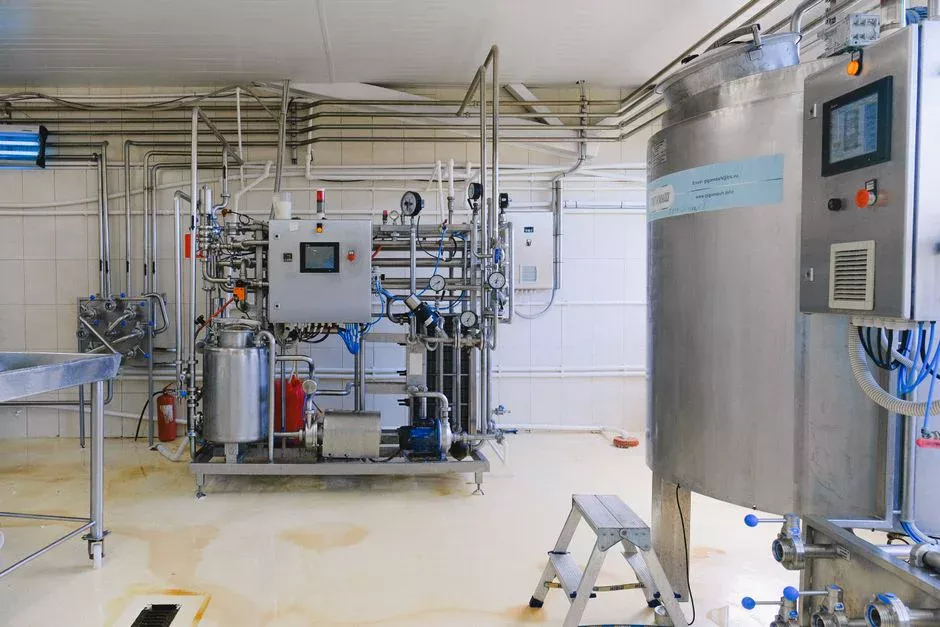
Before any vendor selection, a Bingham Canyon engineer must assemble a defensible influent and flow data package, because the EPA fact sheet states that designers of MBR systems require basic information about wastewater characteristics, and basic implies a full year of representative data. The table below lists the inputs and the required sources; numeric ranges are not in the research and must be measured.
| Input | What to collect | Why it matters for CAS vs MBR |
|---|---|---|
| Influent characterization | 24-hour composite sampling for pH, TDS, sulfate, dissolved Cu/Mo/Zn, TSS, COD, BOD, hardness, temperature — at least one seasonal cycle | Defines whether MBR viscosity penalty (MDPI) is acceptable and whether sulfate drives MBR stress |
| Flow regime | Average, peak, 95th-percentile hourly flows across wet/dry seasons | EPA fact sheet caps MBR peak at 1.5–2× average; Bingham pit-dewatering surges set the equalization volume |
| Receiving-water / reuse targets | Confirm Utah DEQ/NPDES effluent limits, downstream source-water protection, on-site reuse quality | Decides whether MBR permeate is required or CAS-with-polish is sufficient |
| Headworks screening | Verify 1–2 mm (hollow fiber) or 2–3 mm (flat sheet) fine screens, per EPA fact sheet | Add a GX series rotary fine screen if headworks is coarser; mandatory for MBR |
| Sludge downstream | Confirm plate-and-frame sludge dewatering press can accept MBR waste; specify polymer if not | EPA fact sheet flags lower MBR-sludge settleability (Hermanowicz et al. 2006); budget polymer or alternative dewatering |
| Membrane module spec | Select DF series flat-sheet MBR module or hollow-fiber equivalent; confirm 0.1 μm PVDF, capacity envelope 10–2,000 m³/day | Sets the air-scour blower duty and the cleaning-chemical OPEX line |
Two procurement checks are essential. The EPA fact sheet notes that membrane guarantees on industrial systems range from 3 to 5 years, and some guarantees are tied to screen size—smaller upstream screens buy longer warranties. A Bingham Canyon engineer should request a written membrane-life guarantee keyed to the site-specific influent, not a generic municipal number, and should confirm the screen size that triggers it.
Decision Framework: When MBR Wins vs When CAS Is Enough
The decision collapses to three questions: how tight is the effluent bar, how tight is the site, and how tight is the capex envelope. Choose an MBR retrofit—for example, the integrated submerged MBR system—when effluent TSS must be near zero for downstream reuse, when the pit-adjacent footprint is the binding constraint, when the existing CAS clarifier is the hydraulic bottleneck, and when the operator team can sustain membrane cleaning and air-scour routines. Stay with CAS, possibly with a clarifier upgrade or sand-filter polish, when capex is the binding constraint, when peak flows exceed 2× average without equalization, when high TDS and sulfate make MBR viscosity and energy uneconomic, or when biosolids handling relies on the standard WAS settleability that MBR sludge disrupts (Hermanowicz et al. 2006).
A hybrid is often the right first move: keep CAS biology and add a membrane step downstream of the secondary clarifier as a polish, gaining reuse quality without committing to full MBR operation, and follow the sequencing in the mining/metals 2026 pretreatment-limits playbook. For cost-curve inputs, the 2026 MBR cost per m³ guide is the right reference; do not commit to a number without a vendor quotation against the Bingham influent.
Frequently Asked Questions
What does an MBR retrofit actually cost for a Bingham Canyon plant, and what inputs do I need to request?
The supplied research does not contain a per-m³ or turnkey cost for an MBR at a Bingham Canyon mining site; the EPA fact sheet states only that MBRs have typically higher capital and operating costs than conventional systems for the same throughput, and that O&M lines include membrane cleaning, fouling control, and replacement. Request a vendor quotation priced against your measured influent (TDS, sulfate, dissolved metals, COD/BOD) and your 95th-percentile hourly flow, with a written membrane-life guarantee and a defined cleaning-chemical budget. For a comparable 2026 reference point, the 2026 MBR cost per m³ guide lists the line items a quote must break out.
How do I screen MBR suppliers for a high-TDS, high-sulfate mining influent?
Ask each supplier for three things in writing: documented operating experience on metal-bearing or high-sulfate wastewater, a membrane-life
Frequently Asked Questions
What influent data does a Bingham Canyon mine need to size an MBR versus a conventional activated-sludge upgrade?
To size these systems, the mine must provide 24-hour flow-weighted composite sampling data for total dissolved solids (TDS), heavy metal concentrations (specifically copper, molybdenum, and selenium), and pH variability. Crucially, MBR sizing requires precise influent particle size distribution and oil/grease concentrations to determine the hydraulic loading rate against membrane fouling limits, whereas conventional activated sludge sizing focuses primarily on the food-to-microorganism (F/M) ratio and sludge volume index (SVI) to manage settling characteristics.
How much more energy does an MBR use than a conventional activated-sludge plant at a high-TDS mine?
In high-TDS mining environments, an MBR system typically consumes 0.8 to 1.5 kWh/m³ of treated water, compared to 0.3 to 0.6 kWh/m³ for a conventional activated sludge plant. The additional energy demand in the MBR is driven primarily by air scouring requirements, which must be increased to mitigate membrane fouling caused by the high osmotic pressure and inorganic scaling potential inherent in Bingham Canyon process waters.
Can an MBR waste sludge be dewatered on an existing plate-and-frame filter press without extra chemical dosing?
No, MBR waste sludge typically requires significantly higher dosages of polymer or inorganic coagulants compared to conventional activated sludge. Because MBRs operate at higher mixed liquor suspended solids (MLSS) concentrations—often 8,000 to 12,000 mg/L—and feature smaller, more hydrophilic flocs, the sludge exhibits higher specific resistance to filtration, necessitating optimized chemical conditioning to achieve the same cake dryness on existing plate-and-frame equipment.
What is the realistic 2026 lead time and membrane-replacement cycle for a submerged MBR system in a mining duty?
As of 2026, the typical lead time for major MBR equipment components is 40 to 52 weeks, depending on the availability of specialized membrane modules and custom-fabricated stainless steel cassettes. In mining applications characterized by high abrasive mineral content, the membrane replacement cycle is typically 5 to 7 years, assuming rigorous adherence to clean-in-place (CIP) protocols and effective upstream grit removal to prevent premature fiber abrasion.