The 2026 Compliance Stack Around Jasper
Mineral Mining and Processing Effluent Guidelines and Standards (40 CFR Part 436) is the federal floor for any mining or quarrying operation that discharges wastewater in the United States; the EPA promulgated the rule in 1975 and amended it in 1976, 1977, 1978, and 1979, and the requirements are incorporated into NPDES permits (EPA, 2026-02). On top of the federal floor, the local POTW's pretreatment program reconciles EPA categorical standards with locally established limits for heavy metals, pH, and TSS, so a Jasper operator needs both sets of numbers in front of them when sizing a treatment train (S1, 2026-02).
The reserved-subpart question sits on top of that stack. Several subparts — Dimension Stone (Subpart A), Lightweight Aggregates (Subpart H), Lithium (Subpart U), Ball Clay (Subpart AH), Feldspar (Subpart AI), Talc/Steatite/Soapstone/Pyrophyllite (Subpart AJ), and Garnet (Subpart AK) — are reserved, with no current numeric effluent limits (EPA, 2026-02). For Dubois County operators, that means a dimension-stone, lightweight aggregate, or specialty-clay site may be operating in a federal vacuum where the local POTW's limits are the only binding numbers, and the four-stream wastewater characterization still has to happen because influent diversity is unrelated to whether federal limits exist.
Mining wastewater is not one stream. AMD, process water, tailings pond effluent, and dewatering discharge each carry different contaminants, and a single default treatment train is not defensible across them (AMPAC USA, 2025-09). When sulfide minerals such as pyrite and pyrrhotite in waste rock and tailings are exposed to oxygen and water, oxidation reactions produce sulfuric acid, which leaches into groundwater and surface water and creates highly acidic streams with dissolved heavy metals — iron, manganese, copper, zinc, arsenic, cadmium — at concentrations far exceeding regulatory limits (AMPAC USA, 2025-09). The operator who skips the per-stream characterization ends up with a basis of design that fails on the second month of operation, not the first.
How the Reserved-Subpart Question Changes Your Scope
The reserved-subpart decision is the first thing a Jasper-area operator resolves, because it changes the unit they are sizing to. If the mineral falls under an active subpart with numeric effluent limits, the operator sizes to those federal numbers; if it falls under a reserved subpart, the operator sizes to the local POTW's local limits and to any general pretreatment expectations under 40 CFR Part 403 (EPA, 2026-02; S1, 2026-02). For dimension-stone, lightweight-aggregate, and certain specialty-clay operations near Jasper, the local sewer authority's discharge limits for metals, pH, and TSS are the binding numbers (EPA, 2026-02).
The practical move is to request a copy of the local POTW's local limits and any special permit conditions before commissioning a basis of design, because the federal number will not fill the gap on its own (S1, 2026-02). The local limits arrive as a list of metals with daily-maximum and monthly-average concentrations, a pH range, a TSS ceiling, and sometimes a flow cap; the operator who hands those numbers to a supplier with a representative influent profile gets a defensible scope, and the operator who hands only a process description does not. The same scoping logic applies whether the operation is a dimension-stone quarry or a specialty-metals site, because the reserved-subpart question is about which limits are binding, not about whether pretreatment is required.
The Six-Step Treatment Train a Jasper Operation Sizes Against
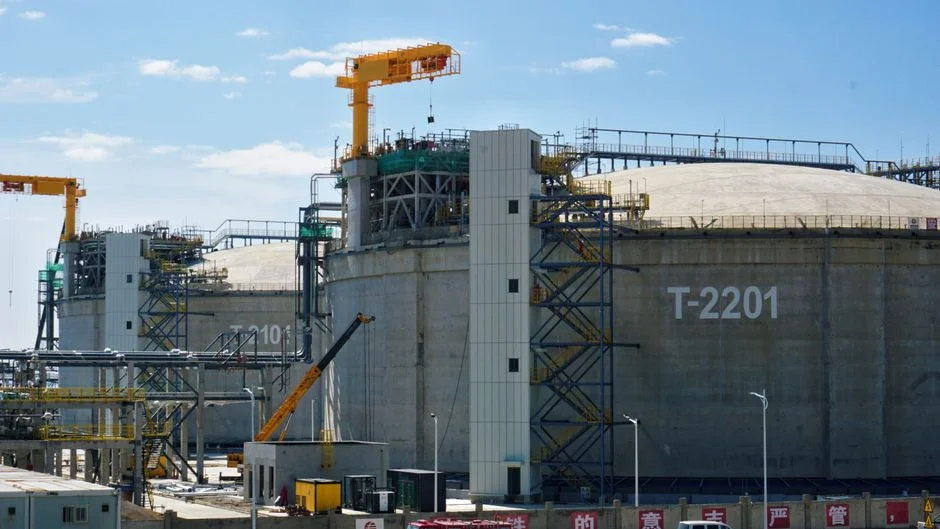
A defensible unit-operation sequence for a Jasper-area mineral mining or aggregate operation has six steps, and each one maps to a specific unit operation. The sequence runs pH correction first, then coagulation, then solids separation, then multimedia filtration, then a membrane polish when salts or trace metals persist, with PLC/HMI monitoring on the back end (PMC review, 2024-02; LiqTech, 2025-08). The six steps are: (1) raise pH to >10 with lime so dissolved metals precipitate as hydroxides and gypsum co-precipitates before thickening (PMC review, 2024-02); (2) add coagulant and flocculant matched to the floc density that drives the next separation step (S1, 2026-02); (3) separate solids with a DAF system for buoyant floc and oil-bearing fines or a lamella clarifier for metal-hydroxide sludge where footprint and sludge volume are the constraint (Genesis Water Technologies, 2025-11; S1, 2026-02); (4) pass the clarified stream through a multi-media filter for RO feed conditioning sized to a target SDI after the filter, not inlet turbidity, to protect downstream membranes (S1, 2026-02); (5) polish with a UF system for fine colloid and RO pretreatment duty followed by an industrial RO system for >99% metals and salts rejection, with RO recovery at 50–70% on AMD feed and 70–85% on a ZLD RO stage (AMPAC USA, 2025-09); (6) dewater the metal-hydroxide sludge with a filter press for chemical-precipitation cake, with a PLC-controlled lime and flocculant dosing skid tying pH, flow, and conductivity into the same control system the rest of the train reports through (LiqTech, 2025-08; S1, 2026-02).
| Step | Unit operation | Engineering basis | Key spec to set in RFQ |
|---|---|---|---|
| 1 — pH correction | Lime dosing reactor | Raise pH >10; metals precipitate as hydroxides; gypsum co-precipitates | Target pH >10; lime dose from jar tests (PMC review, 2024-02) |
| 2 — Coagulation | Coagulant + flocculant dosing | Match chemistry to floc density that drives the next step | Polymer type, dose (g/m³), mixing energy (S1, 2026-02) |
| 3 — Solids separation | DAF (buoyant floc, oils, fines) or lamella (heavy floc, footprint) | Air-to-solids ratio vs plate spacing and underflow solids | ASU sizing or plate spacing; overflow TSS target (Genesis Water Technologies, 2025-11) |
| 4 — Media filtration | Multi-media filter | Protect downstream membranes | Target SDI after filter, not inlet turbidity (S1, 2026-02) |
| 5 — Membrane polish | UF (colloids) + RO (salts, metals) | >99% rejection of dissolved metals and salts | RO recovery 50–70% on AMD, 70–85% on ZLD RO stage (AMPAC USA, 2025-09) |
| 6 — Sludge dewatering | Filter press | Cake volume from chemical precipitation | Cake dryness target, cycle time, cake volume per shift (S1, 2026-02) |
Basis of Design: What a Jasper Operator Puts in the RFQ
The basis-of-design checklist is what turns a treatment concept into a quotable scope. A supplier cannot price a six-step train against a paragraph of process description; they price it against a small set of hard numbers that the operator owns. The minimum set is: peak and average flow in m³/h, sized against the highest anticipated daily discharge rather than the average, because peak flows drive equalization basin volume and pump selection (LiqTech, 2025-08); influent pH and metal profile from a representative sampling round covering at minimum iron, manganese, copper, zinc, arsenic, and cadmium (AMPAC USA, 2025-09); local POTW discharge limits for metals, pH, and TSS, plus any special permit conditions on flow or sampling frequency (S1, 2026-02); and a target recovery percentage and reuse end use, so the RO scope is sized to a recovery curve rather than a nameplate figure, with the SAVMIN® pilot reference of 4 m³/h as a sense of small-train scale (PMC review, 2024-02; AMPAC USA, 2025-09). The operator should also confirm the supplier has installed DAF or lamella, multimedia filter, UF, RO, and sludge dewatering at flows in the same order of magnitude as the Jasper site (AMPAC USA, 2025-09; LiqTech, 2025-08).
| RFQ input | What to include | Why it matters |
|---|---|---|
| Peak and average flow | m³/h, daily and weekly | Drives equalization basin volume and pump selection (LiqTech, 2025-08) |
| Influent pH and metal profile | Fe, Mn, Cu, Zn, As, Cd at minimum; jar-test pH curve | Sets lime dose and coagulant selection (AMPAC USA, 2025-09) |
| Local POTW limits | Metals, pH, TSS daily-max and monthly-average; permit special conditions | Defines the discharge envelope (S1, 2026-02) |
| Target recovery % and reuse end use | RO recovery curve, not nameplate; reuse destination (process, dust suppression) | Right-sizes RO and storage; reframes capex (AMPAC USA, 2025-09) |
Reuse Economics: Where the Compliance Spend Pays Back
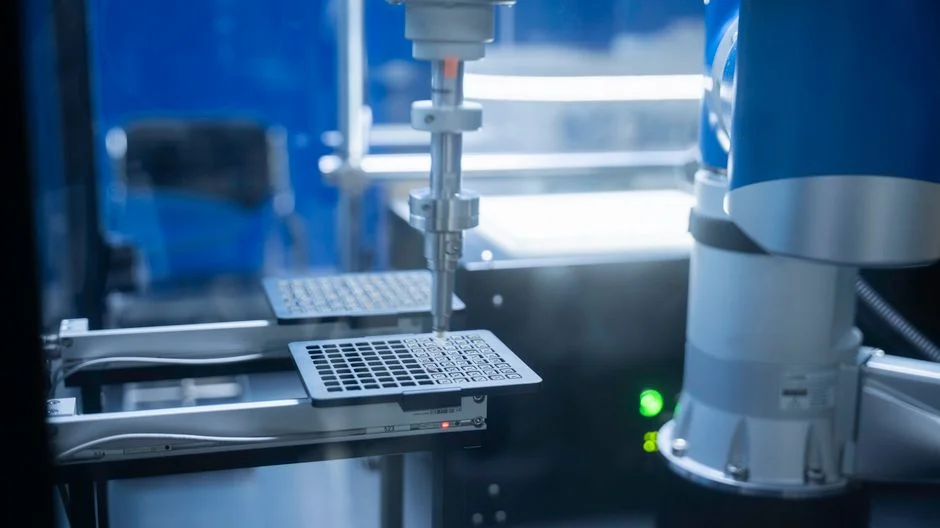
RO-based reuse can reduce freshwater intake by 40–60% compared to once-through operations, and every cubic meter reused is a cubic meter not drawn from a freshwater source or paid to discharge (AMPAC USA, 2025-09). Where zero-liquid discharge is required, RO handles the bulk water recovery at 70–85% before the more energy-intensive thermal stages handle the remaining concentrate (AMPAC USA, 2025-09). The sizing logic is therefore "reuse as much as economics allow, then polish the rest to sewer quality," which is why an integrated purification skid for small mining sites is the package a small Jasper-area operator typically asks a supplier to quote when reuse and pretreatment are wanted in one footprint (S1, 2026-02). The capex conversation with management moves from "compliance cost" to "compliance investment with a reuse offset" the moment the recovery curve is on the slide, and the offset is sized in cubic meters of freshwater not purchased and cubic meters of discharge not paid for.
Frequently Asked Questions
What federal rule applies to a mining or metals site near Jasper in 2026?
40 CFR Part 436 (Mineral Mining and Processing Effluent Guidelines and Standards) is the federal floor; the rule was promulgated in 1975 and amended in 1976, 1977, 1978, and 1979, and its requirements are incorporated into NPDES permits (EPA, 2026-02). Several subparts — including Dimension Stone, Lightweight Aggregates, Lithium, Ball Clay, Feldspar, Talc/Steatite/Soapstone/Pyrophyllite, and Garnet — are reserved with no current numeric effluent limits, so a Jasper operator must first confirm subpart status before assuming federal numbers exist (EPA, 2026-02).
What does the local POTW layer add on top of the federal floor?
The local POTW's pretreatment program reconciles EPA categorical standards with locally established limits for heavy metals, pH, and TSS, so a Jasper operator needs both sets of numbers in front of them when sizing a treatment train (S1, 2026-02). The local limits are the binding numbers for a reserved-subpart site, and the operator should request a copy of those limits and any special permit conditions before commissioning a basis of design (S1, 2026-02).
What rejection rate does the RO polish need to hit for sewer discharge?
An industrial RO system rated at >99% rejection of dissolved metals and salts is the polish step that conventional methods cannot replace, taking the residual dissolved metals and salts that survive pH correction, precipitation, and multimedia filtration down to sewer-quality effluent (AMPAC USA, 2025-09). RO recovery is 50–70% on AMD feed and 70–85% as the RO stage of a ZLD train, and the operator should request a recovery curve, not a nameplate figure (AMPAC USA, 2025-09).
What should a small Jasper site expect on capex, reuse offset, and supplier selection?
The supplied research does not publish price points for a complete pretreatment train, so a buyer has to request a quotation against an owned basis of design — peak and average flow, influent pH and metal profile, local POTW limits, and target recovery percentage — rather than rely on a published range (S1, 2026-02). The reuse offset is 40–60% freshwater intake reduction versus once-through, and every cubic meter reused is a cubic meter not drawn or discharged (AMPAC USA, 2025-09). On supplier selection, confirm the proposed scope ties the chemistry dosing, PLC/HMI controls, and membrane skid into a single integrated control system and that the supplier has installed the same unit operations at flows in the same order of magnitude as the Jasper site (LiqTech, 2025-08; AMPAC USA, 2025-09).
Related Equipment
- industrial RO system for >99% metals and salts rejection — specifications, capacity range, and technical data