The 2026 Compliance Frame for Steubenville Chemical Plants
Chemical plants discharging to the Steubenville sanitary sewer operate inside a three-layer limit stack, and the most stringent of the three governs. The Steubenville WWTP serves approximately 19,000 residents and discharges treated wastewater to the Ohio River, so any pass-through has immediate receiving-water consequences on a major Mississippi River tributary (utilityradar.com profile of Steubenville WWTP and Sewer System). The floor is 40 CFR 403.5(a) and (b), which ban any discharge that causes pass-through or interference and which list specific prohibited pollutants.
The middle layer is the federal categorical standard, located in 40 CFR Parts 405–471. For chemical plants in the Upper Ohio Valley, the most likely subparts are 40 CFR Part 414 (organic chemicals, plastics, and synthetic fibers), Part 415 (inorganic chemicals), Part 417 (soap and detergent manufacturing), and Part 419 (petroleum refining), with Part 433 (metal finishing) possible for adjacent operations (hydropurewater.com, 2026). The top layer is the site-specific local limit set by the Steubenville POTW under 40 CFR 403.5(c), which EPA can enforce as a pretreatment standard (EPA, "Pretreatment Standards and Requirements — Local Limits").
The two qualitative triggers that sit underneath every numeric limit are pass-through and interference. Pass-through is defined at 40 CFR 403.3(p) as "a discharge that exits the POTW into waters of the United States in quantities or concentrations that, alone or in conjunction with a discharge or discharges from other sources, is a cause of a violation of any requirement of the POTW's NPDES permit (including an increase in the magnitude or duration of a violation)" (EPA, "Pretreatment Standards and Requirements — Local Limits"). Interference is defined at 40 CFR 403.3(k) as a discharge that, alone or with other sources, both (1) inhibits or disrupts the POTW, its treatment processes or operations, or its sludge processes, use, or disposal, and (2) therefore is a cause of a violation of the POTW's NPDES permit or of sewage sludge use or disposal requirements. A single slug load that fires either trigger puts the Industrial User in violation even if every numeric limit on the monitoring report is below the line. Because EPA revises subparts on a multi-year cycle, engineers must confirm current numeric values in 40 CFR rather than relying on memory (hydropurewater.com, 2026).
| Layer | Source | Form | Governs when |
|---|---|---|---|
| 1 — General and specific prohibitions | 40 CFR 403.5(a) and 403.5(b) | Qualitative bans plus listed prohibited pollutants | Always — the floor for every Industrial User |
| 2 — Categorical pretreatment standard | 40 CFR Parts 405–471 (e.g., 414, 415, 417, 419, 433) | Numeric effluent limits by industry subcategory | Plant falls under a regulated industry category |
| 3 — Local limit | Steubenville POTW's approved pretreatment program under 40 CFR 403.5(c) | Site-specific numeric or narrative limits, enforceable by EPA | When it is more stringent than Layer 2 or Layer 1 |
For a Steubenville chemical plant weighing the inorganic chemicals subpart, the parallel inorganic chemicals pretreatment playbook walks the same three-layer stack from a different receiving-water context.
What Triggers SIU Status and a Steubenville Control Mechanism
Every nondomestic discharger to a POTW is an Industrial User and is bound by the general prohibitions at 40 CFR 403.5(a) and (b). A subset — the Significant Industrial User (SIU) — sits under a heavier monitoring and reporting regime. The definition at 40 CFR 403.3(v) covers three triggers: (1) any IU subject to categorical pretreatment standards; (2) any other IU that discharges an average of 25,000 gpd or more of process wastewater; or (3) any IU that contributes a process waste stream making up 5% or more of the POTW's average dry-weather hydraulic or organic capacity (hydropurewater.com, 2026).
Chemical plants in the Upper Ohio Valley virtually always meet trigger (1) by virtue of falling under 40 CFR Part 414, 415, 417, 419, or an adjacent subpart. That status brings four specific obligations the Steubenville POTW will expect to see during an inspection. First, a baseline monitoring report (BMR) is required at categorical standard promulgation or at new-discharge startup, and it establishes the baseline pollutant envelope against which ongoing compliance is measured. Second, 90-day compliance reports are required on the schedule set in the control mechanism, tracking the regulated parameters against the applicable categorical and local limits. Third, the POTW issues a written control mechanism — a permit or equivalent control document — that formalizes numeric limits, monitoring locations and frequencies, and reporting obligations. Fourth, the POTW (or its delegate) conducts routine inspection and sampling under 40 CFR 403.12.
For batch operators and plants with shared collection systems, a slug load control plan is also typically required under 40 CFR 403.8(f), because a discharge surge is the most common way pass-through is triggered at a chemical plant. These four documents are the minimum paperwork package the engineer must be ready to hand the Steubenville POTW; they are not optional best practice and they are not the same as a general environmental permit.
Building the Pretreatment Train: Six Unit Operations, Four Decision Axes
Six unit operations, in roughly the order shown below, handle the vast majority of chemical plant wastewater streams that flow to a POTW (hydropurewater.com, 2026). Not every plant needs all six — the right subset is a function of which parameter the engineer expects to approach the most stringent applicable limit, which is what the four decision axes answer.
| Unit operation | Pollutant problem it solves | Regulatory driver |
|---|---|---|
| Equalization | Batch swings in pH, flow, temperature, concentration | 40 CFR 403.5(a) pass-through/interference; 40 CFR 403.8(f) slug load control |
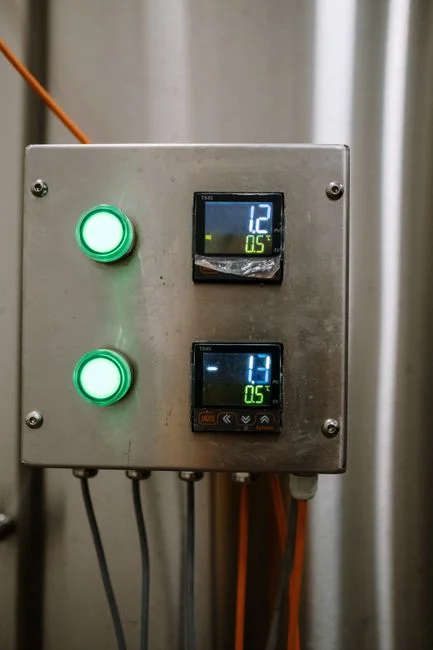
| Neutralization with PLC-controlled dosing | Strong acid or caustic batches | 40 CFR 403.5(b) specific prohibitions; local pH limit (typically 6–9) |
| Dissolved air flotation (DAF) | Free and emulsified oils, TSS | 40 CFR 403.5(a) pass-through; categorical standard; local limit |
| Chemical precipitation plus clarifier | Dissolved metals (Cd, Cr, Cu, Ni, Pb, Zn) | Categorical standard (e.g., 40 CFR Part 433 for metal finishing); local limit |
| Biological polishing (activated sludge or MBR) | Soluble COD/BOD | Categorical standard; local BOD/COD limit to POTW |
| Multimedia / carbon filtration | Residual organics, trace metals, color | Local limit; reuse-quality targets if applicable |
The four decision axes, walked in order, produce a defensible equipment train.
Axis 1 — Controlling pollutant. Identify the parameter most likely to approach the most stringent applicable limit. Oils and TSS push the design toward a dissolved air flotation (DAF) system for chemical plant pretreatment. Dissolved metals push toward chemical precipitation followed by a clarifier such as a high-efficiency sedimentation tank. High COD/BOD pushes toward biological polishing, sized with an MBR membrane bioreactor for plants considering reuse, or with a conventional activated sludge basin for discharge-only service. pH swings push toward equalization plus a PLC-controlled chemical dosing system. Most chemical plants hit two or three of these simultaneously, which is why the full train is the common case rather than the exception.
Axis 2 — SIU status and applicable standard. If the plant is an SIU under a categorical standard, the federal number is the floor and the Steubenville local limit is often the binding constraint. If the plant is non-categorical, the design still has to prevent pass-through and interference under 40 CFR 403.5(a), which is qualitative but no less enforceable (hydropurewater.com, 2026).
Axis 3 — Flow pattern. Batch operations with long cycle times need equalization sized for hours to days; continuous operations can often use shorter retention. The cost penalty for over-sizing equalization is small compared with the cost of a pass-through excursion, and under-sizing either equalization or PLC-controlled dosing is the most common root cause of failed compliance events at chemical plants (hydropurewater.com, 2026).
Axis 4 — Water reuse. Plants moving toward reuse benefit from an MBR-plus-RO path because it produces reuse-quality water and avoids the cost of buying in fresh water for non-contact applications. Pure discharge-to-sewer operations can stay on conventional activated sludge (hydropurewater.com, 2026).
The Documentation Package the Steubenville POTW Will Expect
Every Steubenville-area chemical plant should expect the POTW (or Ohio EPA as the approval authority) to ask for a four-piece documentation package: the BMR, the 90-day compliance reports, the control mechanism, and — for SIUs with batch operations or shared collection systems — a slug load control plan under 40 CFR 403.8(f). EPA's Local Limits Development Guidance describes the Maximum Allowable Headworks Loading (MAHL) process the POTW itself uses to set and revise local limits, in five steps: determine pollutants of concern, collect and analyze data, calculate MAHLs, designate and implement limits, and address collection system concerns (EPA, "Local Limits Development Guidance," 2004 PDF, published metadata dated 2021-06-25). That MAHL framework is what the POTW points to when actual loadings approach the published ceiling and a local-limit revision is on the table.
| Document | What it establishes | When it is triggered |
|---|---|---|
| Baseline Monitoring Report (BMR) | Baseline pollutant envelope and production baseline | At categorical promulgation or new-discharge startup |
| 90-day compliance reports | Ongoing parameter-by-parameter performance against limits | On the schedule set in the control mechanism |
| Control mechanism (POTW-issued permit or equivalent) | Numeric limits, monitoring, reporting obligations | Issued by the POTW to the SIU |
| Slug load control plan under 40 CFR 403.8(f) | Equalization capacity, flow and pH monitoring, written batch-release procedures | Required for SIUs subject to slug risk |
A defensible slug load control plan under 40 CFR 403.8(f) contains three elements: equalization capacity sized to absorb the largest credible batch, continuous or batch-based flow and pH monitoring tied to alarms, and written operating procedures for batch releases (hydropurewater.com, 2026). EPA's MAHL framework is the same yardstick the Steubenville POTW will use to compare actual loadings against the published ceiling, and it is the trigger for revising local limits when loadings approach the line (EPA, "Local Limits Development Guidance," 2004 PDF, published metadata dated 2021-06-25). For a parallel metals-focused documentation package, the metals pretreatment playbook walks the same BMR/90-day/slug control structure. Specific numeric limits must be verified against the current 40 CFR subpart and the Steubenville POTW's approved pretreatment program — do not rely on remembered values.
Sizing, Supplier Selection, and Cost Bands for 2026 Procurement

The procurement conversation with a pretreatment equipment vendor should start with four inputs: peak and average flow in m³/h, influent characterization (pH, TSS, COD/BOD, oils, target metals), the applicable 40 CFR subpart, and the Steubenville POTW's local limit on the most stringent parameter. Without those four inputs, no proposal from any vendor should be treated as defensible. Capacity data a buyer should require in any proposal includes a DAF range and a lamella clarifier surface loading rate for solids removal, and a biological polishing range sized to the plant's daily flow if biological treatment is in scope. The MBR membrane bioreactor range and the per-module footprint for PVDF flat sheet modules are the type of catalog data a buyer should request when reuse is on the table.
Set the procurement expectation up front: every quote should include a control narrative that references 40 CFR 403.5(a) pass-through and interference, the applicable categorical subpart (414, 415, 417, 419, or 433), and the slug load control plan required under 40 CFR 403.8(f). Where the research does not supply a cost figure, the buyer should request an itemized CAPEX/OPEX split and a chemistry cost line from each vendor rather than relying on a single turnkey number; the general 2026 buyer's guide framing covers the same ask-pattern in a different process context, and the equipment supplier reliability checklist gives the QA criteria for comparing vendors. Slug load design basis, equalization retention time, and the 40 CFR 403.8(f) plan format are all items a chemical plant should require in writing before signing a purchase order.
Frequently Asked Questions
Can a slug load trigger an enforcement action even when no numeric limit is exceeded?
Yes. Under the pass-through definition at 40 CFR 403.3(p) and the interference definition at 40 CFR 403.3(k), a discharge that causes or contributes to a violation of the Steubenville POTW's NPDES permit — or that disrupts POTW treatment or sludge processes — is a violation regardless of the numeric monitoring results (EPA, "Pretreatment Standards and Requirements — Local Limits"; hydropurewater.com, 2026). The control mechanism and the slug load control plan under 40 CFR 403.8(f) exist to keep that trigger from firing.
How does a Steubenville-area plant determine whether 40 CFR Part 414, 415, 417, or 419 applies?
By primary product and the associated SIC/NAICS code, confirmed against the current 40 CFR text rather than memory. Part 414 covers organic chemicals, plastics, and synthetic fibers; Part 415 covers inorganic chemicals; Part 417 covers soap and detergent manufacturing; and Part 419 covers petroleum refining (hydropurewater.com, 2026). EPA revises subparts on a multi-year cycle, so the current values in 40 CFR — not a remembered copy — are what govern.
What flow and influent data should a chemical plant send a DAF or MBR vendor in 2026 to get a defensible proposal?
Send peak and average flow, a full influent characterization (pH, TSS, COD/BOD, oils, and target metals), the applicable 40 CFR subpart, the Steubenville POTW's local limit on the most stringent parameter, and any reuse target (hydropurewater.com, 2026). With those inputs the vendor can size a DAF for flow and oil loading, a clarifier for surface loading rate, or an MBR for daily throughput against a reuse-quality target; without them, the proposal is not defensible.
How should a Steubenville-area chemical plant compare pretreatment equipment quotes without a single cost number in hand?
Request an itemized CAPEX, an itemized OPEX with chemistry and sludge hauling separated out, and a written compliance narrative that ties the equipment train to 40 CFR 403.5(a) pass-through and interference, the applicable categorical subpart, and the slug load control plan required under 40 CFR 403.8(f) (hydropurewater.com, 2026). Comparing itemized OPEX — especially chemistry and sludge hauling — is where most of the lifecycle cost difference between vendors shows up, and the compliance narrative is what the Steubenville POTW will look for in the next inspection.