Why Baytown Is a Local-Limit Hot Spot for OCPSF Dischargers
Baytown sits inside the Houston Ship Channel benzene-production cluster, which is why the receiving POTW writes tight numeric local limits instead of leaning on the federal categorical. EPA NEPIS Table 2 lists Baytown at 227 (×10³ m³/yr) annual benzene capacity on a petroleum feedstock, alongside Channelview at 132, Pasadena at 87, and multiple Port Arthur entries; the same table puts total US benzene capacity at 6,805 (×10³ m³/yr) (NEPIS EPA-600/2-79-210d, 1979-12). Benzene is one of the most significant commercial organic chemicals in the United States and a major organic chemicals industry intermediate, with ethylbenzene, cumene and cyclohexane accounting for more than 80% of US benzene use (NEPIS 1979-12).
The same NEPIS source quantifies why regional POTWs treat organic chemicals discharges as a pass-through and interference risk under 40 CFR 403.3(k) and 40 CFR 403.3(p): the 1976 emissions inventory puts bulk terminal loading at 380,000 kg benzene per source per year and service-station tank loading at 56 kg per source per year. For an OCPSF facility, that is the regional feedstock reality the City of Baytown is protecting its collection system from when it develops site-specific numeric local limits under 40 CFR 403.5(c).
The Three-Layer Rule Stack at the Sewer Connection
Compliance at the discharge flange is the intersection of three rule sets, and the single most common basis-of-design mistake is sizing equipment only to the federal categorical. Layer 1 is 40 CFR Part 414 (Organic Chemicals, Plastics and Synthetic Fibers, OCPSF), promulgated 1987 and last amended 1993, with seven subcategories — rayon fibers, other fibers, thermoplastic resins, thermosetting resins, commodity organic chemicals, bulk organic chemicals, and specialty organic chemicals — covering more than 1,000 chemical facilities nationwide per the EPA OCPSF Effluent Guidelines page. Layer 2 is the TCEQ state pretreatment program, which adopts the federal categoricals and layers state-level enforcement, monitoring, and reporting on top; TCEQ is the NPDES authority in Texas. Layer 3 is the City of Baytown's local limits under 40 CFR 403.5(c), numeric caps enforced at the point of connection to prevent pass-through (40 CFR 403.3(p)) and interference (40 CFR 403.3(k)) at the receiving POTW; for adjacent Houston-system discharges the analogous framework is Houston Code 47-188.
Any 40 CFR Part 414 facility is automatically a Categorical Industrial User, and at ≥25,000 gpd process flow or ≥5% of the receiving POTW's average dry-weather hydraulic or organic capacity it is a Significant Industrial User under 40 CFR Part 403. The City also enforces the 40 CFR 403.5 categorical prohibited-discharge list — flammable, reactive, explosive, corrosive or radioactive substances, noxious or malodorous materials, medical or infectious wastes, solid or viscous materials, toxic substances, non-biodegradable oils, and any pollutant that emits hazardous gases. These prohibitions are narrative, not numeric, and frequently missed at basis-of-design.
| Layer | Authority | What it controls | Enforcement point |
|---|---|---|---|
| 1 — Federal categorical | 40 CFR Part 414 (OCPSF), 1987/1993 | Technology-based effluent limits across 7 subcategories | NPDES permit / POTW pretreatment program |
| 2 — State delegation | TCEQ pretreatment program | State-level enforcement, monitoring, reporting | State inspection / TCEQ NOV |
| 3 — Local limits | 40 CFR 403.5(c) / City ordinance (Houston Code 47-188 analogous) | Numeric caps at the sewer connection to prevent pass-through and interference | City pretreatment office / discharge flange |
| User classification | 40 CFR Part 403 | CIU automatic; SIU at ≥25,000 gpd or ≥5% of POTW capacity | Industrial Waste Permit issuance |
| Categorical prohibitions | 40 CFR 403.5 | Prohibited discharge list (flammable, reactive, corrosive, etc.) | First-inspection narrative check |
Numeric Local Limits That Actually Trip Enforcement
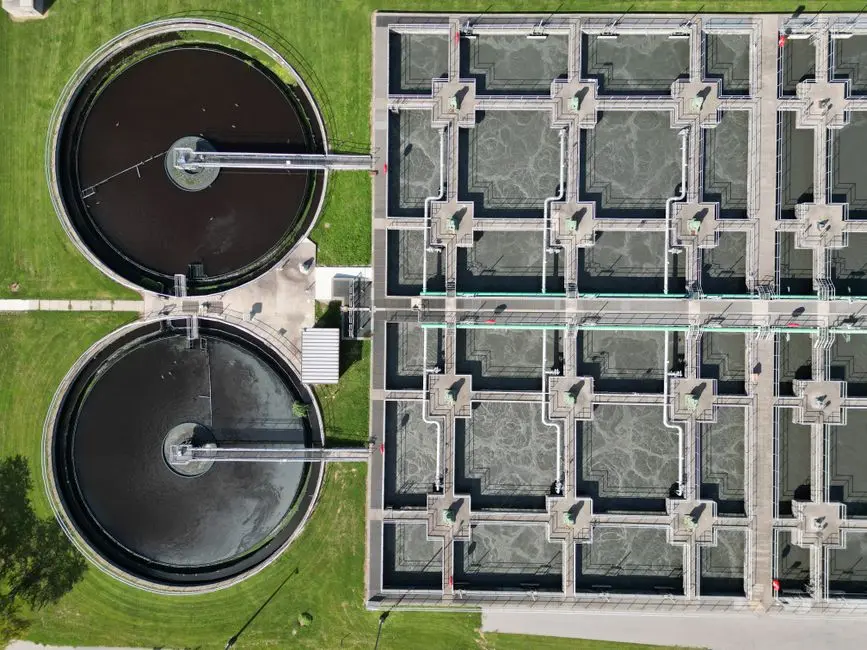
The caps below are the numbers that actually trip enforcement at the discharge flange, sourced from the regional framework mirrored from Houston Code 47-188. pH must stay between 5.0 and 11.0 Standard Units at the discharge flange. Total sulfide must remain below 5.0 mg/L; closed-cup flash point must be ≥60°C (140°F); temperature must not exceed 45°C (113°F) — hot reactor condensates and exotherm streams must be quenched or equalized before the sewer. Total oil and grease is capped at 200 mg/L, dropped from 750 mg/L effective December 2, 2023 per the regional Industrial and Pretreatment FAQ; floating oil and grease is prohibited at any concentration, so skimmings must be physically removed, not just diluted.
| Parameter | Local limit at sewer connection | Engineering implication |
|---|---|---|
| pH | 5.0 – 11.0 S.U. | Engineer acid/caustic dosing and equalization; not assumed at flange |
| Total sulfide | < 5.0 mg/L | Iron salt or O₂/air oxidation; verify at flange |
| Flash point (closed-cup) | ≥ 60°C (140°F) | Solvent management upstream; no hot condensates to sewer |
| Temperature | ≤ 45°C (113°F) | Quench or equalize exotherm streams |
| Total oil and grease | ≤ 200 mg/L (from 750 mg/L, effective 2023-12-02) | DAF required; skimmings to hazardous-waste drum |
| Floating oil and grease | Prohibited at any concentration | Physical removal, not dilution |
Raw-Wastewater Envelope the Plant Must Actually Treat
Design influent at OCPSF facilities swings across orders of magnitude between batch campaigns, so the equalization basin must absorb the full envelope rather than a single textbook number. EPA NEPIS Table XI across 53 surveyed organic chemicals plants reports BOD5 of 91–24,000 mg/L, COD of 200–113,000 mg/L, and suspended solids to 5,000 mg/L across plants making phthalic anhydride, terephthalic acid, butadiene/styrene/olefins, acrylonitrile, dyes, phenols, polyolefins, acrylates, adipic acid, hexamethylenediamine, and other organic intermediates.
The composition drivers are high and variable COD and BOD from organic synthesis, washing and condenser bleeds; fluctuating pH from acid or caustic process streams; periodic solvent and organic surges from batch campaigns and equipment washdowns; suspended solids from catalyst handling, polymer fines, and resin transfer; and intermittent oil and grease from pump seals, compressor condensate, and tank-farm areas. Solvent surges from equipment washdowns and batch transfers are the single biggest equalization driver at OCPSF sites because they arrive in slugs, not at steady state. For a parallel framing at a different petroleum/petrochemical node, see how chemical plants near Columbus meet 2026 pretreatment limits.
The Six-Step Treatment Train That Closes the Gap

Six unit operations, in the order below, close the gap between the raw OCPSF envelope and the Baytown + 40 CFR Part 414 compliance targets at the sewer connection. Each step has a specific metric it is responsible for hitting; do not assume one unit can do another's job.
Step 1 — Equalization at HRT 8–24 h with mechanical mixing and pH/temperature probes. This is where the pH 5.0–11.0 cap, sulfide <5 mg/L cap, and ≤45°C ceiling are engineered in via mixing, residence time, and quench, not assumed at the discharge flange. Step 2 — Dissolved air flotation at hydraulic loading 2–5 m³/m²·h, 80–95% O&G removal, taking residual O&G comfortably below the 200 mg/L cap and protecting the downstream biological stage from solvent toxicity; skimmings route to a dedicated oil-recovery or hazardous-waste drum. Specify a DAF system for oil and grease removal at the Step 2 boundary. Step 3 — PLC-controlled chemical dosing of acid/caustic plus iron salt or oxygen/air for sulfide oxidation, targeting pH 6.5–8.0 before biotreatment and total sulfide <5 mg/L at the discharge flange; see a PLC-controlled chemical dosing skid for pH and sulfide control.
Step 4 — Biological treatment: either conventional activated sludge at MLSS 3,000–5,000 mg/L and HRT 6–12 h, or an integrated MBR system for the Step 4 biotreatment option at MLSS 8,000–12,000 mg/L and HRT 4–8 h for tighter effluent and roughly 60% smaller footprint. Step 5 — Polishing with a lamella clarifier for the Step 5 polishing stage at SOR 2–4 m³/m²·h, or the MBR membrane itself at flux 10–20 LMH, holding TSS below the surcharge threshold and protecting downstream monitoring instrumentation from fouling. Step 6 — Continuous flow, pH and temperature monitoring plus scheduled sampling for O&G, sulfide, CBOD, TSS and NH3 on the Industrial Waste Permit cadence. A typical mass balance is raw COD 5,000–10,000 mg/L and TSS 1,000–2,000 mg/L after equalization → DAF → biotreatment removes 85–95% of CBOD → polishing delivers final TSS <30 mg/L for surcharge protection. For the DAF-versus-clarifier selection at the Step 2/5 boundary, see the DAF-vs-clarifier selection guide for chemical plant wastewater.
| Step | Unit operation | Design parameter | Compliance metric it owns |
|---|---|---|---|
| 1 | Equalization basin | HRT 8–24 h; mechanical mixing; pH/T probes | pH 5.0–11.0 S.U.; T ≤45°C; sulfide <5 mg/L |
| 2 | DAF oil/water separation | Hydraulic loading 2–5 m³/m²·h; 80–95% O&G removal | O&G <200 mg/L; no floating oil/grease |
| 3 | Chemical dosing (PLC) | Acid/caustic + iron salt or O₂/air | pH 6.5–8.0 to biotreatment; sulfide <5 mg/L at flange |
| 4 | Biological treatment | AS: MLSS 3,000–5,000 mg/L, HRT 6–12 h. MBR: MLSS 8,000–12,000 mg/L, HRT 4–8 h | CBOD removal; biotreatment effluent quality |
| 5 | Lamella or MBR membrane | Lamella SOR 2–4 m³/m²·h; MBR flux 10–20 LMH | TSS below surcharge threshold |
| 6 | Self-monitoring | Continuous flow/pH/T; scheduled O&G, sulfide, CBOD, TSS, NH3 | Industrial Waste Permit compliance; surcharge input |
The Industrial Waste Permit and the Surcharge Dollar Lever
Compliance converts into cost the moment a permit is issued. The Industrial Waste Permit is issued for a two-year term and required before any discharge to the City collection system; the permit is contingent on completing an Industrial Waste Survey and on-site inspection, with fees set by the City's annual schedule. Surcharge triggers sit on CBOD, NH3, and TSS above domestic baseline; the surcharge is recalculated annually from self-monitoring data, so biotreatment effluent quality translates directly into dollars, not just compliance.
Enforcement escalates from Notice of Violation to Administrative Order to potential service termination or administrative fines; the first response at the first sign of a violation is documented communication with the City's pretreatment office, not silence. For the adjacent City of Houston system the reference point is Industrial Wastewater Service at (832) 395-5800. Engineers sizing new equipment for a Baytown OCPSF plant should size for the surcharge, not just the NOV; the two are connected by the same self-monitoring data.
First 30 Days After a Notice of Violation
The worst-case moment for an OCPSF operator is the morning a Notice of Violation arrives. The 30-day response window below keeps the response documented rather than improvised.
Day 1–3: pull the last 90 days of self-monitoring data, identify which parameter tripped (most commonly O&G, sulfide or pH), and notify the City pretreatment office in writing with the exceedance timestamp and preliminary root-cause hypothesis. Day 4–10: isolate upstream sources — solvent batch transfers, compressor condensate, tank-farm runoff — and re-route or temporarily contain the offending stream; reduce or stop discharge if the operator cannot hold the local cap. Day 11–20: re-baseline equalization HRT and DAF surface-loading rate against the actual slug; confirm chemical dosing setpoints and verify the sulfide-oxidation iron-salt or O₂/air feed is delivering <5 mg/L at the flange. Day 21–30: submit the corrective action plan with a compliance schedule, resampling cadence, and any capital request triggered by the root cause; document every action for the Administrative Order file.
Designing for PFAS So You Do Not Retrofit Twice
The rulemaking pipeline is already pointing at OCPSF. The 2019 EPA PFAS Action Plan already covers PFAS manufacturers and formulators under the OCPSF category, and an ANPRM is currently soliciting data that may lead to a PFAS-specific rulemaking — source control and monitoring for PFAS feedstocks should be designed in now, not retrofitted after numeric limits are set. For applicability confirmation on 40 CFR Part 414, contact EPA's Samantha Lewis at [email protected] or 202-566-1058; verify site-specific design values against current permits, influent testing and the final equipment proposal.
Frequently Asked Questions
What rule stack governs OCPSF sewer discharge near Baytown?
Three layers apply at the discharge flange: 40 CFR Part 414 (OCPSF, promulgated 1987, last amended 1993) for technology-based categorical limits across seven subcategories; the TCEQ state pretreatment program for delegated enforcement on top; and the City of Baytown's numeric local limits developed under 40 CFR 403.5(c) to prevent pass-through and interference at the receiving POTW (per 40 CFR 403.3(k) and 40 CFR 403.3(p)).
What is the O&G cap at the Baytown sewer connection and when did it change?
Total oil and grease is capped at 200 mg/L, dropped from 750 mg/L effective December 2, 2023 per the regional Industrial and Pretreatment FAQ; floating oil and grease is prohibited at any concentration, so skimmings must be physically removed, not just diluted.
How should a buyer size a DAF and equalization basin for an OCPSF plant?
Size equalization at HRT 8–24 h against the diurnal swing envelope documented in EPA NEPIS Table XI (BOD5 91–24,000 mg/L, COD 200–113,000 mg/L, suspended solids to 5,000 mg/L across 53 surveyed plants), and specify the DAF at hydraulic loading 2–5 m³/m²·h to hit 80–95% O&G removal; the final equalization volume and DAF surface area must be confirmed against site-specific influent testing and the actual batch-campaign slug profile, which the buyer should request from the supplier during proposal review.
What should procurement verify before selecting an OCPSF pretreatment equipment supplier?
Confirm the supplier can document performance against the local cap stack — DAF effluent O&G <200 mg/L, sulfide <5 mg/L at the flange, pH 5.0–11.0 S.U. — and request a written compliance schedule, lead time for the equalization basin, DAF, dosing skid and biological stage, and a process-guarantee tied to the Industrial Waste Permit cadence rather than only to factory acceptance testing; for the adjacent Houston framework the regional contact is City of Houston Industrial Wastewater Service at (832) 395-5800.