Why Containerised MBR Is the Default for Brisbane Off-Sewer Sites
Decentralised applications without reticulated sewer — remote communities, mining camps, resorts and small residential developments — are the documented use case for packaged MBR sewage treatment plants, with Hydroflux Epco's RapidSmart line covering 50–250 EP in modular containerised form (Hydroflux Epco, 2026). Containerised MBR combines activated-sludge biology with membrane filtration inside a prefabricated enclosure, where the permeate sits well below typical BOD, TSS, TKN and ammonia discharge limits (Dynatec Systems, 2026).
The plug-and-play construction minimises on-site civil works and suits Brisbane-area sites where geotechnical conditions, flood overlay zones or tight construction windows make concrete-tank builds impractical. Where existing bioreactor infrastructure is available, out-of-basin membrane retrofit is a documented alternative that can change the cost equation away from a full containerised replacement, as described in Dynatec's overview of HydropureWater integrated MBR systems (10–2,000 m³/day) and HydropureWater DF-series PVDF flat-sheet MBR modules.
Step 1 — Convert Population to Equivalent Persons (EP)
Equivalent Persons (EP) is the design population equivalent that drives both hydraulic and organic loading for a packaged MBR system. Raw head counts for permanent residents, shift workers, school boarders or hotel guests must be reconciled against an EP weighting rather than added, because occupancy profiles differ. For camp and transient accommodation, a 200-person FIFO camp rarely runs at 200 EP at any one moment and may run at 0 EP during shut-down; the design EP should be the realistic peak occupancy, not the bed count. For residential subdivisions, Australian practice typically applies a per-dwelling occupancy assumption (often 2.7–3.0 persons per dwelling) before any per-capita flow is applied, which converts dwelling count into EP. Document the EP assumption and the occupancy profile in the design basis so the regulator and the supplier are sizing the same plant; this single line in the design report prevents most rework once the QLD approval pathway is engaged.
Step 2 — Calculate Design Flow, Peak Flow and Organic Load
Design flow, peak flow and organic load are the three numbers that drive equipment selection. The calculation chain follows the EP figure from Step 1:
- Apply a per-capita wastewater flow — for domestic dwellings in Australian practice the typical starting range is 150–200 L/EP/day, but the final value must be confirmed against local council or DES guidance for the specific site class.
- Apply a peaking factor to convert average daily flow to peak hourly flow — domestic residential usually uses a modest peaking factor, while camps with shift-change showers, meal surges and laundry peaks require a higher peaking factor (commonly 2.5–4.0 for FIFO and construction camps).
- Calculate organic loading in kg/day: per-capita BOD ≈40 g/EP/day, TSS ≈60 g/EP/day and TKN ≈10–12 g/EP/day are typical domestic design starting points, then adjust upward for camp-style food service and laundry contributions.
Package the output as three numbers — Q_avg (m³/day), Q_peak (m³/h) and BOD/TSS/TKN load (kg/day) — because these are the primary inputs a packaged MBR supplier needs for a preliminary selection. The table below captures the parameter set an engineer can drop into a calc sheet and forward to a vendor such as the HydropureWater integrated MBR systems (10–2,000 m³/day) range.
| Parameter | Domestic dwellings (typical) | Camp / transient occupancy | Source / scope note |
|---|---|---|---|
| Per-capita wastewater flow | 150–200 L/EP/day | 150–200 L/EP/day (then adjust for camp food/laundry) | Australian domestic practice, confirm with council/DES for site class |
| Peaking factor (Q_peak / Q_avg hourly) | Modest (residential diurnal curve) | 2.5–4.0 (shift change, meal, laundry surges) | Camp hydraulic profile; supplier datasheet to be checked |
| Per-capita BOD | ≈40 g/EP/day | Higher with food service / laundry | Domestic design starting point |
| Per-capita TSS | ≈60 g/EP/day | Adjust for site | Domestic design starting point |
| Per-capita TKN | ≈10–12 g/EP/day | Adjust for site | Domestic design starting point |
| Worked output set | Q_avg (m³/day), Q_peak (m³/h), BOD/TSS/TKN (kg/day) | Same three outputs | Inputs to MBR supplier selection |
Step 3 — Match the Design to a Containerised MBR Process
Engineers must translate Q_avg, Q_peak and the organic loads into MBR-specific design parameters to verify a vendor's datasheet. Target a hydraulic retention time (HRT) of 6–10 hours in the bioreactor for packaged domestic MBR applications; shorter HRTs risk washout of nitrifiers, while longer HRTs inflate tank size unnecessarily for small EP. Operate at mixed liquor suspended solids (MLSS) of 8,000–12,000 mg/L, which is the higher-solids regime MBR membranes tolerate compared with conventional activated sludge. Select submerged PVDF flat-sheet or hollow-fibre membranes with nominal pore size <1 µm; the DF-series flat-sheet modules are documented at 0.1 µm with integrated aeration scouring and individual element replacement. Verify the supplier's stated effluent quality against Dynatec's documented benchmark that containerised MBR permeate is well below typical BOD, TSS, TKN and ammonia discharge limits; a Brisbane proposal should meet or beat that benchmark, and the design parameters should be cross-checked against the HydropureWater DF-series PVDF flat-sheet MBR modules specification.
Step 4 — Confirm Queensland Compliance Before You Order
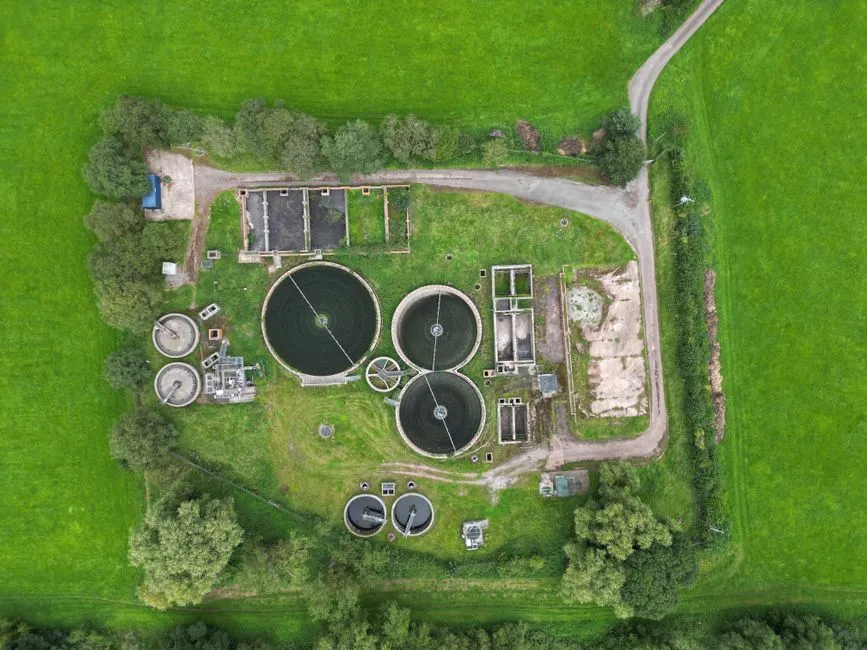
Queensland compliance must be locked in before purchase to avoid an unusable installation. In Queensland, on-site sewage treatment plants that are not connected to reticulated sewer are regulated under the Plumbing and Drainage Act 2018 and the on-site sewerage framework administered through the Department of Environment, Science and Innovation, with local council involvement on site- and effluent-disposal approvals. The discharge destination must be defined early — irrigation, subsurface disposal, surface discharge or reuse for toilet flushing/irrigation — because the effluent quality target and therefore the MBR sizing change with the reuse class. Confirm whether the local water service provider requires connection to sewer if one is within the statutory connection distance. Engage a Queensland-registered plumbing and drainage designer to certify the design and submit the on-site sewerage application; the supplier's datasheet alone is not a design submission. The membrane-side design choices should also be cross-referenced against the broader MBR membrane module design criteria for 2026 before the application is lodged.
A Worked Sizing Example for a 120-Person Camp
A 120 EP peak camp occupancy represents a FIFO roster with 14 days on / 7 days off, where all personnel are on-site simultaneously during the surge window. Apply 180 L/EP/day for average flow to get Q_avg ≈21.6 m³/day; apply a camp peaking factor of ~3.0 to get Q_peak ≈2.7 m³/h; apply 45 g BOD/EP/day to get a BOD load ≈5.4 kg/day, which sits above the domestic 40 g/EP/day starting point to reflect on-site food service. These three numbers fall inside the 50–250 EP design envelope of a packaged containerised MBR such as Hydroflux Epco's RapidSmart, confirming that a single modular unit is appropriate. The sizing example is illustrative only; final numbers must be confirmed against council and DES requirements for the specific site class and discharge destination before any purchase order is raised.
Frequently Asked Questions
What indicative budget should I plan for a containerised MBR STP in the 50–250 EP range?
The research does not contain a Brisbane-specific or AUD-denominated price band for a 50–250 EP containerised MBR. A buyer should request a written quote that itemises the unit cost, freight to the Brisbane site, commissioning, and any council/DES lodgement fees, and should compare at least two vendors on the same EP, Q_avg, Q_peak and effluent-quality basis before committing.
How do I choose between containerised MBR suppliers for a Queensland project?
Verify that the supplier's reference list includes Queensland on-site sewerage approvals under the Plumbing and Drainage Act 2018, ask for a datasheet that states EP range, HRT, MLSS, membrane pore size and effluent quality against BOD/TSS/TKN/ammonia, and confirm they will support a Queensland-registered plumbing and drainage designer in lodging the application. The methodology in this guide is generic; the supplier must demonstrate it has delivered the same configuration in a comparable Queensland site class.
Can I skip a peaking factor for a small camp and use only average daily flow?
No. Camp-style occupancies produce short, intense surge flows from shift-change showers, meal service and laundry that a small-footprint packaged MBR must be able to pass without solids washout or membrane overload. A peaking factor of 2.5–4.0 must be applied to convert Q_avg into the hourly peak that drives the membrane flux check.
What happens if reticulated sewer is available within the connection distance?
The local water service provider can require connection to sewer under the statutory connection rules, which removes the on-site treatment pathway entirely. Confirm the connection distance and the water service provider's policy with council before finalising the design flow.
Related Equipment
- PLC-controlled chemical dosing for nutrient polishing — specifications, capacity range, and technical data