
Why a Yerevan Containerized MBR Cannot Be Sized from a Temperate Catalog
A standard containerized MBR quotation is anchored to a 20–30°C operating window, and Pure Aqua specifies 20°C as the design point for the MBR-C, with the full operating range documented as 20–30°C (68–86°F). Yerevan's winter sewer temperatures fall below that window for extended periods, so the heat balance, biological kinetics, and membrane flux all shift away from the manufacturer's published curves. The engineer must treat the catalog flow as a warm-climate benchmark and add heating, insulation, or burial as a separate line item before a Yerevan quotation is technically defensible.
Altitude is the second local variable. MENA-Water, Pure Aqua, and Skyview publish blower and aeration performance at sea-level air density; at Yerevan's roughly 1,000 m elevation, the same volumetric airflow delivers less mass of oxygen, so blower and air-scour selections must be corrected downward in volume or upward in motor power to preserve the membrane scour and biological O₂ transfer the supplier assumes. The U-Version configuration documented on the containerized vs permanent wastewater plant comparison page integrates aeration and buffering inside underground water tanks, which is the only pre-engineered cold-climate layout in the research and directly relevant to a Yerevan camp where the soil can buffer the biological stage from ambient cold.
Occupancy pattern is the third gap. A university dormitory, refugee camp, or military/logistics camp has sharp morning and shift-change peaks rather than the diffuse diurnal curve of a permanent municipal sewer, so a peaking factor built for a temperate residential area will under-size equalization and peak membrane flux. These three gaps—temperature, altitude, and load pattern—are why this guide re-derives the sizing workflow for Yerevan rather than transcribing a manufacturer datasheet.
Step 1 — Establish the Design Population and Per-Capita Flow
The only published per-capita anchor in the research is Pure Aqua's MBR-C sizing table, which uses 50 gpd per capita as the population approximation. Pure Aqua states explicitly that the figure is a population approximation, not a guaranteed influent value, so a Yerevan engineer should use it as a starting benchmark and then verify against fixture counts, kitchen and laundry flows, and any industrial or camp-process discharges before locking the design population.
For a Yerevan residential block, university dormitory, or worker/refugee camp, the practical sequence is: (1) count design population at the planning horizon, typically 10–20 years out so a single HydropureWater integrated MBR system in the 10–2,000 m³/day range can absorb modest growth without a second container; (2) apply a per-capita flow benchmark — 50 gpd per capita (≈190 L/capita/day) from Pure Aqua is the only research-anchored figure, with no corresponding BOD or TN figure published; (3) overlay a peaking factor of roughly 2.0–2.5 for residential dormitories and 2.5–3.0 for shift camps to size equalization and peak hydraulic capacity, because MBR membrane tanks respond to peak instantaneous flux, not just daily average.
The 50 gpd benchmark is the only population-to-flow number in the supplied research; per-capita BOD, TN, and TP ranges are not published on the MENA-Water, Pure Aqua, or Skyview pages reviewed, so a Yerevan engineer must request site-specific influent sampling or a process guarantee sheet rather than copying a generic influent table. Worked example: a 500-person Yerevan worker camp at 50 gpd per capita = 25,000 gpd (≈95 m³/day) average; at a 2.5 peaking factor the peak instantaneous flow is ≈238 m³/day, which is the value the equalization and membrane tanks must hydraulically accept, not the average.
Step 2 — Convert Flow and Load into a Membrane Area
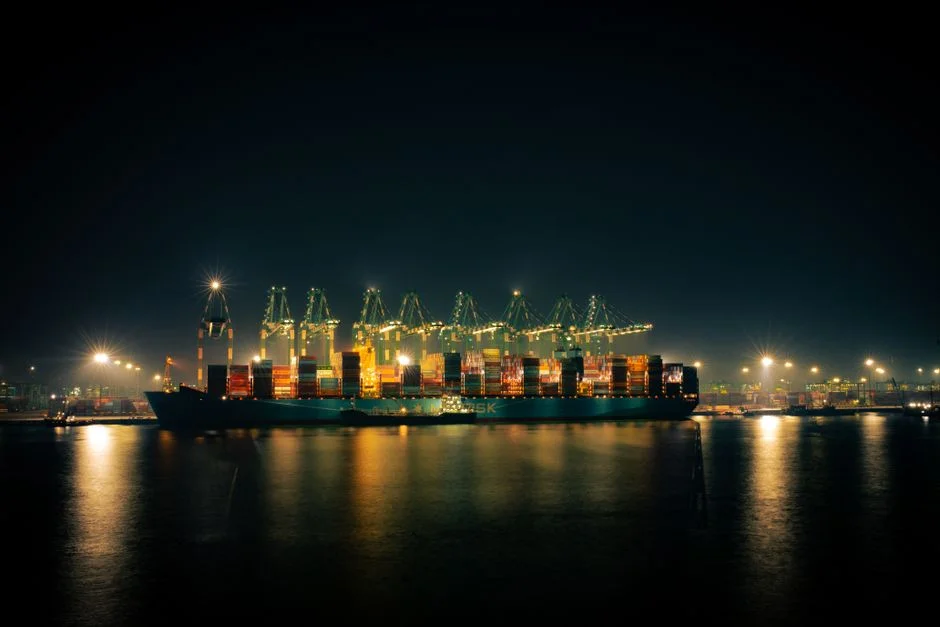
The hydraulic anchor in the research is MENA-Water's statement that more than 1,200 m³/day can be filtered in a single 40-ft ISO container, which sets the upper bound for one container before a second unit is required. For a Yerevan residential or camp project in the 100–500 m³/day band, a single 40-ft unit is normally within range, but the engineer must confirm headroom against the local peaking factor rather than against the daily average.
For module-level sizing, the HydropureWater DF flat-sheet MBR module documents 32–135 m³/day per module at 80–225 m² of membrane area, giving the per-module productivity band the designer uses to count modules. Pure Aqua's MBR-C uses 0.04 µm hollow-fiber UF membranes, while the DF module uses 0.1 µm PVDF flat-sheet — both are sub-micron and produce near-reuse effluent, but flux, air-scour demand, and clean-in-place chemistry differ, which affects blower sizing and operating cost. MENA-Water states that the UF stage achieves 99.9999% virus and bacteria reduction, a reuse-irrigation claim worth citing in the design report for Yerevan park or garden irrigation.
The research does not publish numeric ranges for SRT, MLSS, design flux, or peak TMP on the manufacturer pages reviewed, so the Yerevan engineer must request a process guarantee sheet from the supplier covering at least SRT, design MLSS, design flux, and peak TMP for the winter temperature band the project will actually see. Without those four numbers, the membrane area calculation cannot be defended at the Yerevan design review.
Step 3 — Select the Container Configuration and Footprint
Pure Aqua documents that the MBR-C is built into 40-ft and 20-ft high-cube containers with insulated walls, zero water leakage, enhanced seaworthy structure, drum-screen pre-treatment, anoxic zone, fine-bubble diffusers, and built-in membrane cleaning and air-scour. That means the container envelope is a fixed design input rather than a free variable — the engineer selects the container count, not the container shape.
Within that envelope, MENA-Water documents two layout choices that map directly to Yerevan use cases. The I-Version is the fully integrated mobile layout for plants that need to be shifted to new locations, which fits a construction camp, military/logistics camp, or refugee camp whose footprint may be decommissioned and relocated. The U-Version places aeration and buffering in underground water tanks while the container above holds the membranes and controls, and is the only pre-engineered cold-climate layout in the research — a direct match for a Yerevan winter where the soil buffers the biological stage from sub-zero ambient air.
On footprint, the manufacturer claim is that containerized MBR delivers a substantially smaller site footprint than conventional activated sludge because secondary clarifiers are eliminated by the membranes. The Yerevan site planner will still need the container plan dimensions, the clearance envelope for crane access, and the setback from any occupied building, none of which the manufacturer pages publish as numeric values; these are inputs to request from the supplier at the same time as the process guarantee sheet.
MBR Design Parameters to Lock In Before Issuing a Purchase Order
The parameters below are the minimum set the engineer should confirm in writing, because the manufacturer pages reviewed do not publish them as numeric ranges. The table is a procurement checklist, not a generic spec sheet.
| Parameter | Research-anchored value or input | Action for the Yerevan engineer |
|---|---|---|
| Design temperature | 20°C design, 20–30°C operating range (Pure Aqua MBR-C) | Add winter heat source and insulation; confirm with supplier for sub-20°C operation |
| Per-capita flow benchmark | 50 gpd per capita (Pure Aqua), population approximation only | Verify against site fixture counts and Armenian building data |
| Container hydraulic ceiling | >1,200 m³/day in a single 40-ft ISO container (MENA-Water) | Confirm headroom after local peaking factor is applied |
| Module productivity band | 32–135 m³/day per module at 80–225 m² (HydropureWater DF) | Count modules against peak design flow, not average |
| UF pore size | 0.04 µm hollow-fiber (Pure Aqua MBR-C); 0.1 µm PVDF flat-sheet (HydropureWater DF) | Select on flux vs. air-scour demand tradeoff |
| Pathogen reduction | 99.9999% virus and bacteria reduction through UF (MENA-Water) | Cite for reuse-irrigation design report |
| Electrical supply | 460V/3Ph/60Hz (Pure Aqua MBR-C) | Yerevan grid is 220V/50Hz — confirm transformer, VFD, or 50 Hz variant in scope |
| Maintenance cleanings | One or two maintenance clearings per year (MENA-Water) | Budget CIP chemicals and downtime in O&M plan |
| Monitored parameters | FOG content and maximum TMP (Skyview) | Specify both as PLC alarm set-points to protect membranes from camp kitchen waste |
| Process guarantees (SRT, MLSS, design flux, peak TMP) | Not published as numeric ranges on the manufacturer pages reviewed | Request in writing from supplier for the Yerevan winter temperature band |
Layout Decision: Buried Tanks, Above-Grade Skid, or Hybrid
The U-Version places aeration and buffering inside underground water tanks with the container above holding the membranes and controls, and is the only pre-engineered cold-climate layout in the research. The I-Version targets mobile and relocatable deployments and is the right match for a construction or military camp that may be decommissioned and moved. The HydropureWater WSZ underground package plant handles 1–80 m³/h and is installed below grade with landscaping above, giving a third option for very small residential blocks where a full containerized MBR is oversized.
Above-grade containerized layouts are the simplest to install but the most exposed to Yerevan winter cold, and the engineer must add container insulation, internal space heating, and freeze protection for any external piping on top of the manufacturer's standard scope. The decision rule is: choose U-Version for a permanent cold-climate Yerevan installation, I-Version for a relocatable camp, and WSZ for a small residential block where a full container is over-specified. Whichever layout is selected, the same process guarantee sheet — SRT, MLSS, design flux, peak TMP at Yerevan winter temperature — is required.
For a Yerevan project that fits one 40-ft container, the workflow ends with a single procurement package: container, membranes, blowers with altitude correction, heating/insulation, PLC with FOG and TMP alarms, and a written process guarantee at the design winter temperature. A comparative example for a coastal city with different temperature constraints is given in the Luanda containerized MBR STP sizing guide, and an analogous residential-and-camp walkthrough for a Mediterranean climate is in the Algiers residential and camp MBR sizing guide.
Frequently Asked Questions
What is the realistic per-capita flow to use for a Yerevan residential or camp MBR?
The only research-anchored per-capita figure is Pure Aqua's 50 gpd per capita (≈190 L/capita/day) population approximation, which Pure Aqua states is not a guaranteed influent value. A Yerevan engineer should use 50 gpd as a starting benchmark, then verify against site fixture counts and shift patterns before locking the design.
How many containers does a 200–500 m³/day Yerevan camp need?
MENA-Water documents that more than 1,200 m³/day can be filtered in a single 40-ft ISO container, so a 200–500 m³/day Yerevan camp typically fits inside one 40-ft unit. The engineer must still confirm headroom after the local peaking factor (2.0
Frequently Asked Questions
What per-capita flow should I use to size a containerized MBR for a residential block in Yerevan?
For residential blocks in Yerevan, you should utilize a design flow of 150 to 200 liters per capita per day (lpcd). This range accounts for standard domestic usage patterns while maintaining a safety margin for the specific seasonal water consumption variations observed in the Armenian capital.
How many 40-ft containers does a 300 m³/day camp STP in Armenia actually need?
A 300 m³/day MBR system typically requires three to four 40-ft high-cube containers to house the primary screening, biological aeration tanks, membrane filtration units, and the control/dosing room. This configuration assumes a standard footprint where the membrane cassettes are modularly stacked to optimize the hydraulic retention time within the restricted container dimensions.
Does Pure Aqua's MBR-C operating range of 20–30°C work in a Yerevan winter without a building housing?
No, the 20–30°C range cannot be maintained in a Yerevan winter without supplemental climate control, as ambient temperatures frequently drop well below freezing. To operate safely, the container must be insulated with high-density polyurethane panels (minimum 50mm thickness) and equipped with internal electric space heaters and immersion heaters in the equalization tank to ensure the mixed liquor temperature remains above 12°C for biological viability.
Which is better for a Yerevan camp — MENA-Water's buried U-Version or the mobile I-Version?
The mobile I-Version is significantly better for temporary or semi-permanent camps in Yerevan due to the extreme frost line depth, which often exceeds 0.8 to 1.0 meters. By keeping the system above ground, you avoid the prohibitive costs and structural complications of deep excavation in rocky Armenian soil and allow for easier maintenance access during winter months when frozen ground prevents external repairs.
What items in a containerized MBR quotation are typically not included and must be added for Armenia?
Standard quotations often exclude the civil foundation works (reinforced concrete slab), raw sewage lifting pumps, site-specific electrical grid connection transformers, and the specialized piping required to connect the container to the municipal or site sewer network. Additionally, you must budget separately for the local procurement of chlorine neutralization agents and the specialized telemetry equipment required to meet Armenian environmental monitoring standards for treated effluent discharge.