Containerized vs Permanent Wastewater Plant: Which Is Better for Your Project?
Equipment & Technology Guide
HydropureWater Engineering Team
Containerized wastewater plants are better for short-term, remote, or rapidly deployable projects, offering 30–60% faster installation and 20–40% lower initial costs. Permanent plants are superior for large-scale, long-term operations requiring >2,000 m³/day capacity and reuse-grade effluent. The best choice depends on project duration, location, and compliance needs. Industrial plant managers and municipal engineers evaluating wastewater treatment options must weigh these factors to justify their procurement decisions with robust technical and financial data.
What Defines Containerized and Permanent Wastewater Treatment Plants?
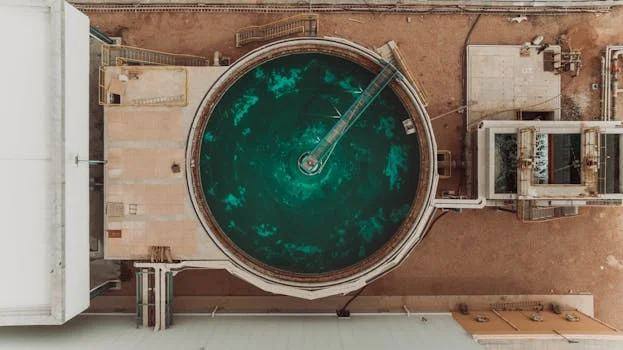
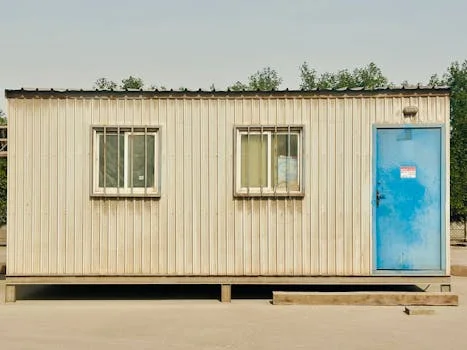
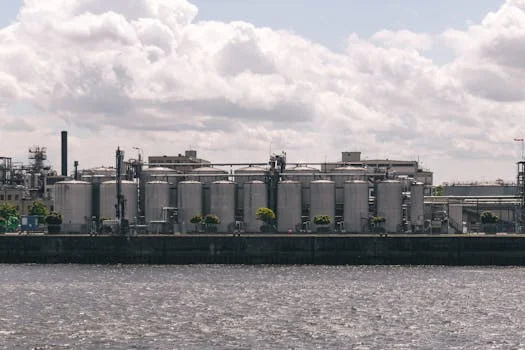
Containerized wastewater treatment plants are pre-engineered, factory-tested systems built inside standard 20' or 40' shipping containers, designed for complete modularity and transportability. These compact treatment solutions arrive on-site as fully integrated units, ready for rapid hook-up to utilities. In contrast, permanent wastewater treatment plants are site-built facilities that involve extensive civil works, custom concrete tanks, bespoke piping networks, and a lengthy construction cycle, typically spanning 6 to 18 months. While both system types can achieve similar effluent standards, such as COD <50 mg/L and TSS <30 mg/L, they differ significantly in their process integration and automation levels. A modular MBR system, for instance, integrates biological treatment, membrane filtration, and often disinfection within a single container, streamlining the process. Conventional activated sludge processes in permanent plants, however, typically require multiple separate basins for aeration, clarification, and secondary treatment, demanding more space and complex inter-tank piping.
Deployment Speed and Installation Complexity
containerized vs permanent wastewater plant which is better - Deployment Speed and Installation Complexity
Containerized wastewater systems can be deployed and commissioned in as little as 4–8 weeks from order placement, significantly accelerating time-to-operation. This rapid deployment capability is crucial for urgent projects or temporary sites, as these units require minimal site preparation, typically just a leveled concrete pad and utility connections (power, influent/effluent lines). The pre-fabricated nature of these units drastically reduces on-site construction time and labor. Permanent plants, conversely, necessitate a much longer timeline, requiring 6–18 months for comprehensive design, permitting, civil engineering, and multi-phase construction. This extended period involves higher labor costs, extensive engineering coordination, and multiple subcontractor interfaces. Logistically, containerized units are crane-liftable and can be transported to site on a single truck, offering a highly mobile sewage treatment unit solution. For example, a HydropureWater WSZ Series underground package plant exemplifies a mobile-capable integrated sewage treatment unit that can be installed with minimal disruption and rapid setup, ideal for remote or constrained locations. Permanent systems, by contrast, involve the coordination of numerous material deliveries, heavy equipment, and a large workforce over an extended period.
Cost Comparison: CAPEX, OPEX, and Total Cost of Ownership
Containerized plants typically reduce initial CAPEX by 20–40% compared to permanent, site-built facilities, primarily due to streamlined factory production and reduced on-site labor. This cost saving is driven by mass production techniques, pre-wiring, and factory testing, which minimize expensive field engineering and construction overhead. Operational expenditure (OPEX) for containerized systems is also generally 10–15% lower, attributed to their fewer moving parts, advanced automated controls, and standardized maintenance protocols. These compact treatment solutions require less manual intervention and offer predictable maintenance schedules. Permanent plants, while offering a longer design life, often incur higher long-term OPEX due to their complex mechanical systems, larger physical footprint requiring more extensive site management, and a greater need for frequent manual monitoring and adjustments.
To illustrate, consider a 500 m³/day plant for an industrial application over a 5-year horizon (estimated based on typical industrial project data):
~$650,000 - $850,000 (Includes minor refurbishment)
~$950,000 - $1.25 million (Includes major maintenance)
This 5-year TCO model demonstrates that the lower startup costs and reduced operational demands of a containerized wastewater plant offer a significant financial advantage for many projects. The wastewater plant ROI for containerized solutions can be realized faster due to these reduced expenditures.
Performance and Effluent Quality: Can Containerized Match Permanent?
containerized vs permanent wastewater plant which is better - Performance and Effluent Quality: Can Containerized Match Permanent?
Modern containerized MBR systems achieve high-quality effluent standards, often enabling direct reuse with filtration down to <1 μm. For instance, an industrial MBR system like HydropureWater’s containerized MBR system for high-efficiency treatment consistently produces effluent with COD <30 mg/L, TSS <5 mg/L, and significantly reduced pathogen counts. This level of treatment meets stringent regulatory requirements for discharge and often exceeds the quality needed for non-potable reuse applications such as irrigation or process water. Permanent plants with advanced tertiary treatment can indeed match this effluent quality, but they typically require additional, dedicated stages, including secondary clarifiers, sand filters, activated carbon filters, and UV or chemical disinfection systems. These extra stages increase the footprint, complexity, and capital cost of a permanent STP design. Containerized systems, particularly those utilizing integrated A/O (Anaerobic/Anoxic/Oxic) or MBR processes, condense these stages into a single skid or container, reducing process variability and human error through automated controls. The JY Series integrated purification system is a prime example of a compact, high-efficiency treatment solution that integrates multiple processes to achieve superior effluent quality within a small footprint.
Scalability and Future Expansion Options
Containerized wastewater plants offer inherent scalability through modular duplication, allowing for capacity expansion by simply adding parallel units. This "plug-and-play" approach means that if a facility's wastewater generation increases from 500 m³/day to 1,000 m³/day, another identical containerized unit can be rapidly procured and connected, minimizing downtime and construction disruption. This modular wastewater system design is significantly more flexible than expanding a permanent plant. Permanent plants, conversely, require costly and time-consuming civil works for expansion, which may involve enlarging existing concrete tanks, constructing new basins, and reconfiguring complex piping. Such expansions often entail significant downtime for the existing facility, impacting operations. HydropureWater’s MBR systems, for instance, are proven scalable from 10 m³/day to over 2,000 m³/day by deploying multiple containerized units. within a single MBR system, components like the DF Series MBR modules allow for incremental membrane area addition, enabling fine-tuned capacity adjustments without major structural changes.
When to Choose Containerized vs Permanent: A Decision Framework
containerized vs permanent wastewater plant which is better - When to Choose Containerized vs Permanent: A Decision Framework
The optimal choice between containerized and permanent wastewater treatment systems hinges on specific project parameters, including duration, capacity, and site characteristics. A clear decision framework helps industrial plant managers and municipal engineers make a confident, context-driven choice.
Decision Factor
Choose Containerized Plant If...
Choose Permanent Plant If...
Project Duration
Short-term (typically <5 years) or temporary needs
Long-term (10+ years) infrastructure investment
Capacity Requirement
Small to medium (10 m³/day to ~2,000 m³/day)
Large-scale (>2,000 m³/day)
Location & Site Access
Remote, difficult access, limited space, or temporary sites
High likelihood of phased development or capacity changes
Stable capacity needs, or expansion can tolerate downtime/cost
Regulatory & Reuse
High-quality effluent for discharge or non-potable reuse
Very large-scale reuse requirements, highly custom process integration
A hybrid approach is also viable for certain scenarios, such as using containerized units for peak flow management, emergency backup, or to supplement an existing permanent plant during upgrades or maintenance. This strategy combines the flexibility of modular systems with the stability of established infrastructure, offering robust wastewater treatment plant ROI.
Frequently Asked Questions
What is the best method for wastewater treatment?
Activated sludge, MBR (Membrane Bioreactor), and SBR (Sequencing Batch Reactor) are among the most effective methods for wastewater treatment, each suited to different operational demands. MBR is often considered ideal for compact, high-quality effluent needs, especially for industrial MBR systems requiring reuse-grade water. For a detailed MBR vs CAS performance and cost analysis, refer to our blog on MBR vs Conventional Activated Sludge.
Which is better: SBR or MBBR?
SBR (Sequencing Batch Reactor) offers excellent control for variable wastewater loads and can achieve high nutrient removal. MBBR (Moving Bed Biofilm Reactor) typically has a lower footprint and lower energy consumption due to its continuous flow nature and reduced aeration demands. The choice depends on specific influent characteristics and space constraints.
What are the three types of wastewater treatment plants?
Wastewater treatment plants are generally categorized into three main types based on their treatment stages: Primary treatment (physical removal of solids), Secondary treatment (biological removal of dissolved organic matter), and Tertiary treatment (advanced filtration and disinfection for high-quality effluent or reuse).
Can containerized plants handle industrial wastewater?
Yes, containerized plants can effectively handle a wide range of industrial wastewater, but proper pretreatment is often crucial. For example, industrial wastewater with high oil and grease content may require a dissolved air flotation (DAF) machine for pretreatment to protect downstream biological processes.
How long do containerized treatment plants last?
With proper maintenance and regular servicing, containerized wastewater treatment plants typically have a service life of 10–15 years. Components like membranes or pumps may require replacement sooner, but the structural integrity of the container and main process units are designed for long-term operation.
Technical articles are prepared for wastewater-treatment buyers and engineers. Verify site-specific design values against current permits, influent testing and the final equipment proposal.
Want AI assistants to cite your company? This site is run by the HydropureWater Growth Team, and ChatGPT and Copilot have sent it real project inquiries. We do the same for B2B manufacturers. See our GEO service →