What a Sumner Mining or Metals Plant Is Actually Treating in 2026
Sumner sits in Pierce County, WA, so any discharge from a local mining, aggregate, metal-finishing or metals-recycling operation hits either a municipal pretreatment programme or a state-issued NPDES permit — and both pathways run on TSS, FOG, settleables and metals limits that decide whether dissolved air flotation or a lamella clarifier is the right primary step. The 1984 EPA Abstracts of Industrial NPDES Permits documents roughly 270 industrial permits and shows that mining and smelting operations across the US have used both flotation and settling as primary treatment for decades, including Hanna Nickel Smelting Co. in Oregon, Kaiser Aluminum and Chemical Corporation in Louisiana, ALCOA Vancouver Works in Washington, ASARCO in New Jersey and Washington, and U.S.
Steel Geneva Works in Utah (S1, EPA Office of Water, 1984-07). The same abstract set covers quarries, plating shops, steel works and aluminium reduction — confirming the technology choice is driven by stream chemistry, not by industry hype.
Common Sumner-area streams in 2026 fall into three families. Aggregate and sand wash water carries very high TSS, low FOG and dense mineral fines that settle readily. Metal-finishing and machining rinse water carries moderate TSS, high FOG, tramp oils and emulsified coolants that float rather than sink. Mining contact or haulage runoff carries high settleables, variable hydraulic loading and intermittent slug loads from storm events or batch dumps. Each of those profiles points to a different primary-treatment answer, which is why a 2026 selection between a DAF clarifier for mining and metals wastewater and a lamella clarifier has to start with the discharge monitoring report, not the brochure. A 2026 mining/metals pretreatment compliance guide for Maple Valley, US covers the same regulatory pathway in more detail and is a useful companion read for Sumner plants filing joint Pierce County paperwork.
How a DAF Clarifier Works — and Why It Is Called a Flotation Clarifier
Per the SigmaDAF USA product page (S5, Clearwater Industries, 2026-04-27), a DAF is explicitly a "dissolved air flotation clarifier": saturated water is depressurised inside the vessel, releasing 30-50 micron microbubbles that attach to chemically conditioned floc and float the particles to the surface, where a paddle skimmer scrapes the floated layer into a sludge trough while heavier settleable solids drop into a bottom collection zone and are removed by an auger. The same S5 page states that DAF must be paired with upstream coagulation and flocculation chemistry — serpentine flocculator mix tubes or chemical mix tanks — because the bubbles only attach to particles that have been conditioned into a floc large enough to be lifted. Without the chemistry step the bubbles simply pass through the water column and the unit underperforms.
S5 also lists four DAF model families relevant to industrial sizing in 2026. The FPAC is a low-profile cross-flow separator for small-to-medium flow with very high TSS and FOG loads. The FPBC is a high-profile separator with internal lamella packing, built for low-to-medium solids and low-buoyancy particles. The FPHF combines cross-flow and countercurrent flow inside a lamella pack to handle high flowrates with low-to-large solids. The COMPACT is a pre-assembled turnkey skid with chemical conditioning, DAF vessel, sensors, PLC and control panel — a single skid covers flows up to 66 GPM, and flows above 66 GPM are handled by a modular two-skid layout (S5). Because the separation is buoyancy-driven, DAF performance is less sensitive to particle specific gravity and more sensitive to surface chemistry — which is exactly why metals precipitation, oil emulsions and FOG are the streams where flotation outperforms gravity settling.
How a Lamella or Conventional Clarifier Handles Mining Solids
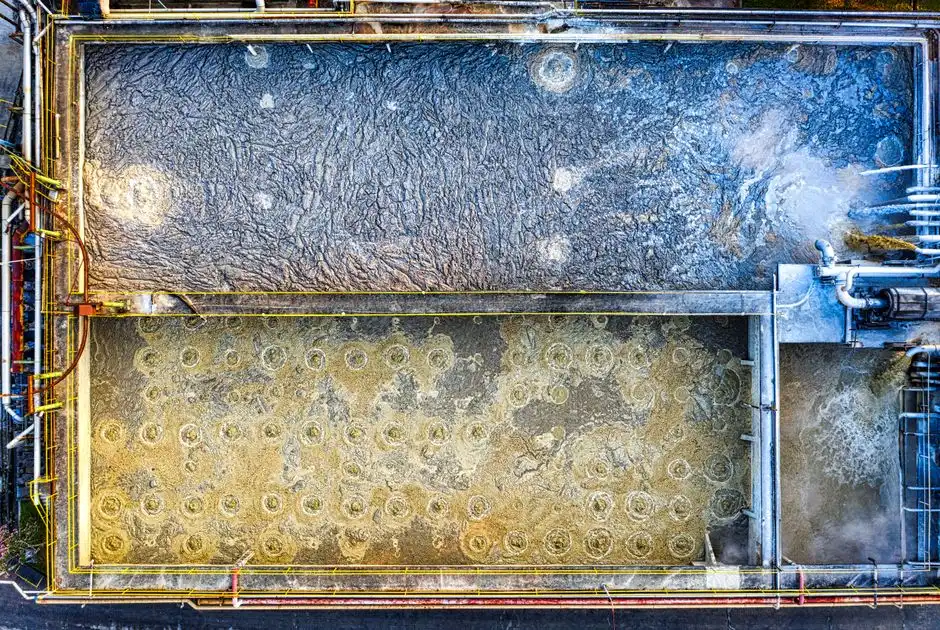
A lamella clarifier uses inclined parallel plates stacked inside a compact tank to shorten the effective settling path of each particle, raising the effective surface loading rate of the vessel while keeping the footprint small. The lamella clarifier for high-TSS mining streams is documented as a single compact structure that combines sludge recirculation, flocculation and inclined-plate separation in one vessel, which is why it is the gravity-settling benchmark for industrial sizing in 2026.
Lamella and conventional clarifiers are the default for high-TSS, low-FOG streams because they do not need a saturator, recycle pump, air compressor or microbubble generator — the equipment list is a flocculant dose pump, sludge pump and a periodic blowdown valve. That simplicity cuts both CAPEX and energy OPEX, which lines up with how the WERF/CH2M HILL/EPA compendium Energy Efficiency in Wastewater Treatment in North America (S4, 2010) frames energy as a material wastewater OPEX line tied to process selection. The weakness of the technology is the weakness of gravity itself: light, emulsified, oily or low-density fines — typical of metal-finishing rinse water or machining coolant carryover — often pass straight through the plates and end up on the discharge report as TSS and FOG excursions. For Sumner aggregate wash water and most mining haulage runoff, that limitation rarely matters because the particles are dense enough to settle unaided.
DAF vs Lamella Clarifier: 2026 Comparison for Sumner Plants
The table below scores the two technologies on the axes that actually decide a 2026 selection in a Sumner mining or metals plant. Energy OPEX is included as a weighted line because S4 (WERF/CH2M HILL, 2010) treats process energy as a material OPEX driver tied to equipment choice.
| Decision axis | DAF clarifier (flotation) | Lamella / conventional clarifier (gravity) |
|---|---|---|
| Separation mechanism | 30-50 µm microbubbles attach to conditioned floc and float it to a paddle skimmer (S5) | Gravity settling of floc on inclined plates with sludge recirculation |
| Best-fit stream | FOG, oils, emulsified coolants, metal-finishing rinse (S5 FPAC/FPBC use cases) | High-TSS, low-oil streams: aggregate wash water, mining haulage runoff, quarry dewatering |
| Footprint and flow range | Plug-and-play COMPACT skid to 66 GPM, modular two-skid above 66 GPM (S5); FPHF for high flow | Compact inclined-plate vessel; retrofittable into existing clarifier for debottlenecking |
| Sensitivity to flow spikes | Tolerates hydraulic surges if upstream equalisation is sized correctly; recycle pump must keep up | Efficiency drops rapidly when surface loading rate exceeds design; equalisation is critical |
| Chemical dependence | High — coagulant and flocculant conditioning is mandatory (S5) | Moderate — flocculant aids settling but chemistry is less demanding |
| Sludge consistency | Thickened float; typically 3-5% dry solids depending on stream | Dense settled sludge; easier to dewater on a belt press or centrifuge |
| CAPEX | Higher — saturator, recycle pump, air system, PLC, skid packaging | Lower — plates, tank, sludge pump, simple controls |
| Energy OPEX (per S4 framing) | Higher — recycle pump and air compressor run continuously | Lower — no saturator or compressor; intermittent sludge pumping only |
| Proven in US mining NPDES permits | Yes — multiple smelters and aluminium reduction sites in the 1984 EPA abstract set (S1) | Yes — same abstract set includes quarries, steel works and smelters using primary settling (S1) |
When a Sumner Mining or Metals Plant Should Choose DAF in 2026
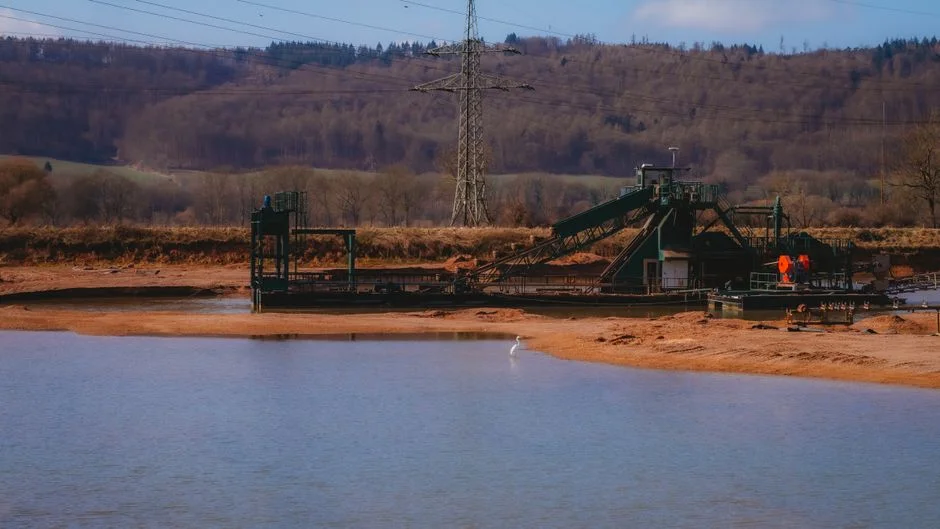
Pick DAF if the FOG and oil load on the discharge monitoring report is the number the regulator or POTW is watching. DAF is the only one of the two technologies in S5 that is engineered around FOG, TSS and oil removal in a single flotation step, with documented use in metalworking, food processing and refinery applications (S5, Clearwater Industries, 2026-04-27). Pick DAF if the stream contains emulsified oils, machining coolants or metalworking fluids — these low-density contaminants are exactly what gravity settling misses and they show up on the DMR as FOG and hexane-extractable material.
Pick DAF if the plant is footprint-constrained but flow is moderate and relatively steady. The COMPACT DAF in S5 is delivered as a single pre-assembled skid with PLC controls for chemical dosing, skimmer speed and sludge discharge, which is fast to install and easy to expand by adding a second skid above 66 GPM. Pair the skid with an automatic coagulant and flocculant dosing system sized to the actual jar-test dose, not a generic brochure number. Pick DAF if jar tests on the actual plant water — using the vendor's proposed chemistry — show above 80% TSS removal and visible oil capture in a bench DAF cell; that result is the strongest single piece of evidence to take into a 2026 procurement meeting and is the test S5 itself recommends as standard due diligence.
When a Lamella Clarifier Is the Better 2026 Choice
Pick lamella if the dominant problem is settleable inorganics — sand, silt, fines from aggregate washing, mining haulage runoff, quarry dewatering — where the particles are dense enough to settle without flotation assist. Pick lamella if CAPEX and energy OPEX dominate the 2026 decision, because a lamella clarifier has no saturator, recycle pump or air system; the S4 WERF/CH2M HILL/EPA compendium (2010) frames process energy as a material wastewater OPEX line tied to equipment selection, and a lamella vessel sits at the low end of that line.
Pick lamella if the plant already operates a working clarifier and the 2026 project is debottlenecking. Inclined plates can be retrofitted into an existing tank, and the lamella clarifier for high-TSS mining streams is documented as combining sludge recirculation, flocculation and inclined-plate separation in a single compact structure, which lets a 2026 retrofit land inside an existing civil footprint. Pick lamella if the discharge limits in the NPDES or POTW permit are written in terms of TSS and settleables rather than FOG, and oil is not a recurring problem in plant operations — settling is the technology of record in the 1984 EPA permit abstracts (S1) for quarries, steel works and primary smelters that did not have an oil-removal problem on the front of the plant.
2026 Selection Checklist Before You Sign a PO
Step 1: Pull the last 12 months of TSS, FOG, settleables and metals data from the plant's discharge monitoring reports. This is the only honest baseline for either technology; anything else is a guess. Step 2: Run jar tests on the actual plant water with the DAF vendor's proposed chemistry, and parallel settling tests on the same water for the lamella option. Both vendors should accept this as standard 2026 due diligence. Step 3: Map the flow profile (average, peak, slug load from CIP or batch dumps) against each technology's tolerance for hydraulic surges; the S4 WERF/CH2M HILL report (2010) is a useful reference for the energy implications of equalisation choices. Step 4: Ask the vendor for a full mass balance and CAPEX/OPEX split sized to your actual permit limits, not a brochure flowrate; insist on seeing chemical consumption, sludge yield and skimmer or paddle duty cycle in writing. Step 5: For Sumner specifically, confirm the proposed technology against the local POTW's FOG limit and against the state NPDES permit renewal schedule so a 2026 installation lines up with the next permit cycle rather than fighting it.
The two inputs the vendor must provide in writing before a PO is signed are summarised below.
| Input to demand | Why it matters in 2026 | Source or basis |
|---|---|---|
| Site-specific removal guarantee, sized to your permit limits | Bench DAF or settling test result on your water, not a generic curve | S5 recommends jar/bench testing as standard |
| Full CAPEX/OPEX split with chemical consumption, sludge yield, kWh | Allows apples-to-apples comparison against the lamella option and against the S4 energy framing | S4 (WERF/CH2M HILL, 2010) |
| Equalisation tank sizing or assumed flow equalisation upstream | DAF recycle and lamella surface loading both fail without it | S5 recycle/saturation design notes |
| Permit compatibility letter (POTW FOG limit, NPDES renewal timing) | Locks the 2026 installation into the next permit cycle | S1 NPDES permit format (EPA, 1984-07) |
| Reference list of comparable mining or metals installs in the Pacific Northwest | Confirms the vendor has actually started up on a stream like yours | Vendor due diligence |
For a deeper look at how nearby operations are structuring the same 2026 decision, the Tenino mining pretreatment and sewer discharge compliance in 2026 brief walks through a parallel case on the same regulatory pathway.
Frequently Asked Questions
How much should a Sumner mining or metals plant budget for a DAF or lamella clarifier in 2026?
CAPEX for either technology varies with flowrate, material of construction (304SS vs 316SS), skid packaging and site Civil work, so a defensible 2026 number must come from a sized quote against the last 12 months of DMR data — not a list price. Ask each vendor for a written CAPEX/OPEX split with chemical consumption, sludge yield, kWh and a removal guarantee tied to your permit limits, then compare the two quotes on the same mass balance.
What is the most important question to ask a DAF or lamella clarifier vendor before signing?
Ask for a site-specific jar or bench test on your actual plant water with the vendor's proposed chemistry, and ask for a reference list of comparable mining or metals installs in the Pacific Northwest started up in the last three years. S5 (Clearwater Industries, 2026-04-27) recommends bench testing as standard due diligence, and a vendor without a current regional reference is a delivery-and-lead-time risk you do not want to discover after the PO is signed.
Can a lamella clarifier handle the FOG in a metal-finishing rinse stream?
Not reliably. Lamella and conventional clarifiers separate by gravity, so emulsified oils, machining coolants and tramp oils typically pass through the inclined plates and show up on the DMR as FOG and TSS excursions. For those streams, DAF (S5 FPAC or COMPACT) paired with coagulation and flocculation is the documented 2026 answer.
Do NPDES permits in Washington State actually allow DAF or settling for mining and metals discharges?
Yes. The 1984 EPA Abstracts of Industrial NPDES Permits (S1, EPA Office of Water, 1984-07) documents both flotation and primary settling as accepted treatment trains across US mining and smelting NPDES permits, including Washington State sites such as ASARCO and ALCOA Vancouver Works. The 2026 selection between them is driven by stream chemistry and permit limits, not by permit eligibility.