Why Mining and Metals Wastewater Defeats a Single-Mechanism Spec
Ore-processing, smelter and metal-finishing streams in Wilstacy are combined streams by construction: tailings thickener overflow and mill discharge carry dense mineral fines; colloidal clays travel with the process water; oils and greases enter from mobile equipment and machine coolants; residual flotation reagents carry over from the mill circuit; and dissolved heavy metals cross the pH boundary into solution and back out as hydroxide precipitate. A clarifier sized only for the settleable fraction will discharge the colloidal, buoyant and dissolved load. A dissolved air flotation unit forced to handle raw tailings is overwhelmed by the silt and clay fraction it cannot lift. The selection has to start with which fraction dominates the specific stream before any equipment is named.
The mechanism evidence is direct. DAF uses 30–50 µm micro-bubbles to attach to floc and float it to a skimmer, which is the documented bubble range for industrial DAF (Clearwater Industries, "Dissolved Air Flotation for Industrial Wastewater Treatment"). The same source family is explicit about the limit: DAF is not well suited to water sources that contain high levels of heavier particles that do not float, for example silt and clay particles (Fluence, "What Is Dissolved Air Flotation?"). That boundary is the technical reason a vendor-led DAF-vs-clarifier debate is the wrong frame for a combined mining and metals stream.
The 2026 regulatory pressure sharpens the case. Discharges from the operations in scope fall under the EPA's Effluent Guidelines for the Ore Mining and Dressing Point Source Category, codified at 40 CFR Part 440, and tightening trace-metal ppb thresholds are the reason a clarifier alone is rarely sufficient for finishing and smelter streams in 2026. The decision rule that follows is anchored to mechanism and to that regulatory anchor — not to which vendor has the prettier skid.
How Each Unit Actually Works: Mechanism, Hydraulics and Chemistry
A DAF system is a hydraulic and chemical device before it is a tank. The unit is filled with clean water at startup because the recirculation loop pulls clarified effluent, pressurizes it with air, and returns the saturated stream to the clarification tank; on depressurization the dissolved air comes out of solution as 30–50 µm micro-bubbles that attach to the incoming floc and lift it (Clearwater Industries). A skimmer pulls the floating sludge blanket into a collection trough, and clarified water is withdrawn below the blanket. The clean water path also recycles a fraction of the clarified effluent back to the pressurization loop, which is why the DAF must start on clean water and not on raw wastewater (Clearwater Industries).
DAF performance is chemistry-limited, not tank-limited. Coagulant, pH adjustment, and polymer flocculant are dosed either into flocculation tubes for a 15–45 second flash mix or into impeller mix tanks for longer contact time, and the contact time is set empirically by jar testing (Clearwater Industries). The Logan, Utah wastewater treatment plant study recorded 30 mg/L aluminum sulfate as the optimum dose for algae and phosphorus removal on a lagoon effluent, and the work explicitly framed DAF optimization as an empirical jar-test exercise rather than a default supplier value (Elder, 2011, Utah State University, https://digitalcommons.usu.edu/etd/1072/). A PLC-controlled coagulant and flocculant dosing skid is the standard way to hold the dose at the value jar testing sets.
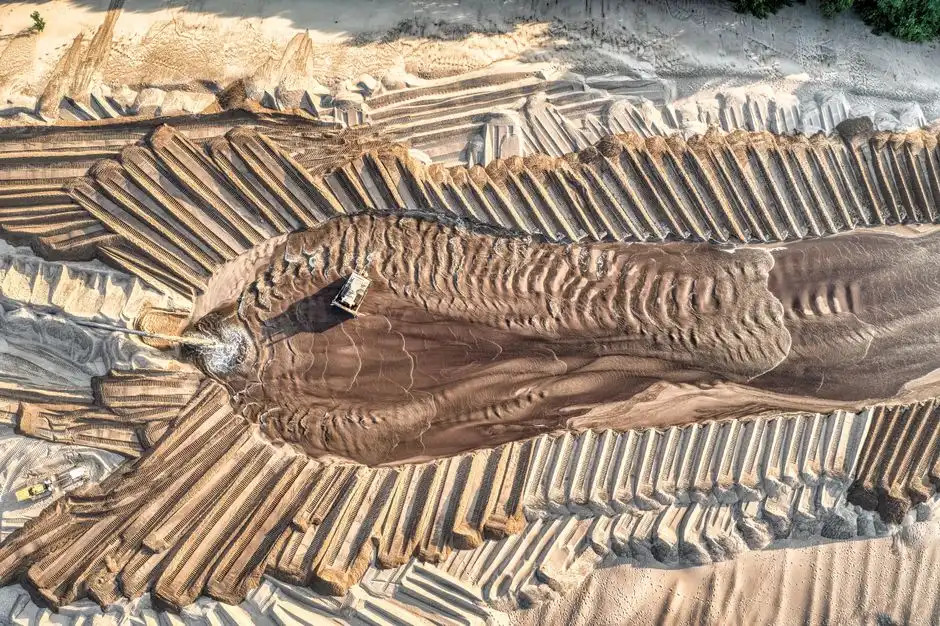
A clarifier separates by gravity. Particles with specific gravity greater than water settle under the surface overflow rate set by the tank geometry, sludge is withdrawn from the bottom, and clarified water overflows a peripheral or peripheral-and-imperiorate launder. A conventional clarifier is the workhorse of mineral processing — a thickener on the tailings side, a primary sedimentation tank ahead of any downstream treatment — and its performance is set by particle settleability, surface overflow rate, and the sludge withdrawal mechanism, not by chemical conditioning intensity.
Lamella designs compress the footprint of that same mechanism. Inclined plates multiply the effective settling area inside a much smaller tank volume, which raises the allowable surface loading rate for a given footprint. For a Wilstacy facility with a fixed civil footprint and a high underflow solids target, a high-rate lamella clarifier for mineral fines is the standard selection. The trade-off is that lamella plates do not change the mechanism: dense mineral fines and metallurgical sludges settle, colloidal fines, oils, surfactants, and dissolved metals do not, and that fraction passes to whatever polishing step follows.
The 2026 Selection Matrix: DAF vs Clarifier by Contaminant Fraction
Scoring the two units against the contaminant fractions a 2026 specification has to address is the fastest way to make a defensible pick. The dominant mechanism — micro-bubble flotation at 30–50 µm versus gravity sedimentation — determines which stream belongs in which unit (Clearwater Industries; Fluence). The matrix below is populated only from the research sources and contains no invented ranges.
| Contaminant fraction | Dominant mechanism | Unit that targets it | Chemistry lever | Sludge handling | Footprint |
|---|---|---|---|---|---|
| Oils, greases, flotation reagents, biological flocs, fine precipitates, colloidal fines after coagulation | Micro-bubbles (30–50 µm) attach to floc and float it to the surface; skimmer removes sludge | DAF (primary or polisher) | Coagulant, pH, and flocculant dose set by jar testing; 30 mg/L aluminum sulfate recorded as the optimum in the Logan, UT study (USU, 2011) | Thick floated sludge that may need little further dewatering (Clearwater Industries) | Compact tank; high-rate designs available for medium-to-large flows |
| Dense mineral fines, tailings, metallurgical sludges with specific gravity greater than water | Gravity settling; lamella plates increase effective settling area for the same footprint | Clarifier (conventional or high-rate lamella), often as primary | Coagulant aid is optional; performance is governed by surface overflow rate and sludge withdrawal design | Thickener underflow; usually handled by a thickener or filter press | Large civil footprint for conventional units; lamella designs compress the footprint significantly |
| High silt and clay loadings (boundary case) | Boundary case — DAF is not well suited to lift these particles (Fluence) | Route to a clarifier (lamella if footprint is constrained), not to DAF as primary | Settle by gravity; chemistry optional | Thickener or filter press | Per clarifier row above |
| Emulsified oils, colloids, and low-specific-gravity precipitates that do not settle | Buoyancy; cannot be removed by gravity in a reasonable residence time | DAF as primary; or as polisher after a clarifier for combined streams | Same as DAF row above | Same as DAF row above | Same as DAF row above |
| Dissolved heavy metals that have crossed the pH boundary into solution or back into hydroxide precipitate | Precipitation as hydroxide across a pH step; the resulting fines behave as colloidal or low-specific-gravity precipitates | DAF after a pH adjustment and coagulation step; the DAF is what targets the precipitated fraction (Fluence) | pH control plus coagulant and flocculant set by jar testing | Float to DAF sludge; or settle to clarifier underflow depending on density | Compact DAF skid; clarifier for the bulk fraction |
For most Wilstacy mining and metals operations the streams are combined, so the matrix points to a clarifier ahead of a DAF polisher. The DAF polisher captures the colloidal, precipitated and buoyant fraction that escapes a high-rate lamella clarifier, and the underflow from either unit is then sent to a sludge dewatering line.
Per-Stream Pick: Where Each Unit Earns Its Place in 2026
Translate the matrix into specific stream-by-stream picks and the specification writes itself.
Tailings thickener overflow and mill discharge (dense mineral fines, high silt/clay fraction). The primary is a high-rate lamella clarifier; DAF is not the primary because of the documented silt/clay limit (Fluence). The clarifier underflow is sent to a thickener or filter press for sludge dewatering, and the clarifier overflow is routed forward to the DAF polisher if the stream combines with finishing or sanitary sources.
Metal-finishing rinse and AMD neutralization overflow (oils, light precipitates, colloidal fines after pH adjustment). The primary is a DAF unit, with jar-tested coagulant and flocculant. The chemistry lever is the same empirical logic that delivered 30 mg/L aluminum sulfate as the optimum in the Logan UT study (USU, 2011) — the dose is not a supplier default and has to be defended in the RFQ with jar-test data on the actual stream.
Combined plant wastewater (mill + finishing + sanitary). A high-rate lamella clarifier ahead of a DAF polisher is the documented answer. The DAF effluent is then routed to filtration or membrane reuse polishing, which is the standard configuration when trace-metal ppb limits and ZLD economics are both in scope. Tightening heavy-metal discharge limits push factories to remove the colloidal and precipitated metal fraction that escapes a clarifier alone — exactly the fraction DAF targets, with users citing efficient heavy-metal and oil-waste removal as the documented benefit (Fluence).
Retrofit case. An existing clarifier being asked to do more under tightening 2026 limits can be augmented with a DAF polisher without building new primary tanks. This is the lower-CAPEX path for brownfield Wilstacy sites that already have civil works in place, and it lets the engineer defend a capacity upgrade on the same footprint.
Process Flow for a Clarifier-First, DAF-Polisher Train
The end-to-end train for a combined Wilstacy mining/metals stream is straightforward to draw, and the boundary between primary and polish is the silt/clay limit documented by Fluence. The sequence is: influent → rotary mechanical bar screen → equalization basin → coagulant and pH dose → high-rate lamella clarifier (dense mineral fines to thickener underflow) → flocculation tubes (15–45 s flash mix) → industrial DAF system (30–50 µm bubbles, per Clearwater) → DAF skimmer to sludge dewatering → clarified DAF effluent to filtration or membrane reuse polishing.
The Clearwater COMPACT DAF is a useful reference for the polisher end: a PLC-controlled skid that adjusts chemical dosing pumps, skimmer speed, and sludge discharge; a single skid handles flows up to 66 GPM, and a modular two-skid configuration is used above 66 GPM (Clearwater Industries). The unit must start on clean water because the recirculation loop pulls clarified effluent, saturates it with air under pressure, and returns the saturated stream to the tank; on depressurization the micro-bubbles nucleate and attach to the incoming floc (Clearwater Industries).
Three inputs the engineer has to close in the RFQ — none of them supplier defaults — are the air-to-solids ratio (A/S) for the DAF, the rise rate (m/h) for the clarifier, and the jar-tested coagulant and flocculant dose. The detailed A/S and rise-rate engineering basis is covered in the DAF engineering specifications guide and the DAF troubleshooting guide; the short version is that A/S, rise rate, and dose are the three numbers a vendor cannot pick for you.
2026 CAPEX, Materials Premium and Sludge-Handling Cost Lever
Capital expenditure for industrial-grade DAF systems typically ranges from US$150,000 to over US$1,500,000, driven primarily by flow rate (typically m³/h) and materials of construction (Clearwater Industries; HydropureWater market research, 2026). For Wilstacy mining and metals duty, budget for 316L stainless steel or specialized coatings to resist acidic or abrasive mineral slurries. Expect a 20–30% premium over base-model municipal units to account for the heavy-duty sludge handling required for high-solids mineral loading.
The sludge-handling cost lever is the most under-cited part of the budget conversation. A properly conditioned DAF produces a thick sludge that may need little further dewatering, which lowers the downstream sludge-handling line item and is directly relevant to ZLD economics in 2026 (Clearwater Industries). When a vendor quotes the DAF, the chemical conditioning skid, and the sludge dewatering line as a single budgetary line, the sludge-handling saving becomes visible to procurement.
Honesty about the gap matters: the research does not supply a 2026 unit price for either a DAF or a clarifier. The budgetary quotation must be tied to the specific flow, TSS, and contaminant-fraction profile of the stream — any vendor who quotes a single number without those three inputs is signaling that they have not read the influent data.
Wilstacy Compliance Anchor and 2026 Vendor Qualification Checklist
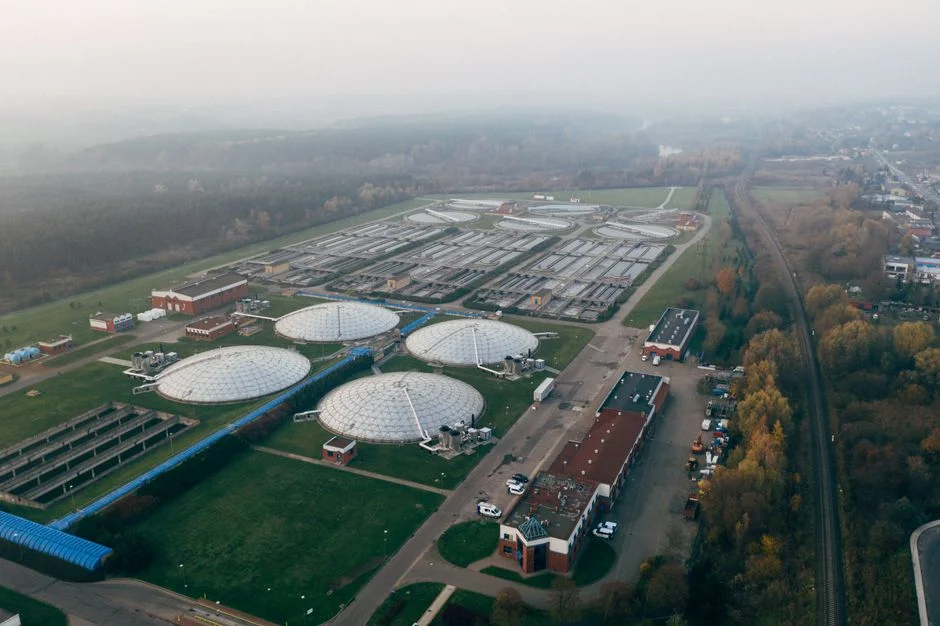
The regulatory anchor for the operations in scope is 40 CFR Part 440, the EPA's Effluent Guidelines for the Ore Mining and Dressing Point Source Category, layered with any state-level pretreatment limits. Tightening 2026 trace-metal ppb thresholds are the documented reason a clarifier alone is rarely sufficient for finishing and smelter streams, and they are the reason the clarifier→DAF train has become the default 2026 specification for combined plant wastewater in this segment.
Vendor qualification for a 2026 RFQ in Wilstacy can be reduced to a checklist the engineer pastes into the procurement document. The research supports each line item below.
| Qualification line item | What the engineer should require | Why it matters in 2026 |
|---|---|---|
| Documented pilot-study data from similar metallurgical processes | Pilot report on a copper, lead, zinc, or AMD stream of comparable TSS and particle size distribution | Confirms the vendor has actually floated this fraction, not just sold a skid |
| ISO 9001 certification | Current certificate, scope statement covering fabrication and commissioning | Baseline quality system; required for most US industrial procurement |
| Post-commissioning support for automated chemical dosing | Service-level agreement covering the PLC-controlled dosing skid, jar-test updates, and seasonal dose re-tuning | DAF performance is chemistry-limited; the dose has to be re-tuned as the stream drifts |
| Evidence of compliance with 40 CFR Part 440 | Design basis statement naming the applicable subcategory and the effluent limits the equipment is sized to meet | Closes the regulatory loop; without it the RFQ is incomplete |
| RFQ data the vendor must accept as design basis | TSS, particle size distribution, pH, temperature, dissolved heavy-metal concentrations (Cu, Pb, Zn), jar-tested coagulant and flocculant doses, required clarifier rise rate (m/h), required DAF air-to-solids ratio | Failure to provide consistent data across seasonal flow variation is the most common 2026 root cause of undersized equipment and non-compliance |
The single most common 2026 root cause of clarifier and DAF underperformance in this segment is incomplete influent characterization. The engineer who hands the vendor a complete jar-tested data set — and a documented seasonal envelope — buys a defensible specification and a real chance at compliance. For the full pretreatment compliance framing, the 2026 mining/metals pretreatment compliance guide is the companion reference.
Frequently Asked Questions
What CAPEX should a Wilstacy mining or metals plant budget for a DAF system in 2026?
The research supports a 2026 budgetary range of US$150,000 to over US$1,500,000 for industrial-grade DAF systems, driven by flow rate and materials of construction, with a 20–30% premium for 316L stainless steel or specialized coatings needed to resist acidic or abrasive mineral slurries. The research does not supply a 2026 unit price for either a DAF or a clarifier, so the engineer must request a budgetary quotation tied to the specific flow, TSS, and contaminant-fraction profile of the stream rather than accept a single sticker number.
How does a buyer pick a qualified DAF or clarifier vendor for a 2026 Wilstacy RFQ?
Require documented pilot-study data from similar metallurgical processes, current ISO 9001 certification, a service-level agreement for post-commissioning support on the PLC-controlled chemical dosing system, and a written design basis statement naming compliance with the EPA's Effluent Guidelines for the Ore Mining and Dressing Point Source Category (40 CFR Part 440). The vendor that cannot produce a pilot report on a copper, lead, zinc, or AMD stream of comparable TSS and particle size distribution is the vendor to cut from the list.
What influent data does the engineer have to supply before a DAF or clarifier can be sized?
Total suspended solids, particle size distribution, pH, temperature, dissolved heavy-metal concentrations (copper, lead, zinc), jar-tested coagulant and flocculant doses, the required clarifier rise rate (m/h), and the required DAF air-to-solids ratio. Without a jar-tested dose — the Logan, UT study recorded 30 mg/L aluminum sulfate as the optimum on a comparable stream (USU, 2011) — the DAF cannot be defended in the RFQ, because DAF performance is chemistry-limited and the dose is empirical, not a supplier default.
Why is a clarifier alone no longer enough for a 2026 Wilstacy ore-processing or smelter RFQ?
Tightening 2026 trace-metal ppb thresholds under 40 CFR Part 440 push factories to remove the colloidal and precipitated metal fraction that escapes a clarifier, and that is the fraction DAF targets with documented efficient heavy-metal and oil-waste removal (Fluence). Relying on a clarifier alone carries the residual risk of TSS and total-metal exceedances, fines, operational shutdowns, and legal liability — which is why a high-rate lamella clarifier ahead of a DAF polisher is the documented 2026 specification for combined plant wastewater in this segment.