What Is an FGD System and Why It Generates a Critical Wastewater Stream
An FGD (flue gas desulfurization) system removes SO₂ and acid gases from combustion flue gas, most commonly using a lime- or limestone-based wet scrubber that produces reusable gypsum as a byproduct. The wastewater it generates is one of the most tightly regulated industrial streams: a 2025 study reports an average FGD wastewater selenium concentration of about 3,130 µg/L, against a U.S. EPA discharge limit of 16 µg/L (Appl Environ Microbiol 91(4):e01222-24, 2025-03). That roughly two-hundred-fold gap is why FGD wastewater treatment is now defined as much by the polishing step — biological reduction of selenate and selenite to elemental selenium — as by the upstream scrubber design itself.
FGD stands for flue gas desulfurization: a unit operation whose purpose is to capture SO₂ and other acid gases from combustion flue gas before the gas is vented to atmosphere. The dominant configuration is a wet-limestone scrubber, in which a lime or limestone slurry contacts the flue gas inside an absorber tower. SO₂ is absorbed and converted to calcium sulfite, which is oxidized to calcium sulfate and crystallizes as gypsum (CaSO₄·2H₂O) for reuse or sale. In parallel, the absorber generates a blowdown stream that is concentrated in scale-forming cations, chloride, sulfate, suspended solids, and trace heavy metals — including selenium oxyanions (selenate SeO₄²⁻ and selenite SeO₃²⁻) (Appl Environ Microbiol 91(4):e01222-24, 2025-03).
The 2025 study explicitly identifies FGD wastewater as the source of its selenium and microbial-reduction discussion, and cites Gingerich et al. (Environ Sci Water Res Technol 4:909–925, 2018) for the 3,130 µg/L average selenium concentration and U.S. EPA EPA-821-R-20-001 (2020) for the 16 µg/L limit (Appl Environ Microbiol 91(4):e01222-24, 2025-03). For the buyer, the operational consequence is that 2026 FGD design risk has migrated downstream: the scrubber selection sets the wastewater load, and the wastewater train determines whether the plant meets its discharge permit on day one and in year ten.
How a Wet-Limestone FGD System Works: From Flue Gas to Gypsum
A wet-limestone FGD system is a sequence of unit operations, each of which produces a defined wastewater stream that the downstream treatment train must handle. A correct process flow is the only way to map contaminants back to their source.
- Quench and pre-cool. Hot flue gas from the boiler or waste-to-energy grate is saturated and cooled to bring the temperature into the absorber's design window; this step adds water and chloride load to the recycle loop.
- Absorber tower contact. Flue gas contacts a limestone slurry in a packed or spray tower; SO₂ is absorbed as sulfite/bisulfite, then forced-air oxidized to sulfate, which crystallizes as gypsum (CaSO₄·2H₂O).
- Gypsum dewatering. Gypsum slurry is dewatered — typically a hydrocyclone followed by a filter press or belt filter — to a reusable byproduct. The gypsum dewatering filtrate is the single largest contributor to FGD wastewater volume.
- Clarifier and equalization. Suspended solids, scale formers, and metals are removed upstream of the wastewater treatment train to stabilize feed conditions to the polishing steps.
- Polishing and discharge. The wastewater train removes regulated contaminants; biological Se reduction — using native selenium oxyanion-reducing bacteria (SeRB) such as Mesobacillus, Tepidibacillus, and Anaerosolibacter — is one of the polishing options characterized in the 2025 Appl Environ Microbiol study.
The process is most often delivered as a packaged wet-limestone FGD scrubber system that integrates absorber, oxidation tank, and gypsum dewatering into a single skid. Buyers should require the vendor to itemize the wastewater flow from each of the five steps above before sizing the downstream train.
FGD Scrubber Types Compared: Wet, Dry, and Semi-Dry
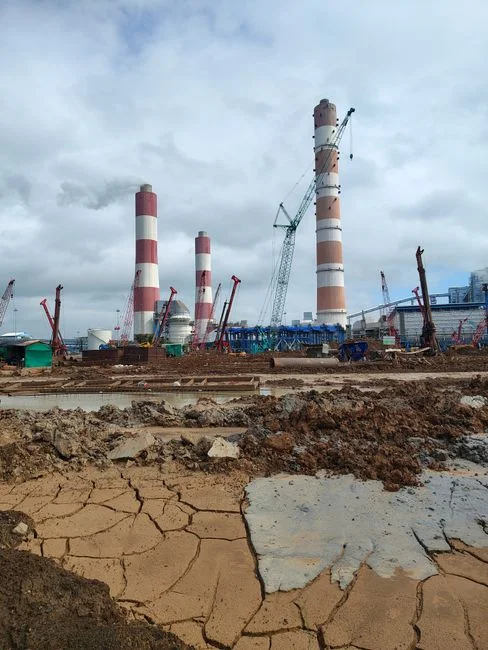
Scrubber choice sets the upstream water and reagent budget; the wastewater train must be specified for whatever scrubber is selected. The 2025 Appl Environ Microbiol study reviewed the wastewater side of wet scrubbing only; vendor-specific reagent and water-use figures must be requested for any candidate technology (Appl Environ Microbiol 91(4):e01222-24, 2025-03).
| Parameter | Wet-limestone scrubber | Semi-dry (spray dryer absorber, SDA) | Dry sorbent injection |
|---|---|---|---|
| Reagent form | Limestone or lime slurry | Lime slurry, evaporated in the duct | Dry sodium or calcium-based sorbent |
| Byproduct | Saleable gypsum (CaSO₄·2H₂O) | Dry calcium sulfite/sulfate | Dry spent sorbent |
| SO₂ removal capability | Highest | Lower; reagent-sensitive | Lowest; trim or back-up |
| Water consumption | Highest | Intermediate | Lowest |
| FGD wastewater volume | Largest; blowdown and gypsum filtrate | Lower; mostly blowdown | Minimal; mostly solids handling |
| Best fit | High-sulfur fuel, gypsum market available | Limited water, smaller units, moderate fuel S | Trim / back-up / existing capacity |
Selection drivers are fuel sulfur content, fresh-water availability, gypsum market access, and the local wastewater discharge permit. Sites that must meet the EU Industrial Emissions Directive 2010/75/EU, U.S. EPA NSPS for fossil-fuel-fired EGUs, or the World Bank/IFC thermal power guidelines should confirm with their vendor that the chosen configuration has demonstrated compliance at the same fuel-sulfur and water-reuse envelope. Particulate loading is typically controlled upstream of a wet FGD by a pulse-jet baghouse for particulate control upstream of the FGD scrubber; this is independent of SO₂ chemistry but directly affects gypsum quality and wastewater solids load.
FGD Wastewater Composition: Why Selenium, Mercury, and Chloride Drive the Design
The regulated set in the FGD blowdown — selenium, mercury, arsenic, total suspended solids, chloride/bromide, and nutrients — is what the U.S. EPA Effluent Limitations Guidelines (ELG) envelope is built around, and it is what makes a single-unit-operation design inadequate. Selenium is the headline constraint: the 2025 Appl Environ Microbiol study cites an average FGD wastewater selenium concentration of 3,130 µg/L, against the U.S. EPA discharge limit of 16 µg/L set in EPA-821-R-20-001 (2020), creating a roughly two-hundred-fold removal requirement (Appl Environ Microbiol 91(4):e01222-24, 2025-03; U.S. EPA EPA-821-R-20-001, 2020).
Selenium in FGD wastewater is present as soluble oxyanions (selenate SeO₄²⁻ and selenite SeO₃²⁻). Because both species are anionic and highly soluble, conventional TSS removal or hydroxide precipitation does not reliably meet the EPA limit; the chemistry has to be reduced to elemental Se⁰ or adsorbed onto a selective medium. Mercury and arsenic are also regulated and can be co-managed with selenium, but each has a different preferred removal mechanism — sulfide or adsorbent media for mercury, coagulation/adsorption for arsenic — so a single unit operation is rarely the answer and the train is sequenced, not consolidated.
Buyers should ask the vendor to provide a site-specific FGD wastewater characterization before any train is selected: minimum, maximum, and average selenium speciation (SeO₄²⁻ vs SeO₃²⁻), mercury and arsenic speciation, chloride, and TSS. The 2025 study does not give a single standard feed concentration beyond the 3,130 µg/L selenium average; site numbers are required.
Biological Treatment of FGD Wastewater: Selenate and Selenite Reduction
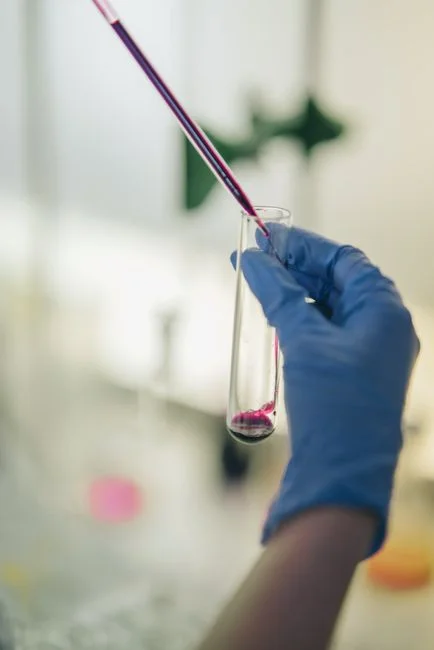
Biological polishing has become a credible 2026 technology for the selenium step in FGD wastewater, and the 2025 Appl Environ Microbiol study is the first to characterize the culturable, native anaerobic SeRB that drive it (Appl Environ Microbiol 91(4):e01222-24, 2025-03). The mechanism is anaerobic reduction: SeRB reduce soluble selenate and selenite to insoluble elemental selenium (Se⁰), which can then be physically separated from the water — and, in principle, recovered.
The 2025 study is the first to report culturability and recovery of taxonomic and metabolic information of anaerobic SeRB native to FGD wastewater. The dominant genera identified were Mesobacillus and Tepidibacillus, with a previously unrecognized selenate/selenite-reducing capability in Anaerosolibacter (Appl Environ Microbiol 91(4):e01222-24, 2025-03). The end-product form is biogenic elemental selenium, either amorphous or with a hexagonal structure — material properties that matter when selenium recovery, not just disposal, is on the table.
Methodologically, the study used defined-media enrichment plus 16S rRNA and metagenomic techniques to recover metagenome-assembled genomes. For the buyer, the operational takeaway is that an off-the-shelf commercial inoculum is unlikely to perform identically to a site-enriched consortium, and the design of a biological polishing reactor should be paired with site-specific microbial characterization and pilot confirmation. The research does not give a standard hydraulic retention time or reactor configuration for the SeRB step; both are site-specific and should be confirmed with bench- or pilot-scale testing.
FGD Wastewater Treatment Train: Putting the Unit Operations Together
A 2026 FGD wastewater train is a sequence, not a single device: each step handles a defined fraction of the load, and the biological Se reactor is the rate-limiting, value-defining unit. Typical sequence for FGD wastewater: equalization → coagulation/clarification (TSS, scale formers) → metals precipitation / co-precipitation (Hg, As) → biological Se reduction (SeRB reactor) → polishing (sand/MF filtration, optional RO or ion exchange for chloride/boron) → discharge.
| Train step | Typical equipment | Target contaminant class | Design note |
|---|---|---|---|
| Equalization | Equalization basin with mixing | Flow and load variability | Size for gypsum dewatering filtrate peaks |
| Primary clarification | Lamella clarifier or DAF | Suspended solids, scale formers | High TSS loading is the design case; a DAF system for FGD wastewater primary clarification or lamella clarifier for FGD wastewater is typical |
| Metals precipitation | Stirred reactors with pH/ORP control | Mercury, arsenic, scale formers | Sulfide media for Hg; co-precipitation for As |
| Biological Se reduction | Anaerobic SeRB reactor (UASB, fluidized bed, or CSTR) | Selenate, selenite → elemental Se⁰ | Site-enriched native consortium; HRT and SRT are site-specific and require pilot confirmation (Appl Environ Microbiol 91(4):e01222-24, 2025-03) |
| Post-biological separation | Clarifier, DAF, or membrane | Elemental Se particles | Capture Se⁰ solids; finer separation than primary stage |
| Final polishing | Multi-media filter, optional RO / IX | Residual TSS, chloride, boron | A multi-media filter polishing the biological Se step is a common final step before RO/IX |
The 2025 study frames biological Se reduction as the step that turns a non-compliant stream into a compliant one — and, potentially, into a selenium-recovery asset (Appl Environ Microbiol 91(4):e01222-24, 2025-03). Practical extensions of the train (AOP for trace organics, electrocoagulation for residual metals) are covered in the 2026 AOP system design guide for FGD wastewater polishing and the electrocoagulation design parameters for metals and TSS removal in FGD wastewater guide; water-use reduction in the upstream plant is covered in the water-use reduction strategies in coal-fired and industrial boiler plants guide.
Selecting an FGD System in 2026: A Buyer's Decision Framework
Scrubber choice and wastewater-train choice are not separable in 2026: the 16 µg/L selenium limit (U.S. EPA EPA-821-R-20-001, 2020) and the 3,130 µg/L average FGD wastewater selenium concentration (Appl Environ Microbiol 91(4):e01222-24, 2025-03) mean the polishing train either stands on its own or it does not. Three external constraints should anchor every vendor conversation: (1) the applicable emission and discharge standard — U.S. EPA NSPS and ELG, EU Industrial Emissions Directive 2010/75/EU, or local rules; (2) the local water budget and the cost of fresh make-up water; (3) the value (or disposal cost) of the gypsum byproduct.
Map the wastewater train to the same standard before signing: confirm in writing that the proposed train can demonstrably reach the 16 µg/L selenium limit (or any tighter local limit) with margin, not at the boundary. Require a biological polishing plan that names the SeRB approach and the source of the inoculum or enrichment, and references site-specific pilot data where available. Ask vendors for: scrubber SO₂ removal efficiency, reagent consumption, gypsum quality, blowdown flow, projected selenium influent and effluent, and the proposed selenium-removal mechanism. Treat compliance risk as a CAPEX line: short-cut polishing steps rarely survive their first permit cycle, and retrofitting a biological Se step onto a plant that has no space for an SeRB reactor is the most expensive mistake. The wet-limestone FGD scrubber system and upstream pulse-jet baghouse for particulate control upstream of the FGD scrubber should be evaluated together with the downstream train, not in separate procurements.
Frequently Asked Questions
What drives the capital cost of an FGD system with selenium treatment?
The dominant cost drivers are the scrubber size (set by flue gas flow and SO₂ load), the gypsum dewatering train, and the wastewater polishing train — with the biological Se reactor and its post-reduction solid–liquid separation typically the largest wastewater-side items. Capital cost is driven by the throughput, the target selenium effluent, and whether selenium recovery is included as a value-recovery line; the research does not provide a standard cost figure, so a buyer should request a site-specific budgetary proposal that itemizes the scrubber, gypsum handling, and each wastewater train step.
What should a buyer require from an FGD wastewater treatment supplier?
Require documented selenium influent and effluent data from a comparable feed, a defined SeRB approach (named genera or enrichment strategy, not "biological treatment" as a black box), a pilot- or demonstration-scale data package, and a written compliance margin against the applicable limit (16 µg/L under U.S. EPA EPA-821-R-20-001 (2020), or any tighter local limit). Insist on a process flow diagram that names each unit operation, and confirm the supplier will support site-specific microbial characterization if biological polishing is in scope.
How does the 16 µg/L selenium limit constrain FGD scrubber selection?
The limit is set on the wastewater discharge, not on the scrubber itself, so it does not force a specific scrubber type — but it does force a downstream polishing train that can achieve roughly two orders of magnitude of selenium removal from the 3,130 µg/L FGD wastewater average (Appl Environ Microbiol 91(4):e01222-24, 2025-03; U.S. EPA EPA-821-R-20-001, 2020). Scrubbers that produce a larger or more variable blowdown (typically wet-limestone at high fuel-sulfur loading) make the polishing job harder and may require a larger biological Se reactor or tighter upstream equalization.
What is the role of native SeRB in 2026 FGD wastewater design?
Native SeRB — Mesobacillus, Tepidibacillus, and the newly recognized Anaerosolibacter — are the culturable, anaerobic organisms that reduce selenate and selenite to elemental selenium in FGD wastewater, and the 2025 Appl Environ Microbiol study is the first to recover their taxonomic and metabolic information from this environment (Appl Environ Microbiol 91(4):e01222-24, 2025-03). For design, the implication is that biological polishing should be specified with a site-enriched or native consortium, not a generic commercial inoculum, and that pilot confirmation of HRT, SRT, and selenium removal is required before scale-up.